At its meeting on Tuesday, August 26, the Alameda Unified School District (AUSD) Board of Education received an update on enrollment numbers as of the fifth day of school and key priorities for this school year.
Enrollment up districtwide
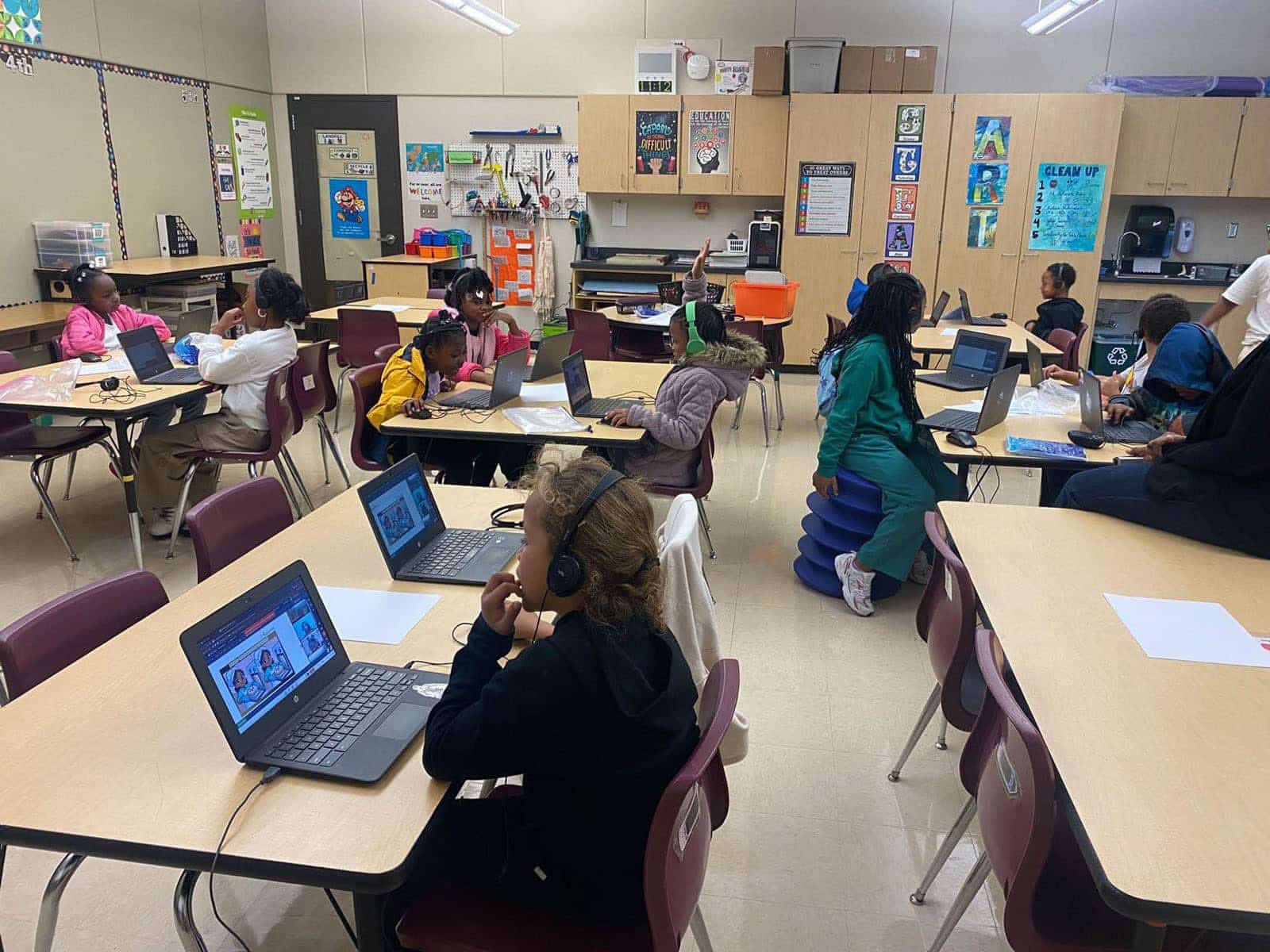
Kirsten Zazo, Assistant Superintendent of Educational Services, started with a report on enrollment following the first five days of the 2025-2026 school year. The report is part of an annual effort to track student numbers at the beginning of each school year so that classes can be balanced by the 20th day to meet class size maximums.
Overall, actual enrollment districtwide on Day Five exceeded projected enrollment by nearly 100 students. Secondary schools had nearly 140 more students enrolled than expected, while elementary schools had 40 fewer. Notably, Ruby Bridges Elementary had 69 more students enrolled compared to Day Five last year, following the addition of one new first grade classroom and one new third grade classroom.
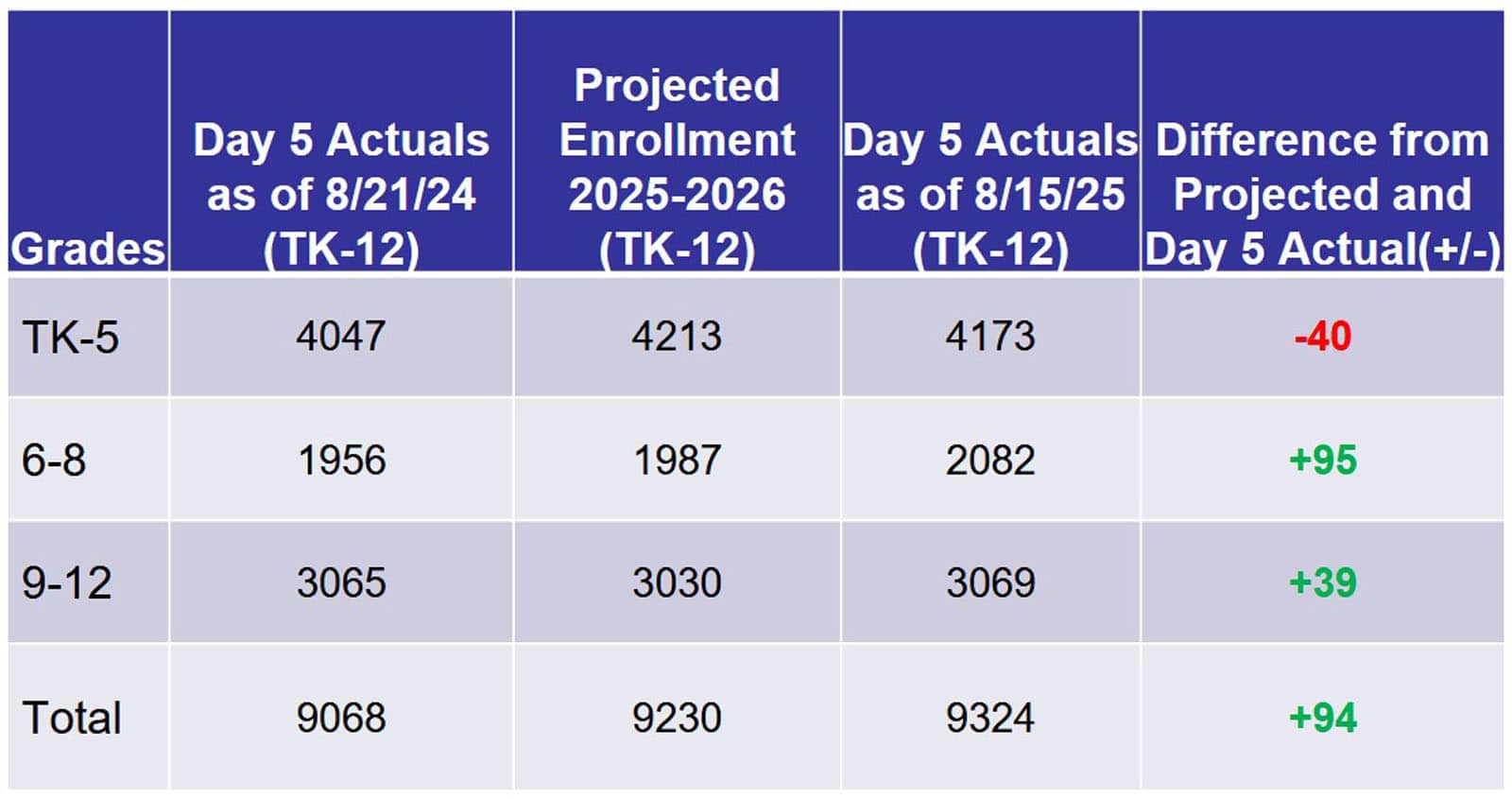
The District’s three middle schools also had increases across the board. Zazo revealed that AUSD has more sixth graders this year than fifth graders last year, which is unusual, since the District traditionally sees declines due to families moving away during the transition between elementary and middle school. She pledged to do a deep dive into this “abnormal pattern” to investigate causes for the trend.
“Nice job this year!” commended Board Clerk Heather Little, applauding District staff for proactively and strategically diverting some students to other schools with sufficient space, leading to minimal over-enrollment at individual schools.


Investments to target student success
Throughout the previous school year, the Board and District staff identified several key areas to target resources and attention in order to address student achievement, particularly for underrepresented groups. During Tuesday’s meeting, Superintendent Pasquale Scuderi provided an update on next steps and potential investments needed to support the following initiatives:
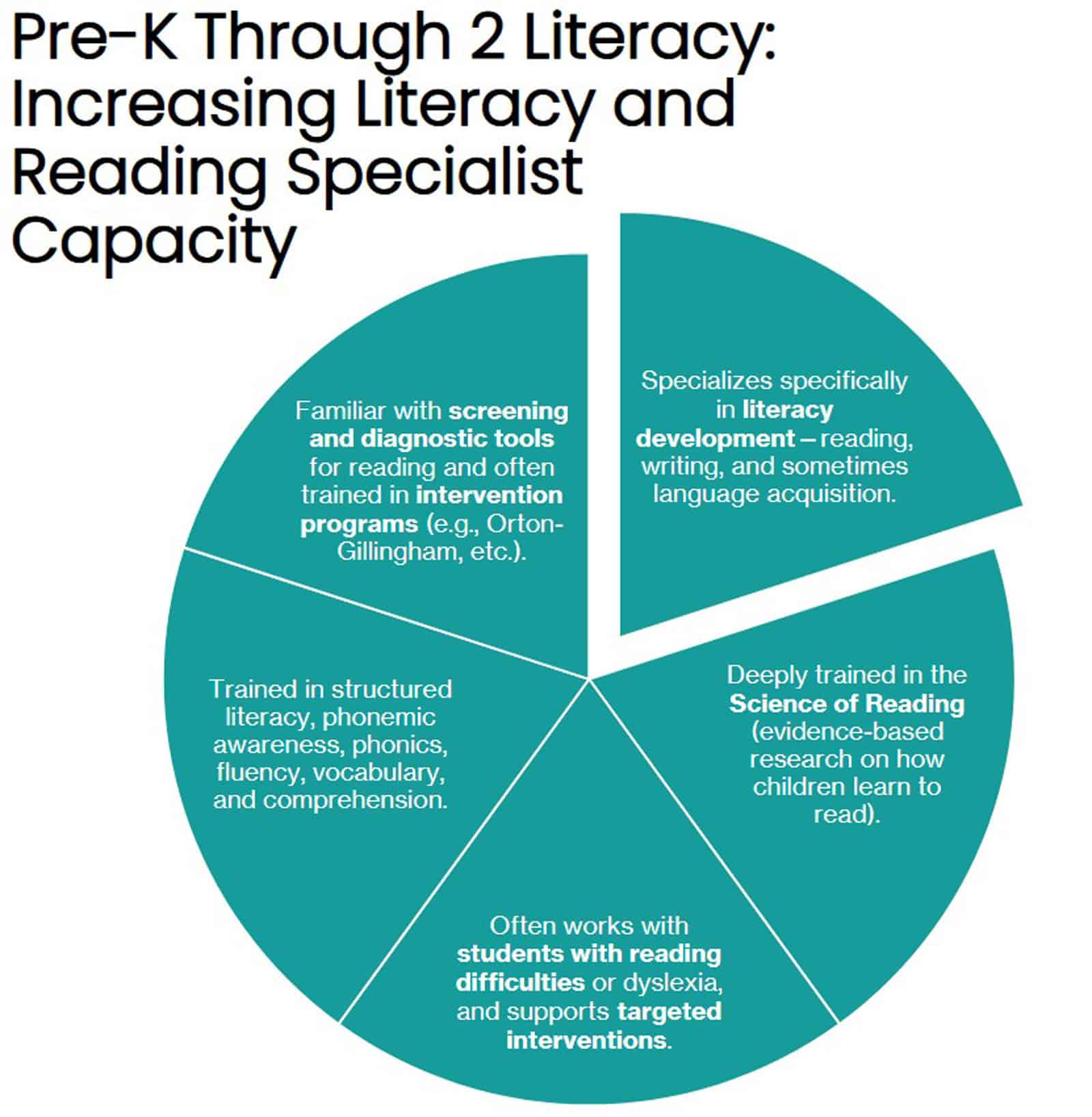
- Pre-Kindergarten through second grade literacy: Three additional staff at a cost of $420,000 to provide reading support and to serve as intermediaries between a struggling student and the special education (SPED) program.
- Grade 4 through Grade 8 mathematics: $83,500 to support educator professional development, after-school collaboration, and math conference attendance.
- Focal Scholar Program: Continued academic and social-emotional support to close opportunity gaps, particularly for Black and African-American students.
- Special Education and Inclusion: Investigate how to move students from the SPED program into less restrictive, inclusive environments.
- Discretionary investments: Gradually reduce investments, programs, and/or staff supported by one-time funds to avoid a fiscal cliff.
Scuderi prefaced his remarks by emphasizing the need to support initiatives that pursue improvement on academic achievement without compromising other holistic aspects—like arts and science—that enliven a student’s educational journey. To that end, he suggested maximizing subject time during the school day and clearly defining roles and responsibilities as strategies to be as efficient as possible.
Board Vice President Ryan LaLonde noted that the district needs more than a half-million dollars to support these programs on an ongoing basis and must “creatively find the resources. …But I think we’re lucky to be able to have these conversations. Other school districts are talking about major cuts, school closures, their enrollment going down when ours is going up.”
Ken Der is a contributing writer for the Alameda Post. Contact him via [email protected]. His writing is collected at AlamedaPost.com/Ken-Der.

