On March 9, the Planning Board reviewed Alameda’s General Plan and Housing Element Annual Progress Reports (link downloads document), which track the City’s progress toward meeting its state-mandated housing goals. City Planner Tristan Suire reported that Alameda has issued 663 building permits toward its Regional Housing Needs Allocation (RHNA) target of 5,353 homes for the 2023–2031 cycle, well below the pace needed to meet the requirement. Board members, a housing advocate, and a developer discussed the challenges slowing housing production—including high construction costs, financing constraints, and market uncertainty—while also exploring potential policy changes and incentives the City could pursue to help move stalled housing projects forward and increase overall housing supply.

General Plan and Housing Element progress
Suire presented the General Plan and Housing Element Annual Progress Reports, summarizing the City’s housing production and policy efforts during calendar year 2025 and the broader eight-year Housing Element cycle, 2023-2031.
The Housing Element requires Alameda to plan for its Regional Housing Needs Allocation (RHNA) of 5,353 housing units—the number the State Department of Housing and Community Development (HCD) assigned Alameda to build over eight years. Since 2023, the City has issued just 663 building permits toward its RHNA target.
Alameda’s 2023-2031 RHNA Progress
| Income Category | 8-Year RHNA Goal (Units) | Building Permits Issued 2024 | Building Permits Issued 2025 | Remaining to Meet RHNA |
|---|---|---|---|---|
| Very Low Income | 1,421 | 124 | 17 | 1,212 |
| Low Income | 818 | 18 | 15 | 763 |
| Moderate Income | 868 | 21 | 15 | 726 |
| Market Rate | 2,246 | 80 | 18 | 1,989 |
| Total | 5,353 | 243 | 65 | 4,690 |
Still, the report highlighted progress on several major projects. Affordable units at the North Housing Project reached the final stage, with certificates of occupancy issued for units serving households at 30% and 40% of Area Median Income. The RESHAP Project received entitlements in 2025 and will replace existing supportive housing with new housing. Supportive housing combines affordable, permanent housing with support services to help people with complex challenges—including chronic homelessness and disabilities—live independently.
Applications for the West Midway housing development entitlements are under review, while Alameda Marina Phase II and the Grant & Clement (Skyline) townhome developments saw construction progress and completed units. The Mariner Square Loop project also secured planning entitlements and is advancing toward development.
Staff also reported on 22 Housing Element programs, ranging from down payment assistance and energy rebates to Accessory Dwelling Unit (ADU) production. Policy work in 2025 included updates to the Inclusionary Housing Ordinance, revisions to the Universal Design Ordinance, and ongoing development of a Short-Term Rental ordinance.
Housing production data showed a notable decline in building permits issued—from 243 units in 2024 to 65 units in 2025, with many of the 2025 permits being ADUs rather than multifamily projects. Suire explained that this drop reflects both slower market conditions and the typical lag between applications, permits, and completed units. In fact, the 243 permits issued in 2024 resulted in 234 units completed in 2025. Applications increased in 2025, suggesting permit activity could rise in the coming year.
Public comment
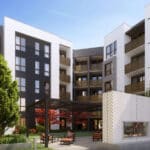
Sean Murphy, representing Pacific Development Group and the Alameda Marina project, discussed the Foundry project, a planned 260-unit apartment development that is part of the larger Alameda Marina Master Plan approved in 2019. Murphy said the project is “shovel-ready” and could begin construction as early as this summer, but warned that high construction costs, volatile material prices, and other economic pressures make any delays risky. He urged the City to use every available mechanism to support housing production and noted that the project would generate nearly $10 million in impact fees for the City.
Reverend Sophia DeWitt, Chief Program Officer at East Bay Housing Organizations, urged Alameda to strengthen its efforts to meet community housing needs—especially for very-low-income residents. DeWitt noted that current data show the very-low-income category has the highest number of permits issued, which she described as encouraging. However, she stressed that the number is still far below RHNA targets.

Board discussion
Upon Board questioning, staff confirmed that Alameda is not alone in struggling to meet its RHNA target. With few exceptions, such as Sacramento, Dublin, and Fresno, nearly every jurisdiction in California is behind on producing enough housing, especially affordable units.
Under the Housing Element, the City must review and consider adjusting policies if housing production is falling short. Staff said potential policy changes under consideration include updates to the inclusionary housing ordinance, ADU-to-condominium conversions, short-term rental regulations, and other streamlining measures to encourage housing construction.
However, Boardmember Andy Wang emphasized that while the report correctly notes that high interest rates, construction costs, and market uncertainty have slowed development, the City should pursue more proactive policy solutions. He urged considering new policy tools used by other Bay Area cities to stimulate housing construction. Examples included temporary reductions in development fees, lowering affordable housing requirements, tax reductions, and incentives for office-to-residential conversions. He cited these measures as models for Alameda to evaluate in order to “unstick” projects that are approved but financially stalled.
Boardmember Hanson Hom recommended collaborating with developers to pursue state housing funds and tax credits. He also suggested that impact fees, the charges imposed on new developments to pay for the expansion of public infrastructure and services, could be phased so that developers are not required to pay them all up front.
Wang asked for an update on the Short-Term Rental Ordinance. Suire explained that the ordinance is still being developed and is expected to return to the Planning Board later in the year for a study session.
Board President Xiomara Cisneros asked for an update on the City’s down payment assistance program. Suire responded that the program still exists but now assists only buyers of affordable homes, rather than all first-time homebuyers.
Board vote
The Board unanimously voted to accept the annual progress report with some revisions and clarifications, based on the Board’s discussion, before submitting it to HCD by April 1. City Council will use the annual reports to inform citywide budget and Capital Improvement Program decisions.
Contributing writer Karin K. Jensen covers boards and commissions for the Alameda Post. Contact her via [email protected]. Her writing is collected at https://linktr.ee/karinkjensen and https://alamedapost.com/Karin-K-Jensen.
