Radium theater, homeless services, sale of Building 92, nitrous oxide ban, new TOT requirement
On April 21, City Council will weigh a wide-ranging agenda, including three major Alameda Point-related issues—agreements to develop the Radium Performing Arts Center; a new operator for the Day Center, Emergency Shelter, and Safe Parking programs; and the sale of historic warehouse Building 92. Council will also consider a ban on the sale of nitrous oxide and new data requirements for short-term rental platforms.
Radium Performing Arts Center
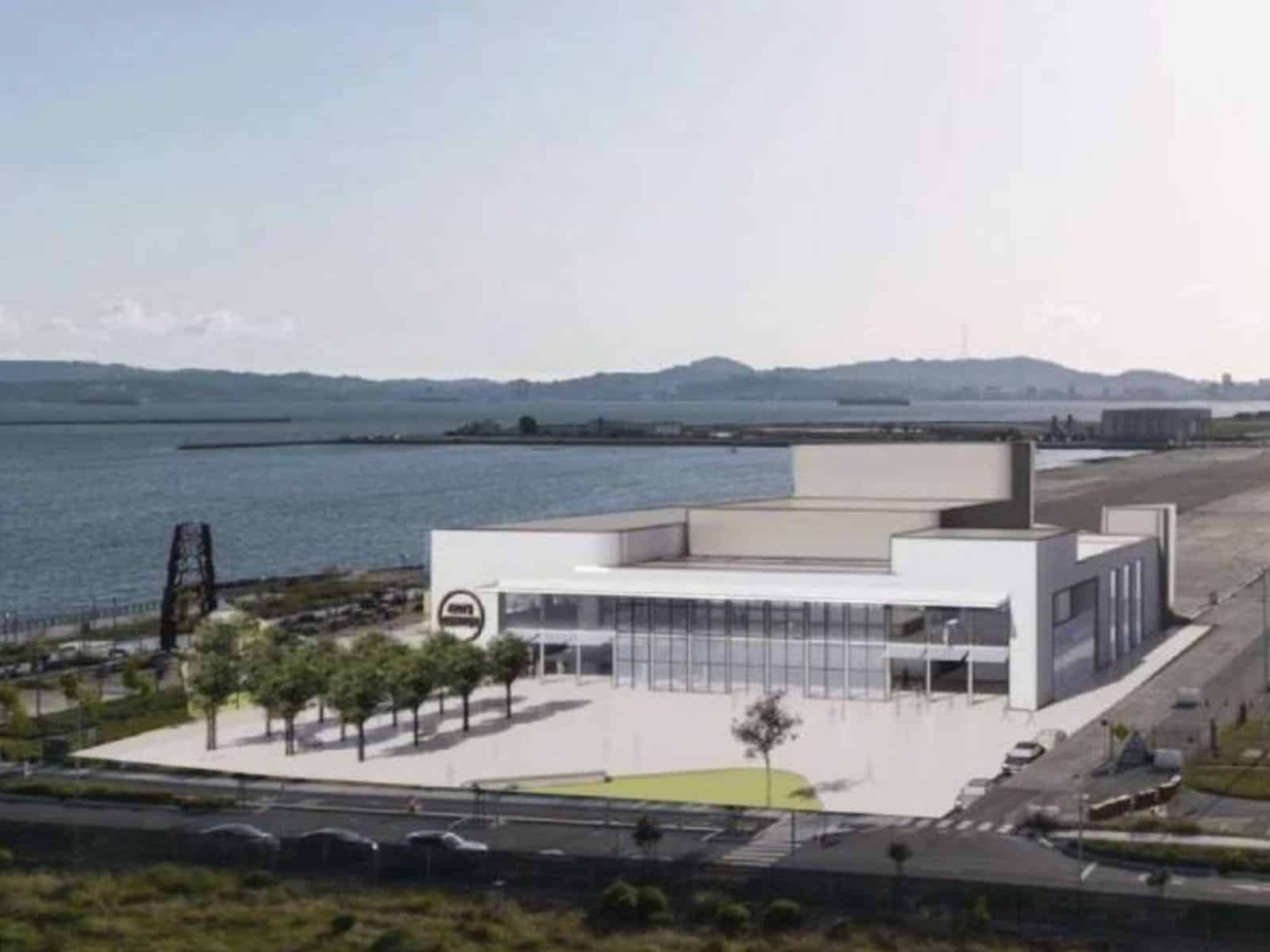
Council will consider approving a set of agreements with Radium Presents, a nonprofit arts organization, to develop and operate a new 53,000-square-foot performing arts center and one-acre public plaza at Alameda Point.
The project would be fully funded and built by the developer and includes an approximately 600-seat main theater, a smaller studio theater, rehearsal and event spaces, and public outdoor areas. The goal is to create a regional cultural destination capable of attracting national and international performers while providing community access.
To move the project forward, Council must declare the 1.87-acre site “exempt surplus land” under state law, and approve a phased real estate structure, including a three-year lease option, a 66-year ground lease at $1/year, and a future purchase option after at least 10 years of successful operation.
The agreements require the developer to secure full project funding, meet construction and operational benchmarks, and maintain the site’s nonprofit use. In return, the project includes community benefits such as public access to the plaza, discounted tickets, nonprofit rental discounts, local hiring goals, and at least 200 annual uses of the facility.
City staff note there is no direct General Fund impact, though the City will fund nearby infrastructure improvements. If approved, the agreements would allow the project to proceed to final design, permitting, and construction.
New day center operator
Council will consider approving a contract with Ruby’s Place, Inc., dba Restorative Pathways, to operate the City’s Day Center, Emergency Shelter, and Safe Parking programs—key services for people experiencing homelessness. The proposed agreement would run from May 1, 2026 through June 30, 2027 with an optional one-year extension.
Restorative Pathways was selected following a competitive RFP process and extensive vetting, including site visits, reference checks, and financial and reputational reviews. Although another provider, Urban Alchemy, was initially chosen, contract negotiations failed, leading to the temporary closure of the Day Center on February 27. Staff recommends Restorative Pathways instead.
Sale of Building 92
Council will consider approving the sale of Building 92 at 650 West Ranger Avenue, Alameda Point, to Ernst Development Partners, Inc., for $7.825 million. Building 92 is a World War II-era warehouse on about 3.56 acres. The sale is part of the City’s strategy to activate underused properties, generate revenue, and support economic development at Alameda Point. Ernst Development was chosen through a competitive RFP process based on the highest offer, experience, and a feasible redevelopment plan.
The buyer plans to rehabilitate the building for advanced manufacturing, research and development, and light industrial uses, including upgrades, hazardous material abatement, and tenant improvements. The property will be sold “as-is,” and the developer must also fund required street and infrastructure improvements along West Ranger Avenue.
The sale is expected to net the City about $7.15 million after costs, with $500,000 of proceeds paid to Alameda Point Collaborative for a prior lease termination. The City will reinvest remaining funds into backbone infrastructure at Alameda Point. Staff emphasizes the project will reduce City maintenance liabilities, leverage private investment, and support long-term reuse goals for the former naval base.
Nitrous oxide ban
City Council will consider an ordinance banning the sale and distribution of nitrous oxide by tobacco retailers, convenience stores, and similar businesses to address growing public health and safety concerns.
The proposal responds to increased recreational misuse, especially among youth, including incidents such as DUI cases involving nitrous oxide. The substance, often marketed as “whippits” or “Galaxy Gas,” has been linked to serious health risks, including asphyxiation, paralysis, and death.



If adopted, the ban would take effect May 21, 2026, and would be enforced through the City’s existing tobacco retail regulatory system. Enforcement measures include compliance monitoring, holding property owners accountable for violations, declaring violations a public nuisance, and allowing penalties such as product seizures, misdemeanor charges, or revocation of tobacco licenses.
The ordinance includes exemptions for legitimate uses, such as medical and dental care, food products, wholesale distribution, and certain industrial or automotive uses.
New Transient Occupancy Tax requirement
Council will consider adopting an ordinance to improve enforcement of the Transient Occupancy Tax (TOT) on short-term rentals. Currently, platforms like Airbnb and VRBO provide only aggregated data, limiting the City’s ability to identify active rentals and ensure compliance. The ordinance would require platforms to share property-level information, such as addresses and parcel numbers, enabling more accurate tracking and enforcement. It does not create new taxes or regulations but strengthens the administration of existing laws.
How to participate
The meeting will be held on Tuesday, April 21, at 7 p.m. in City Council Chambers, located on the third floor of City Hall, 2263 Santa Clara Avenue.
Members of the public are welcome to participate in person or via Zoom. They may comment on the Non-Agenda, Consent Calendar, and Regular Agenda portions of the Meeting Agenda (link downloads document).
The Non-Agenda portion of the meeting provides an opportunity for members of the public to address the Council regarding any matter not on the agenda over which the Council has jurisdiction. The Consent Calendar is intended for routine items and is approved by a single motion. The Regular Agenda is the central portion of the meeting, where each issue receives a presentation and time for Council discussion and public comment.
Complete this online form to request reasonable accommodation.
Click here for Zoom registration. The Zoom phone number for telephone participants is 669-900-9128; the Meeting ID is 863 3340 1382.
Information to assist with remote participation is available online in the Public Comment and City Council Meeting Guide. The meeting can also be viewed on the City of Alameda’s Facebook page. Note that comments posted there are not monitored.
For each issue, public speakers will have three minutes to speak if fewer than five are speaking, or two minutes if five or more are speaking.
Community members may also email Council Members on issues of interest before meetings.
Contributing writer Karin K. Jensen covers boards and commissions for the Alameda Post. Contact her via [email protected]. Her writing is collected at https://linktr.ee/karinkjensen and https://alamedapost.com/Karin-K-Jensen.

