Also reviews sea level rise adaptation plans
On December 16, the Planning Board held public workshops to review the updated plans for the RADIUM Theatre Performing Arts Center and a proposed 120,000-square-foot, three-story life science building on the Wind River Campus. The Board also reviewed the Oakland Alameda Subregional Adaptation Plan which aims to address sea level rise, enhance water quality, and improve community resilience and draft concept designs for the Estuary Adaptation and Bay Farm Island Adaptation Projects.


RADIUM Theatre Performing Arts Center
The RADIUM Theatre Performing Arts Center project location is a 2.13-acre site on Pan Am Way near the intersection of West Atlantic Avenue at Alameda Point. Plans include a 500-seat theater, ground floor café, and upper level restaurant. The public workshop reviewed an update to its Development Plan.
Since the initial workshop in June, a joint subcommittee of the Historical Advisory Board and the Planning Board has met three times to refine the plan, addressing issues such as the building’s location and plaza details.
Based on feedback received, the theater building has shifted west, creating a larger public plaza framed by the theater and Naval Air Museum while preserving a 40-foot view corridor along the centerline of the Museum and a 60- to 80-foot view corridor to the west. The design aims to integrate ecological and community influences, with flexible outdoor event spaces, emphasizing connections to the waterfront and historic elements. The revised Development Plan includes a landscape plan and proposes modifying the waterfront park north of the Bay Trail to integrate the project into the landscape.
To access the site from West Tower Avenue, the Plan anticipates a new north-south roadway between Building 40 (Bladium) and Building 41. The Plan also shows a public 169-space parking lot on the taxiway west of the theater.
Board comments and discussion focused on technical concerns regarding drainage and stormwater management, the need to update the parking analysis and management strategy for the entire base which may inform the parking strategy for the theater, architectural suggestions, and design guidelines for the landscaped areas. Staff anticipates returning before the Board in February or March 2025 for final Development Plan approval.

Wind River Life Science Building
Blue Rise Ventures proposes a new three-story life science building at the southeast corner of its Wind River Campus at 200 Wind River Way. The Campus was originally approved as five office buildings in 1997, but only four were built. Blue Rise Ventures has retrofitted approximately 600,000 square feet of its office spaces for mixed laboratory and office use to meet the demand for life science space. Now it has plans for the fifth building.
When the Wind River project was approved, there was no street at this new location. However, the completion of the Del Monte warehouse conversion (Alta Star Harbor apartments) and Clement Avenue extensions allows a building to be sited at the new intersection. The 120,000-square-foot building will accommodate approximately 300 employees. Laboratory users require more space per employee than traditional office workers.
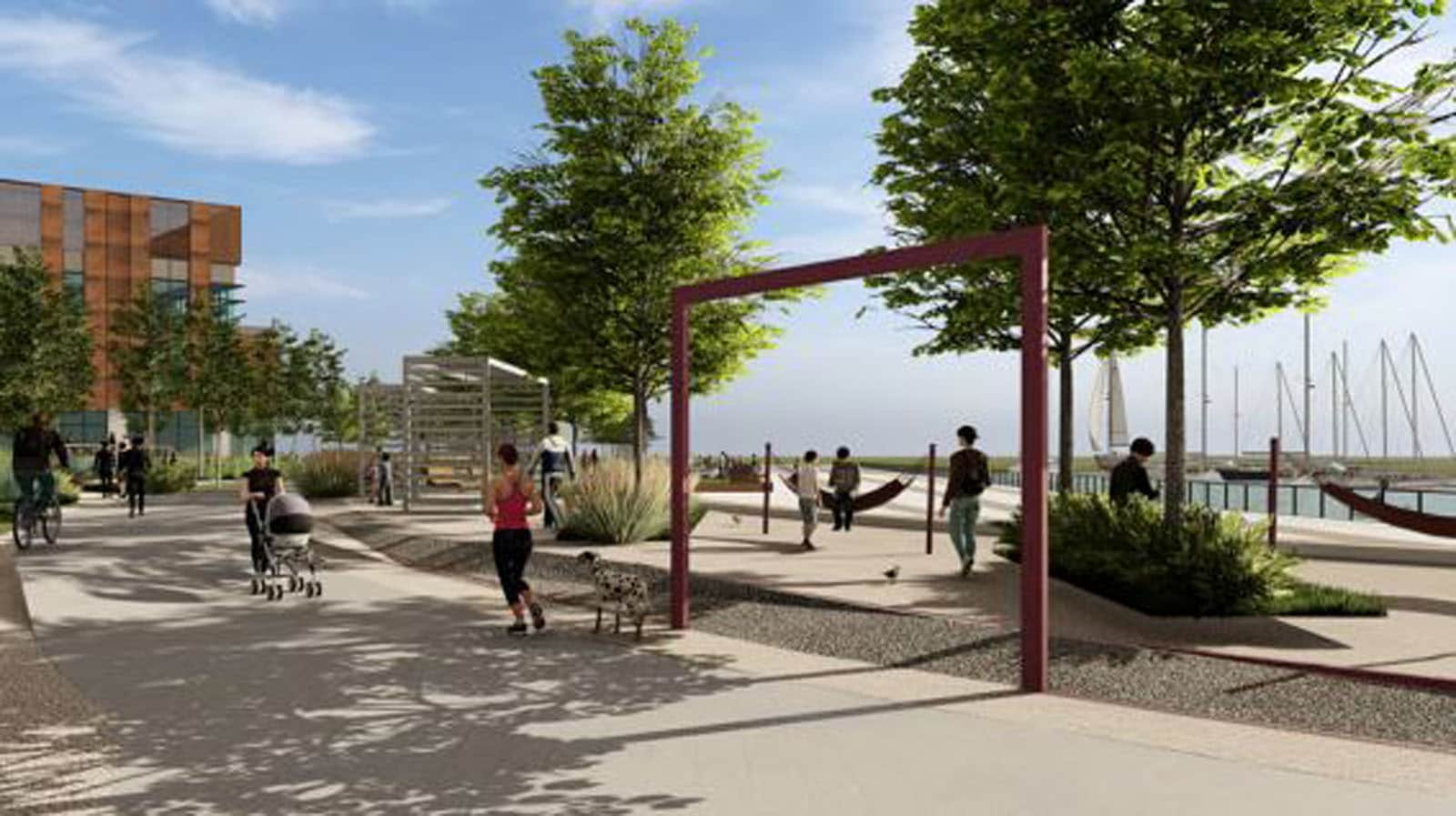
The building aims to balance historic maritime elements with modern design, featuring a mix of materials such as metal panels, concrete, and wood. In addition, the project offers waterfront improvements, including public open space and improved shoreline access. Blue Rise proposes demolishing an unstable wood wharf and connecting the Cross Alameda and Bay Trails behind the existing four buildings, bridging an existing 800-foot gap in the Bay Trail. The concrete wharf will be retained and improved with seating, a turf area, and a bocce ball court.
The rear of the building facing the water will front onto a new plaza and amenity space flanking the Bay Trail. Blue Rise Ventures plans a dock for kayak and other small watercraft access and possibly for a water shuttle. The landscape plan includes 248 new trees, with the Sherman Street extension acting as a London plane tree-lined pedestrian promenade and emergency vehicle access corridor.
Comment and discussion
Public commenters supported the development for its community benefits but expressed concern about Blue Rise Ventures’ commitment to maintaining the Bay Trail and Wind River Park, which they said were neglected. They urged the Board to hold Blue Rise Ventures accountable for cleaning and maintaining these areas before granting further development permissions.


Dan Poritzky, Managing Partner of Blue Rise Ventures, responded by highlighting Blue Rise Ventures’ six-year contribution to Alameda, including bringing 50 new companies to a 200-acre campus. He discussed their community involvement, including providing free space for an Alameda Police Department substation to help reduce West End crime. He said they also supported the Alameda Education Foundation, Boys and Girls Club, and Girl Scouts.
Poritzky said that when Blue Ventures learned they weren’t adhering to Bay Conservation and Development Commission (BCDC) requirements, they began improvements, and although they haven’t completed all the required work, they have allocated the budget to do it and have selected contractors. He anticipates that work will begin when there is sufficient dry weather.
Several Board members responded with a call to review the existing Development Plan to understand the responsibilities for maintenance of the shoreline area and Bay Trail and to craft conditions of approval for the Development Plan to include requirements for facilities and maintenance agreements and compliance with other agency permits.
Board President Xiomara Cisneros also called for exploring options to encourage transit and bike usage. Although members of the Board offered architectural suggestions, such as enhancing the main entrance and the need for clear wayfinding to the front door, they expressed overall approval of the design and looked forward to the project’s completion and the vibrancy it will bring to the area.
Adaptation projects and plan
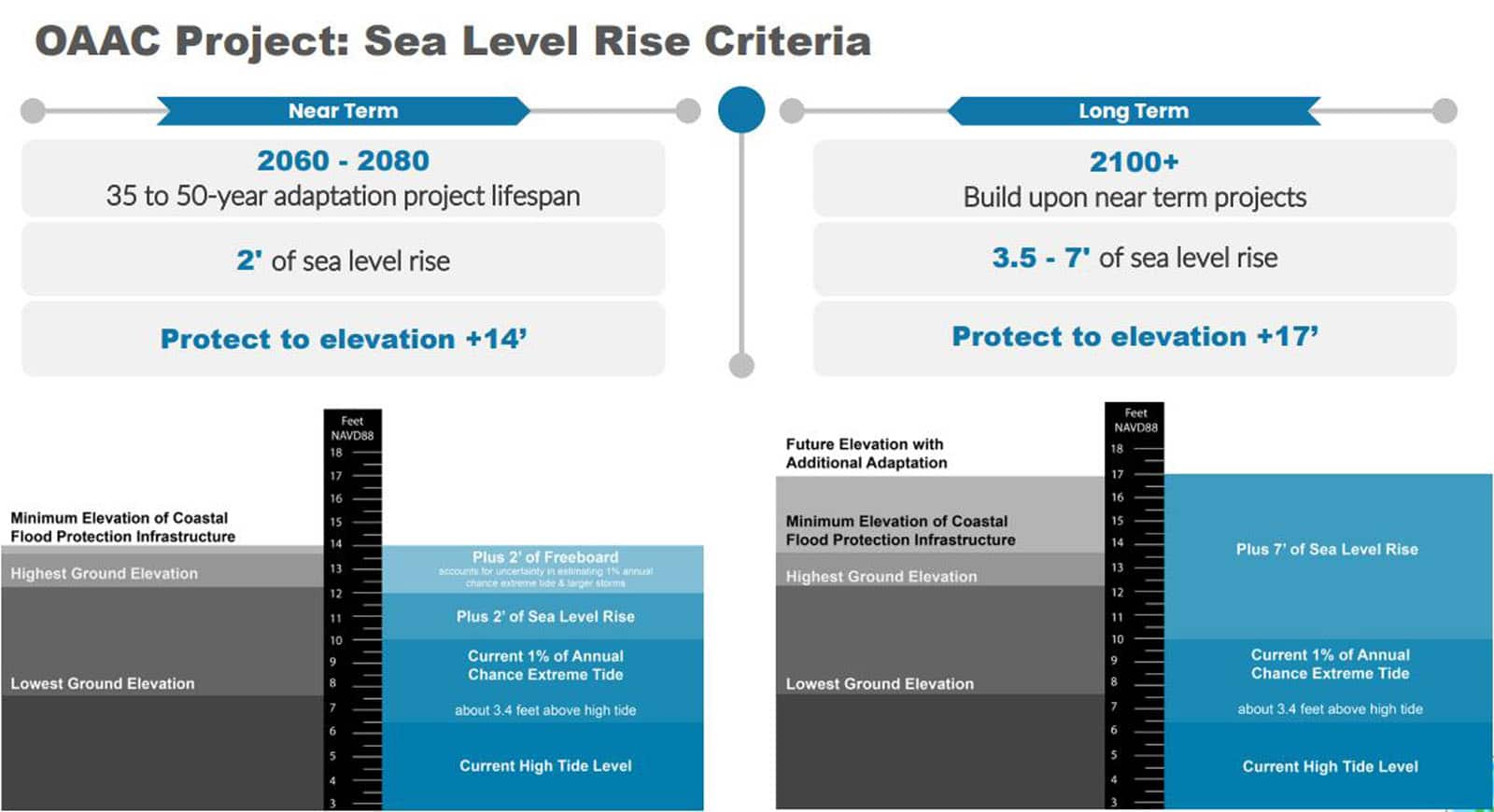
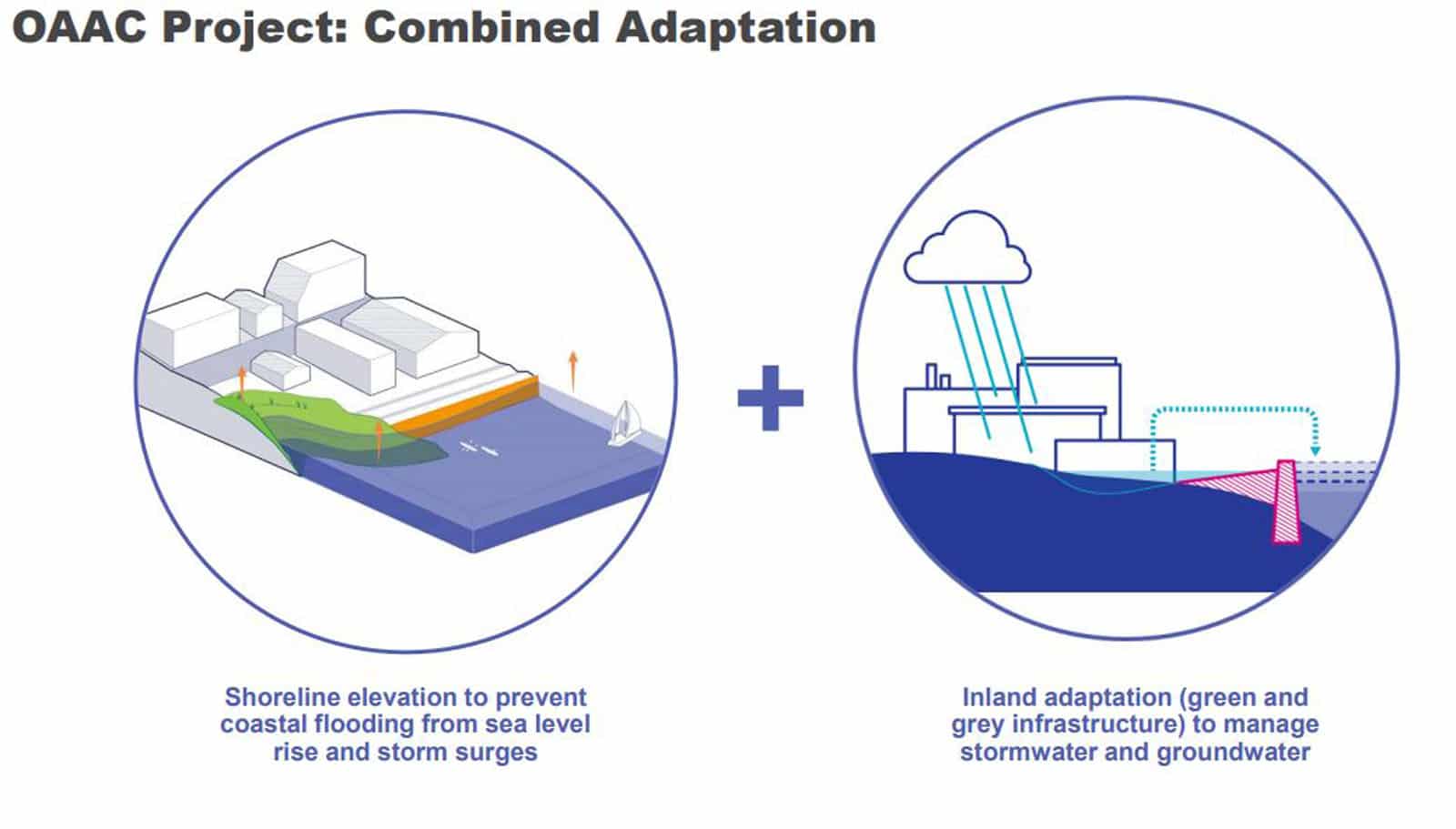
Gail Payne, a City Project Manager for sea level rise adaptation and a representative of the Oakland Alameda Adaptation Committee (OAAC), presented the Subregional Adaptation Plan which aims to address sea level rise, enhance water quality, and improve community resilience in the Oakland-Alameda subregion. This plan, required by state law, is ultimately targeted for completion by 2034. Key projects include the Oakland-Alameda Estuary and Bay Farm Island designs, which accommodate two feet of sea level rise in the short term and up to seven feet in the long term.
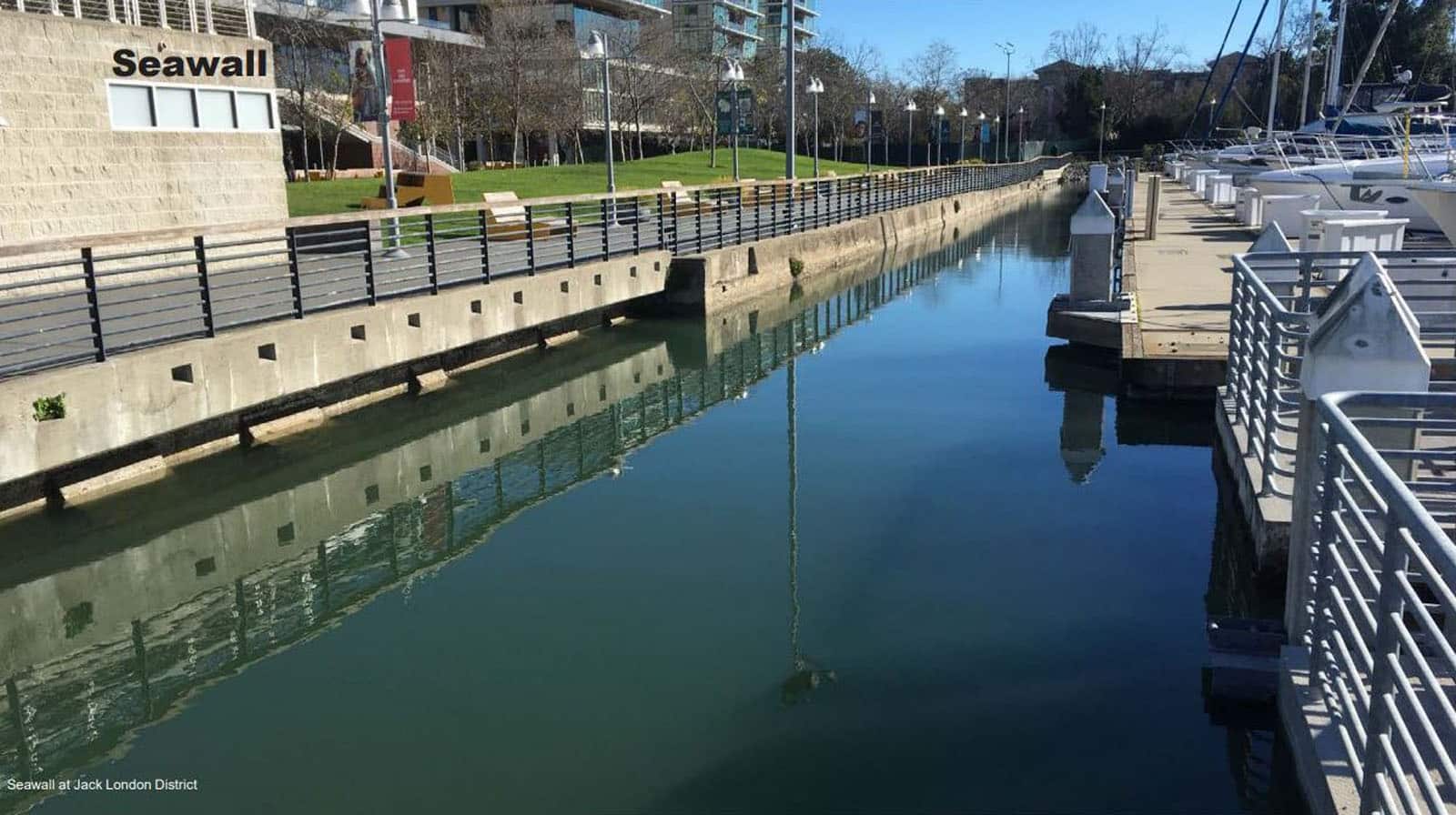
The Estuary Adaptation Project focuses on protecting both the Alameda shoreline near the Posey/Webster Tubes and Downtown Oakland/Jack London Square from sea level rise and flooding. The design includes coastal and inland elements. Coastal recommendations include levees, seawalls, and redevelopment along the estuary shoreline between Bohol Park and Shoreline Park. Inland recommendations include green and grey detention basins to improve Alameda’s northside stormwater drainage. Current grant funding expires in February 2025. OAAC and the City are exploring federal funding opportunities to continue this project beyond 2025.
The Bay Farm Island (BFI) Adaptation Plan addresses Bay Farm Island erosion and flooding issues. The design includes a northern shoreline levee to reduce coastal flooding, Bay Trail enhancements, nature-based solutions to reduce erosion and to improve the marshes and beach habitat, tide gate and pump station replacements and storm drain modifications. The concept will shorten Veterans Court and still allow for 20 to 25 parking spaces. Current grant funding expires in September 2025. The City, on behalf of OAAC, has applied for a $56 million FEMA Building Infrastructure and Communities (BRIC) grant to complete the design and construct the project.
Board comment and next steps
Boardmember Hanson Hom raised a concern about seawall impacts on wildlife migration and whether there will be wildlife corridors. Project Manager Payne indicated she had heard of wildlife corridors for freeways but not in these situations. However, she said that now, in the early stages of planning, was a good time to explore this concern.
Next steps include presenting the draft concept designs for the Estuary and Bay Farm Island Projects to City Council on January 21, 2025, continuing to work on the Subregional Adaptation Plan with plans to roll out the development strategy to the public in 2025, and exploring OACC governance options.
Currently, the City of Alameda leads OACC planning for sea level rise adaptation, but staff recognizes it is not sustainable for the City alone to lead the subregional partnership. Governance options include project-specific Memorandums of Understanding with partner agencies for the near term and the formation of a Joint Powers Authority or a hybrid/special district in the long term.
Contributing writer Karin K. Jensen covers boards and commissions for the Alameda Post. Contact her via [email protected]. Her writing is collected at https://linktr.ee/karinkjensen and https://alamedapost.com/Karin-K-Jensen.

