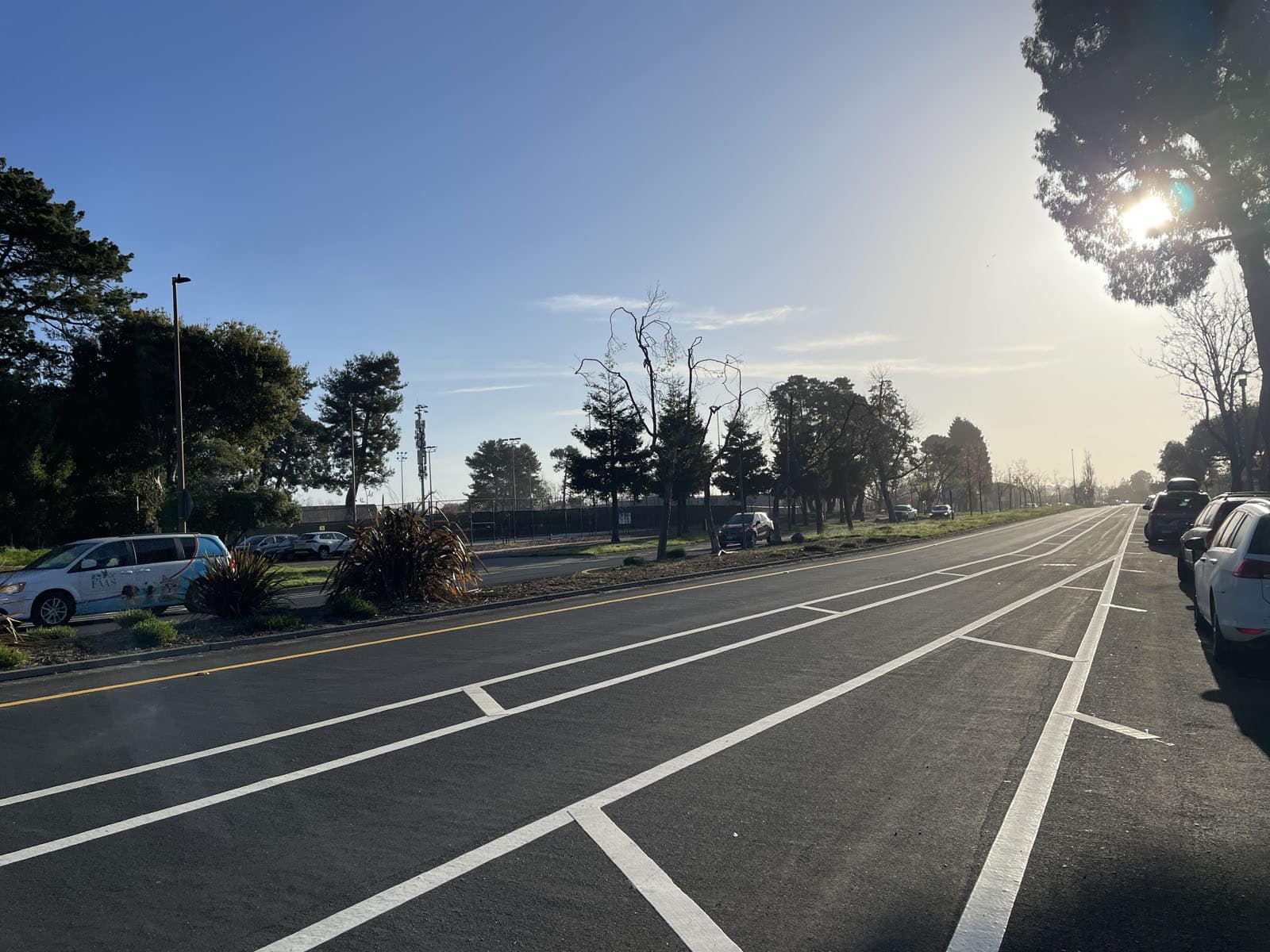
After the Pledge of Allegiance, morning announcements, and a dance routine to get everyone’s blood flowing, Bay Farm School Parent Teacher Student Association (PTSA) President Maria Piper gave a short speech during morning assembly on Monday, March 9, in celebration of the recently reconstructed bike lanes along Aughinbaugh Way and Mecartney Road.
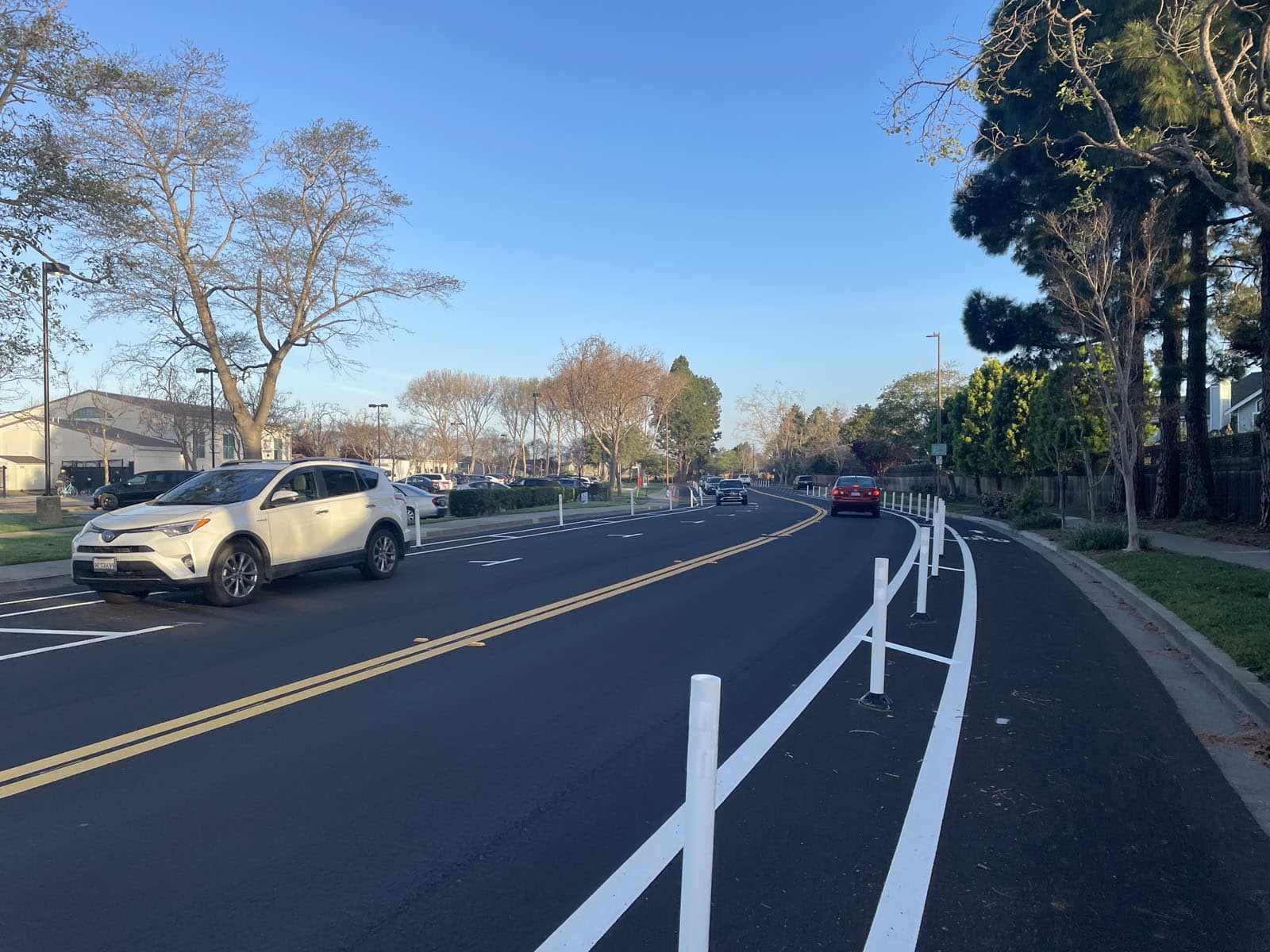
Just minutes earlier, Piper had led a celebratory bike ride from Alameda Fire Station 4 along Aughinbaugh Way, which runs in front of the school and now features plastic vertical posts within the striped buffer zone to provide additional separation between bikes and vehicle traffic. Addressing the school, Piper was flanked by Councilmembers Tracy Jensen and Greg Boller, Public Works Director Erin Smith, City Engineer Scott Wikstrom, Transportation Planning Manager Lisa Foster, and Bike Walk Alameda Board Member Cyndy Johnsen.
“This project is really about something simple but important: making it safer for kids to bike and walk to school so they can build healthy habits and independence,” said Piper.
PTSA President Maria Piper, joined by City staff and Councilmembers Jensen and Boller, addresses parents, students, and teachers during morning assembly at Bay Farm School on Monday, March 9. Video by Ken Der.
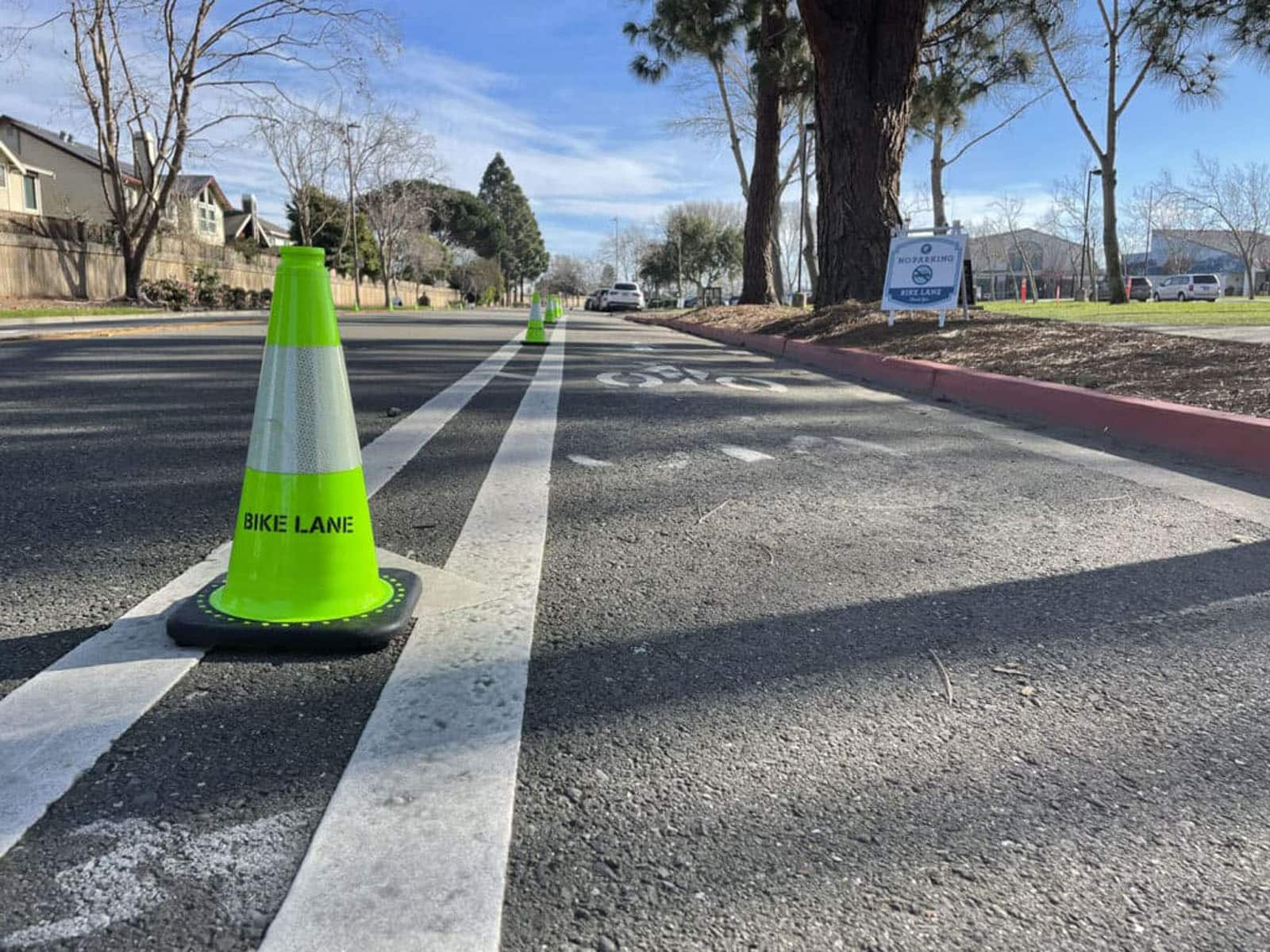
The Alameda Post first covered the tactical urbanism effort spearheaded by Piper, Bike Walk Alameda, and the Bay Farm PTSA in early 2024 in response to drivers stopping in the bike lanes along Aughinbaugh during student pickup and drop-off. Parents were worried about serious safety concerns posed by the obstructive vehicles, which forced their children into the vehicular travel lane and placed them at greater risk of being doored or sideswiped by distracted drivers. So, they decided to pool resources and coordinate shifts to set up cones and homemade signs along the street.
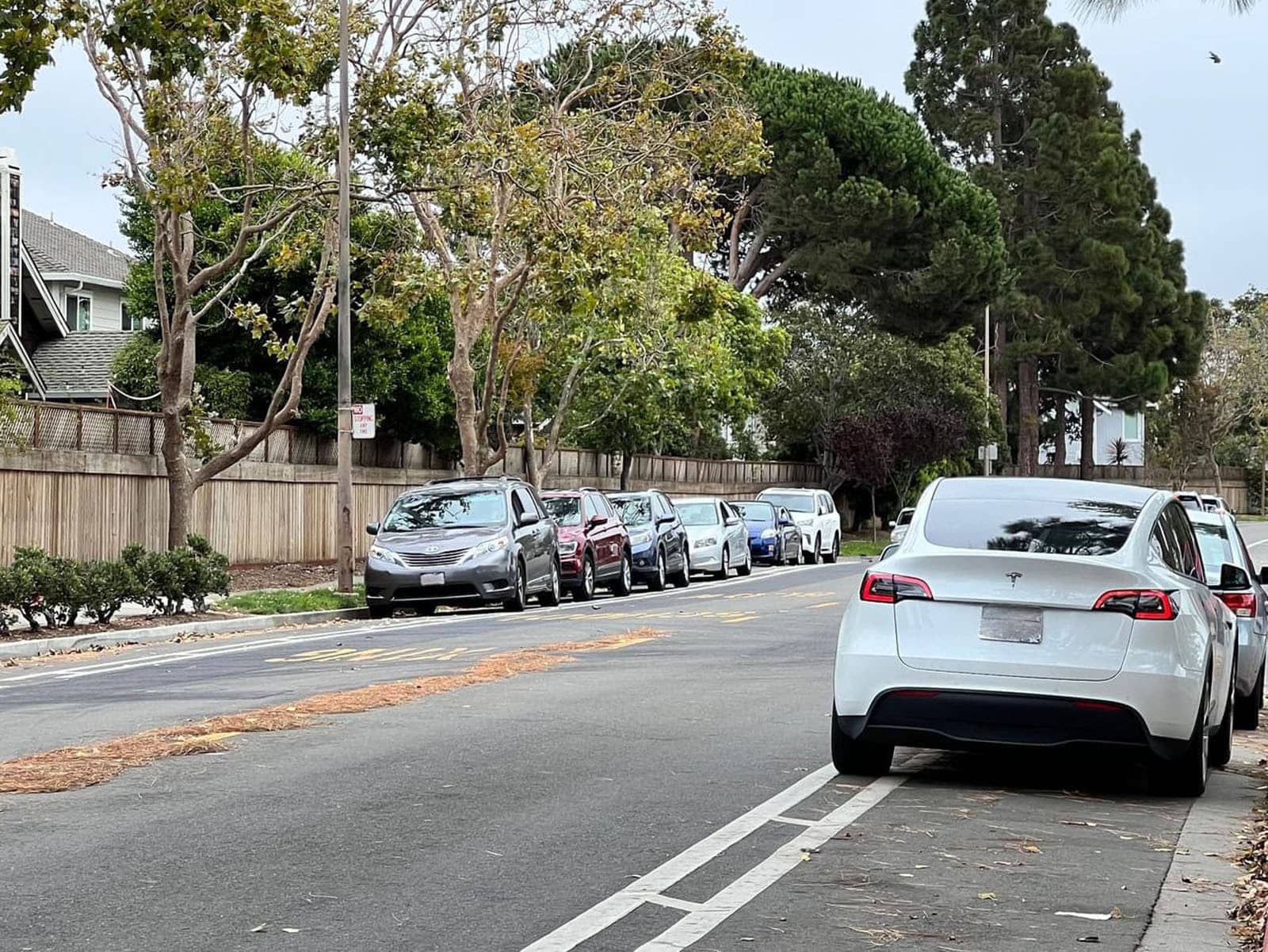
With the parent-led pilot successful in educating families and reducing bike lane blockage, they continued their advocacy and cooperation with City staff to include the project as part of Alameda’s annual repaving cycle, and sought infrastructure that would not require daily parent involvement in setup and takedown.
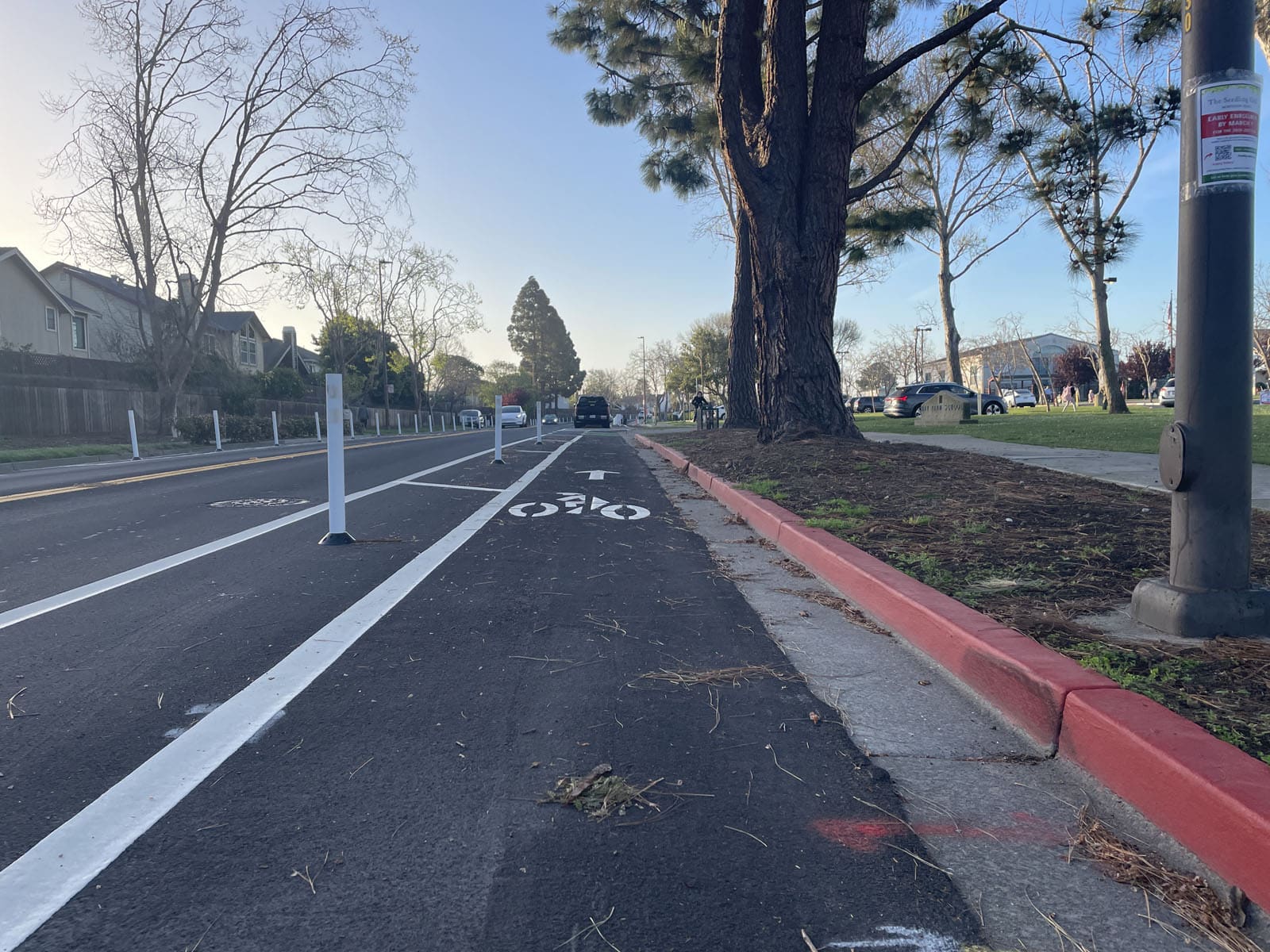
But the journey to install just the plastic posts has not been without controversy. With Phase 43 of the City’s annual Pavement Management Project well underway on Bay Farm during late fall and early winter, some community members voiced their displeasure at the removal of one travel lane in each direction for about 2,000 feet along nearby Mecartney Road between Fontana Drive and Island Drive in favor of the installation of a buffered bike lane and wider door zones for parked vehicles.
In response, Councilmember Tony Daysog made a referral to City Council at its meeting on January 20, 2026, to place the issue of the Mecartney reconfiguration on a future Council agenda and to halt restriping work until Council and the public had a chance to deliberate further.
During Council discussion on the referral, Wikstrom explained staff’s reasoning for the changes, arguing that the repaving project was technically sound and kept traffic safety as the paramount priority.
“As part of Vision Zero, we were pressed to do more,” explained Wikstrom. “There’s been this recognition that with the paving program, you’re paving many miles…and you basically have a blank slate to restripe in a way that is safer for the public.”
Though much of the evening’s conversation focused on Mecartney, the updates along Aughinbaugh were also drawn into the fray. As he responded to Council’s questions, Wikstrom referenced a resolution approved by the board of the Community of Harbor Bay Isle Owners’ Association (CHBIOA) in early 2025, which called for the permanent removal of bike lanes from both Aughinbaugh and Mecartney from the City’s Transportation Choices Plan, deeming them a “costly, unnecessary, and a frivolous use of taxpayer dollars” and citing concerns about the impact of lane reductions on emergency evacuation time.


But Wikstrom noted that Bay Farm is at low wildfire risk as determined by the California Governor’s Office of Emergency Services, and while the entrances to the area (i.e., Island Drive at Dolittle Drive, Bay Edge Road, and Maitland Drive) could be traffic bottlenecks in the event of an evacuation, the Mecartney lane reduction would make little difference.
“In my opinion, some of the objections from the homeowners’ association were, frankly, somewhat unfounded,” he summarized.
Notably, the resolution was co-signed by CHBIOA President Gary Lym (then Vice President), who has also served on the Alameda Unified School District Board of Education since 2014. Piper wondered why a sitting Board member would sign a resolution seemingly in conflict with the interests of the students he was elected to serve.
“From the school community’s perspective, this created a significant governance concern and required additional volunteer effort simply to protect the safety improvements that were already planned and underway,” Piper said during public comment at the February 10, 2026 AUSD Board Meeting, for which Lym was absent. “Not every safety improvement is the district’s responsibility to lead, but the district does have a responsibility to be aware of, supportive of, and aligned with safety efforts that directly affect students,” Piper continued. “A school board member’s visible opposition in another role made that especially difficult.”
Lym did not respond to the Post’s request for comment.
Despite the opposition, many spoke in support for safer routes to school during the January Council meeting.
“A lot of cars come down Mecartney too fast, and there have been too many close calls,” said Sawyer, a fourth-grade student at Bay Farm School who lives with her family just off Mecartney Road. “I love biking to school, and now that there is a new, wide bike lane the whole way to school—with hopefully slower driving cars—I hope I will be able to bike to school more often.”
And on the morning of March 9, Sawyer was one of the many students who rode with the bike bus and delivered a strong endorsement when Piper asked for her thoughts: “I love it!”
Multiple, opposing motions to place the restriping issue on a future Council agenda or to adjust City policy for the delivery and outreach for construction projects failed to pass, meaning that, for now, the changes are as fixed as the plastic posts that line Aughinbaugh.
Ken Der is a contributing writer for the Alameda Post. Contact him via [email protected]. His writing is collected at AlamedaPost.com/Ken-Der.

