Line 19 eliminated. Transbay Line O relegated to weekday commute hours only with no service to the East End or Fruitvale BART. Hours and frequency reduced on Lines 30, 31, 96, and Transbay Line W.
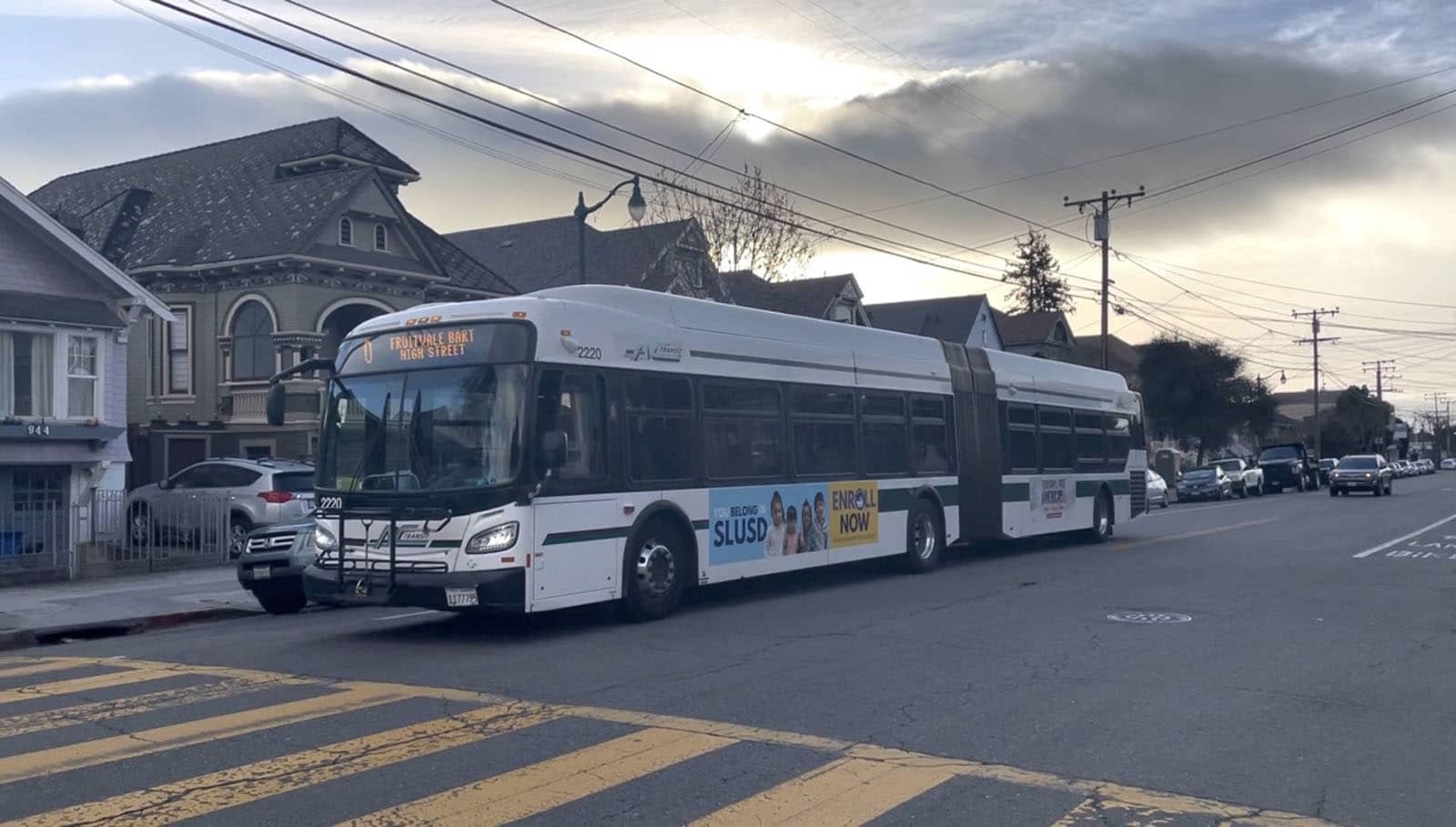
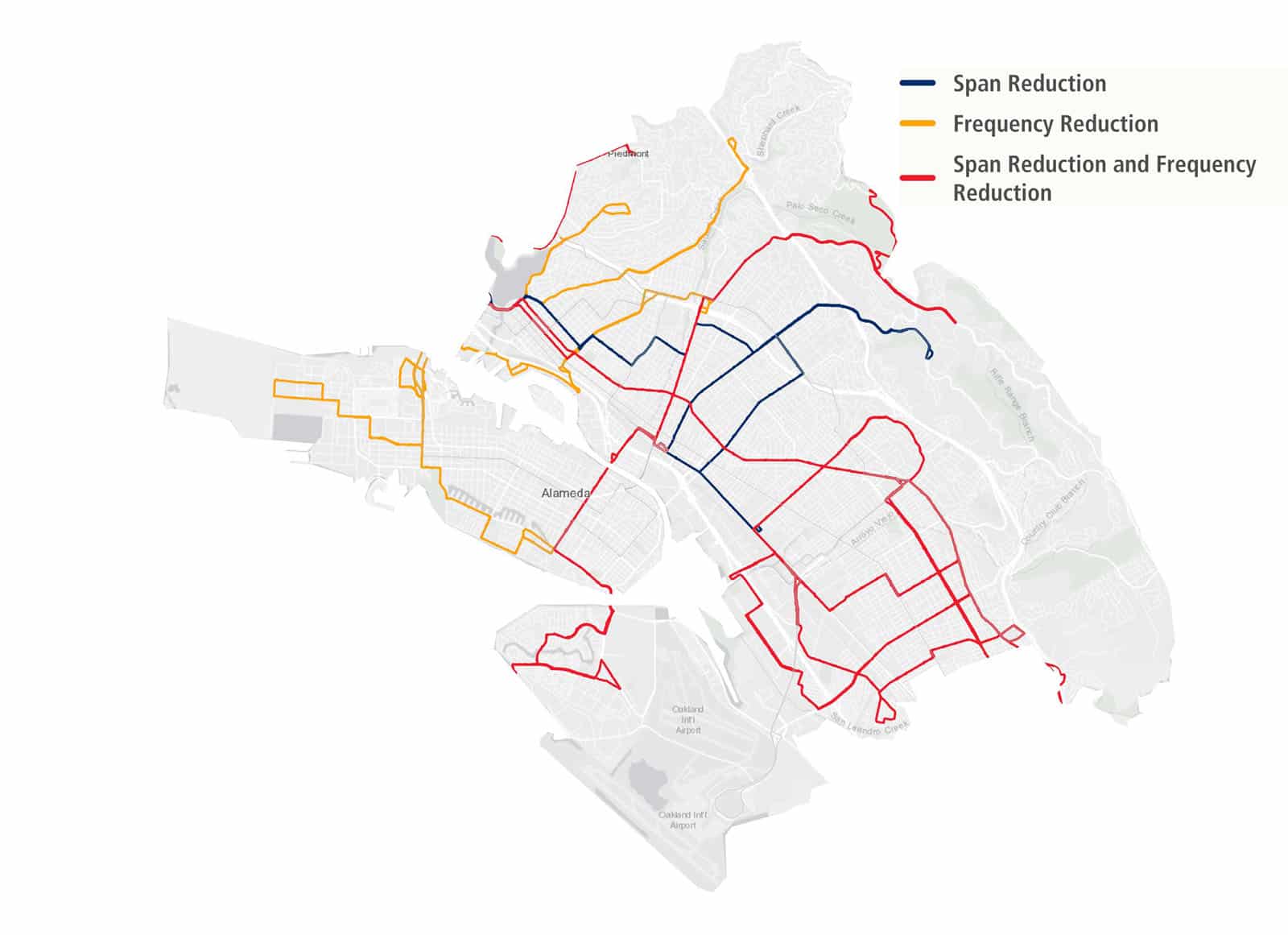
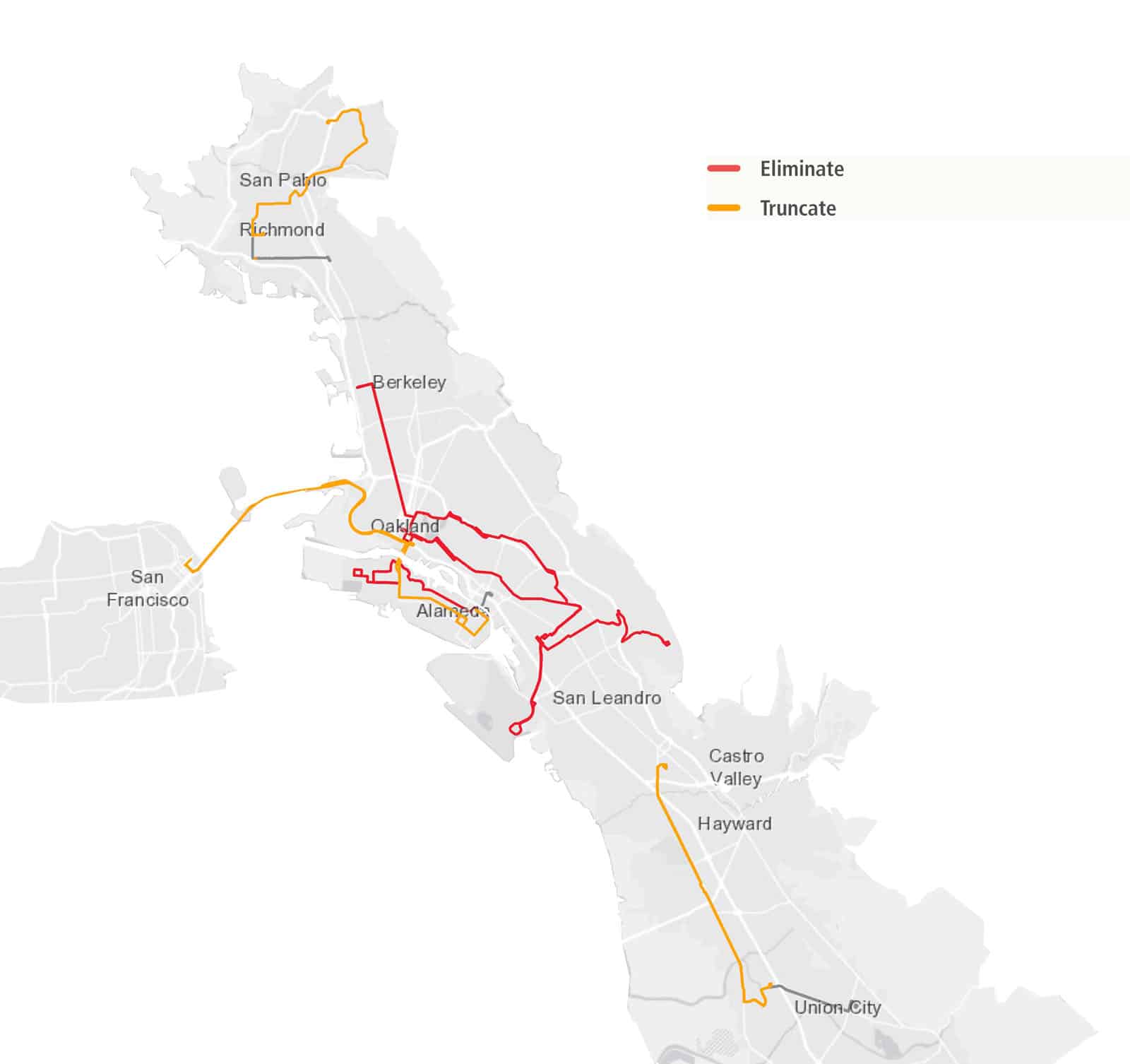
Those service changes in Alameda are just a few of the many cuts across the East Bay outlined in the Proposed Contingency Service Plan released this week by the Alameda-Contra Costa Transit District (AC Transit). Other major changes include the elimination of all weekend Transbay bus service, Line 46L service in East Oakland, and overnight service on several corridors in Oakland and Berkeley. Nearly all AC Transit routes would undergo some level of hours and/or frequency reduction.
The Contingency Service Plan could be implemented in June 2027 if the Connect Bay Area regional transportation ballot measure fails to pass in the upcoming November 2026 election. Led by a community coalition of labor, business, and transit supporters, the measure proposes a half-cent sales tax increase in Alameda, Contra Costa, San Mateo, and Santa Clara Counties, and a one cent increase in San Francisco. In May, it gathered enough signatures to qualify for the November ballot.
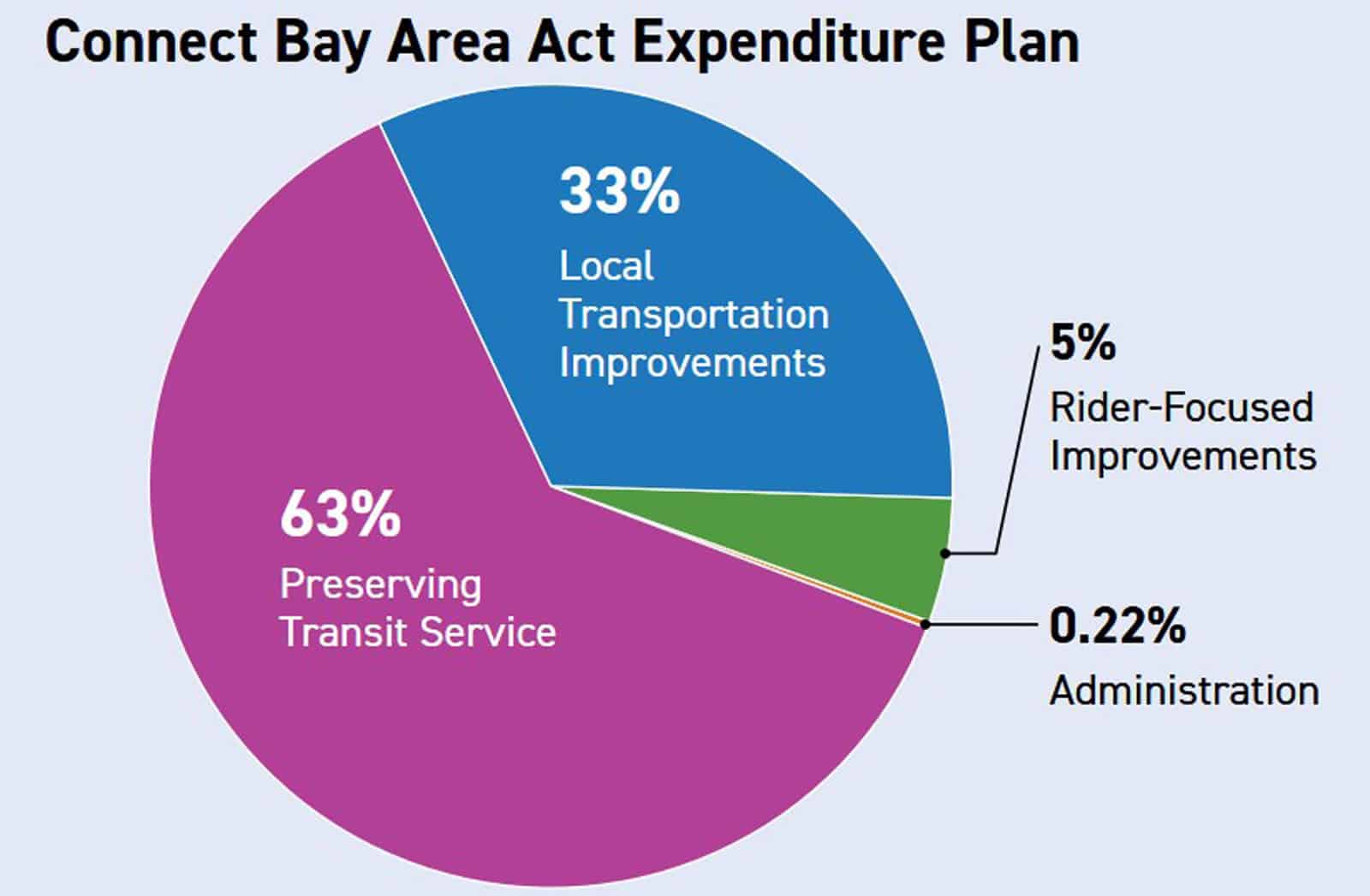
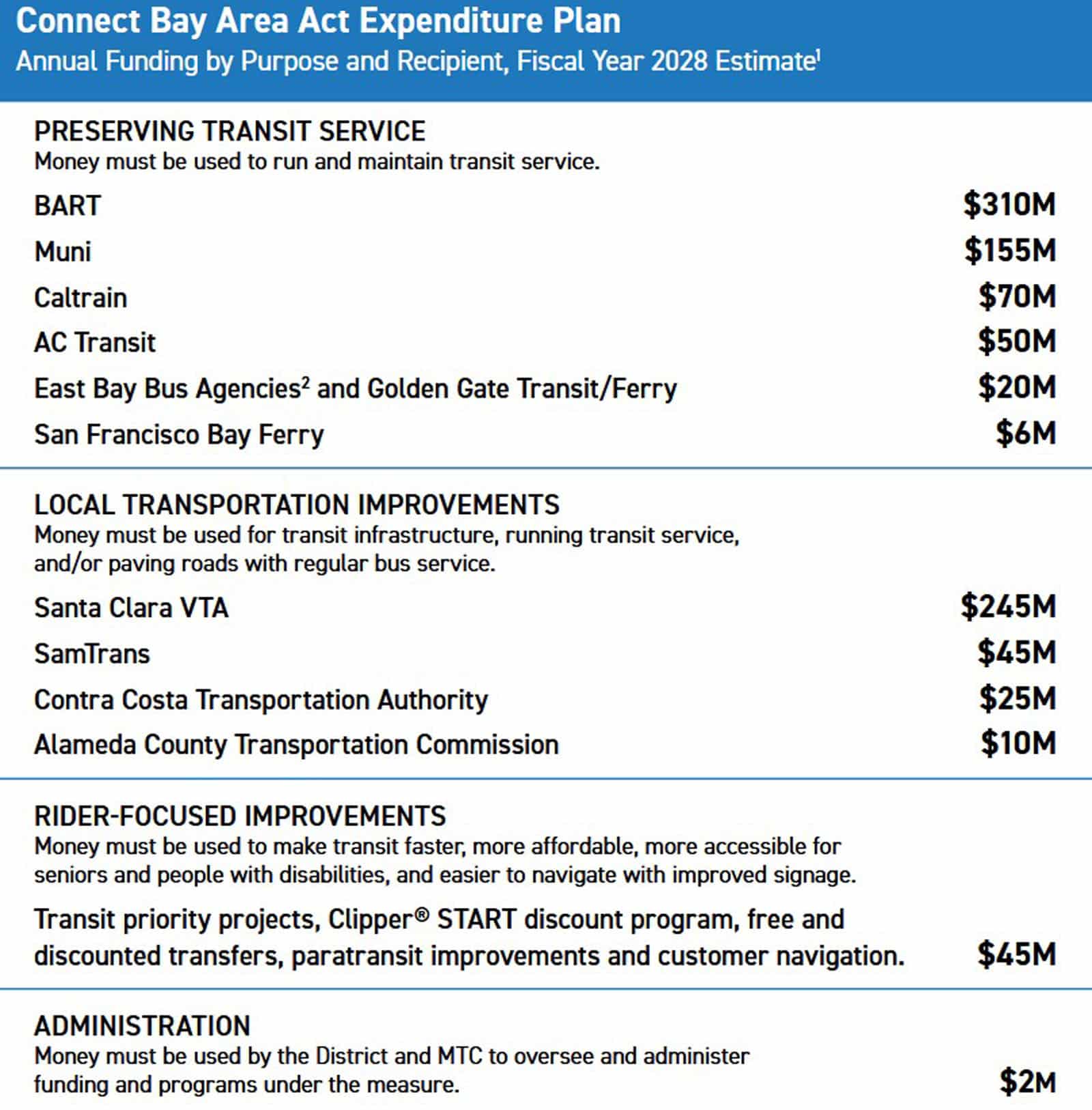
If the measure does pass, it would generate nearly $1 billion per year. The majority of the revenue would be allocated to the Bay Area’s largest transit agencies to preserve existing transit service and address budget deficits, but one-third would help fund transportation infrastructure improvements. A small portion would go towards making transit more affordable and accessible to riders. AC Transit would receive $50 million annually, an amount equivalent to its forecasted annual operating deficit beginning in fiscal year 2027-2028. Bay Area Rapid Transit (BART) would receive $310 million, which would alleviate pressure to proceed with its own alternative service plan that proposes major service reductions and even potential station closures.
AC Transit’s Contingency Service Plan comes less than a year after the agency implemented its Realign service network, itself the culmination of two years of extensive planning and public outreach to meet the needs of post-pandemic ridership habits. Now, the agency is trying to retain the new network as much as possible, primarily by spreading the proposed cuts across its service area to avoid entire route eliminations unless absolutely necessary.
However, AC Transit intends to minimize reductions to its primary network of routes with the highest ridership, including Line 51A (and overnight Line 851), which will see no changes. The table below summarizes the proposed changes for AC Transit service in Alameda, excerpted from a complete table of changes for all of the agency’s routes:


| Line | Proposal | Why is This Route Changing? |
|---|---|---|
| 19 | Line eliminated. | Line is being eliminated due to low ridership and to free up resources to preserve service in other parts of the network. |
| 30 | Reduce frequency to 40 minutes. Only operate along Park Street/ Fruitvale Avenue corridor after 7 p.m. | Frequency is being reduced to preserve service in other parts of the network and avoid eliminating entire lines. |
| 31 | Reduce frequency to 40 minutes and hours of operation to 6 a.m. – 7:30 p.m. | Frequency is being reduced and morning and evening trips with lower ridership are being eliminated to preserve service in other parts of the network and avoid eliminating entire lines. |
| 51A/851 | Lines 51A and 851 would remain the same as the current Lines 51A and 851. | N/A |
| 96 | Reduce frequency to 40 minutes on weekdays and 60 minutes on weekends. | Frequency is being reduced to preserve service in other parts of the network and avoid eliminating entire lines. |
| New Alameda East End Line | Add new weekday-only line, operating every 60 minutes, between Fruitvale BART and South Shore Shopping Center via Fruitvale Avenue, Fernside Drive, High Street, Encinal Avenue, Park Street. | Service added to provide weekday service (6 a.m. to 7 p.m.) along discontinued segments of Line O. |
| O | Operate peak direction service only; truncate to run between Bridgeside Shopping Center to San Francisco via Broadway, Santa Clara Avenue, Webster Street; on weekends, service is eliminated. | Reduce weekday service to maintain a Transbay option for the core part of Alameda during the peak commute period when passenger demand is high and eliminate weekend service to free up resources to preserve service in other parts of the network and avoid eliminating entire lines. |
| W | Eliminate one westbound AM trip & four eastbound PM trips. | Eliminate trips with lowest ridership to free up resources to preserve service in other parts of the network and avoid eliminating entire lines. |
Excerpt from AC Transit table.
Skeptics of the measure have expressed concerns about yet another sales tax increase and lamented the complicated maze that is Bay Area public transit. But a report on six East Bay transit agencies released by the California State Auditor in May had the following conclusion: “They collaborate consistently but face declining reserves, slow ridership recovery, and barriers to consolidation.”
According to the State Auditor, several initiatives are already underway to encourage ridership growth and the six agencies regularly coordinate with one another on regional initiatives or when adjusting routes and schedules. Furthermore, the report determines that “a single hypothetical transit agency combining all six transit agencies we reviewed also does not appear more financially advantageous.”
Meanwhile, AC Transit is raising fares starting July 1, the second of a two-part increase that began in July 2025. Adult single-ride fares will increase to $3.00 (or $2.75 with a Clipper card), up from the current fare of $2.75 (or $2.50 with a Clipper card).
The AC Transit Board of Directors is expected to consider approving the Proposed Contingency Service Plan during its meeting on Wednesday evening, June 10, with multiple public hearings expected in the fall. The quarterly City of Alameda – AC Transit Interagency Liaison Committee meeting will also hear this item at its meeting on Thursday morning, June 11.
Ken Der is a contributing writer for the Alameda Post. Contact him via [email protected]. His writing is collected at AlamedaPost.com/Ken-Der.

