The USS Hornet saw many memorable moments during her service. There were numerous battles against the Imperial Japanese Navy during World War II and even surviving a typhoon which tore the front of the ship off. But her proudest accomplishment came at the end of mankind’s first trip to the Moon.
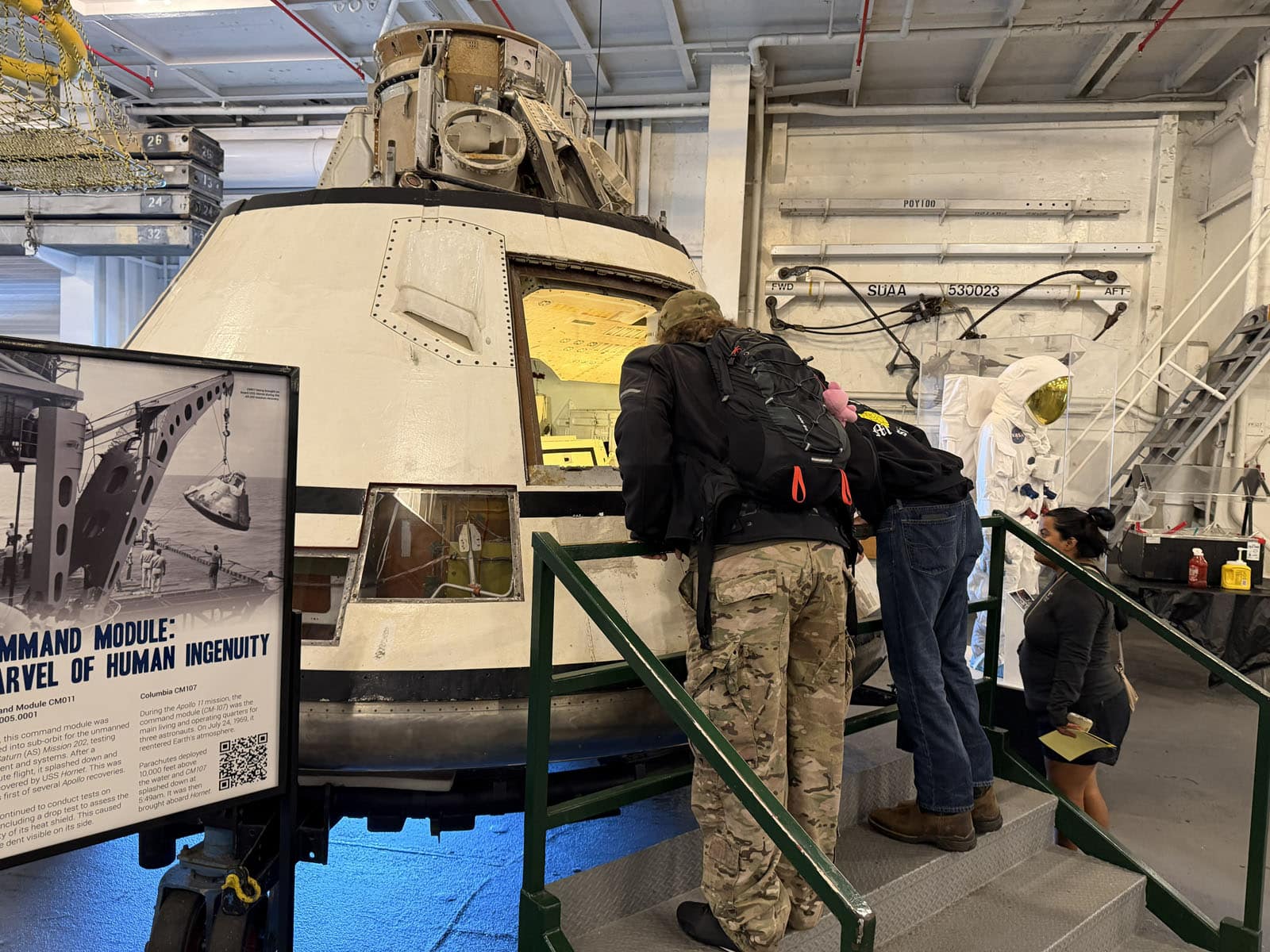
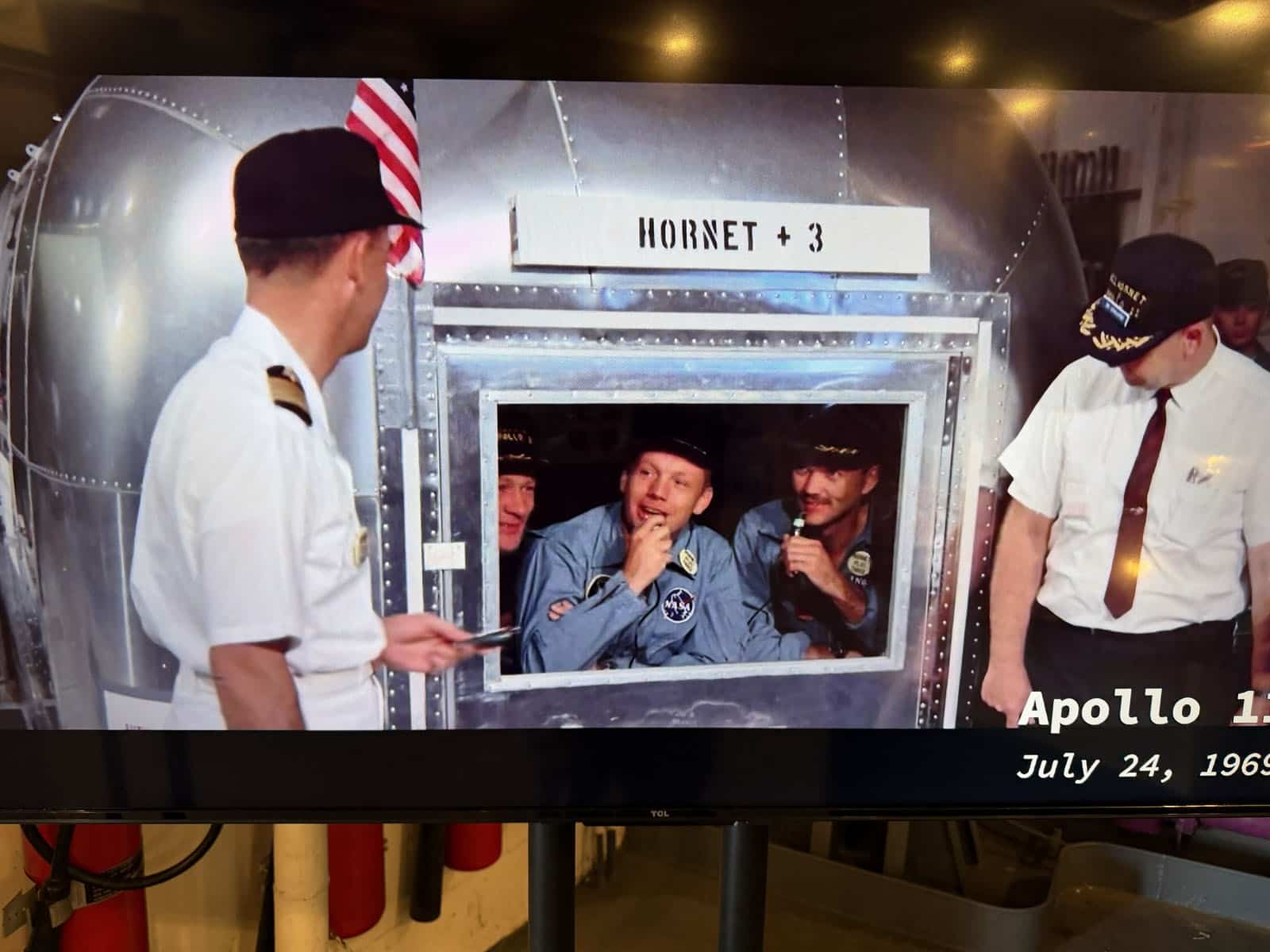
The Hornet was the recovery ship for astronauts Neil Armstrong, Buzz Aldrin, and Michael Collins after their Apollo 11 space capsule landed in the ocean on July 24, 1969.
A little more than a half-century later, on Saturday, July 8, 2026, the USS Hornet Museum held a 57th anniversary celebration to commemorate the work of the ship’s company in securing the astronaut’s safety.
Photos and videos on the ship’s hangar deck show the space travelers being lifted out of the capsule, donning biological isolation suits, and being helicoptered to the ship where President Richard Nixon was waiting to congratulate them. The astronauts were applauded as they boarded the ship, but did not shake Nixon’s hand. They were placed in a specially designed isolation trailer because space agency planners worried that they could have picked up a lunar pathogen that could be transmitted to the American public. So Nixon stood outside the trailer, smiling as the men watched through a window. After spending 21 days in isolation, it was determined that the biohazard fear was groundless.
During the commemoration of the Apollo 11 recovery, artifacts from the 1960s space program were displayed throughout the Hornet’s flight deck amid restored Navy fighter jets, a helicopter, and a World War II-era torpedo bomber. The items from the Apollo 11 lunar mission are not the original space capsules and suits that went to the moon, as those were kept by the Smithsonian Institution. Instead, Hornet staff have acquired equipment used during training for the lunar mission or during subsequent flights in the Apollo space program.
The Hornet’s restoration crew is rebuilding a Gemini program space capsule which was left in a junkyard after it had served its purpose. The interior was bare, and volunteers are recreating the instrumentation panels with information provided by the Smithsonian. The goal is to make the capsule an interactive exhibit giving children the feeling of being an astronaut in the days before high-definition displays and artificial intelligence.
“We want kids to be able to climb in, push buttons and have a sense of the day when everything was analog,” said Hornet volunteer David Flynt.


Orbiting the Earth in the Gemini capsule was no picnic. The interior is no bigger than a small closet and squeezing two men into such a small space is enough to give anyone a big case of claustrophobia.
“Two people spent 14 days in that,” Flynt said. “One of the astronauts said it was like spending two weeks with a friend in a garbage can.”
The isolation trailer that housed the Apollo 11 astronauts has its own unique history. It was equipped with bunks, an eating area, and something unknown at the time. A microwave oven. Litton industries built the device for the Apollo program, though microwaves were not available to the public until 1974.
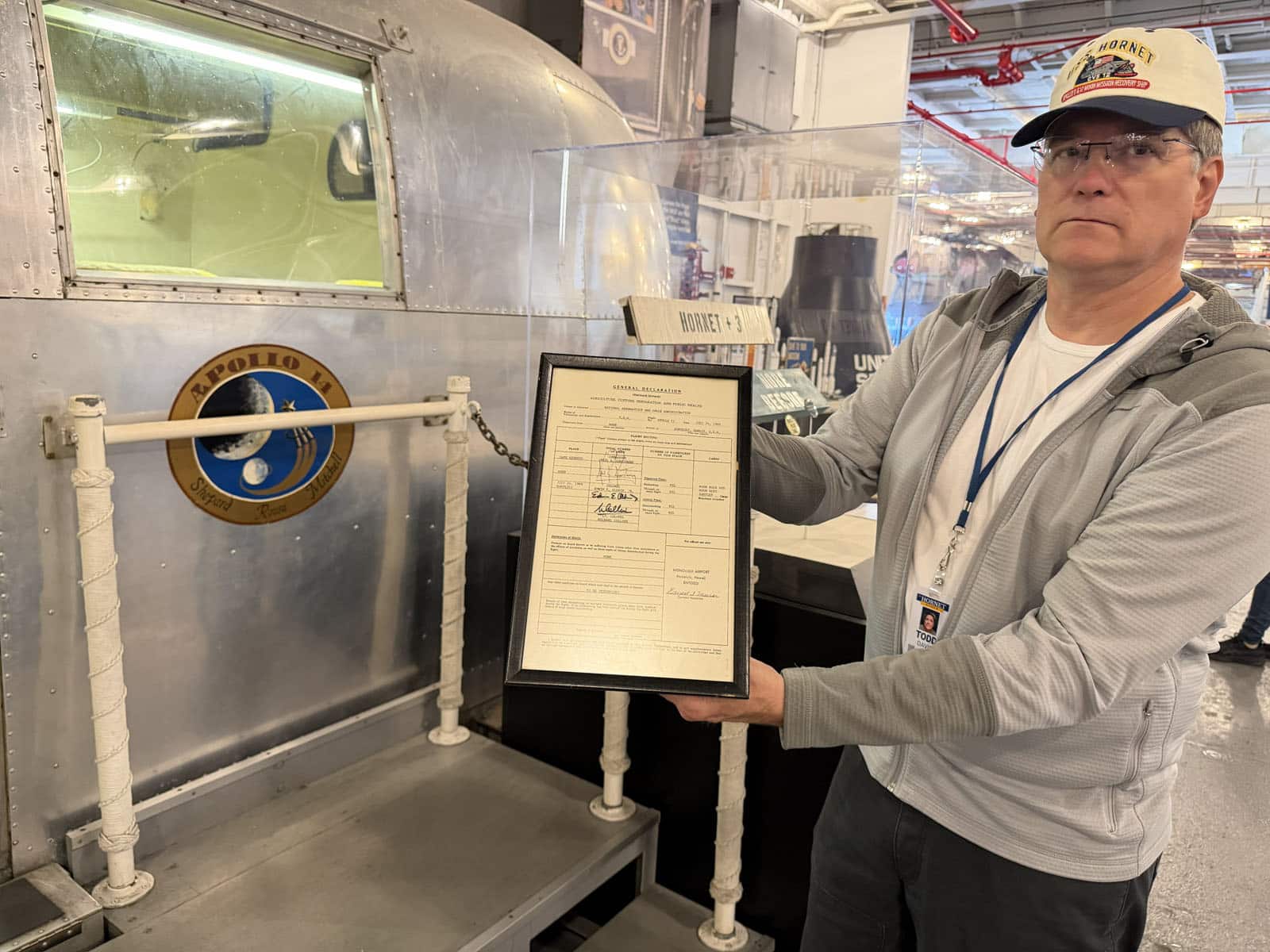
While Armstrong, Aldrin, and Collins conquered the Moon, they could not escape U.S. customs laws. Hornet archives include a copy of the customs declaration all three men were forced to sign because they had brought back Moon rocks back to Earth.
Apollo was the culmination of a decade long effort to beat the Soviet Union to the Moon. The Soviets were the first to launch a satellite around the earth and to send humans into orbit. Bill Miklos, the Hornet’s docent specializing in the space race, said the Apollo 11 commemoration event recognized the 400,000 workers nationwide who labored to make the U.S. space program successful.
Meanwhile, astronauts routinely put in 60 hour weeks preparing for missions, Miklos noted. “Once you were selected for a crew, it took a lot of professionalism and determination to get to the launch pad.”
David Boitano is a contributing writer for the Alameda Post. Contact him via [email protected]. His writing is collected at AlamedaPost.com/David-Boitano.
