The story of the Rose Cottage started all the way back in 1894, when the prolific builder team Marcuse & Remmel put up four houses in a row here on Mozart Street. One of them, 1528 Mozart, was profiled last year in the Alameda Post. And over the course of these four installments, we’ve been profiling its neighbor, 1530 Mozart, which has been lovingly and meticulously restored by homeowner Tommie Veirs. For the past 50 years, Tommie (Thomasina) has made the restoration of this Queen Anne gem her life’s work, restoring both the interior and exterior to the highest levels of Victorian-era style.
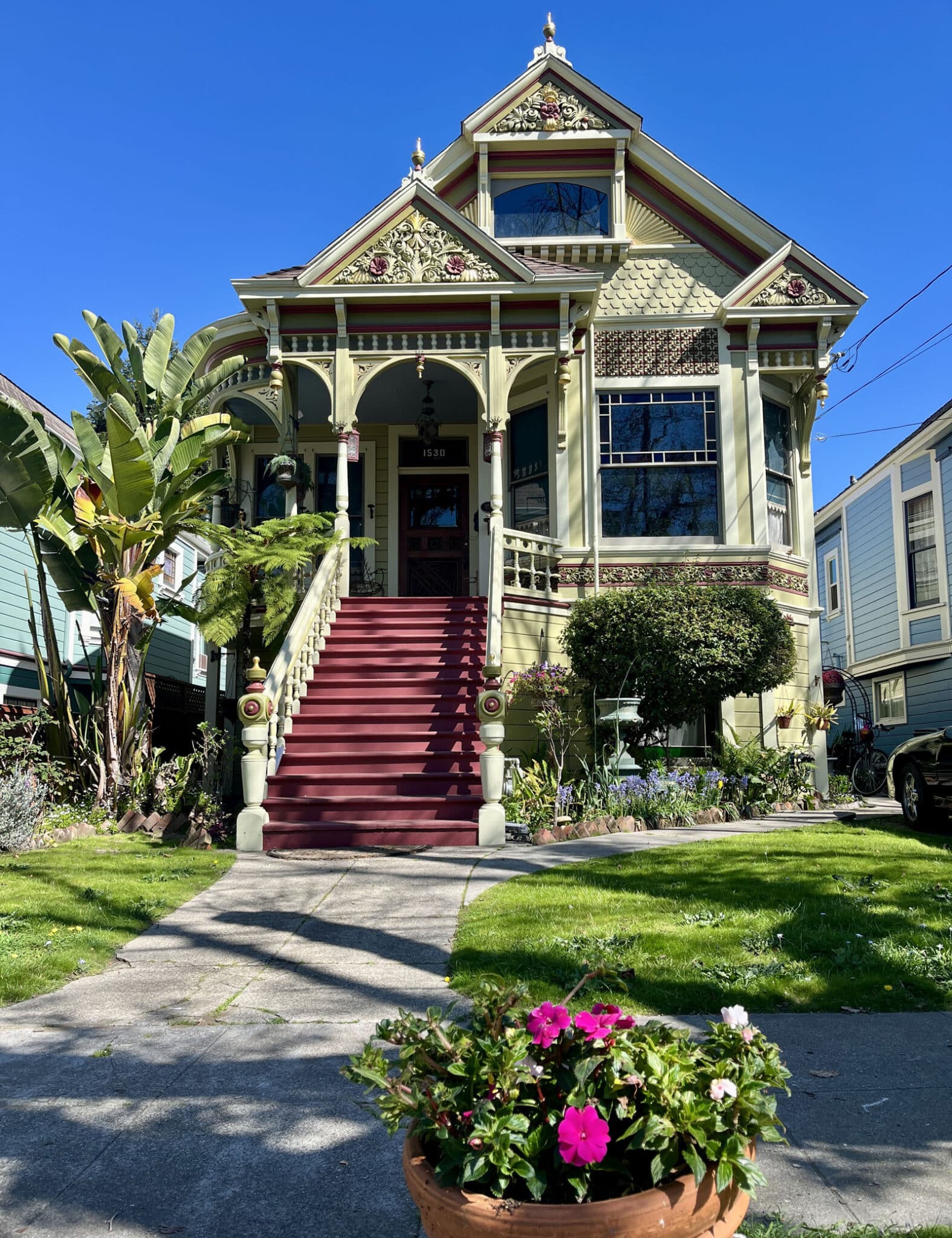
Along the way she had lots of help from a talented team of carpenters, painters, plasterers, and artisans of all kinds. Just as Tommie has developed a long-term relationship with her 132-year-old house, she’s also developed long-term relationships with the team of tradespeople who have restored her home to the condition it’s in today.
Help from Felix Marcuse
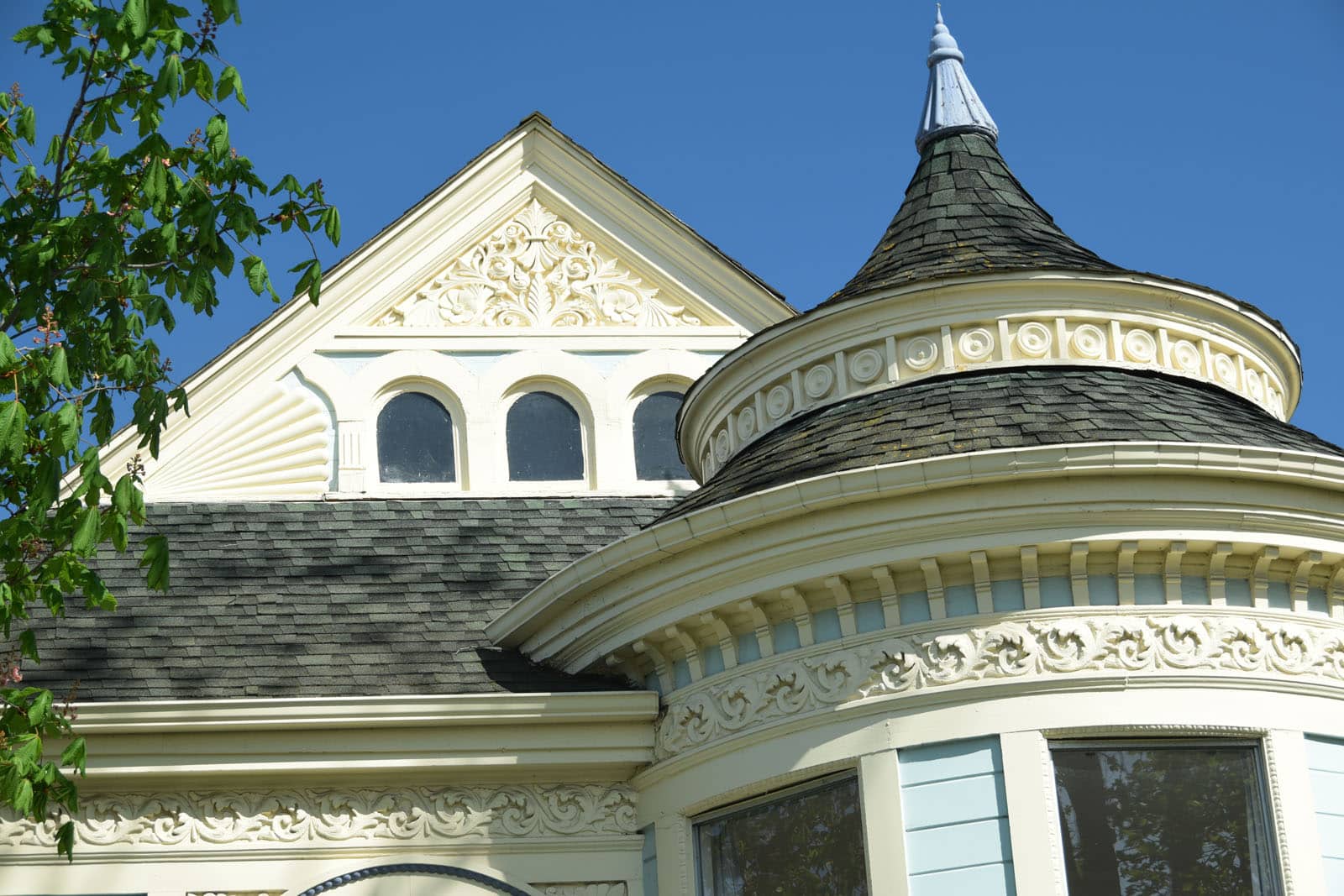
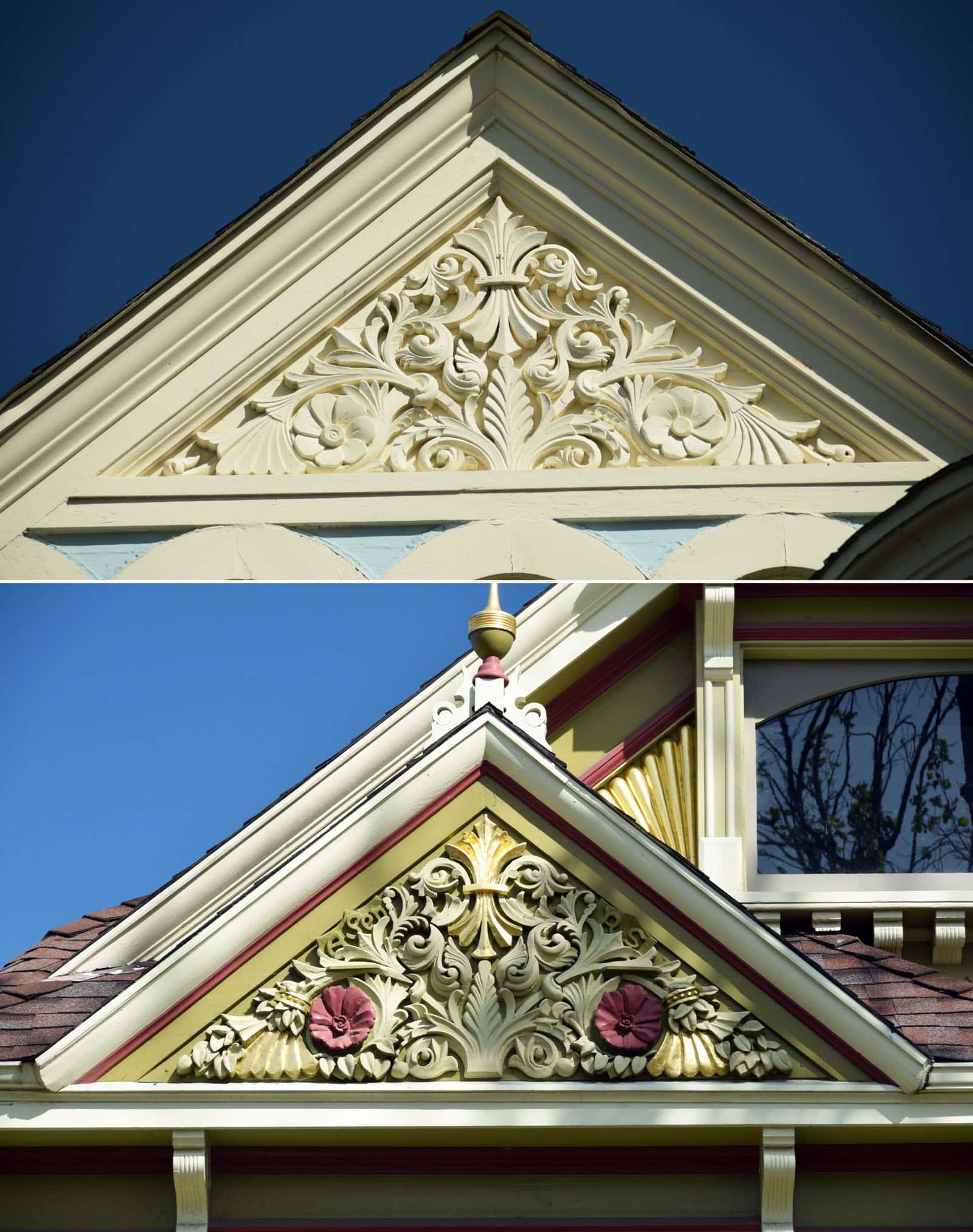
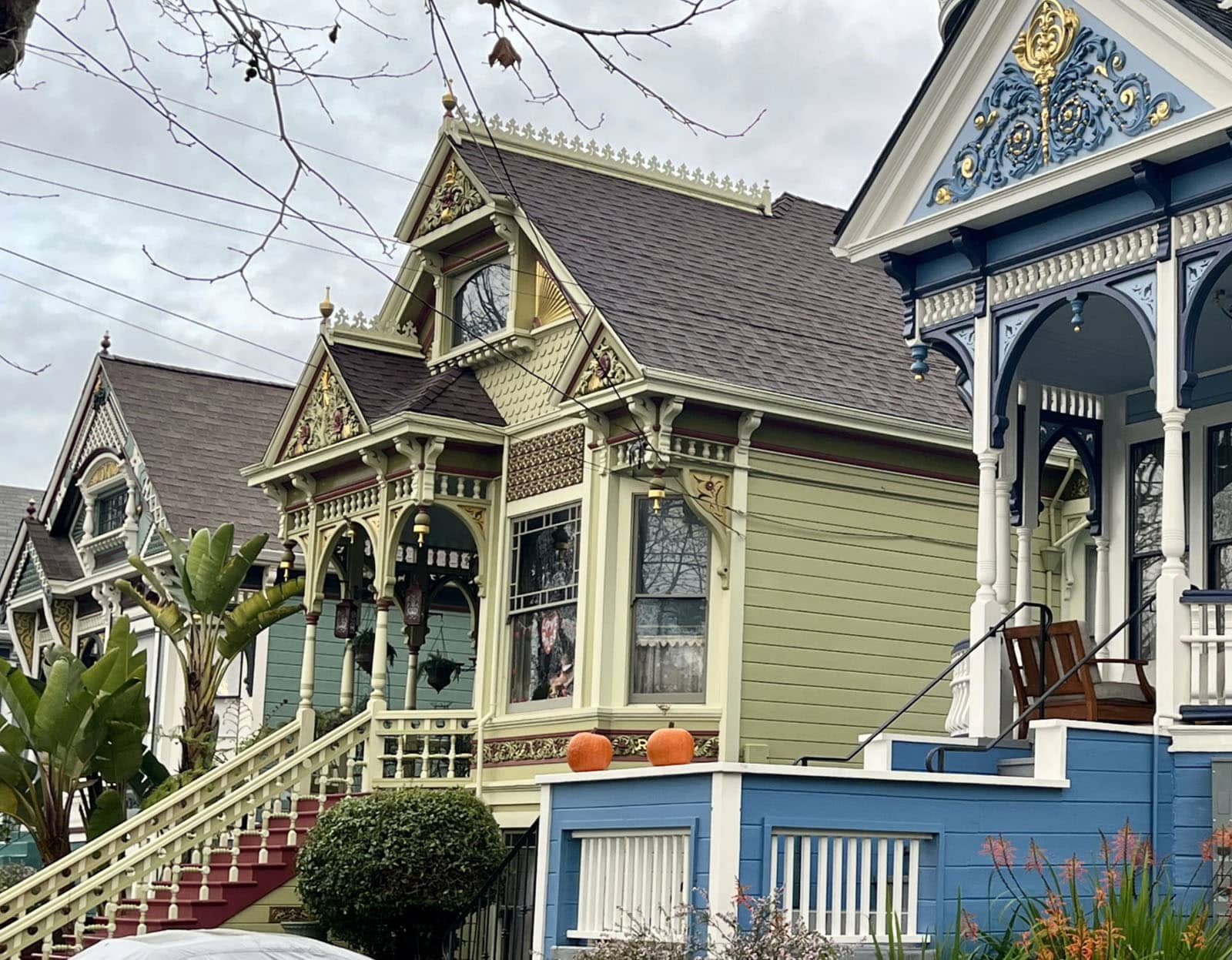
When restoring the façade of 1530 Mozart, some of the decorative elements were so damaged, deteriorated, or even missing, that they had to be re-created from scratch. Striving to be historically accurate, Tommie did what many restorers do—she sought out a comparable Marcuse & Remmel house in the neighborhood as a model for some elements of her restoration. But Tommie didn’t pick just any M&R house; she went straight to the source and sought out Felix Marcuse’s own house, at 1556 Verdi Street, just one street over from hers. Marcuse had this unique home built for himself by his own company in 1893, and it has a very special double-roofed corner tower that I’ve not seen anywhere else in town. The fact that Tommie’s house has a matching triangle gable design to Marcuse’s own house is a sign of her dedication to authenticity of design.
A discovery
When Tommie and her husband Tom first bought their house in 1976, they thought about how convenient it would be to have a pass-through window from the kitchen to the dining room, but other projects took precedence and they never got around to it. It wasn’t until 2021, when Tommie was cleaning out a kitchen closet that had once been the water heater closet, that she discovered that her home actually did once have a pass-through window. At the back of the closet she found a window frame, along with cutouts for ropes and pulley weights. It was then that she realized that this closet once contained the original kitchen-to-dining room pass-through window, which had been replaced by a water heater at some point. With the water heater long gone, Tommie had been using it as a storage closet for crafts and restoration supplies.
Never say no
“I decided I wanted to put the pass-through back,” Tommie noted. “On November 14, 2021, I had an appointment with Tom Wolter, lead carpenter for the 2014 restoration of my home’s exterior. Tom was the one person who would never say no to my crazy ideas. He would find a way.”
The first issue Tom encountered was knob-and-tube wiring in the way of the spot where the pass-through window needed to be. That wiring had to be re-routed.
An unexpected gift
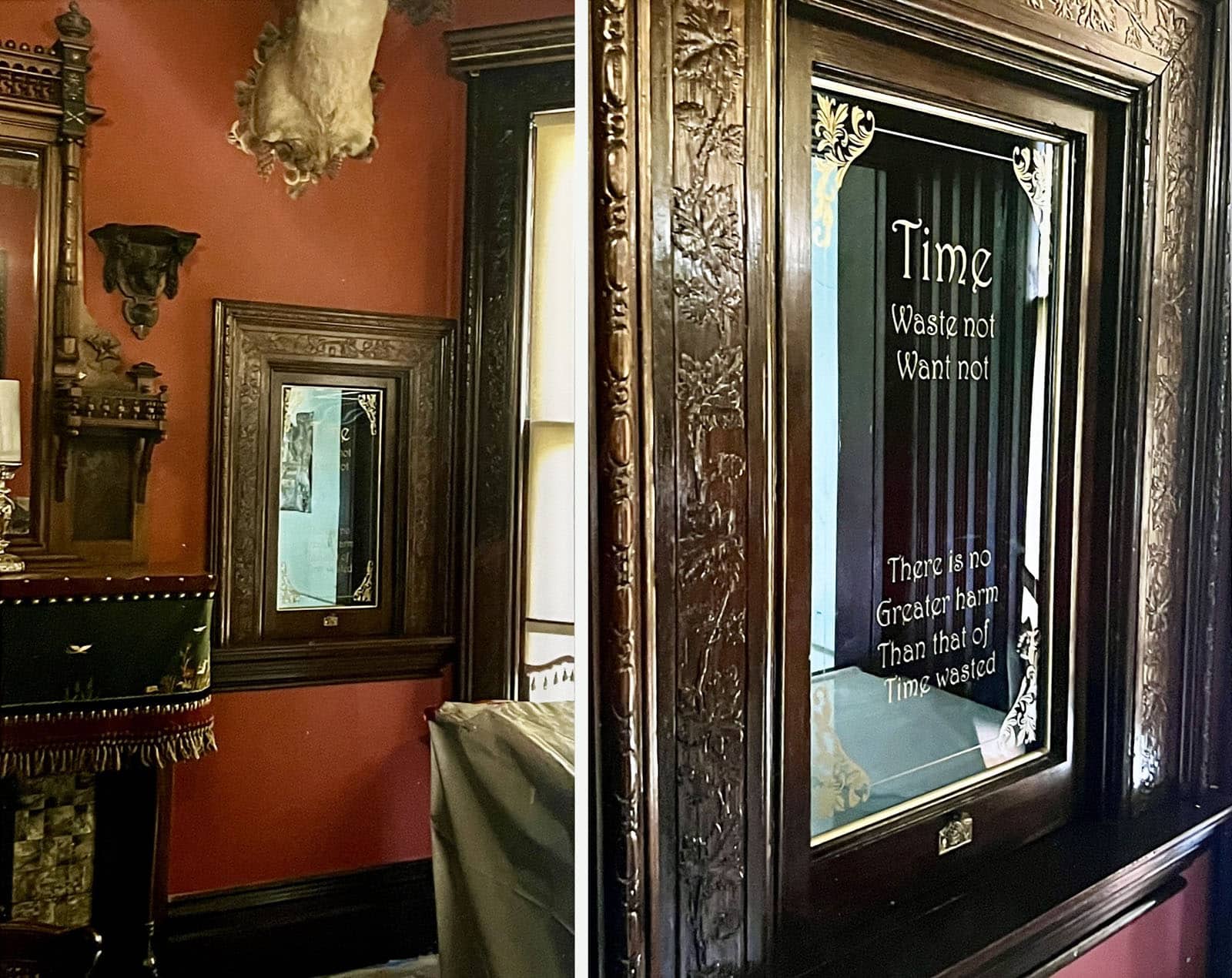
Over the course of eight months, the former closet was turned into a framed box, complete with an interior platform, a restored window, and even matching Marcuse & Remmel pressed-wood casing. Tommie described how that “impossible to find” original casing was found. “The door casing really needed to match the rest of the woodwork in the dining room—a pressed grape leaf pattern which Marcuse & Remmel used for several years and was impossible to find today. Many years back I had mentioned my pass-through fantasy to Virgil and Margie Silver, who had the same woodwork in their house. A short time later, the Silvers showed up with three pieces of casing with the grape leaf pattern, tied together with a big bow.”
Ben Franklin and Michelangelo
After the pass-through project was finally done, Tommie felt it still needed a finishing touch. Since the whole idea of the pass-through was to save time, Tommie decided to feature appropriate quotes from Ben Franklin and Michelangelo, with the lettering created by Fast Signs and applied to the glass using gold decals. The quote from Ben Franklin reads, “Time – Waste not want not” and the quote from Michelangelo Buonarroti is, “There is no greater harm than that of time wasted.” Looking around Tommie’s circa 1894 Victorian-era home, one can see evidence everywhere of time not wasted.
One thing leads to another
As with many home improvement projects, once you do one thing, it leads to the next. With her nice new pass-through window installed, Tommie looked around the dining room and decided that the ceiling and walls needed restoration too. The wallpaper on the ceiling was splitting and peeling, and the lath and plaster walls had cracks and other damage.
“I contacted Myron Olson of Olson’s Painting,” Tommie said. “His workers had done a fabulous job painting the house’s exterior and I respected and trusted his work. We came up with a start date of December 20, 2021.”




An old medallion unearthed
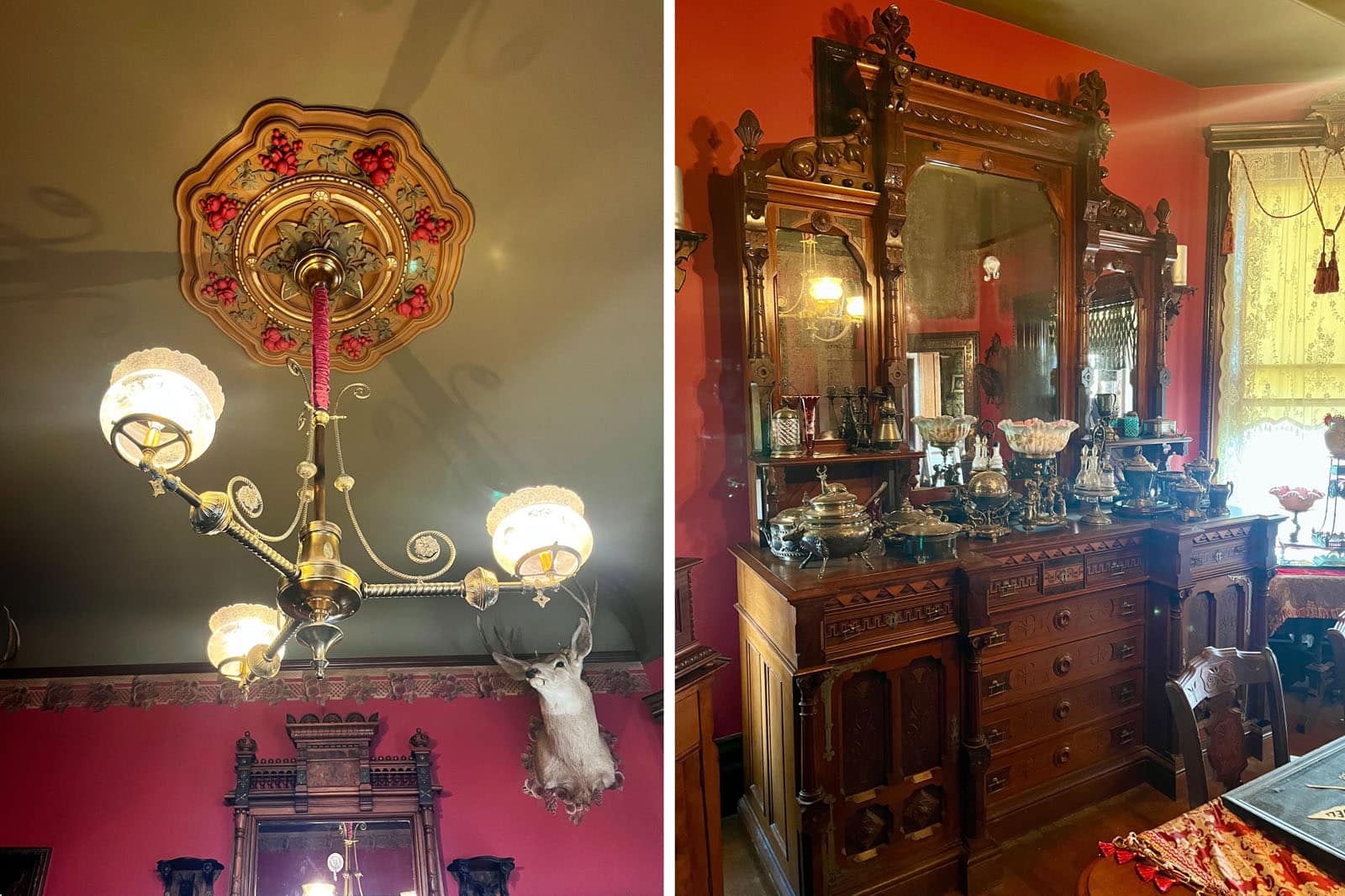
When Tommie and Tom first bought the house back in 1976, there was no ceiling medallion in the dining room. Then, when the house was going to be photographed for the book Victorian Splendor, they put up a piece of Bradbury wallpaper as a temporary medallion. At around that time (1981), a five-part ceiling medallion was purchased from Victoriana, but that medallion remained in the basement until November 2021, when it was finally brought upstairs for installation. After 40 years in the basement, the medallion needed a month of cleaning, sanding, vacuuming, and priming before Tommie could begin painting it. In March 2022, Myron Olson’s team began installing the now-vintage medallion that had been purchased from Victoriana more than 40 years earlier, in its rightful place in the center of the newly painted dining room.
The unending restoration
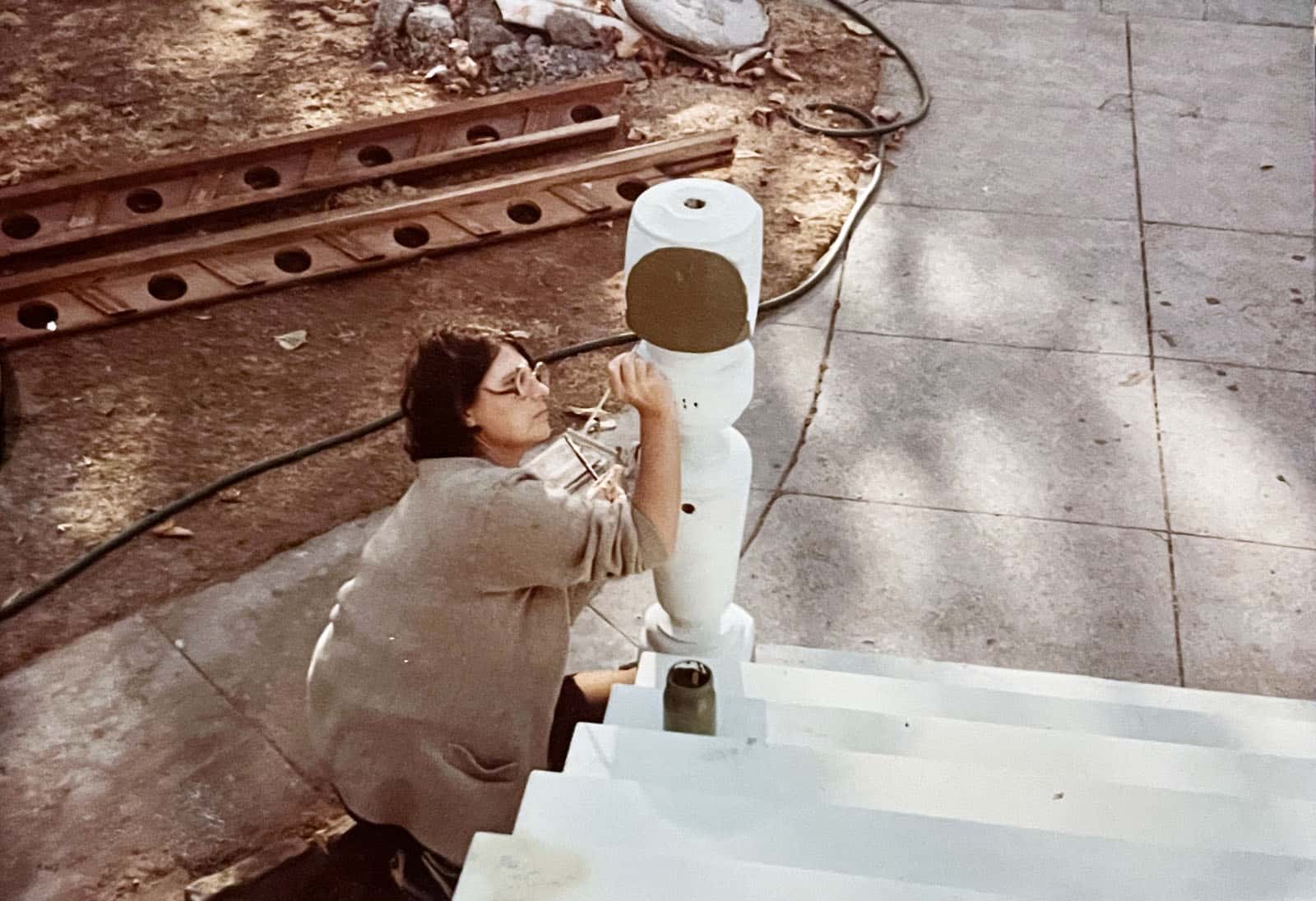
As each project finished, Tommie set her sights on the next one. It seems that restoring and preserving a Victorian-era house is not something that’s ever fully done—it’s more of a lifetime commitment. Part of restoring the ceiling in the dining room involved taking down the antique gaslight-style light fixture, so Tommie called her friend, local preservationist Bob Farrar, to ask if he knew someone who could take down the fixture for her. Bob showed up the next day, and not only did he take down the fixture, but he also offered to rewire it so it would be safe for the next hundred years. Tommie lists this as an example of how kind people can be, and how much support she’s received for her project of restoring her classic Marcuse & Remmel home.
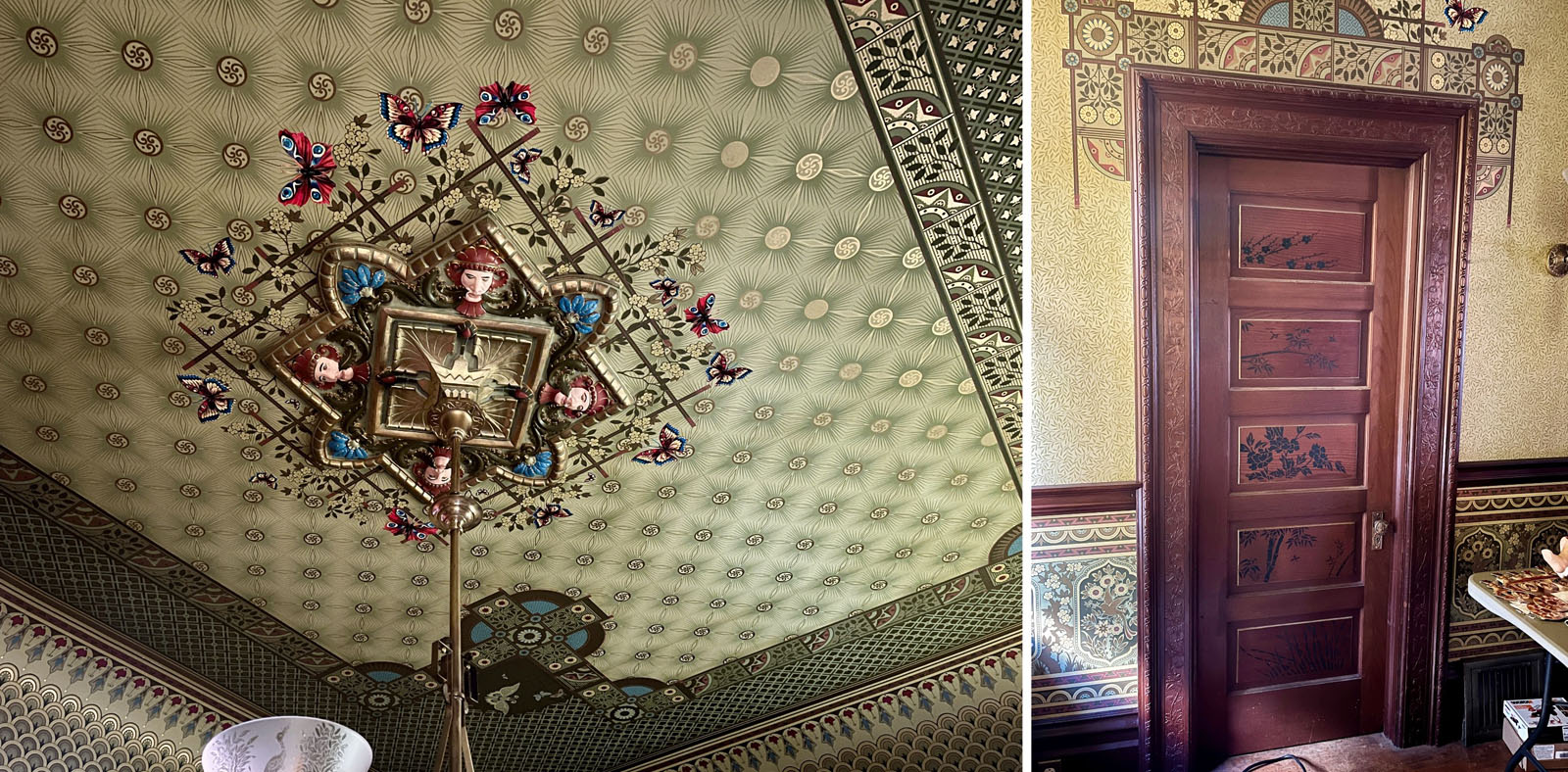
Many other projects were completed, including installing antique border paper on the walls (manufactured in Germany about 1890), and ordering fringed window shades in colors to match the border paper. Those were procured from “Diane’s Shade Shop”, as Tommie calls it. Long-time Alamedans will remember the Shade Shop, which did business on Central Avenue for many years and is now an online business.
Better than ever
The house that Felix Marcuse and Julius Remmel built in 1894 probably looks just as good or even better now than it did 132 years ago when it was brand new. The work that Tommie Veirs has put into this house over the past 50 years is evident everywhere you look, from the ornate façade to the Renaissance Revival style of the interior rooms, to the period furniture and art she has collected. She even restored the roof cresting, an architectural element often missing even on restored Victorian-era homes. Tommie has also honored the past residents of her home by naming it the Rose Cottage, in honor of its first owners, the Roses, and has worked the artwork of second owner Anna Munro into a design for an elaborate ceiling border in the front parlor (see Part 3).
A long legacy
The Rose Cottage has had only four owners in its long history, and Tommie Veirs is closing in on the record for the longest ownership yet. At 50 years and counting, she has not yet eclipsed the 57-year ownership of the Munro family, but there is no doubt she’s committed to not only matching but exceeding that record. After all, the project is not done—there is still more to do. Next on the list is restoring the kitchen back to something resembling its 1894 style, with a nod towards modern convenience, of course.
Every house tells a story
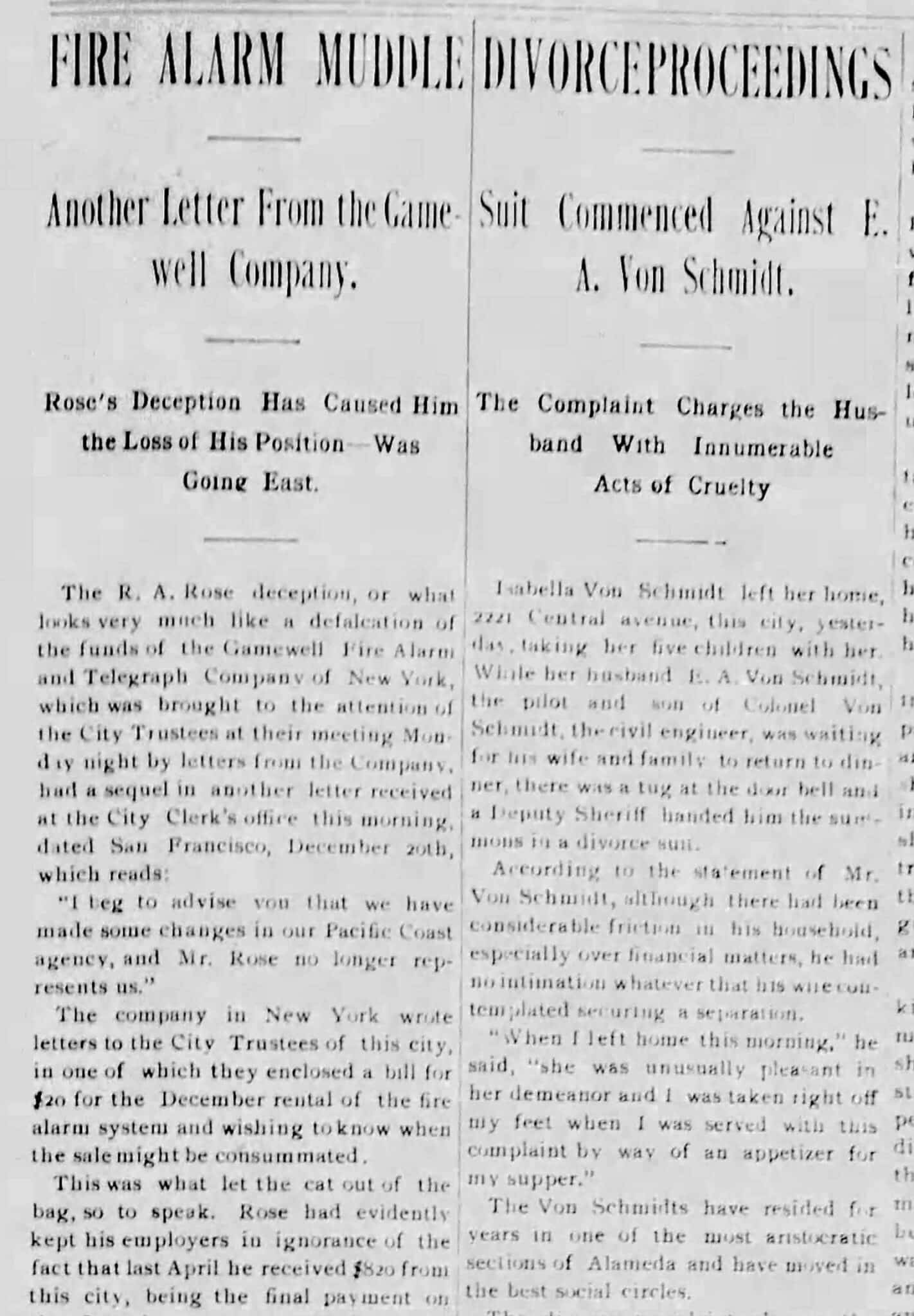
I like to say that every house has a story to tell, and the Rose Cottage is no exception. Its first owner, Robert A. Rose—who got involved in a “Fire Alarm Muddle” that gripped Alameda readers in the late 1890s with a series of newspaper articles reporting on his defalcation of funds from the Gamewell Fire Alarm Company and his subsequent disappearance—ultimately lost the house in a foreclosure sale in 1903.
Reuben Munro passed away in San Francisco on August 10, 1900, at just 53 years old. The death of the patriarch of the family eventually led the Munro family to move to Alameda, where they purchased 1530 Mozart Street in 1904. An announcement appeared in The Daily Encinal on May 18, 1904 stating, “The Commercial Loan & Trust Company has deeded to Alice E. and Anna I. Munro property on the east side of Mozart Street, 250 feet south of Railroad Avenue, 37.6 x 150, $10.” Thus began the residency of the Munro family at 1530 Mozart Street, a period that would last all the way to 1961, when the Beberness family would enter the story, and begin a 15-year residency of their own.
Finally, in America’s bicentennial year of 1976, Tom and Tommie Veirs pulled up in front of 1530 Mozart and experienced love at first sight. That love affair continues to this day, and we are fortunate that Tommie has been so generous in sharing the story of the Rose Cottage with Alameda Post readers, and that she has preserved this Alameda Treasure for all to enjoy as they walk or drive down Mozart Street.
A new appreciation
After completing one of these Alameda Treasures series, I can never look at a house in the same way again. I have a new appreciation for its history, the people who lived in it, all the things that happened there, and the sheer amount of work and dedication it took to bring it to the condition it’s in today. In this way, each story takes a house from “taken for granted” and turns it into “love and appreciation,” and for that I am grateful to all the Alameda homeowners who have shared their treasures with us.
Contributing writer Steve Gorman has been a resident of Alameda since 2000, when he fell in love with the history and architecture of this unique town. Contact him via [email protected]. His writing is collected at AlamedaPost.com/Steve-Gorman.

