When we last left off in Part 2, the Rose family had lost their home at 1530 Mozart Street in a foreclosure sale in 1903. The Roses had been living in San Francisco since 1898, but had been renting out their Mozart Street home. They were the very first owners of this house, but some financial malfeasance on the part of Robert A. Rose against his employer, the Gamewell Fire Alarm Telegraph Company, had cost him his job.

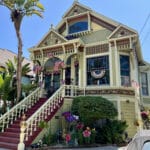
Roses still bloom in Alameda
It was reported that the Rose family might be moving to the East Coast, but a story in the Alameda Times Star, dated August 13, 1906 reported on a streetcar accident in Oakland involving the Roses. According to the story, “The numerous Alamedans among the 23 persons hurt in the street car accident at Fortieth street, Oakland, yesterday afternoon when a Telegraph avenue car was struck by a Key Route train, are comfortable this morning and no fatal consequences are apprehended. Among the Alamedans in the car were… Mr. and Mrs. R. A. Rose of 2253 San Antonio.” This story tells us that despite the setback experienced by Robert A. Rose due to his job loss and foreclosure on his home, the family had landed back on their feet, did not move to the East Coast, and were living on San Antonio Avenue by 1906. Perhaps it was the catastrophic San Francisco earthquake and fire of April 1906 that caused the Rose family to move back to Alameda, as many did.
The Munro era
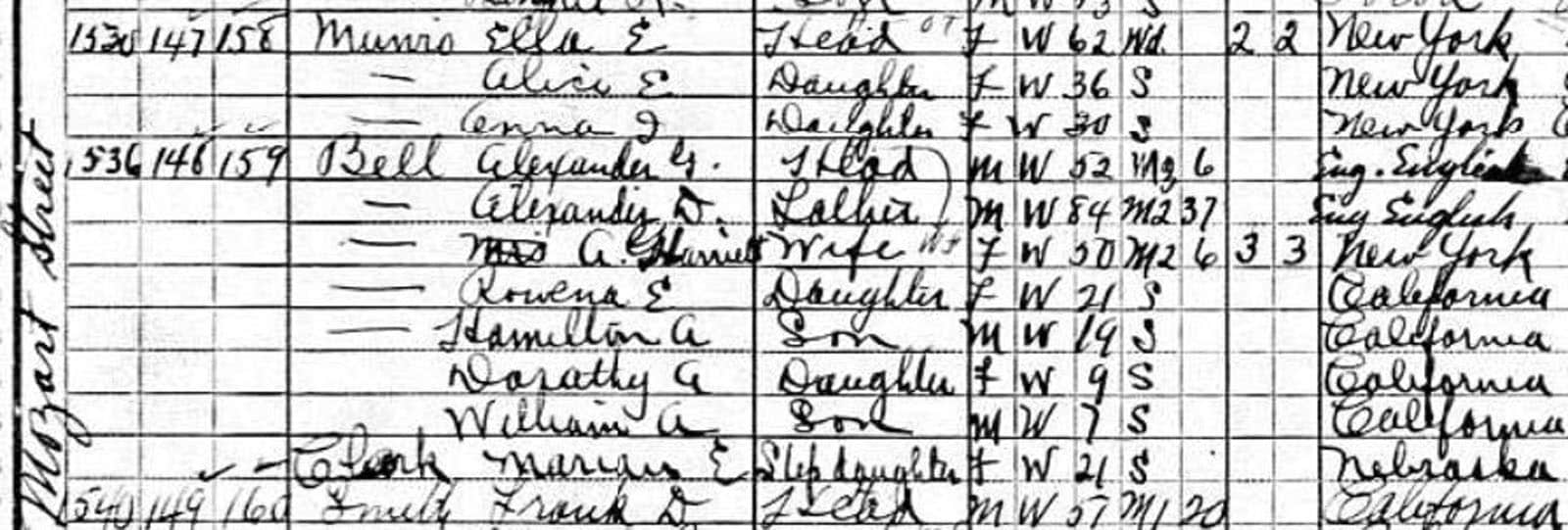
With the Roses settled on San Antonio Avenue, just a mile-and-a-half from their old house in Alameda, it was time for a new chapter to begin for the Mozart Street house. The Munro family, Rueben and his wife Ella, and their two daughters Alice and Anna, had been living on California Street in downtown San Francisco. City directories from the early to late 1890s show Reuben engaged in a number of different jobs over the years, including car repairer, car builder, refrigerator builder, and carpenter for the Market Street Railroad.
Unfortunately, Reuben Munro passed away on August 10, 1900, at just 53 years old. His obituary in the San Francisco Examiner remembered him as a native of Canada (having emigrated to the U.S. in 1865), and as the beloved husband of Ella E. Munro, and father of Alice E. and Anna I. Munro. Interment was to take place at Cypress Lawn Cemetery in Colma.
A move across the bay
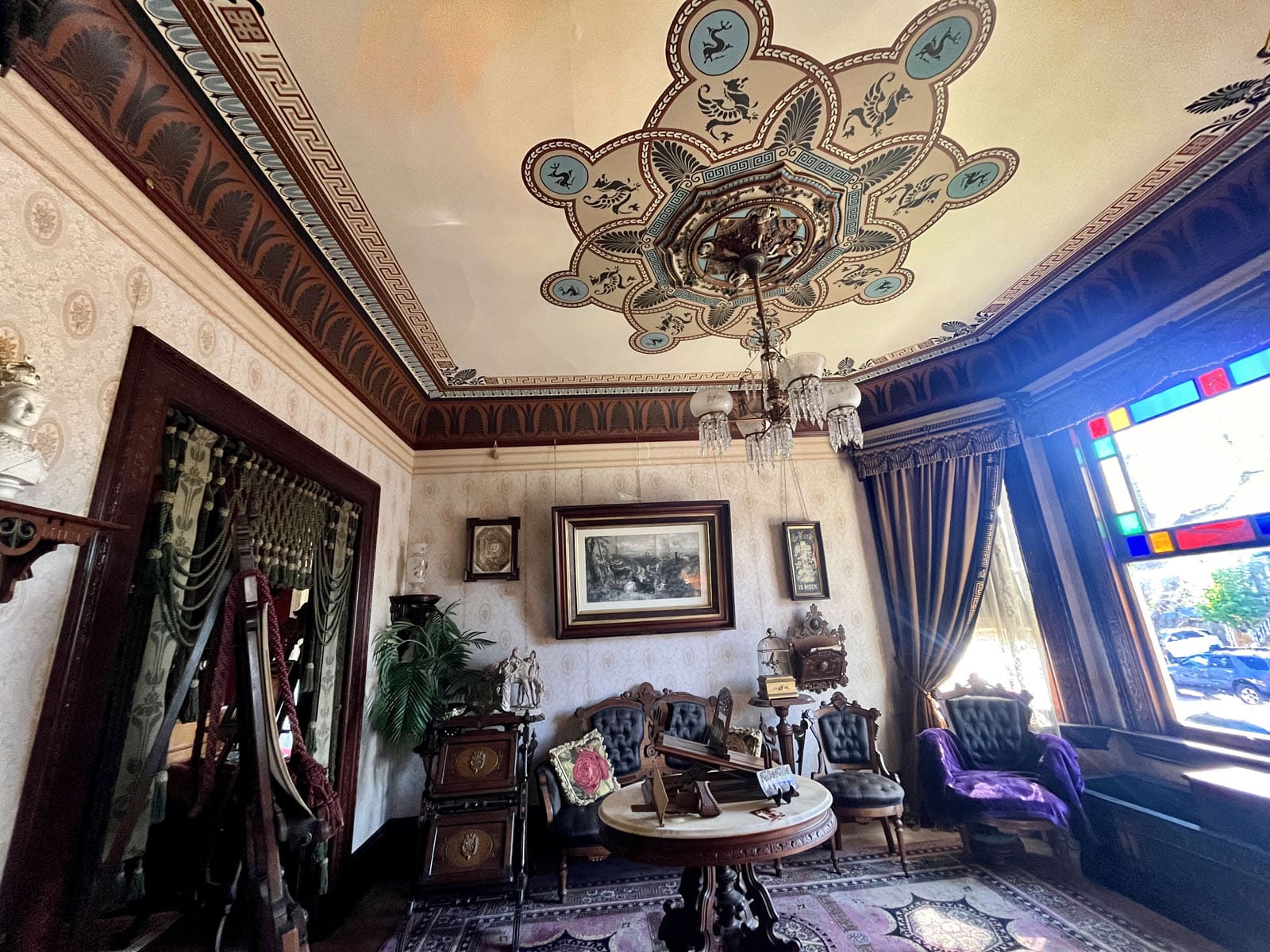
The death of the patriarch of the family eventually led the Munro family to move to Alameda, where they purchased 1530 Mozart Street in 1904. An announcement appeared in The Daily Encinal on May 18, 1904 stating, “The Commercial Loan & Trust Company has deeded to Alice E. and Anna I. Munro property on the east side of Mozart Street, 250 feet south of Railroad Avenue, 37.6 x 150, $10.” This announcement is interesting in a couple of ways. For one, the property was being deeded to the daughters, not their mother. This could be because Alice and Irene were working as bookkeeper and stenographer, respectively, and as such were considered the breadwinners of the family, whereas their 65-year-old mother Ella was likely retired at that time. The other interesting element is the $10 amount listed, which is equivalent to about $367 in today’s dollars. Could that have been a small down payment on the house, made to the company holding the mortgage? The house originally sold for $2,900 in 1894, so the selling price in 1904 would likely have been well over $3,000.
Life on Mozart Street
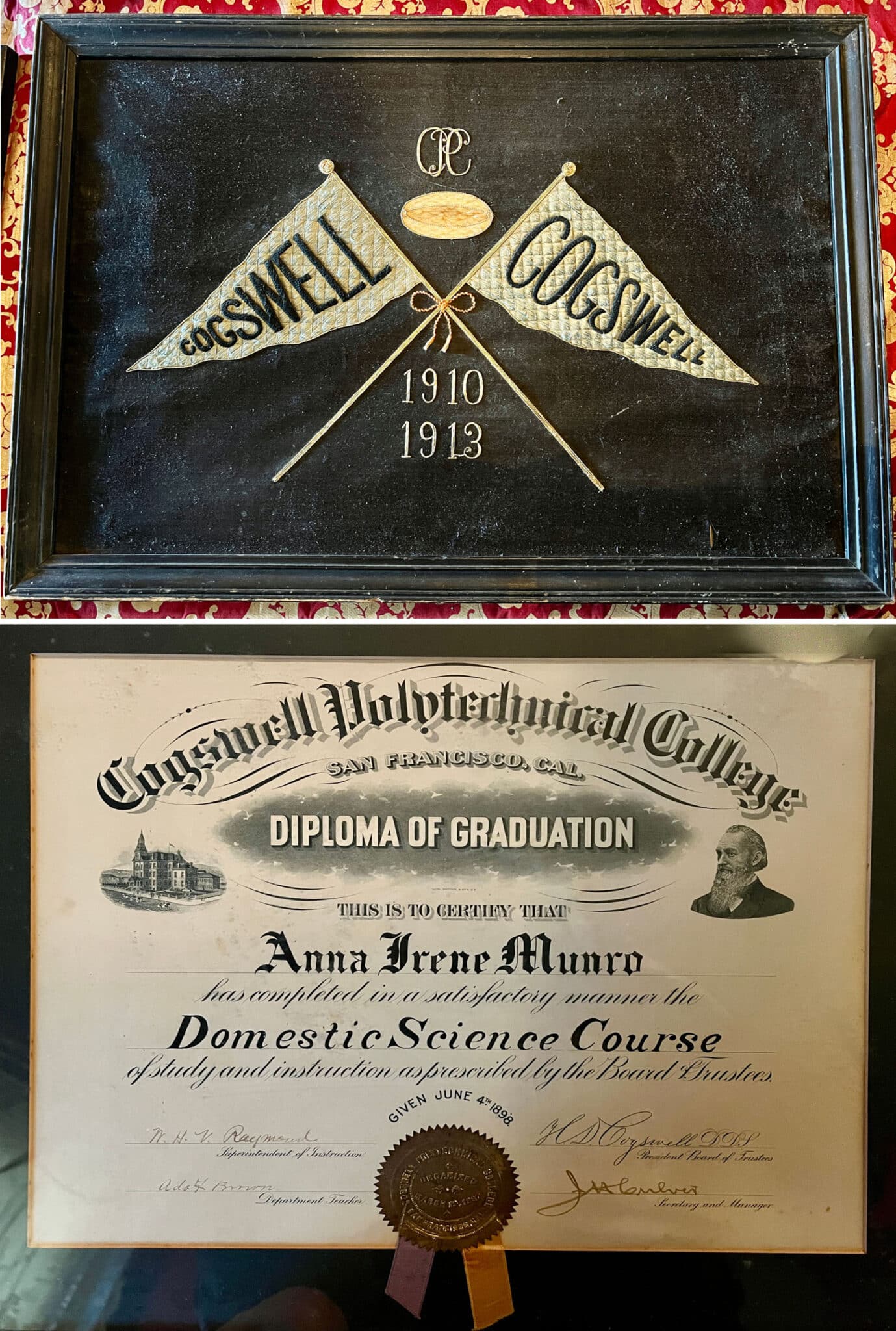
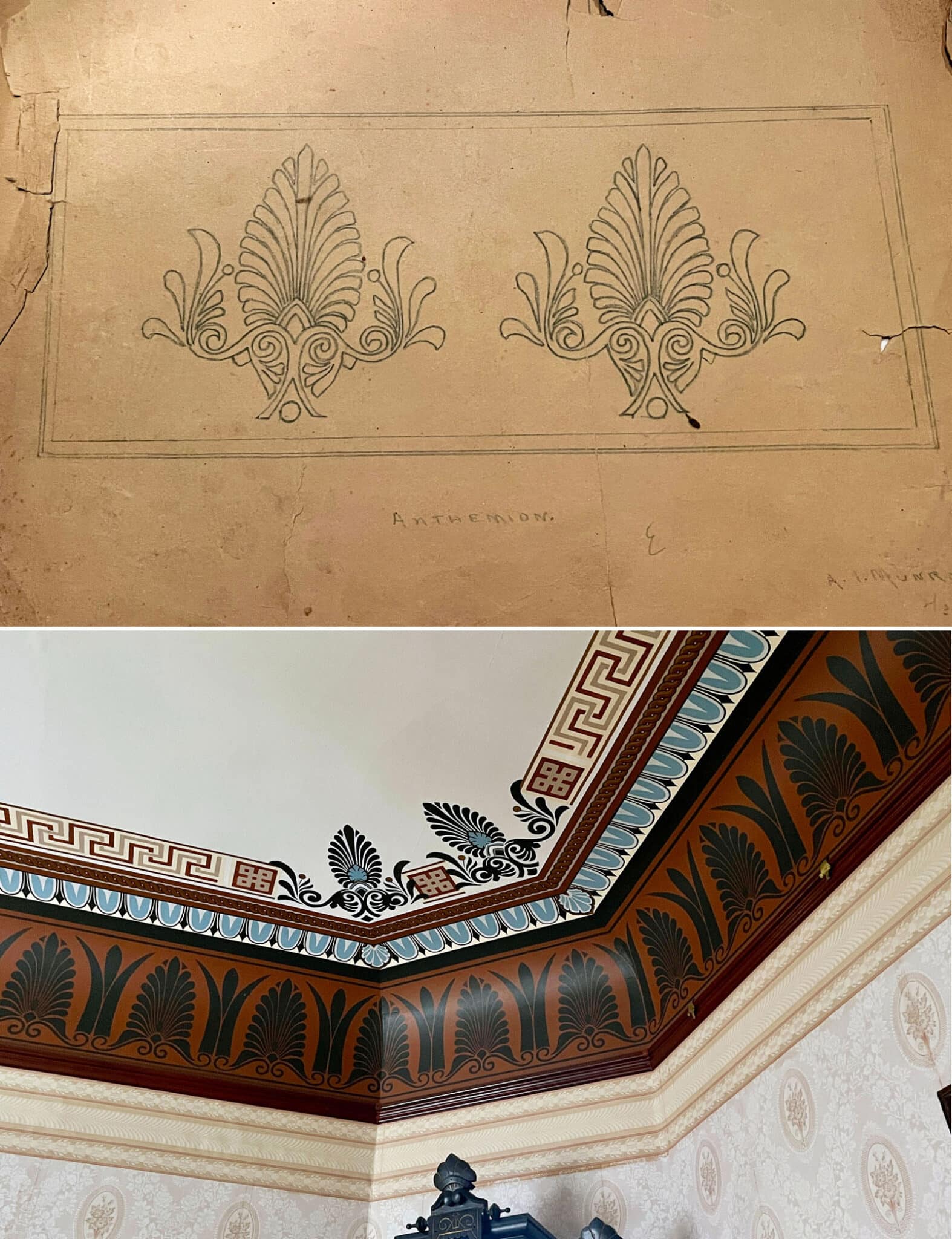
Census records tell us that the elder sister, Alice Evelyn Munro (1874-1938), worked as a bookkeeper for a wholesale produce company. The younger sister, Anna Irene Munro (1879-1961), worked as a stenographer for what the 1910 census listed as a “bag company.” The daughters apparently never married, and lived in the family home on Mozart Street their entire lives. The Munro sisters were educated, with Anna having graduated from Cogswell Polytechnic College in San Francisco in 1898, and Alice graduating from Heald Business College in Oakland in 1901.
The Munro daughters worked hard, but they also enjoyed vacations, sometimes with their mother. An announcement in the Alameda Times Star on June 2, 1911, informed readers that, “Mrs. Ella E. Munro, Miss Alice, and Miss Anna Munro will spend the summer in Mill Valley, where they have a country place. They left this week for Marin county.”
The following year, in September 1912, the Alameda Times Star once again announced a Munro vacation, stating, “Miss Alice E. Munro and Miss Anna I. Munro have left for Dutch Flat, where they will spend the next two weeks.”


Ella Munro dies at home
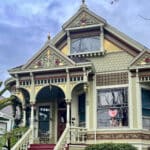
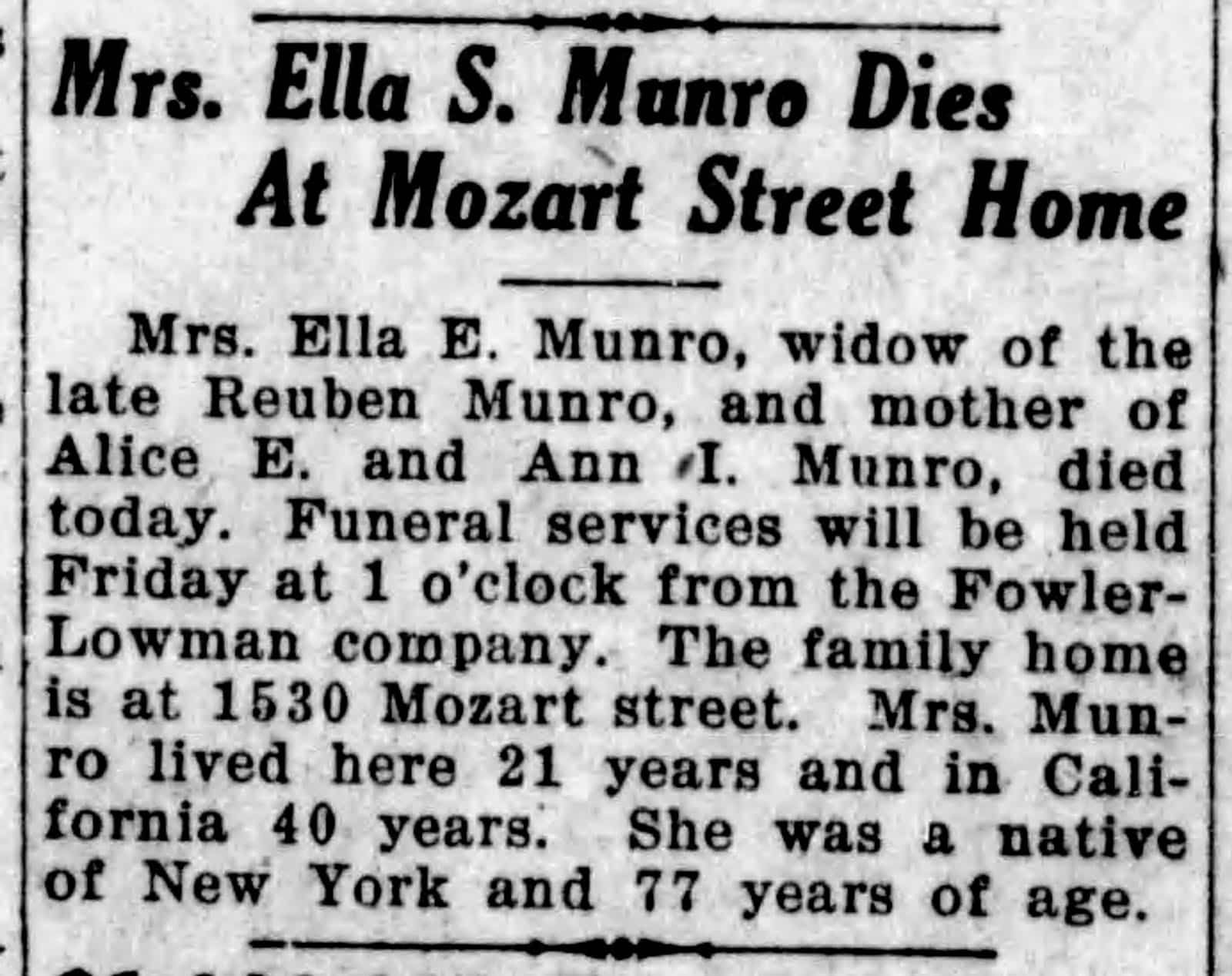
On December 10, 1924, Ella E. Munro, widow of the late Reuben Munro and mother of Alice and Anna Munro, died at home on Mozart Street. An obituary in the Alameda Times Star stated that Ella lived in Alameda for 21 years, and in California for 40 years. She was a native of New York and was 77 years old.
The Munro sisters carry on
With the death of their mother Ella, the sisters Alice and Anna, who were then 50 and 45 years old, respectively, continued on as residents of Mozart Street, living in the house that would one day be called the Rose Cottage. They continued to work, take vacations, get involved in local civic organizations, and support the Boy Scouts during its annual funding drives. They were part of the fabric of life in Alameda, and on Mozart Street
Death on Mozart Street
Alice died in 1938 at 64 years old, and Anna went on to live 23 more years in the house, all the way until 1961, reaching the oldest age of anyone in her family, 82. The Munro era at 1530 Mozart Street was a long one, spanning the years 1904-1961. Their 57 years of stewardship was coming to an end, opening the door on the next era.
A new chapter
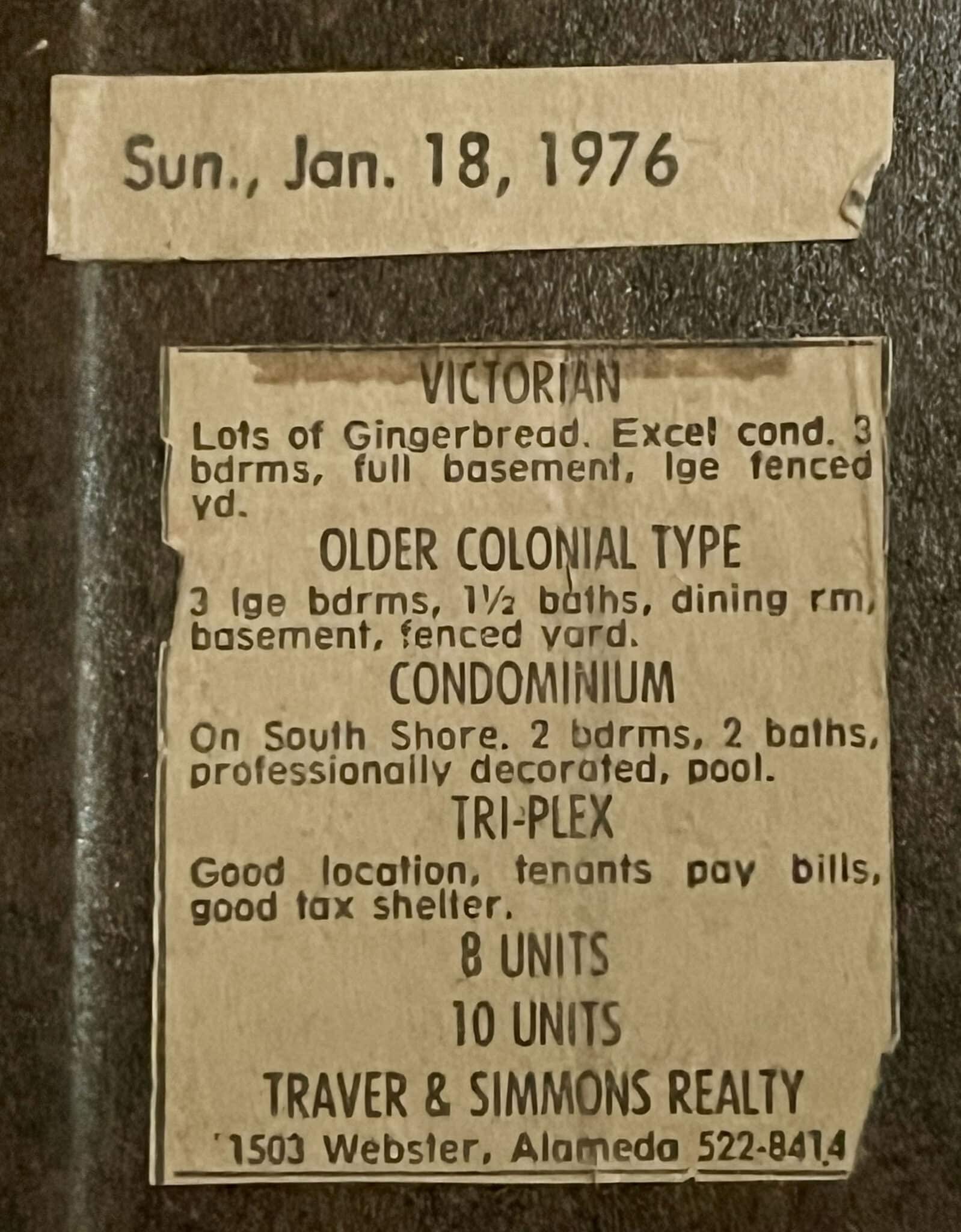
With the death of the last Munro family member in 1961, the old house at 1530 Mozart Street was ready to welcome its third owners, the Beberness family. Not much is known about the Bebernesses, other than the fact that they lived in the house for 15 years before that fateful day in January 1976 when they put their house up for sale. It was then that Tommie and Tom Veirs pulled up in front of the house, and experienced “love at first sight.”
Most original M&R in town?
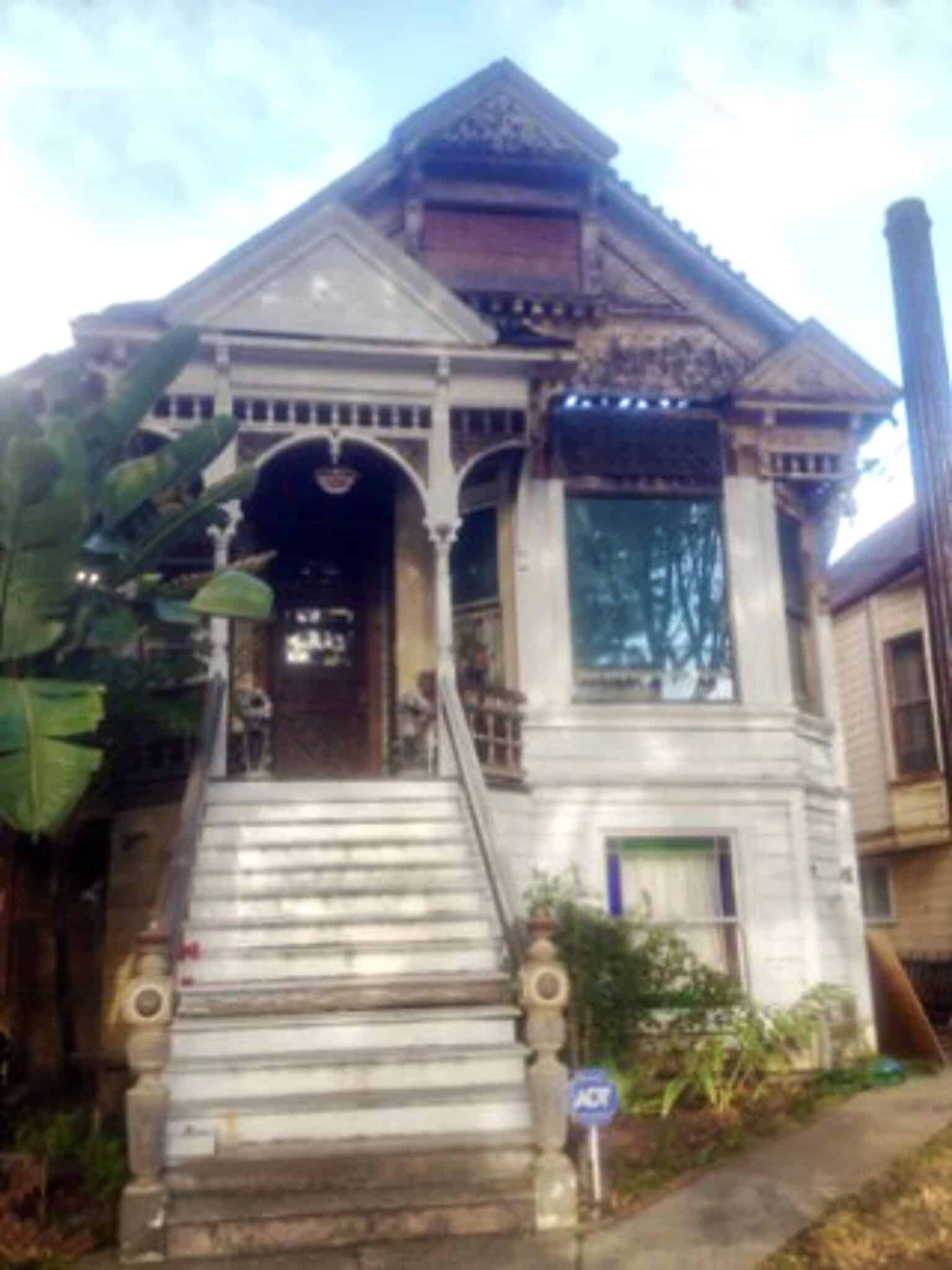
The history of 1530 Mozart Street—the Rose Cottage—has brought us all the way up to the current owner, Tommie Veirs, who with her husband Tom bought this home from the Bebernesses, way back when the United States was celebrating its bicentennial anniversary year in 1976. Over the decades, Tommie has devoted herself to preserving this historic 1894 treasure, always trying to keep its original style, design, and layout intact to the greatest degree possible. Indeed, local Marcuse & Remmel expert Robert Farrar has said that Tommie’s home may be the most original Marcuse & Remmel house in town, in terms of its faithfulness to the original design and features. According to Bob, “All in all this is the most original M&R that I have seen so far and I have been in over 100 M&Rs over the years. Tommie’s house is a showcase for what an original M&R would look like built today.”
Bob went on to say, “The basement still has the original tongue and groove Douglas fir wood flooring sitting on 4X4 redwood beams that are sitting on the dirt. This is the only house that I have been in that still has the original flooring. Most floors rotted out over the years or the area was converted to something else besides storage as it was meant to be.”
Next up
Now that we’ve traced the history of the Rose Cottage all the way from the original Rose family ownership through the longtime owners the Munros, and a brief mention of the Beberness family, we’re ready to take a look at the vast amount of work and restoration that has been done on this home since current owner Tommie and her husband Tom purchased it 50 years ago. We’ll see more interior pictures, including one of a handy pass-through window that connects the kitchen with the dining room, which Tommie restored. It had been covered up over the years, and a gas water heater inserted into the space. But once Tommie set her mind to it, she found a way to move the water heater, re-route electrical lines, source a matching Marcuse & Remmel vintage pressed-wood window frame, and even have custom window glass made, complete with an inspirational saying by Michelangelo. All of that, and more, when our story wraps up with Part 4.
Contributing writer Steve Gorman has been a resident of Alameda since 2000, when he fell in love with the history and architecture of this unique town. Contact him via [email protected]. His writing is collected at AlamedaPost.com/Steve-Gorman.

