This month’s history walking tours will take us to Encinal Park, a neighborhood whose southern reaches lost its identity when it became part of the Gold Coast in the 1960s.
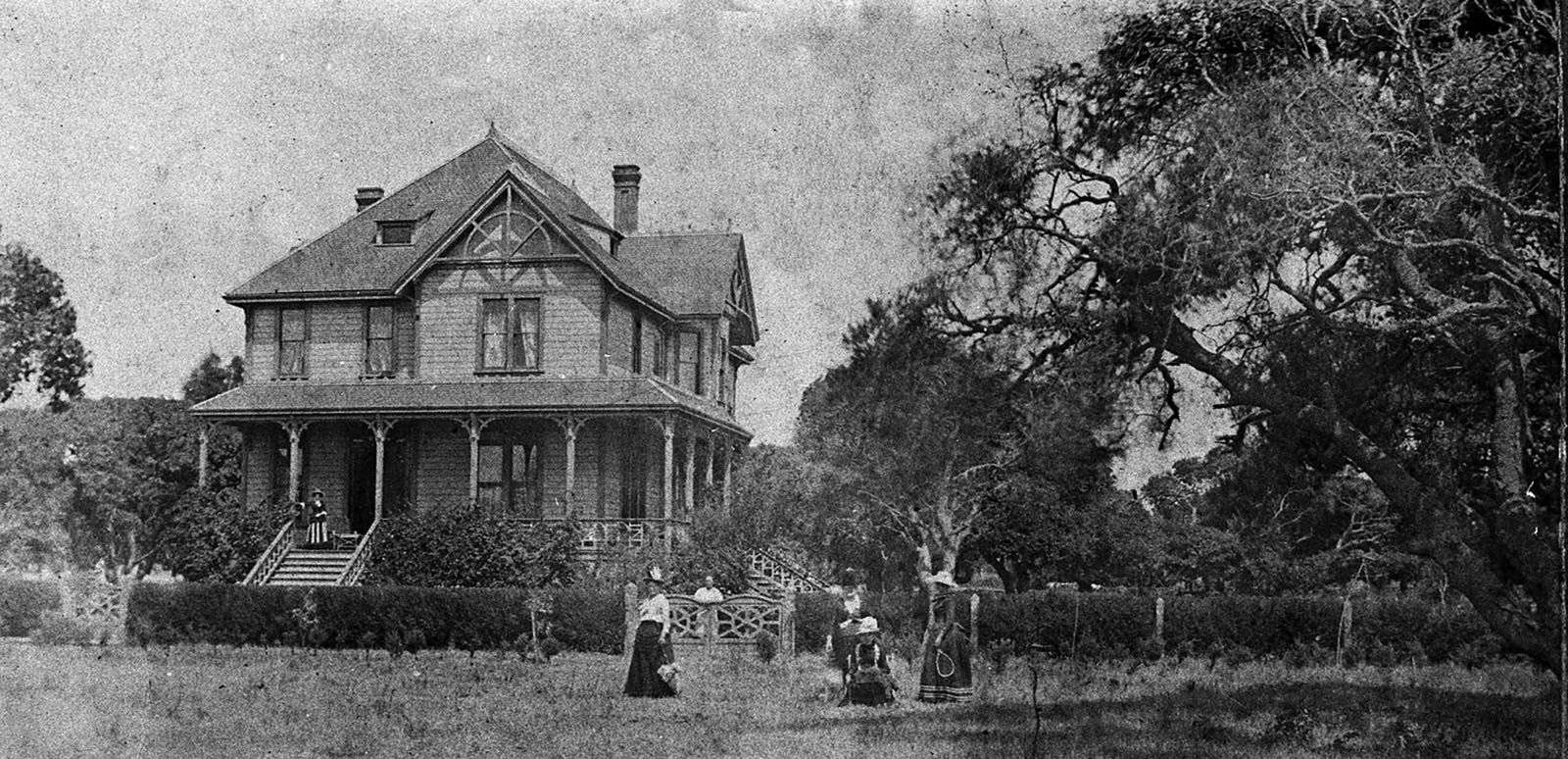
Caroline “Carrie” Dwinelle and Emile Kower owned the tract. Kower lived for a time in the village of Fruit Vale (today’s Fruitvale District in Oakland). He and his wife Johanna moved to Alameda. They lived on San Antonio Avenue with their son Hermann and daughter Gisele. A native of Stuttgart, Germany, Kower joined a number of his countrymen who invested in Alameda real estate. He also owned property in Oakland and San Francisco.
Carrie married William Worthington Chipman in 1857. Her husband and Gideon Aughinbaugh had purchased the entire Alameda peninsula from Don Antonio Maria Peralta six years earlier. By 1860, William and Carrie were living in San Francisco.
William died in 1873, and Carrie married John Dwinelle four years later. They made their home on Rincon Hill’s Fourth Street, not far from the fashionable South Park. John tragically drowned in the Carquinez Strait in 1881. Carrie decided to return to Alameda and had a home built near the San Francisco Bay shoreline.
She and Emile Kower pieced together the Encinal Park Tract. They had their properties surveyed and had six new streets laid out. Emile chose to name three of the streets for women: Christina, Louisa, and Caroline, for his partner in their real-estate enterprise.
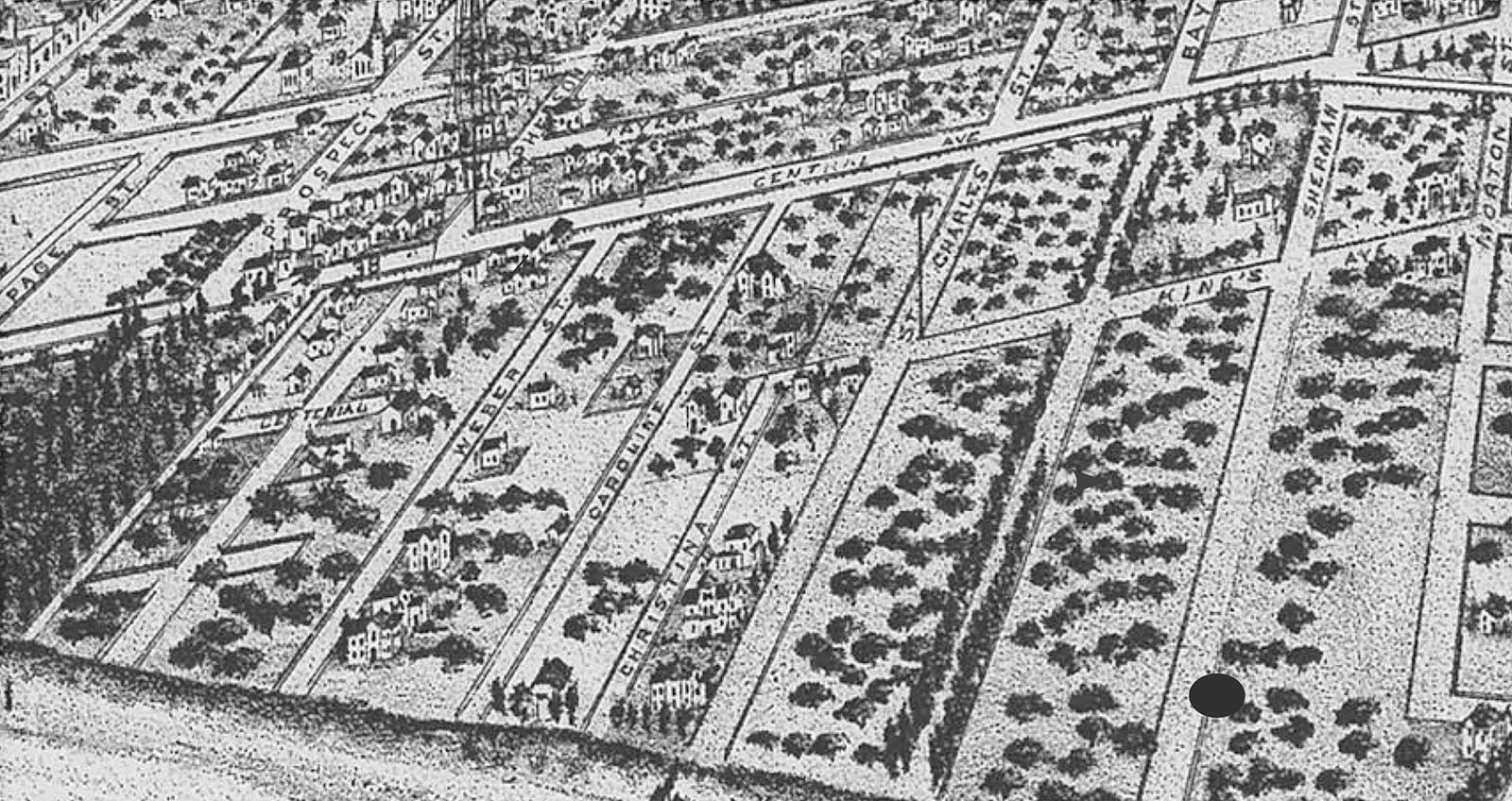
Only Caroline Street remains. It is the longest street in the tract, stretching from the shores of San Francisco Bay, today’s lagoon, to Lincoln Avenue. Christina Street later became Hawthorne Street and Louisa Street was changed to Fair Oaks Avenue.
Caroline named three streets for her favorite composers—Verdi Street for Giuseppe Verdi, Mozart Street for Wolfgang Amadeus Mozart, and Weber Street, the street she lived on, for Carl Maria von Weber (pronounced VAY-ber).


Join Dennis and the Alameda Post for history walking tours of Encinal Park
Caroline Chipman Dwinelle and Emile Kower worked together to create a neighborhood known in its day as “Encinal Park.” The aptly named “Caroline Street” defined the neighborhood that ran from the San Francisco Bay shore to Lincoln Avenue. Dennis will take us through Encinal Park and share information about the area’s architecture. We’ll meet first-hand the prolific firms of Marcuse & Remmel and Denis Straub & Son. The street names play an interesting role in our story, especially one that seems to fit the mold but does not. Streetcars played an important role in this story as did the Central Pacific and South Pacific Coast railroads.
Tickets are $20 each: Saturday, July 18 or Sunday, July 19 . We will meet at 10 a.m. where Kings Avenue dead ended in the mid-1870s, today’s San Antonio Avenue and Caroline Street. More info.
You’ll find Chapin Street just across Lincoln Avenue from Verdi and Mozart streets. Local lore has it that the name is a misspelling for Chopin, that Caroline named the street for the composer Frédéric Chopin to complement Mozart and Verdi but the City misspelled the name on the street signs. However, Chapin Street is in the Mastick tract and bears the name of Samuel Austin Chapin, the executor of Edwin Mastick’s estate and the owner of the property where the street stands.
We’ll start our tours at an interesting intersection, where Kings Avenue (today’s San Antonio Avenue) reached its dead end at Caroline Street. The Alameda, Oakland & Piedmont Railroad’s electric streetcars cut its way through Alameda. Its eastbound cars ran on Santa Clara Avenue. Passengers heading west rode along San Jose Avenue to Morton Street. Their cars made a short turn north onto Benton and turned west onto King’s Avenue (today’s San Antonio Avenue).
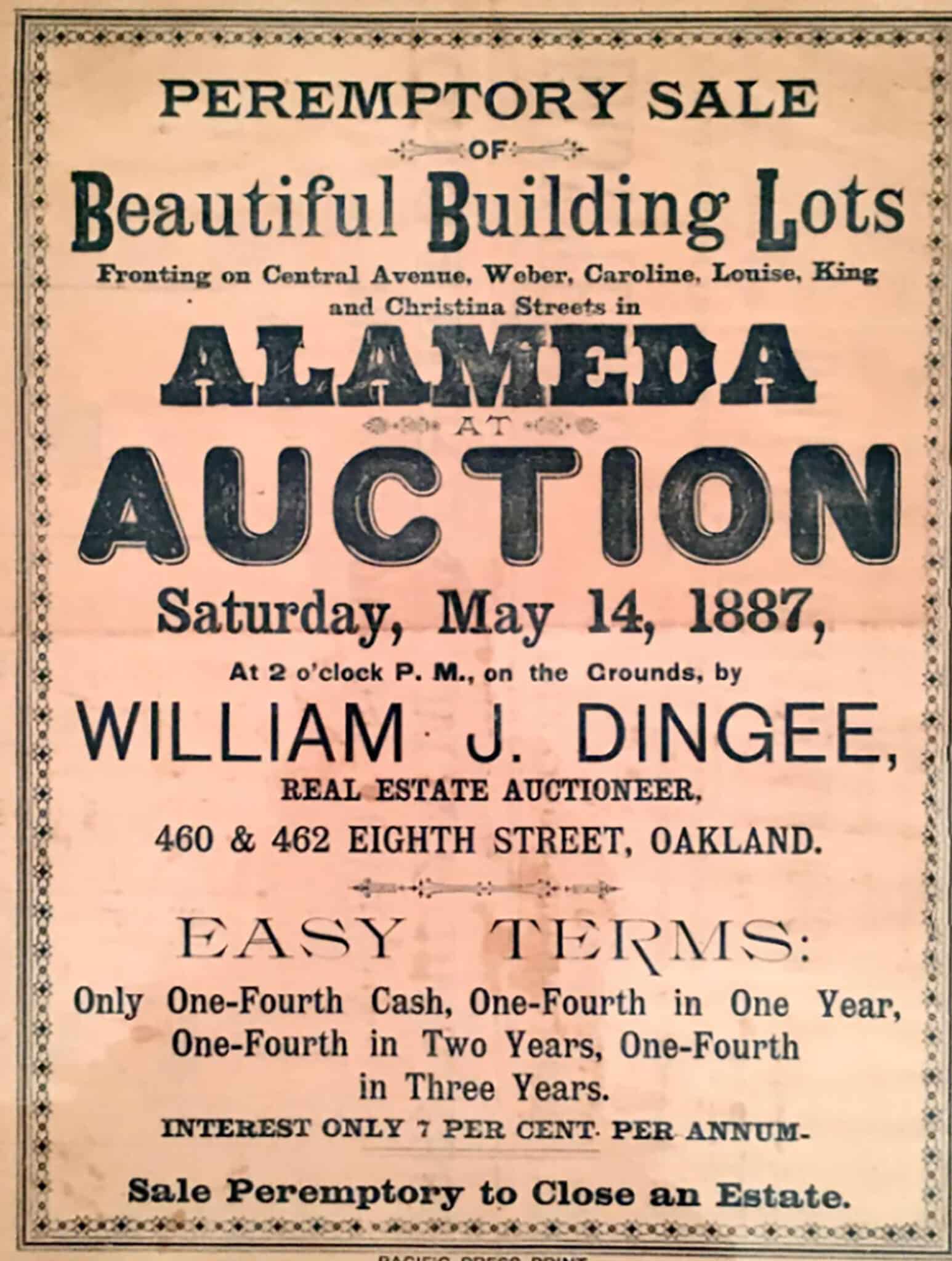
After Emile Kower’s death in 1886, his wife Johanna auctioned much of the Kower family’s Encinal Park holdings to settle his estate. Notice the older street names on this flyer Louisa (Fair Oaks), King (San Antonio) and Christina (Hawthorne). Photo courtesy of the Alameda Museum.
In order for streetcars to reach their turn onto Ninth Street, they needed to lay tracks through the open field that stood between Caroline Street and McPherson Street (today’s Ninth Street. This opened Kings Avenue and required a prominent family to move their home from an open field onto Kings. Emile Kower did not survive to see the electric streetcars roll through Encinal Park. He died in 1886; the first electric streetcar ran in 1895.
Carrie lived in a beautiful home with her extended family nearby. She witnessed the arrival of the Big Red trains. She asked the railroad to name the stop on Encinal Avenue “Encinal Park.” Southern Pacific demurred and named the stop “Caroline.”
This weekend’s tours have all the usual architectural delights along the way. We will share details of the styles of the homes and the stories behind many of them.
Dennis Evanosky is the award-winning Historian of the Alameda Post. Reach him at [email protected]. His writing is collected at AlamedaPost.com/Dennis-Evanosky.

