“That’s one small step for man, one giant leap for mankind.” Those historic words were spoken by Apollo 11 astronaut Neil Armstrong when he became the first human to set foot on the moon, on July 20, 1969.
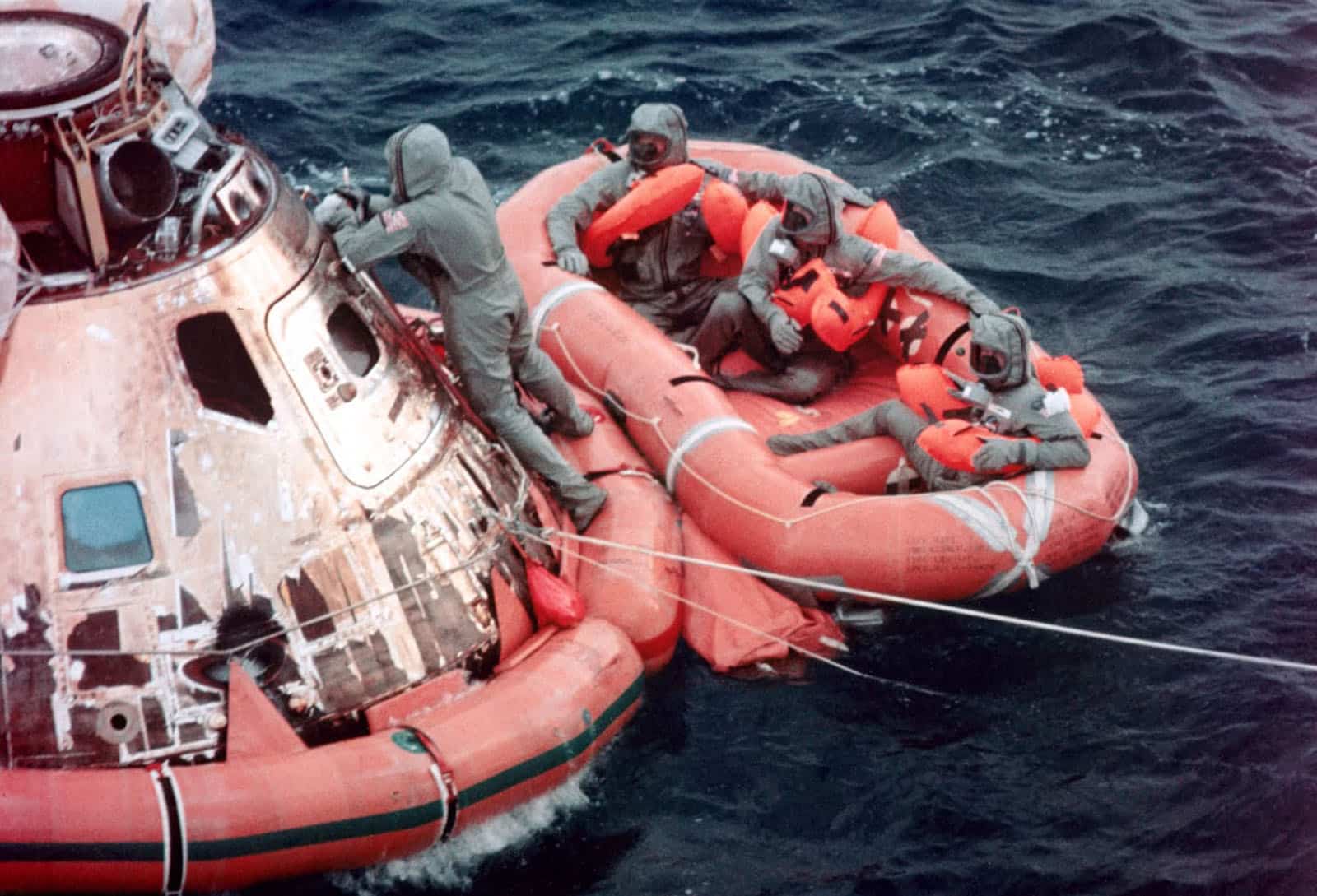
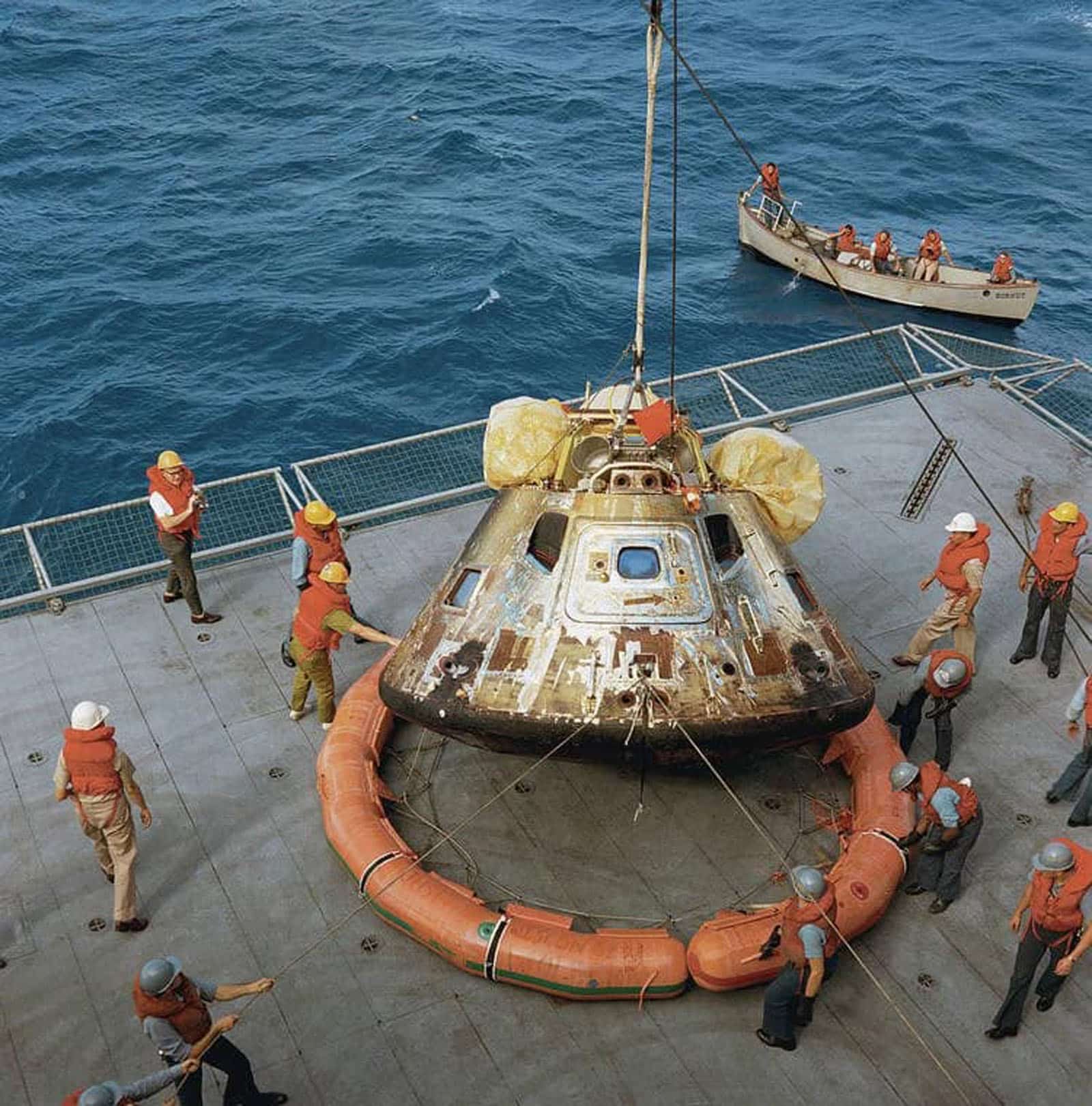
Four days later, the Apollo 11 Command Module, Columbia, returned to Earth, splashing down in the Pacific Ocean, 812 nautical miles southwest of Hawaii and just 13 miles from the prime recovery ship, the USS Hornet. Navy divers secured the capsule, deployed a sea anchor, and attached a life raft for the crew—astronauts Armstrong, Buzz Aldrin, and Michael Collins.
Because NASA was uncertain if the lunar surface harbored any hazardous microscopic organisms, the astronauts were given Biological Isolation Garments to wear as they exited the capsule and boarded the helicopter that took them to the ship. Upon boarding the Hornet, the astronauts entered a Mobile Quarantine Facility, where they remained for 21 days.
Now, the USS Hornet is celebrating the anniversary of the historic Apollo 11 mission and the successful splashdown and recovery of the astronauts. The event will take place aboard the ship on Saturday, July 18, from 10 a.m. to 5 p.m.
In addition to a completely rebuilt Apollo 11 exhibit on full display, the anniversary celebration will feature a special presentation about the interior of the Apollo 11 Command Module. This was a project commissioned by the Smithsonian, which involved a detailed 3D laser scan of the inside of the Command Module. This allowed an unprecedented look inside after it had been sealed up for decades. (See video below.)


After the presentation, attendees can experience the inside of the Command Module via virtual reality goggles. Space expert Bill Miklos also will give a presentation about the splashdown and recovery of the Apollo 11 astronauts.
The Hornet staff is “extra excited this year due to the recent Artemis II Mission that flew around the Moon and then was recovered in the Pacific Ocean off of San Diego.” So there will be a lot of extra exhibits and other things to do all day long, including a NASA Solar System Ambassador.
Several other temporary exhibits will include a Model Rocket Display, a Travelling Space Exhibit, ASTRA, and more.
Tickets may be purchased online: Adults $25, seniors and military $18, students $18, youth (7-17) $12. Children 6 and under and museum members are free.

