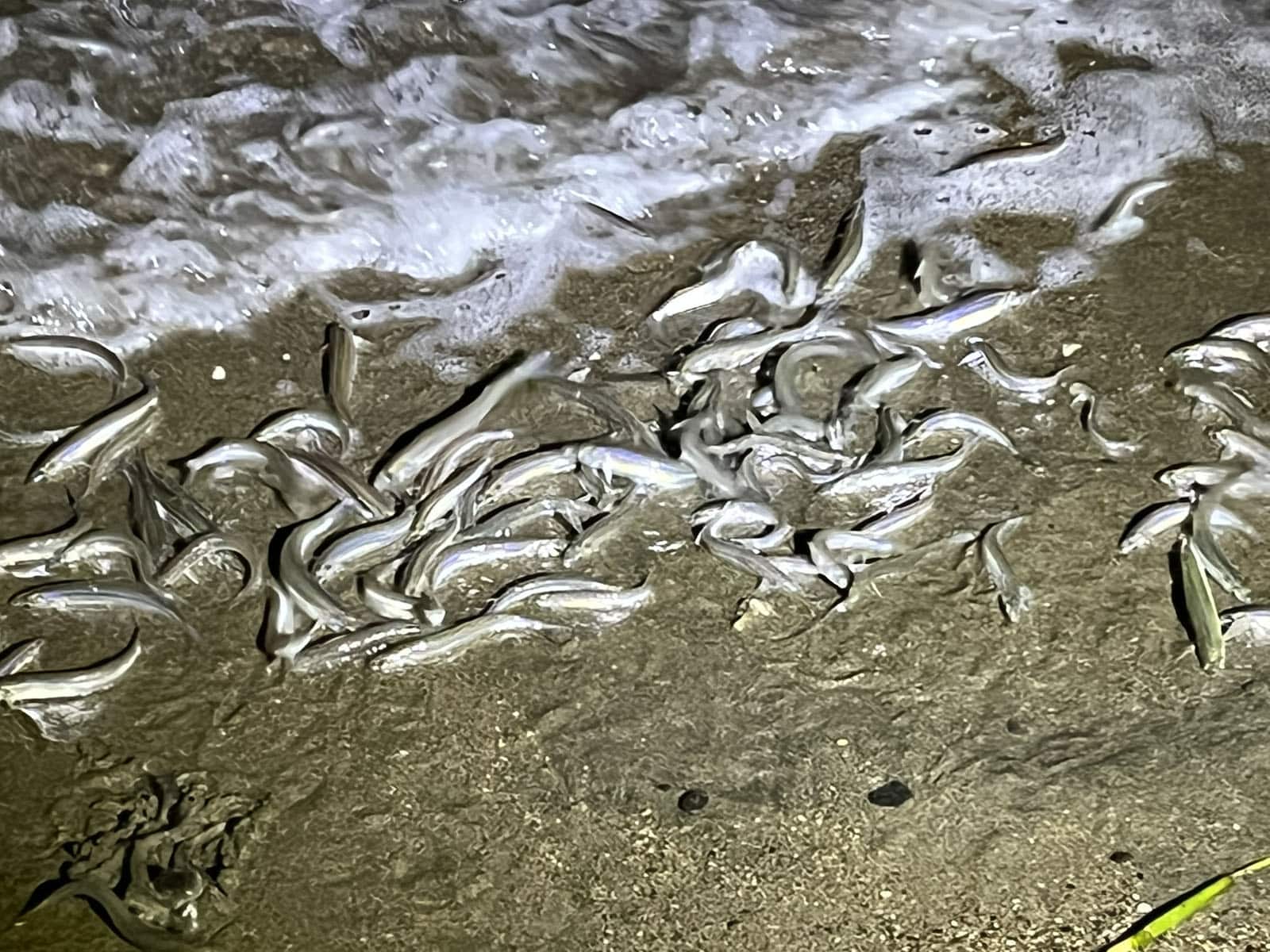
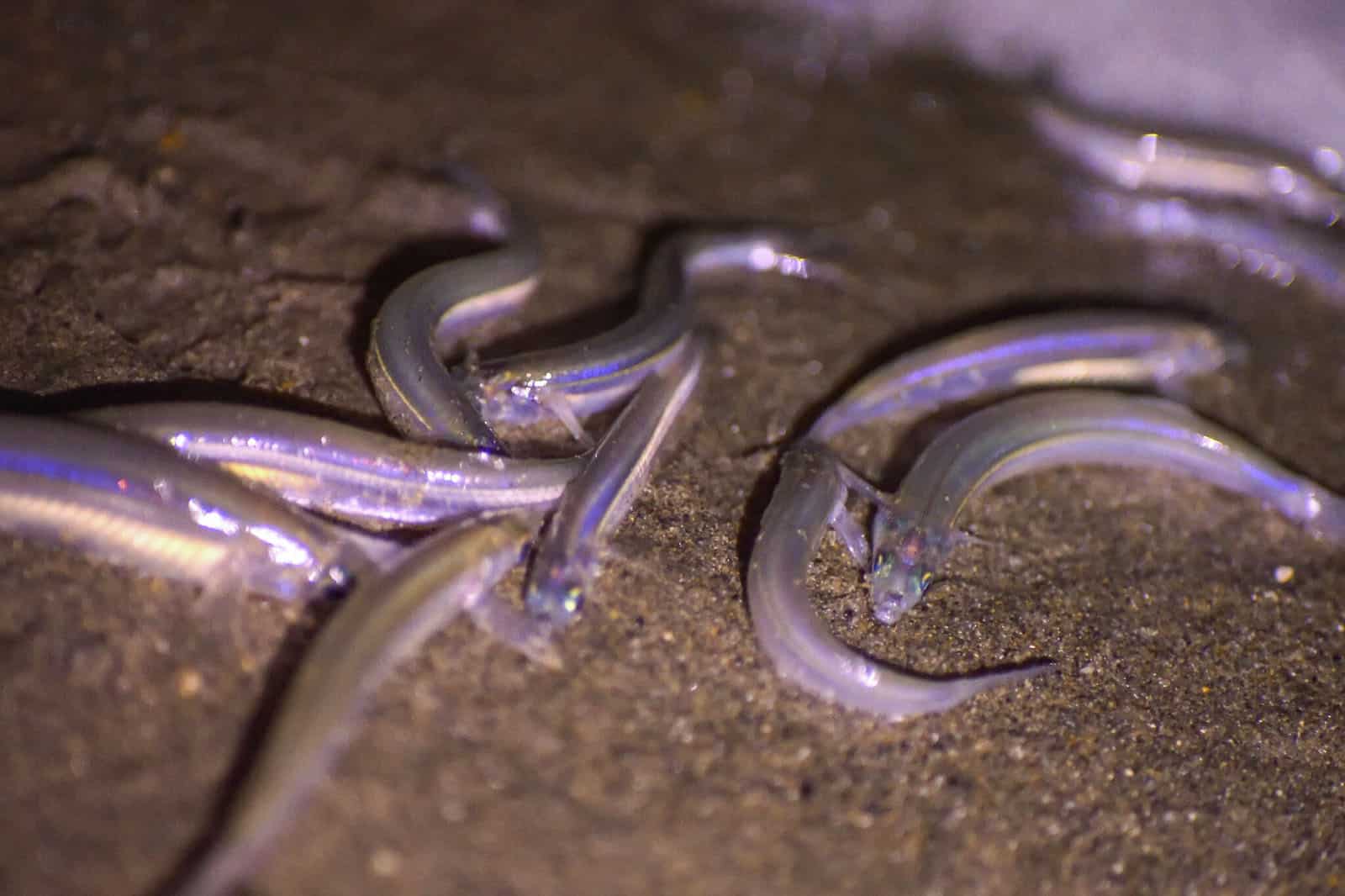
Unbeknownst to most people who live or work in Alameda, there is an amazing natural spectacle that has been taking place along Crown Beach in Alameda. A small, slender, silvery fish wriggles out of the water during the middle of the night and appears to be dancing on the sand. What is it? And what is going on?
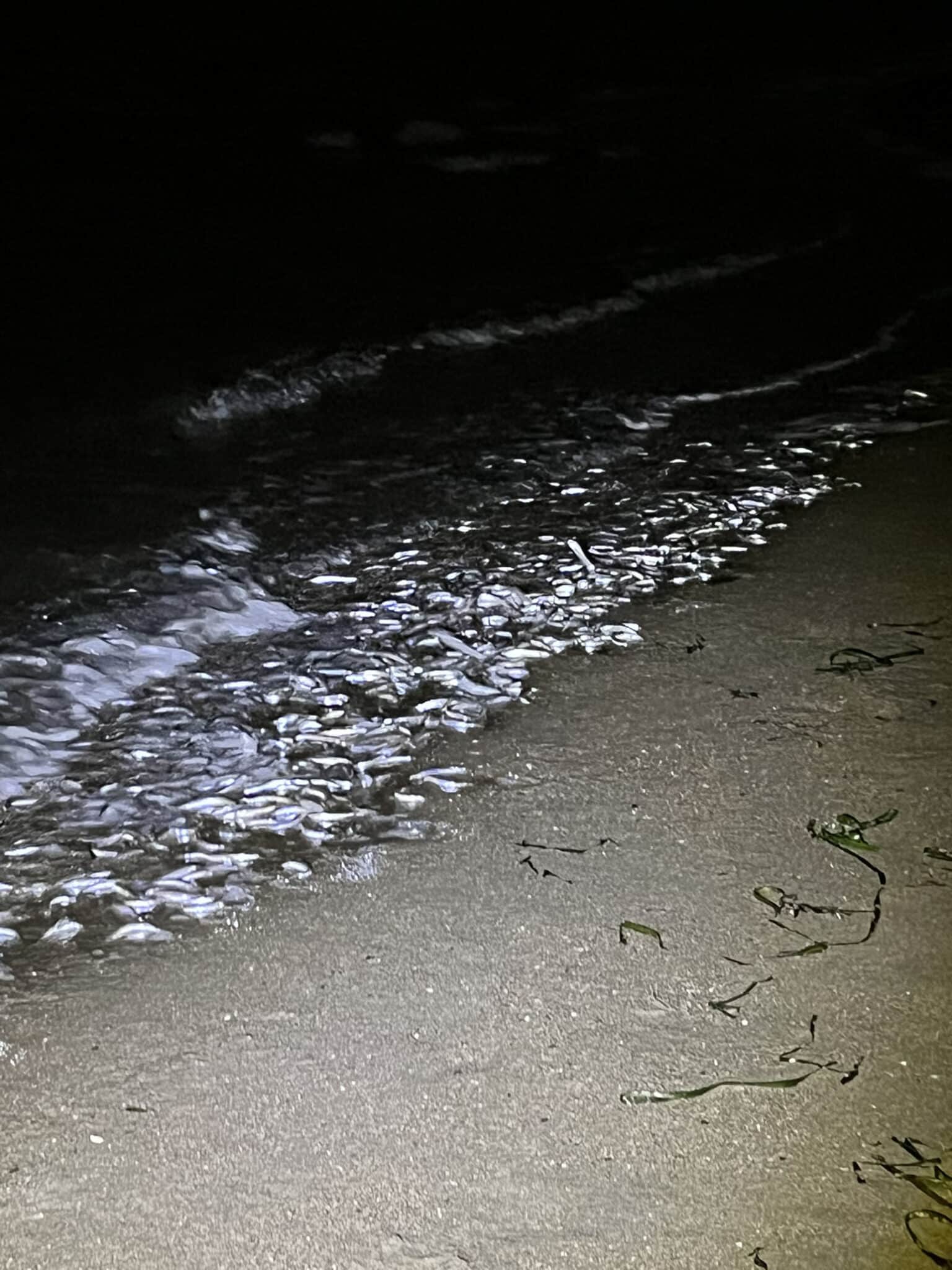
This fish, known as the California grunion, Leuresthes tenuis, is coming to shore to mate and lay eggs. Normally found from Point Conception in southern Santa Barbara County to Point Abreojos in northern Baja California, Mexico, this fish has made its way north. In southern California it’s a “thing” to go out at night and fish for grunion, catching them bare-handed, up to 30 at a time, and cooking them up while drinking Grunion brand beer. Fishing licenses are required, and the season is closed April-June. Here in the Bay, we encourage “Conserve and Observe” since it is so unusual for them to be here.
Just how and when did grunion appear in the San Francisco Bay? The first recorded California grunion was from a San Francisco fish market in 1859, but Native Peoples living along the coast of southern California have eaten grunion since time immemorial. A few years ago, a researcher tried to compare grunion today with bones found in a historic Native American shellmound, but unfortunately the research was inconclusive, as the bones of grunion too closely resembled their relatives Jack smelt and top smelt, all members of the Silverside family.
In 2001, the California Department of Fish and Wildlife began seeing grunion in their San Francisco Bay trawl-net surveys. It was also noticed at that time that an endangered bird, the California least tern, which nests locally, were bringing grunion to their nesting site. These and other sea birds often accidently drop prey items at nesting colonies. The dropped fish give wildlife biologists invaluable information into the prey items being fed to nesting birds’ young.
Many birds in the Bay depend on grunion and other small fish species to feed their growing chicks. Black-crowned night herons are often seen along Crown Beach during grunion searches. Endangered California least terns as well as black skimmers that nest in the South Bay at Hayward Regional Shoreline have recently been documented to have dropped grunion at nesting colonies.
Periodically, when El Niño events occur, trade winds lessen and warm ocean water prevents the normal upwelling of colder nutrient-rich water. It is thought that the grunion expanded their range north during a warm-water influx coinciding with the 1998-99 El Niño event.
In 2005, the Port of Oakland documented grunion breeding in the San Francisco Bay. Grunion greeter workshops were initiated, and volunteers were trained to go out and look for the little fish. At the time finding about one dozen grunion seemed extraordinary. Then, in 2007, the grunion mysteriously disappeared.
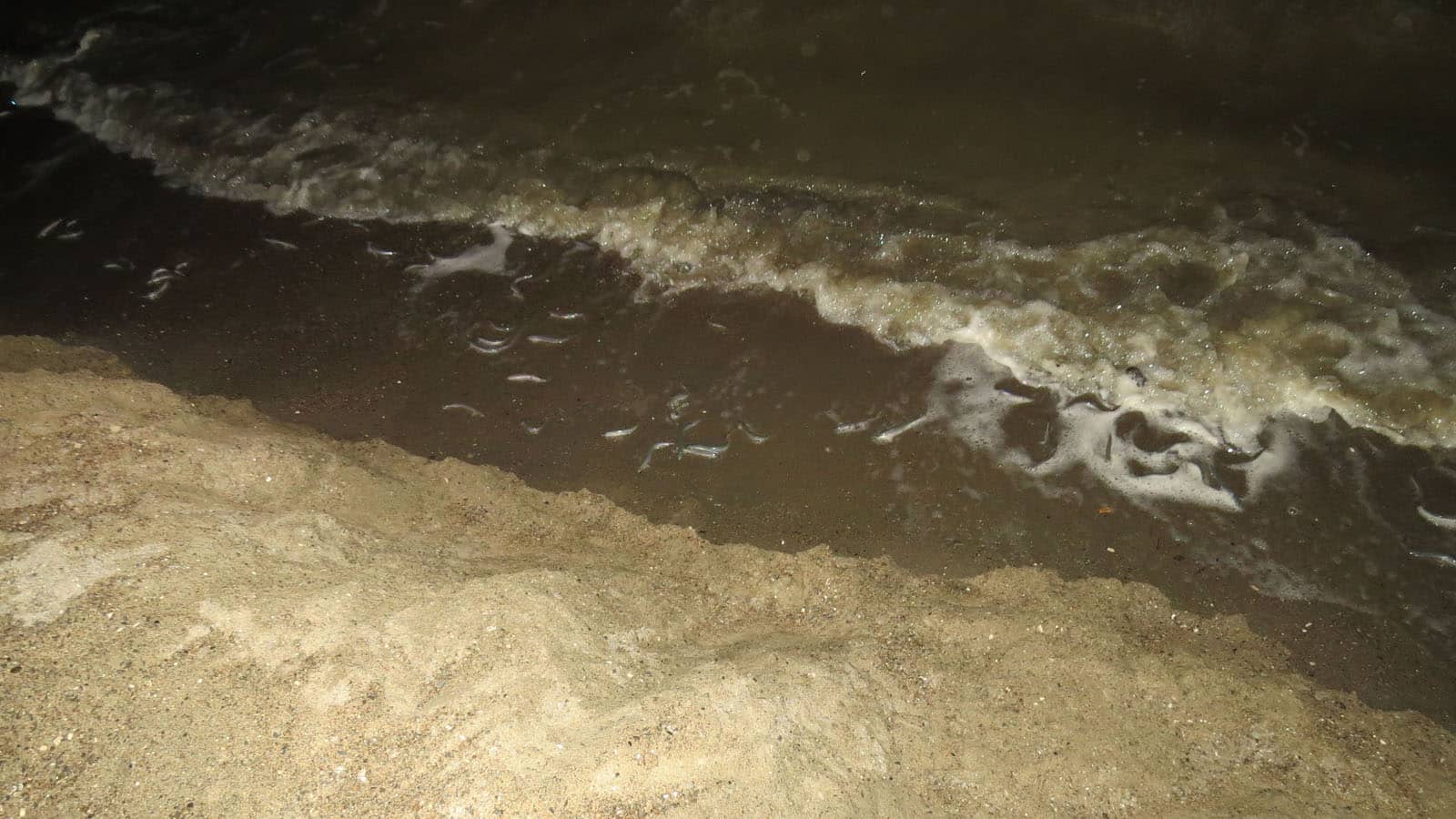
Working as a naturalist for the East Bay Regional Park District’s Doug Siden Visitor Center at Crab Cove, I started hearing stories about grunion. So, in 2017, I decided to venture out after dark and see what I could find. I invited the public to explore the shore with me, starting at the northern end of Crown Beach and heading east on one night, and then on the southern end of the beach and heading west on the night after. What we discovered were literally hundreds of fish spawning! I was hooked and have been leading small groups of participants every late spring and summer to do grunion searches. I report the numbers to Pepperdine University, which studies grunion throughout the state of California.


In the dead of night, during high tides, grunion have been showing up every year since 2017. First, the males begin scouting the shoreline, swimming in the shallow water’s edge. As more fish arrive, the larger females begin digging into the sand with their tails. With only their heads showing, they begin laying eggs, while males circle around them depositing milt (fish sperm). A moment later, she wiggles out of her hole and they all swim back into the bay. This all happens very quickly. The eggs remain buried in the sand, waiting for the next high tide to hatch out.
What brought them back to the San Francisco Bay in 2017? Perhaps it was the ocean heat wave of 2014-15 El Niño, known as the “blob,” that caused the southern fish to move northward. Studies have been shown that the grunion in the bay, although smaller, are genetically the same as the southern grunion.
The last few years have seen an increase in the number of grunion along Crown Beach and in the Bay. Is climate change increasing the temperature of the water? Is it because the yearly sand-moving along Crown Beach has been happening earlier in the season due to storm damage? So many questions, and answers just waiting to be discovered!
Grunion are known to spawn as far north as Tomales Bay, near Point Reyes, but their presence on many other beaches is yet to be documented. Would you like to grab a jacket and flashlight, slip on boots, and venture out under a full or new moon at 1 a.m. to find out?
Crown Beach has an enforced park curfew, but unique guided grunion viewing opportunities are available to the public. I will be leading a couple of outings to see if the fish will show up. Our June grunion search programs are full but email me at [email protected] to be added to the waitlist. Sign up online for July or plan for next year at the East Bay Regional Parks website.
We meet for a brief introduction and cover our flashlights with red cellophane or tape, so as not to disturb the fish. We also do the “grunion groove” dance ourselves (something one of my sons made up long before becoming a firefighter) and then venture out along the beach to witness fish dancing on the sand.
Susan Ramos is a Naturalist with the East Bay Regional Park District, based at the Doug Siden Visitor Center at Crab Cove, Crown Memorial State Beach in Alameda.
This article is part of a series from the Friends of the Alameda Wildlife Reserve (FAWR), a Conservation Committee of the Golden Gate Bird Alliance (GGBA, formerly Audubon). Learn more about FAWR at www.goldengatebirds.org.
