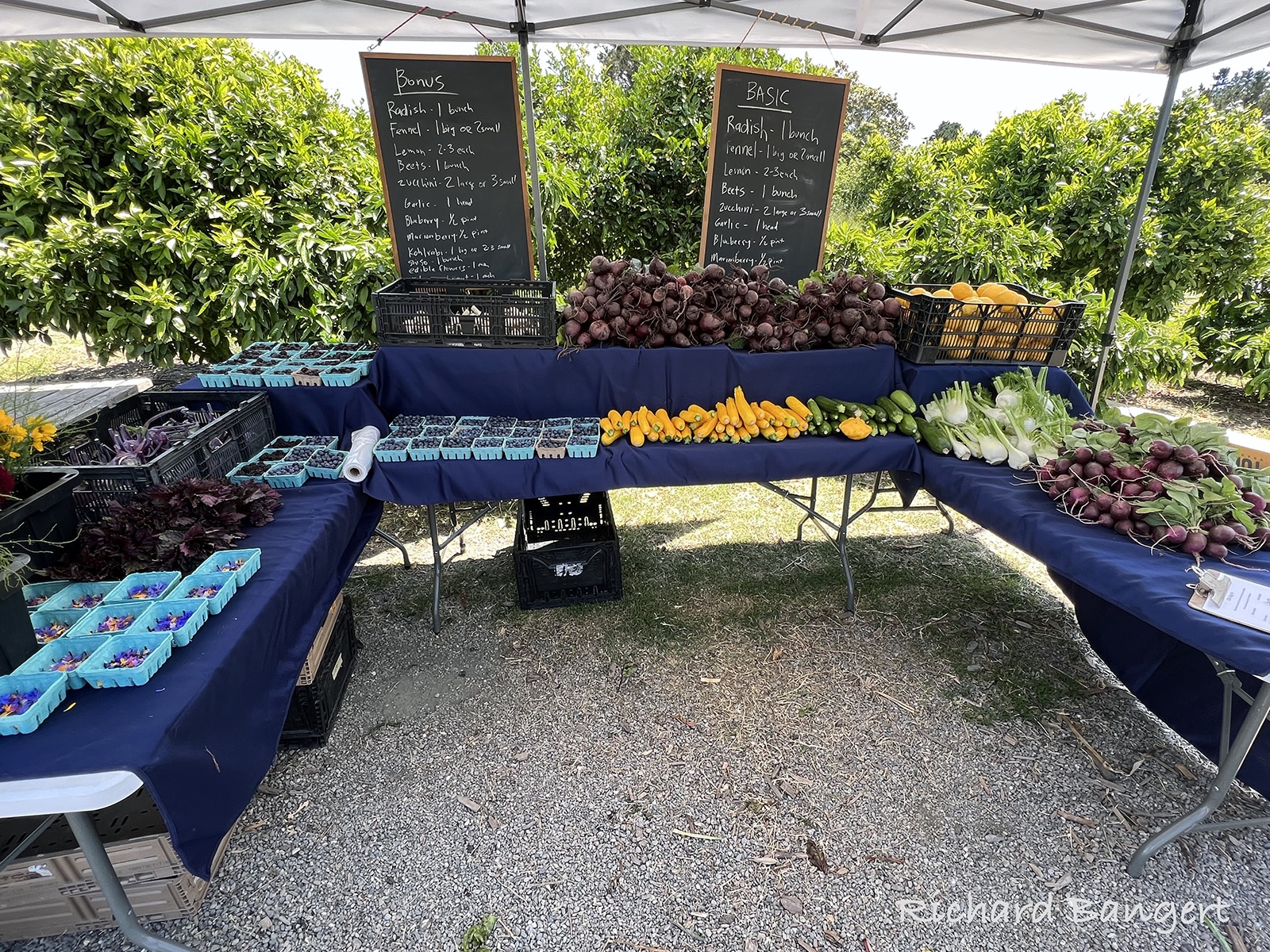
Tilling the land to grow food for people at the Alameda Point Collaborative Farm also provides food opportunities for birds and butterflies.
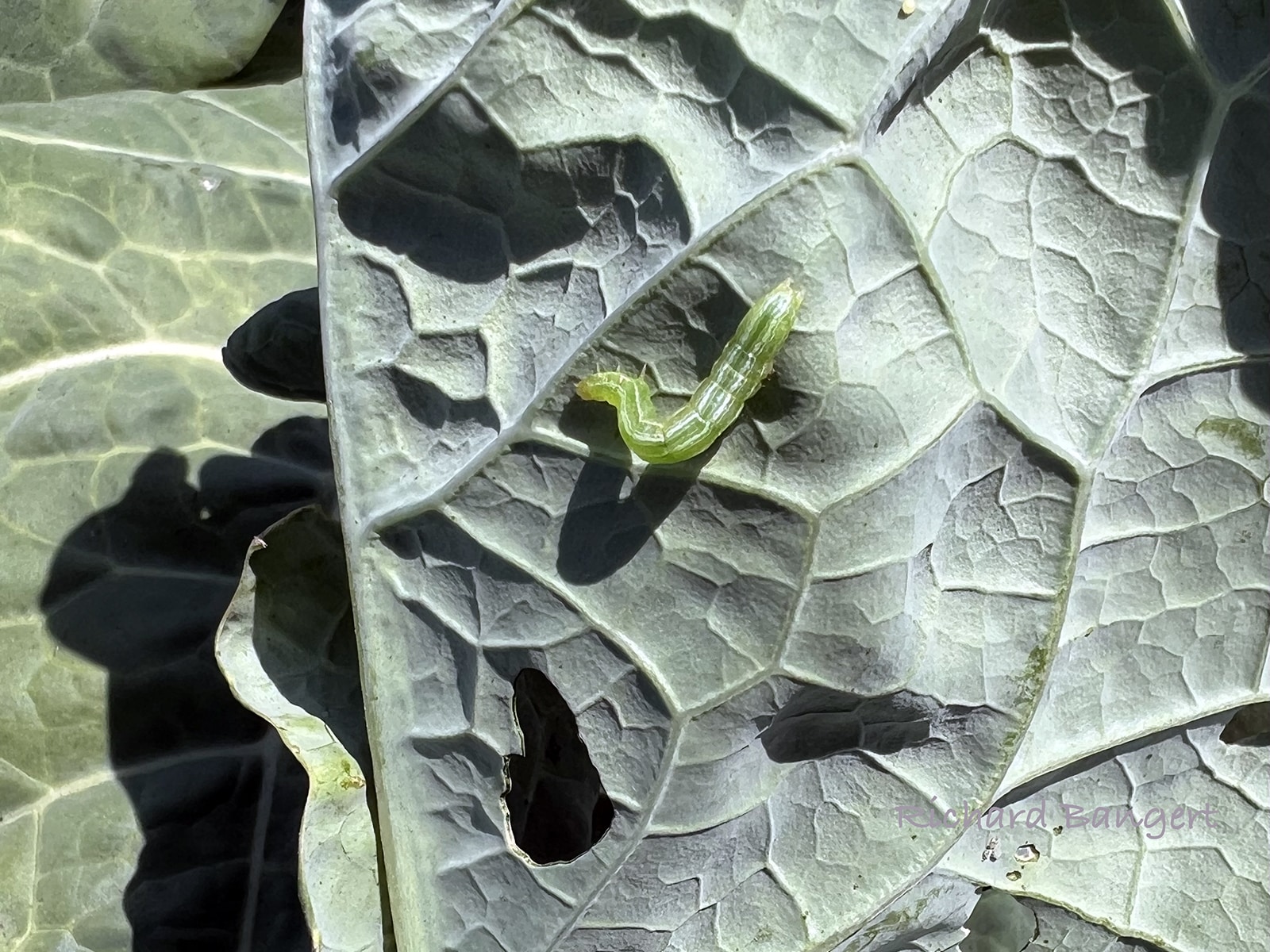
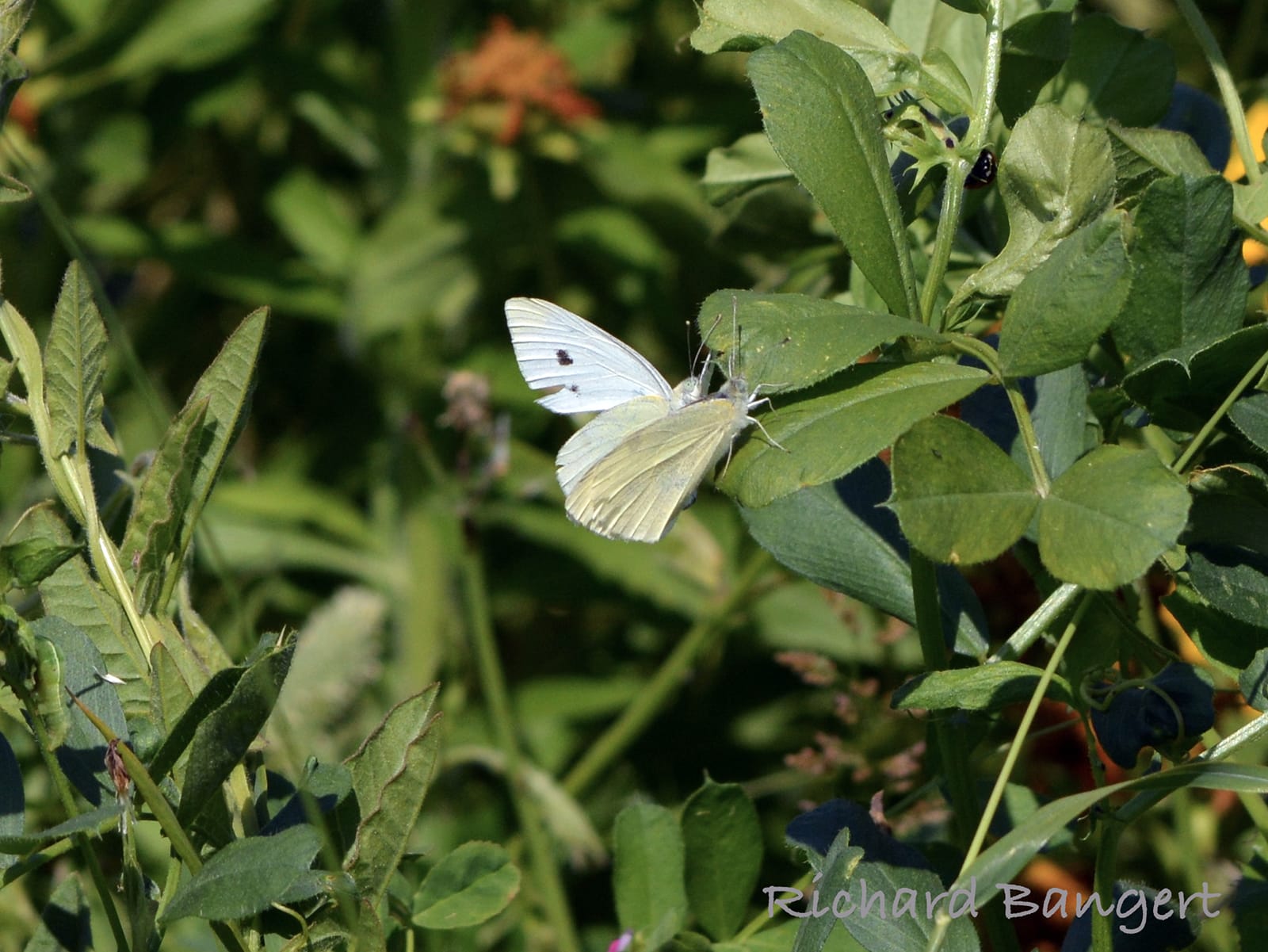
Not all of the insects attracted to the farm, like the cabbage white butterfly, are welcomed by Farm2Market manager Johnny Bootlace. This butterfly species lays eggs on leafy vegetable plants, such as cabbage and broccoli. Those eggs turn into caterpillars that immediately start munching on the leaves. That harms the plants because the leaves provide the photosynthesis that fuels the growth of the edible flowering part of the plant, and holes in the leaves reduce that growth process, according to Bootlace.
A family of black phoebes, birds that are commonly seen in urban areas, was nesting nearby in late June and found this year’s “crop” of caterpillars to be a just-in-time food source for recently-hatched chicks.
Holes in the leaves of the broccoli plants at the farm are a tipoff that caterpillars are at work from the underside of the leaves. That’s where the butterflies lay their eggs, making it difficult for birds to snatch up the eggs or caterpillars. But caterpillars inching along on old plant stalks in an untilled area, for example, are easily spotted by the Phoebes.


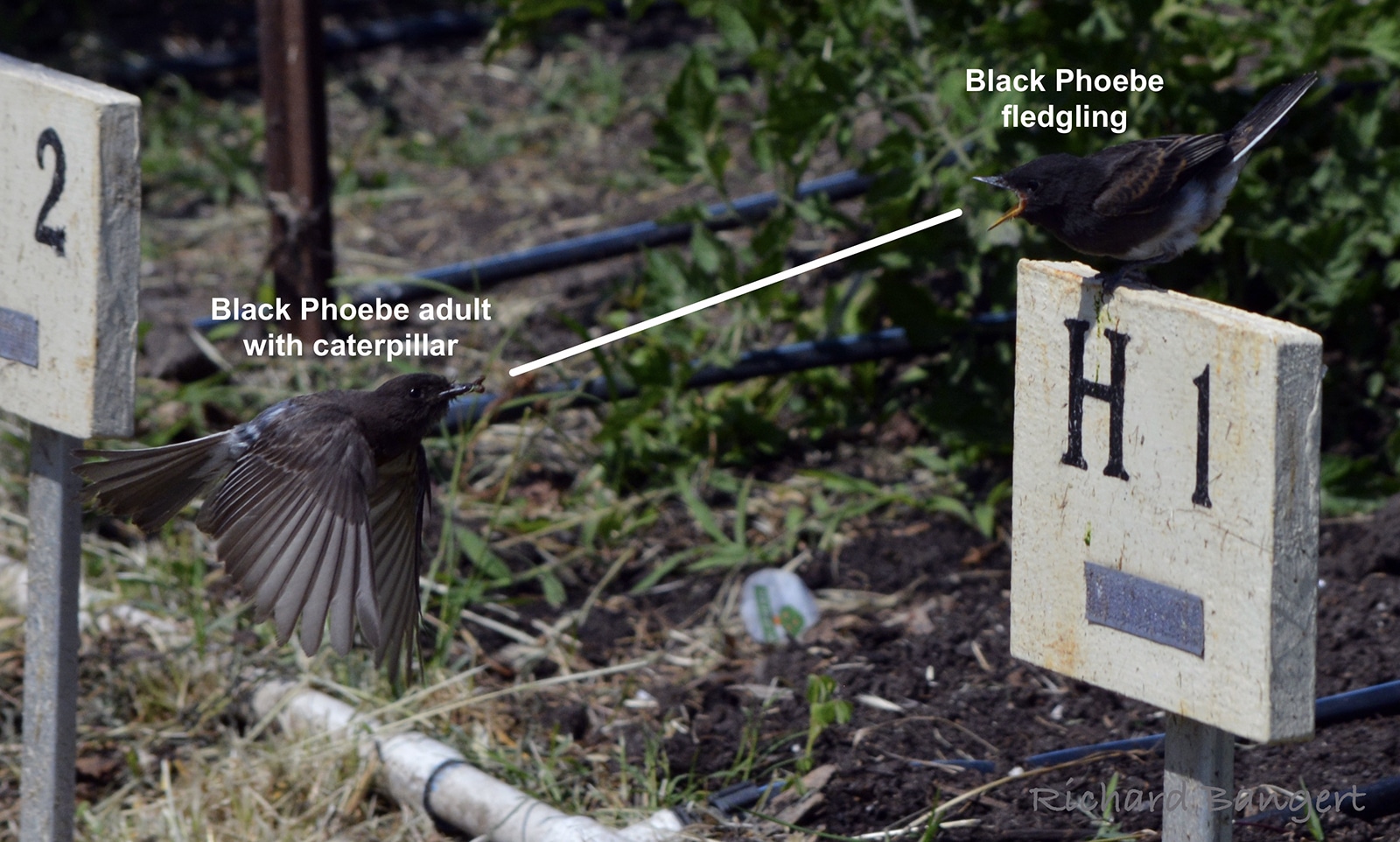
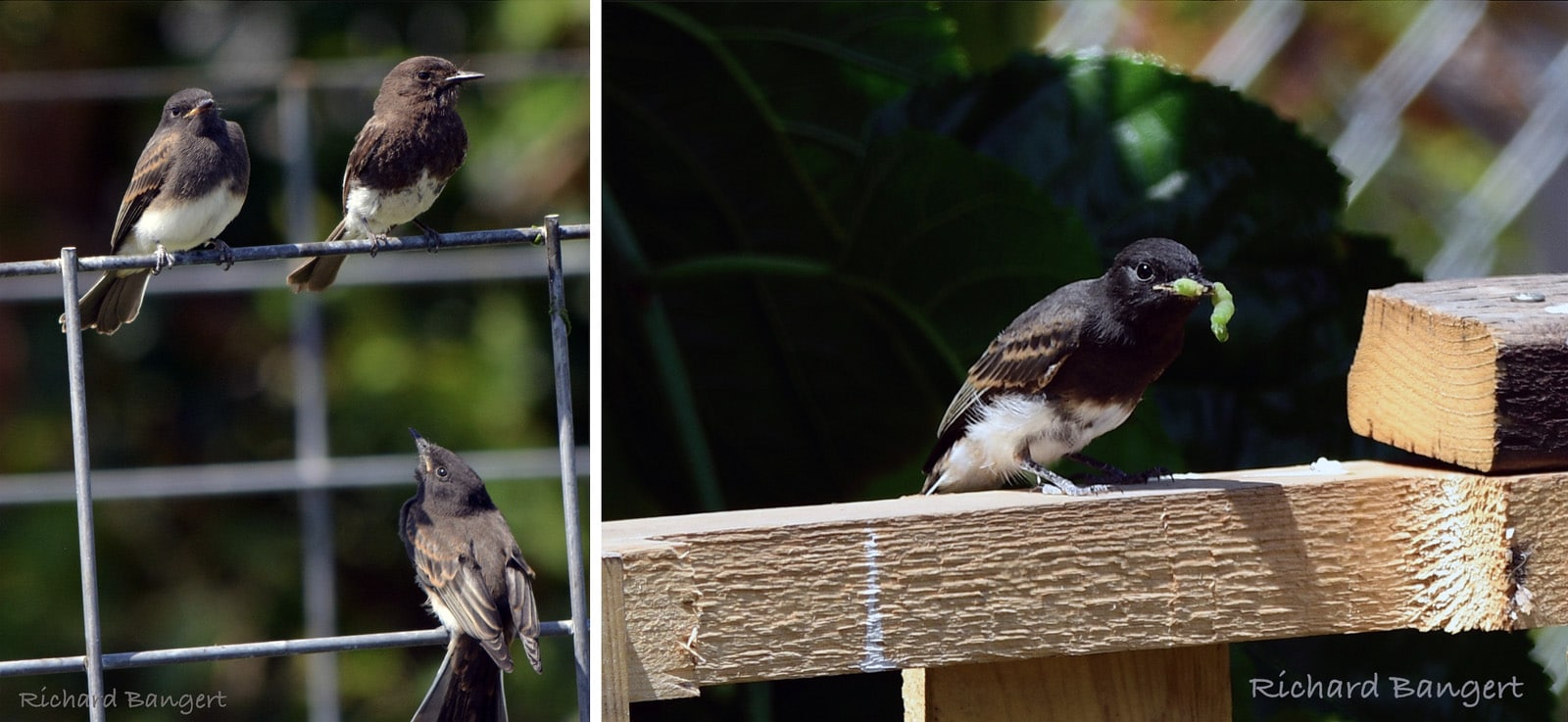
In late June, the phoebe fledglings were in the process of learning to forage for themselves. Sometimes food was delivered by their parents, but other times they grabbed a caterpillar themselves and, appearing unsure of the next move, tried to figure out the technique of flipping the floppy caterpillar into their mouths.
Western bluebirds also were busy foraging for caterpillars at the farm, but for them the insect food was on the ground.

The APC Farm is another living example of the interdependence of the natural world. Whether it be a farm, a garden, or public landscaping along the shoreline, there is value to wildlife beyond the immediate benefit of the vegetation.
Contributing writer Richard Bangert posts stories and photos about environmental issues on his blog Alameda Point Environmental Report, https://alamedapointenviro.com/. His writing is collected at AlamedaPost.com/Richard-Bangert.

