Inclusionary housing, staffing shortages, meeting access rules, Civic Center Parking management
On May 19, City Council will consider major updates to the Inclusionary Housing Ordinance, which aim to improve the financial feasibility of new housing development while continuing to support affordable housing production. Council will also review a report detailing persistent workforce vacancies, including a 27% police officer vacancy rate, and adopt a policy governing technology failures during remote-access public meetings, alongside an ordinance to improve management of the Civic Center Parking Structure.
Below is a summary of the issues and information on how you can participate.
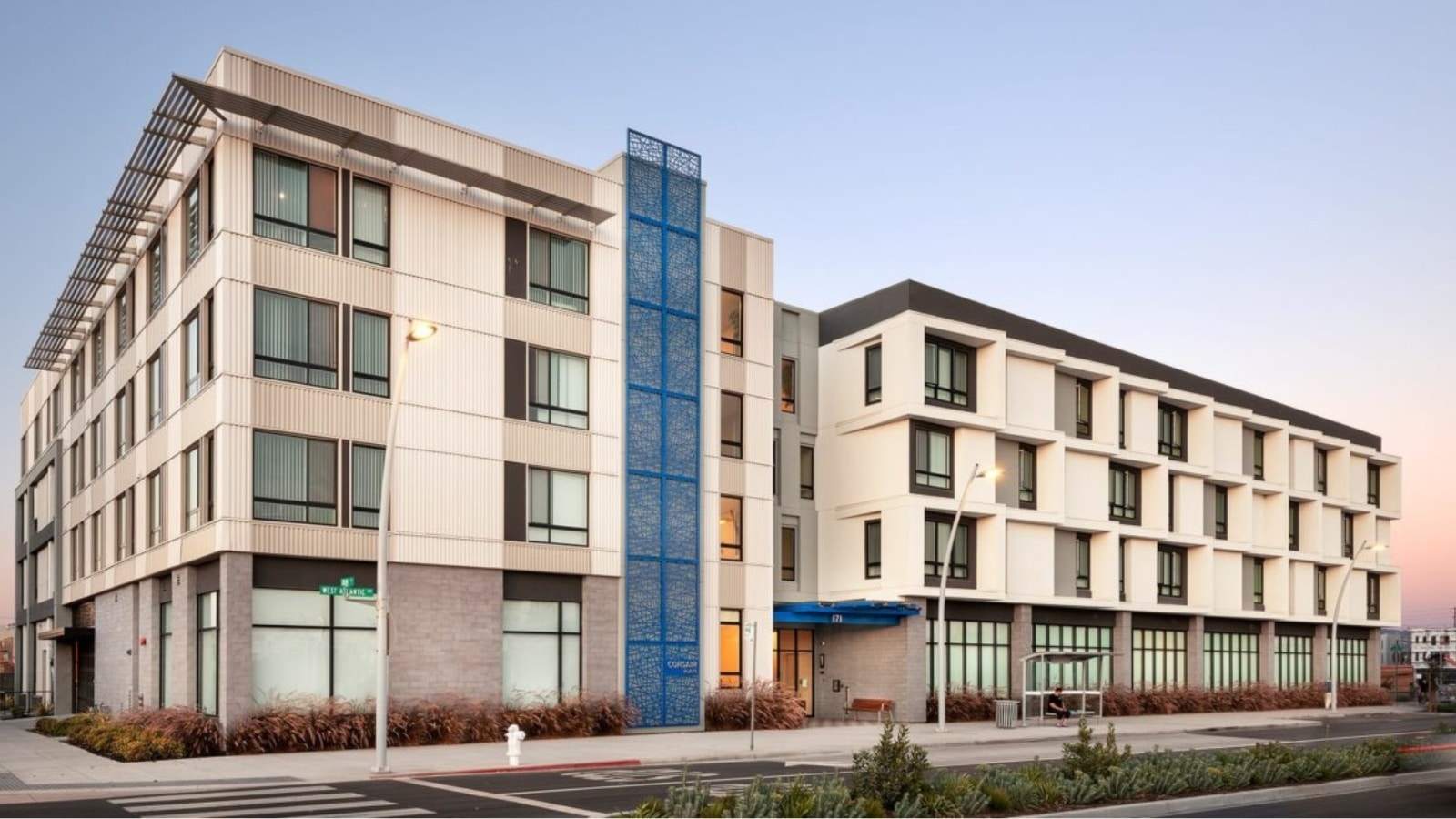
Inclusionary Housing Ordinance update
Council will consider a major update to the City’s Inclusionary Housing Ordinance, which governs how new residential developments contribute to affordable housing production. The amendments aim to modernize Alameda’s 2004 ordinance, align it with state and regional housing policies, and improve the financial feasibility of housing development. The Planning Board endorsed the ordinance in April 2026.
The amendments would significantly change affordability requirements. For rental projects, the City proposes shifting away from the current requirement for moderate-income units and instead prioritizing low- and very low-income housing. The change reflects market realities in which moderate-income rental units often remain vacant because comparable market-rate apartments are available without affordability restrictions. Ownership projects would focus on moderate- and low-income homeownership opportunities.
The ordinance would also codify “clustered development,” a model in which affordable housing is grouped in separate buildings on the same site as market-rate housing. This approach may allow nonprofit partners to combine private contributions with tax credits and public subsidies, increasing the number of affordable units while reducing financial pressure on the market-rate portions of projects. Existing Alameda examples include Littlejohn Commons and Corsair Flats.
Other proposed changes include extending affordability restrictions from 59 years to 99 years, adding definitions for “Acutely Low Income” and “Extremely Low Income” households, and giving developers greater flexibility in meeting affordable housing requirements, such as by expanding in-lieu fee options for larger developments. In-lieu fees are charges paid by property developers to the City instead of building affordable housing on-site. The revised ordinance would apply retroactively to housing projects that are already entitled but unbuilt, including Alameda Marina Phase 3 and Marina Village Parkway.
City workforce report
Council will receive a report on workforce vacancies and recruitment efforts as required by state law to facilitate an annual public hearing on staffing shortages and retention challenges. The report covers the 2025 calendar year.
The City had an overall average vacancy rate of 10.44% in 2025. Excluding police officer positions, the vacancy rate dropped to 7.27%. The Alameda Police Officers Association had the highest vacancy rate at 27.05%. Alameda Municipal Power also had elevated vacancy levels.
Police staffing remains the City’s most significant challenge. Alameda reported 21 police officer vacancies and an average hiring timeline of 224 days. The City continues to offer a $75,000 hiring bonus and other incentives, but exit interviews showed officers often leave for personal reasons or more competitive benefits at other agencies.
Technology Disruption Policy
Council will consider adopting a new Technology Disruption Policy to comply with recent amendments to the Ralph M. Brown Act, which requires local agencies to establish procedures for handling disruptions to remote public participation during public meetings.
The proposed policy, mandated by Senate Bill 707 and required before July 1, 2026, outlines how the City will respond if telephonic or internet failures prevent members of the public from accessing City Council meetings remotely. Under the policy, meetings may be recessed for up to one hour while staff attempts to restore service before reconvening. The policy also establishes procedures for documenting disruptions in the official meeting record. Staff stated the measure aims to preserve transparency and public participation during technological failures.
Related Articles


Civic Center Parking management
In an item continued from the May 5 meeting, Council will consider an ordinance to update Alameda’s Municipal Code to improve management of the Civic Center Parking Structure and remove outdated provisions. The change is driven by safety and operational concerns, including vandalism and the inability to close the garage overnight. Surveys of more than 550 users, comparisons with nearby cities, and occupancy data showing very low late-night usage support closing the facility overnight. The ordinance also establishes enforcement rules for vehicles parked outside posted hours.
How to participate
The meeting will be held on Tuesday, May 5, at 7 p.m. in the City Council Chambers, located on the third floor of City Hall, 2263 Santa Clara Avenue.
Members of the public are welcome to participate in person or via Zoom. They may comment on the Non-Agenda, Consent Calendar, and Regular Agenda portions of the Meeting Agenda (link downloads document).
The Non-Agenda portion of the meeting provides an opportunity for members of the public to address the Council regarding any matter not on the agenda over which the Council has jurisdiction. The Consent Calendar is intended for routine items and is approved by a single motion. The Regular Agenda is the central portion of the meeting, where each issue receives a presentation and time for Council discussion and public comment.
Complete this online form to request reasonable accommodation.
Click here for Zoom registration. The Zoom phone number for telephone participants is 669-900-9128; the Meeting ID is 863 3340 1382.
Information to assist with remote participation is available online in the Public Comment and City Council Meeting Guide. The meeting can also be viewed on the City of Alameda’s Facebook page. Note that comments posted there are not monitored.
For each issue, public speakers will have three minutes to speak if fewer than five are speaking, or two minutes if five or more are speaking.
Community members may also email Council Members on issues of interest before meetings.
Contributing writer Karin K. Jensen covers boards and commissions for the Alameda Post. Contact her via [email protected]. Her writing is collected at https://linktr.ee/karinkjensen and https://alamedapost.com/Karin-K-Jensen.

