Betty Yee wants to leverage her experience as Controller to be California’s next Governor
I had the pleasure of sitting down in June for a conversation with California’s former Controller, Alameda resident Betty Yee. Born and raised in San Francisco, she has served California in various roles in the State Legislature, under State Senator Carole Midgen and then-Governor Gray Davis, and as a member of the State Board of Equalization. Yee studied at UC Berkeley and received a graduate degree from Golden Gate University. She currently serves as Vice Chair of the California Democratic Party.

Yee termed out after eight years as the state’s chief financial officer at the start of 2023. She announced her candidacy for California’s 2026 Governor’s race in April of this year. She was the second Democratic candidate to announce, following Lieutenant Governor Eleni Kounalakis’ announcement earlier that day. Other Democrats are expected to join the race, including State Treasurer Fiona Ma, and another Alameda resident, California Attorney General Rob Bonta. Neither Ma nor Bonta has not yet publicly commented on the possibility. Updated July 26, 11:30 a.m. — Fiona Ma’s campaign contacted us to let us know she has declared her intention to run for Lieutenant Governor.
Yee’s campaign website describes her as “…A tough, innovative, and fiercely independent fiscal watchdog who is on our side, delivering results. Taking on big life insurers, Betty compelled them to pay death benefits to surviving loved ones and held them accountable.” Yee claims in eight years as Controller, audits her office uncovered over $7.3 billion in wasted or disallowed allocations. Her listed priorities include economic equality, growing the economy, climate change, and housing affordability. Editor’s note: Updated 2:15 p.m. July 25 to reflect the correct amount of misused taxpayer funds.
During our hour-long conversation, Yee touched on many of these issues and detailed her experience and vision for California. This interview has been edited for length and clarity. Read Part 2.
Part 1
What was it like growing up in San Francisco?
I felt very supported as a young child. My family felt very supported. My parents had their business in the west side of San Francisco, which was at that time predominantly European descendants, heavily Irish Catholic—the Parkside District, just north of San Francisco State. My siblings and I had to get good report cards, not just for my parents, but for all of their customers as well. We didn’t have much growing up, so our neighbors and we watched out for each other. It was a real sense of community and neighborhood.
The memory that sticks out today is how every morning, at all of these small businesses on Taraval Street, the shop owners would go out at 7 a.m. and sweep off the sidewalks and start their day greeting each other. We had a whole array of small businesses along that street, and that’s what I grew up with. It was a wonderful, wonderful time.
As the daughter of a family business, I became the best employee. All my free time was taken up after school. I would come right back home in the summers. I was working pretty much full time. I did a lot of reading. The library was two blocks away from my parents’ business, so every summer I would look forward to stacks of books and lots of reading.

Can you describe advocating for your parents? What did you do to help them?
The defining moment was when I was 13 years old. My younger sister was in the first class of students in San Francisco who were going to be bused across the city as part of the school desegregation program. I was tasked by the four Chinese American families in the neighborhood, who also had children affected, to go to the local school board town hall meeting—which was going to be in the school auditorium at the elementary school two blocks away from my parents’ laundry and dry-cleaning business—and make a statement.
The parents wanted me to say this: “We don’t oppose the goals of the busing program, but none of us drive. We have our businesses open six to seven days a week. If anything should happen to our child, we would have to shut down our business, take public transportation for well over two hours to bring our child home, and that would be a hardship.”
I’m happy I’m sitting down, because every time I tell this story, my knees shake, because my knees were shaking when I was speaking. It was pretty daunting! And of course, the busing program happened for the next 30 plus years. The kids were all fine, but that experience left an impression on me that I was a voice for someone, you know, that I was their advocate.
People hear about a program that sounds like it would be so beneficial, and they don’t think about the downsides. The best of intentions, but with poor results.
Well, the other side of that statement was, “We don’t oppose the goals, but why don’t you take the money that you would spend on the busing program to make every school better?” There was a sense of responsibility there. Both the statement and the experience stayed with me. We have to think about the practicalities of our decisions, but also [about] being an advocate and being sure that we’re hearing the voices of people who are going to be looking at this as a potential hardship.
The work that I feel the most proud about is the building blocks that we put in place, particularly in the tax code that became the foundation for some of the major court decisions around marriage equality.
The boards that you’re on reflect your wide range of interests—helping and supporting communities that could use the support. I would like to know more about your work with the Equality California Institute.
Being a native of San Francisco, I’m not a stranger at all to the LGBTQ+ community. I grew up with them, saw how in their early days there was very little support for their community, and particularly for young people who were without a net in terms of their challenges with coming out to their families and to their communities. I saw a lot of devastation with respect to suicides, certainly deaths from HIV, AIDS. So it’s a very personal thing for me.
Being on the Equality California Institute in my elected capacity, I felt that I could be a conduit to looking at policies that could uplift the LGBTQ+ community. The work that I feel the most proud about is the building blocks that we put in place, particularly in the tax code that became the foundation for some of the major court decisions around marriage equality, [posing the] economic argument about why are we discriminating in terms of same sex couples. I’m very proud of that work.
And the work continues. Look at what’s happening now in our schools with anti-trans sentiments that are fermenting all over. This work is never done. But, at the same time, I feel like we are seeing much more activism, much more engagement, and I think, politically, a lot more organizing that is possible around these issues now.

I’d also like to know a little bit about Ceres. That sounds like an interesting group.
Ceres is a nonprofit sustainability organization. The whole idea behind Ceres is to get businesses and companies and investors to lock arms and try to move towards a carbon-free economy. That could be the biggest promise that we can have in terms of a planet that will sustain itself for our future generations.
What I have been doing on that board, and in the beginning through the pension funds, is looking at working with like-minded investors around the world, and to look at how we can engage the top 160 or so emitters across the world. The thinking is that if we could put our muscle together in terms of all the assets that we had under management—trillions of dollars—that we would get companies to begin to listen to us, urging them to look at their climate risk and their business practices. That’s been a fairly successful endeavor. But it’s been slow. I mean, as you know, it’s a little bit of a race against time. 2030 will be a very important year in terms of whether it’s a point of no return or whether we’ve made enough progress.


I felt that the decisions around allocation of resources is probably the most important public policy decision you could be influencing.
When you first started in politics, you skipped local office and went straight to the State Board of Equalization. Are you involved with East Bay politics and politicians? Or do you focus only on state issues?
My focus has been on state issues. Let me go back and give you a little bit of history of how I began. I am a Cal Berkeley alum. I went to Golden Gate University for my master’s in public administration, moved back home during those years because my father had become ill during my junior year at Berkeley. He needed some help at home with his health. It was a time where I felt that public service was going to be my career. I had done a lot of work, civically, representing immigrant parents. I felt that there was a lot more that we could do in terms of the government serving people more effectively. It was going to be a calling. My background is in finance. I felt that the decisions around allocation of resources is probably the most important public policy decision you could be influencing. That was the beginning.
After graduate school, I moved to Santa Cruz County. I wanted to be in a smaller area of the state. I was very involved with the Women’s Health Collective in Santa Cruz and was appointed to the County Public Health Commission when the whole HIV/AIDS crisis became challenging for public health officials and for the nation. I was tasked to go to Sacramento to bring home some additional public health dollars during that time. When I went to Sacramento to endeavor to do that, it became very clear to me that there were very few women and very few people of color doing this work of fiscal policy in the legislature.
That was what drove me to want to do more in this arena and to hopefully bring more representation in terms of the communities represented in this work, so that was my [first] foray. I became a Senate fellow for now-retired U.S. Congresswoman and foreign Ambassador Diane Watson from Los Angeles, who chaired the Senate Health and Human Services Committee in the ’80s. After my fellowship, I did stay on. My career has been focused on finance and fiscal policy ever since.
One of the big problems in California these days is voter apathy. What is your strategy to get people engaged and better informed?
We want to make it as easy as possible for people to vote and to understand the process of voting. I’m not sure that that’s going to be the draw. I do think that what will get more people to come out to vote is the ability to translate the issues that are going to be the most impactful on their lives, whether positive or negatively.
Economic issues are always at the top of the list. Housing, homelessness, crime prevention. Look at the quality of the jobs that are being developed today, whether those are going to be enough to sustain anybody. And then general quality of life issues. Do people feel safe? I think those are the issues that actually bring people out, because they can see what it means for them.
You want to get people engaged beyond just one election. You want to get them engaged because they understand that voting is their voice, it’s for their own interest, but it’s also for the many interests of those who do not have the ability to go check off the box—our children, those who are living with disabilities, or may not be able to vote, like so many in immigrant communities. The vote itself means so much more than just one vote—it could have an impact beyond what people are experiencing in their own lives.
If I ever lose myself in this, where I’m not authentically Betty anymore, you have every permission to slap me upside the head.
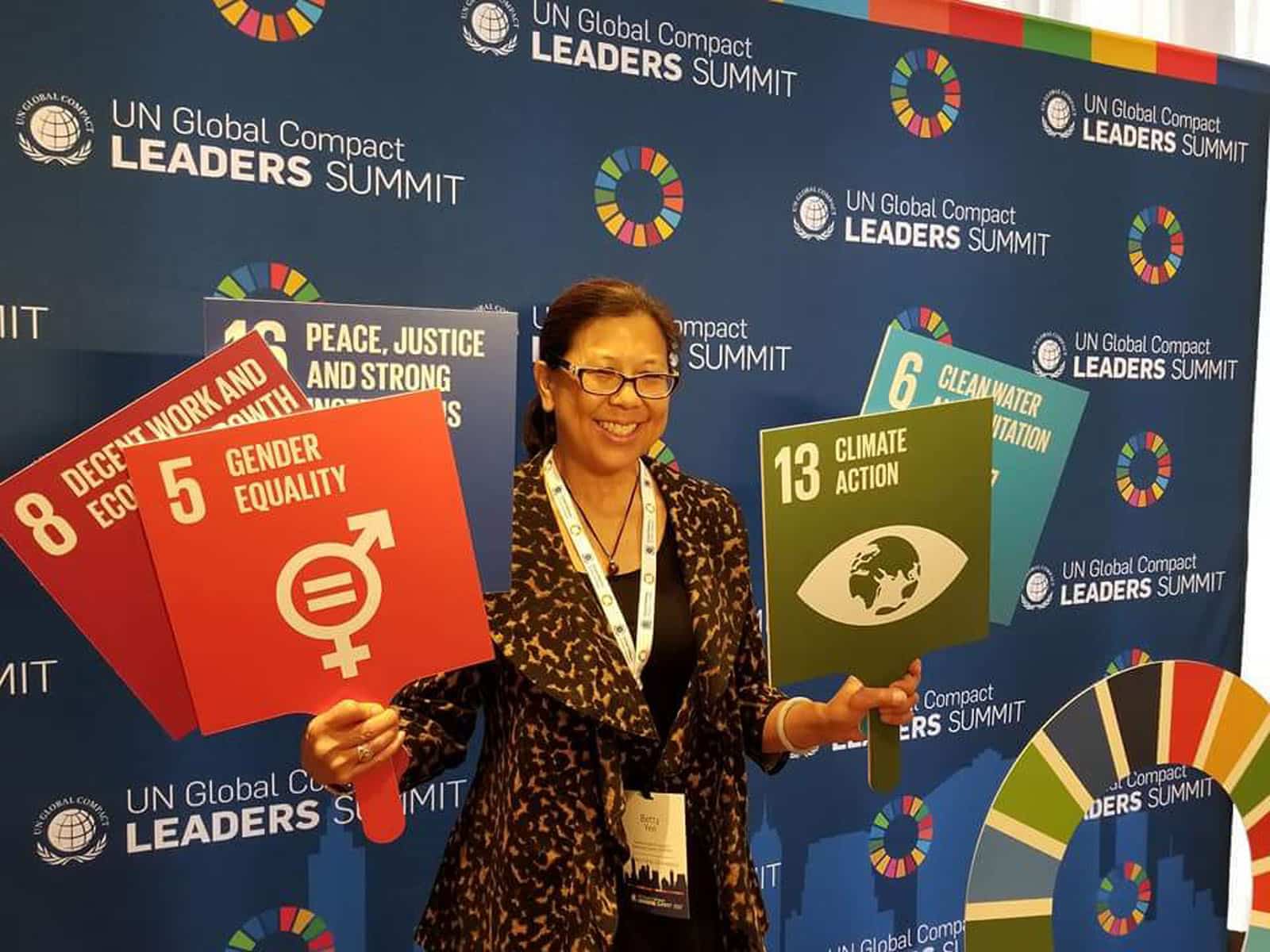
Campaigning for office is so different than it was even 10 years ago, because now you can reach out to people on a personal level. You’re very approachable, so how will you use that to your advantage?
When I first decided I was going to run for office for the Board of Equalization, I remember saying to my family, “If I ever lose myself in this, where I’m not authentically Betty anymore, you have every permission to slap me upside the head.”
First of all, it takes too much energy and secondly, I don’t know how to be anything else. (Laughs.) It was one of my trepidations about running because I’ve worked for so many elected officials in my life. You see all the stripes, people who get seduced by the system and by campaigning, and others who are able to keep themselves real and authentic.
As Controller, I represented the whole state of California. The state is tremendously diverse. Even where we live is tremendously diverse. I like to pay attention in areas where we’ve not been to as a government, places where we [haven’t] invested resources. I’ve spent a lot of time in the Inland Empire and the Central Valley, the north of the state, even down by the border. What I see there is a lot of promise and frankly a lot of grit and a lot of guts. And to me, those are qualities that suggest much more is possible.
I intend to keep getting in front of people, being sure they are engaged, that they are voting, that they are not taking their political process and the electoral process for granted. Their voice really does matter.
When I first ran for Controller, I literally drove over 250,000 miles in my old Toyota Camry because I felt like I needed to really understand who I would be representing. I would spend extra days to have community conversations, to meet the local leaders, to understand what are the issues that give people concern.
In Sacramento, I wasn’t a legislator. I never allocated money, but I was able to provide feedback in terms of how money could be well spent.
I invited a lot of storytelling. I wanted to know what people were experiencing every day. [I heard] some heartbreaking stories… I talked about how I got my start in politics, that I was an advocate for my immigrant parents, how politics still represented something good in terms of being sure that we are hearing all the diverse voices around us to make the best decisions possible, and that they, too, could bring their voice to these processes.
Whether it was an audience of four to an audience of 400—I would ask them to think about a time in [their] life where [they] stood up for someone where [they] were an advocate. I wish I had recorded some of these. They’re heartbreaking and heart-wrenching and some [are] very warm. The second question I would always ask is, “What are your hopes and aspirations for your children?”
Adam Gillitt is the Publisher of the Alameda Post. Reach him at [email protected]. His writing is collected at AlamedaPost.com/Adam-Gillitt.

