2025 tsunami exposed gaps in trainings, communications, and reporting
On June 15, the Alameda County Grand Jury released its final report for the 2025-2026 year, including their findings and recommendations regarding the City of Alameda’s emergency preparedness.
The Grand Jury is a citizen watchdog group that is part of the Superior Court and gets support and advice from the District Attorney’s office. Its 19 citizen volunteers heard 38 complaints throughout Alameda County related to issues involving the use of public funds, effectiveness of government agencies, conditions of jails and hospitals, and charges against public officials.
They decided that 10 of those complaints, including one about the City of Alameda’s emergency preparedness, necessitated further investigation. Other complaints included illegal trash dumpling in Oakland and continuing dysfunction in Newark Unified School District.
“The Grand Jury received a complaint that the City of Alameda failed to provide adequate information to residents both before and during a tsunami advisory in July 2025,” the report stated. Tsunami information, along with warnings, should have come after a magnitude 8.8 earthquake off the Russian coast, according to the report.
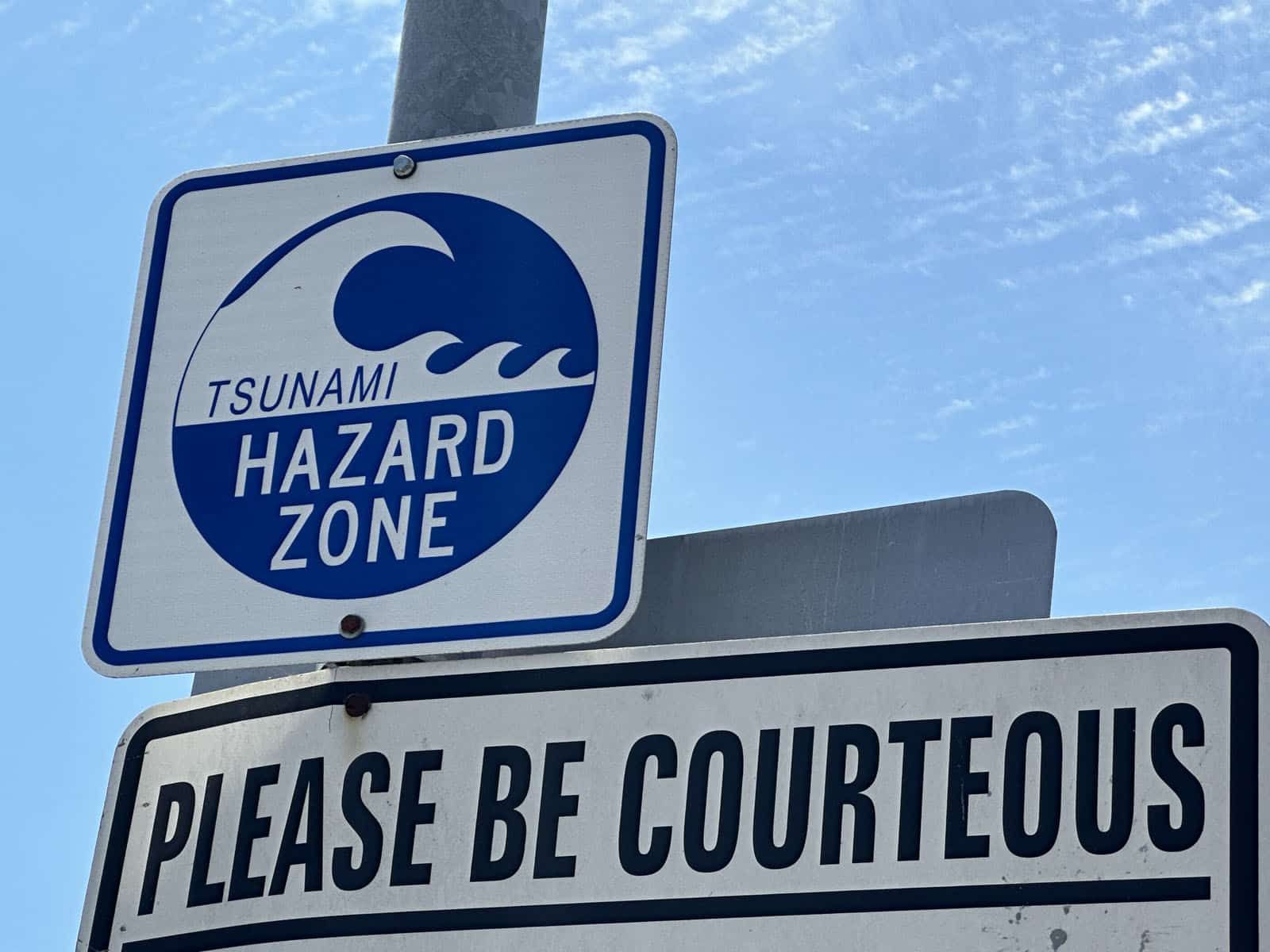
The complaint also noted that “some Alameda neighborhoods feature ‘Tsunami Zone’ street signs, but residents never received any information about what to do in a tsunami.” The Grand Jury also discussed the island’s unique vulnerability to flooding and tsunamis in their report.
The investigation, which involved interviewing city officials — including members of the fire and police departments, the city manager’s office, and the city council — resulted in the following findings and recommendations. The identity of the witnesses who were interviewed was kept confidential following Grand Jury standard procedure.

Update Emergency Operations Plan
The Grand Jury found that the City of Alameda needed to update its Emergency Operations Plan (EOP) more often. Although the City recently updated their EOP in 2026 [PDF], the last update prior to that was in 2019. The Grand Jury recommended a five-year update.
In-person outreach
The Grand Jury acknowledged that the City had information related to disaster preparedness online, but they recommended in-person trainings, as well as outreach that goes beyond social media. The City had not conducted any in-person trainings since 2019. Berkeley and Oakland, by comparison, were cited as holding multiple ongoing in-person trainings last year and this year. The Grand Jury recommended reaching participants via postcard mailings, door hangers, and inserts in electric bills.



Tests and drills
The Grand Jury pointed out that the City ignored its own EOP guidelines from 2019 and 2026, which stated that City employees responsible for emergency management participate in an annual drill. Annual drills had not been taking place and the report recommended that the City implement them.
At risk or vulnerable residents
The City maintains a database of at-risk or vulnerable residents who would need extra help in the event of an emergency. However, the database is voluntary and needs to be updated every year. The state Governor’s Office of Emergency Services (OES) recommends not keeping a database because it gives residents a false sense of security. The reality is that database residents would not receive additional or priority services, according to the report.
The Grand Jury instead recommended the City of Alameda “must create partnerships with community groups” that can identify and help at-risk or vulnerable residents in an emergency. This approach is similar to EOPs of Berkeley and Oakland.
Streamlined and unified communications
As many Alameda residents can recall, the City released confusing updates and information regarding the December 2024 tsunami warning following a magnitude 7.0 earthquake off the Northern California coast. The Grand Jury recommended that the City of Alameda, the Alameda Police Department, and the Alameda Fire Department all send out the same messaging and information regarding emergencies.
It was noted in the report that Alameda Unified School District (AUSD) makes its own decisions about evacuating schools and sends notifications only to school parents. The report did not make any recommendations about whether or not AUSD should coordinate with other City of Alameda communication systems.
After-action reports or siren warning system
The Grand Jury found that the City of Alameda had not prepared any reports after the tsunami warnings or after any exercise drills (because those drills did not occur). They recommended reports. They also recommended that the City look into the implementation of an emergency siren system, noting that Oakland and Berkeley both have one.
Download and read the full report here.
Jean Chen is a contributing writer for the Alameda Post. Contact her via [email protected]. Her writing is collected at AlamedaPost.com/Jean-Chen.

