At its meeting on Tuesday, June 9, the Alameda Unified School District (AUSD) Board of Education discussed plans for the next school year under the Local Control and Accountability Plan and heard the latest update on the district’s multi-year budget projections.

LCAP for 2026-27
Kirsten Zazo, Assistant Superintendent of Educational Services, kicked off the meeting with an overview of the 2026-27 Local Control and Accountability Plan (LCAP), AUSD’s three-year plan that highlights goals and actions to support positive student outcomes. Throughout the year, staff and leadership have presented information on LCAP initiatives underway at their respective school sites, such as efforts to build community at Earhart Elementary and Wood Middle Schools.
The 2026-27 school year will be the third and final year of the current LCAP. As this current school year comes to an end, Zazo highlighted progress and relayed feedback from families, students, teachers, and staff. Overall, families felt schools were safe and welcoming environments, and students felt supported and connected. However, they also believed more can be done to ensure consistency in expectations across classrooms, deliver more engaging instruction, and foster clear communication.
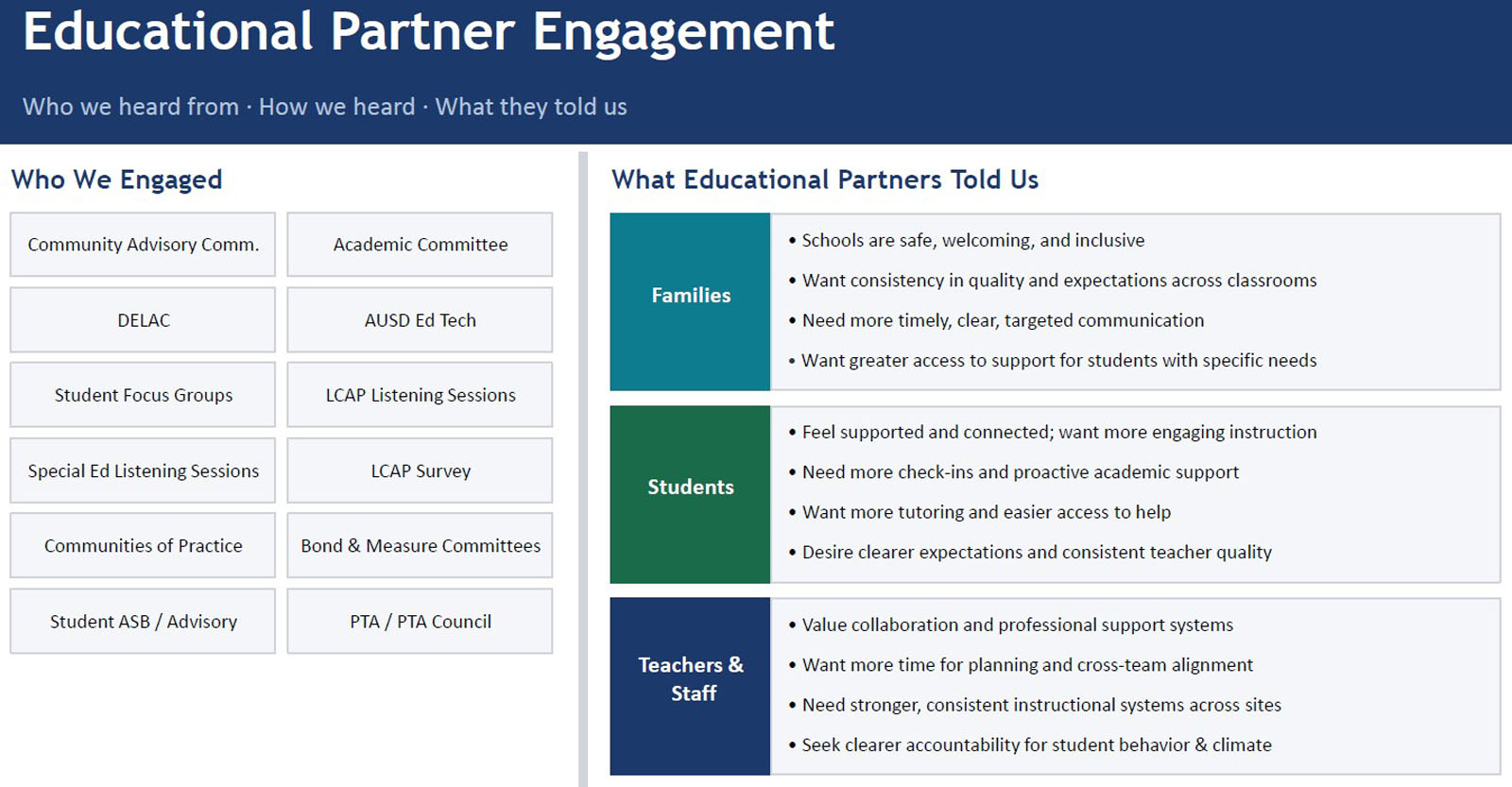
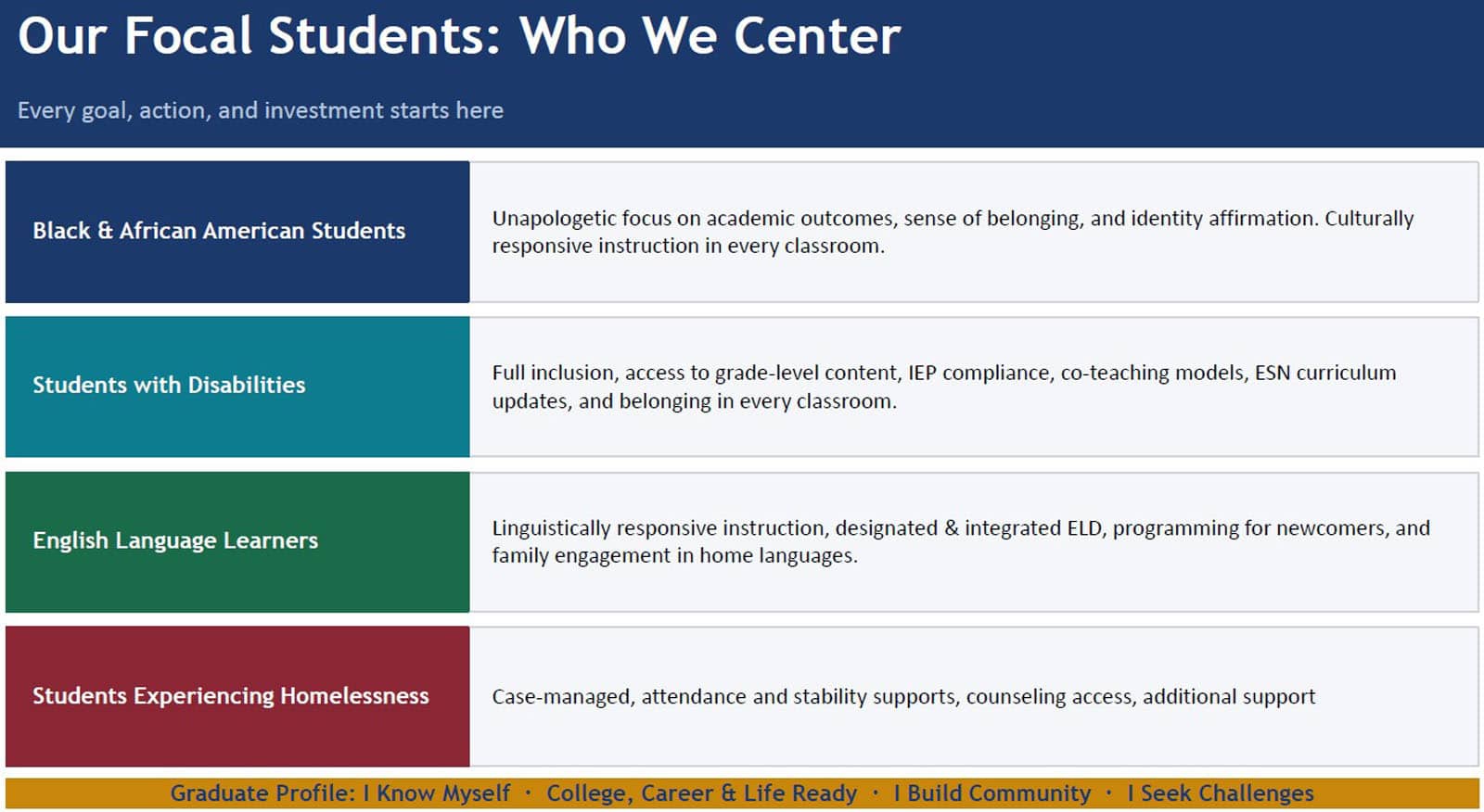
With this feedback, and in line with the district’s Strategic Plan framework and Graduate Profile, Zazo’s intention for the upcoming school year is to “tighten, sustain, and scale” efforts already underway to support LCAP goals of creating a foundational academic program, relationships and a sense of belonging, and comprehensive student support. Zazo also pledged a steadfast focus on AUSD’s focal students, as well as on four key instructional priorities: pre-Kindergarten to third-grade literacy, fourth-grade to eighth-grade mathematics, inclusive environments, and standards-based instruction and common assessments.
“Literacy is the gateway to all learning,” Zazo emphasized. “Early reading proficiency is the strongest predictor for future success.”
The Board will adopt the LCAP at its next meeting on Tuesday, June 23.



Multi-year budget projections
Later in the meeting, Assistant Superintendent of Business Services Shariq Khan made the fourth of five presentations centering on AUSD’s budget. Key to the evening’s discussion was the unveiling of the latest multi-year projections (MYP), which is AUSD’s three-year budget outlook based on current assumptions of student enrollment and staffing and how they inform revenues and expenditures.
Overall, Khan concluded that the district can meet its obligations for the next three years, albeit only with the strategic use of certain one-time funds to fulfill the recently approved labor agreements. Even then, Khan predicts AUSD will have a mere $170,000 in its reserves by the end of the 2028-29 school year, compared to $10.60 million and $8.88 million at the end of the 2027-28 and 2026-27 school years, respectively. By extending the projections to a fourth year, Khan revealed that AUSD could see a deficit of up to $14 million.
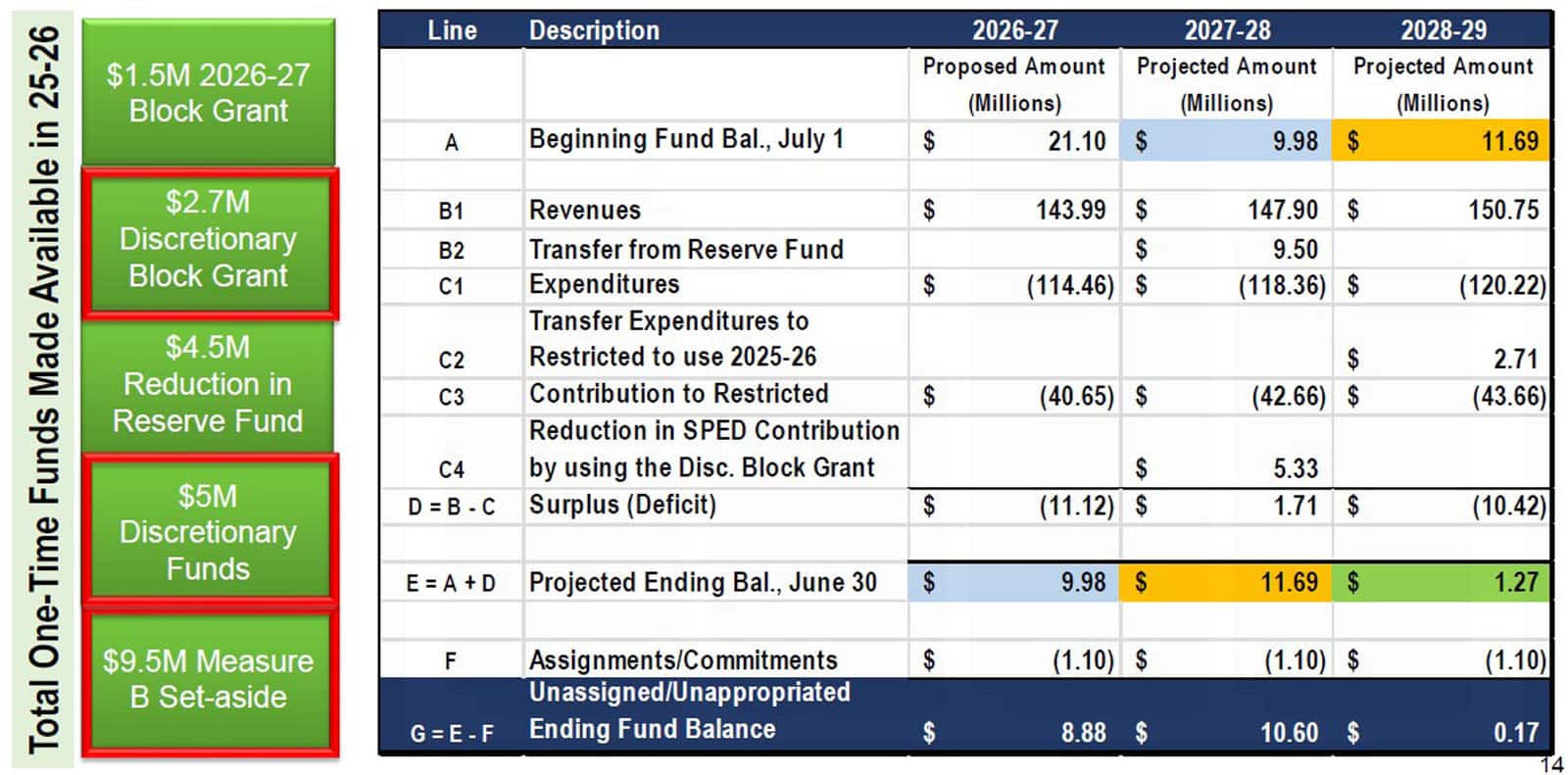
However, Khan emphasized that these numbers are subject to change in the near-term as the state budget is finalized. In the long-term, the strategic application of future one-time funds may help soften the blow. In past presentations, Boardmembers and Superintendent Pasquale Scuderi have warned that difficult decisions, paired with creative prioritization, are likely ahead. Vice President Heather Little noted that the Measure E parcel tax will expire by the 2033-34 school year and sought to “seed thoughts” for the future collaboration and discussions needed in case future funding does not come through.
Other notable items
The Board also held public hearings on the following items, which were largely accompanied by minimal Board discussion and public comments:
- Approval of a spending plan for the Education Protection Account (EPA) funds that AUSD receives from the State.
- The draft Preliminary Environmental Assessment (PEA) report for the Wood Middle School project, which assesses the presence of hazardous substances or materials at the project site. According to Khan, soil and roadway testing revealed levels consistent with natural occurrence, except for an area near the site’s transformer—that soil has since been removed.
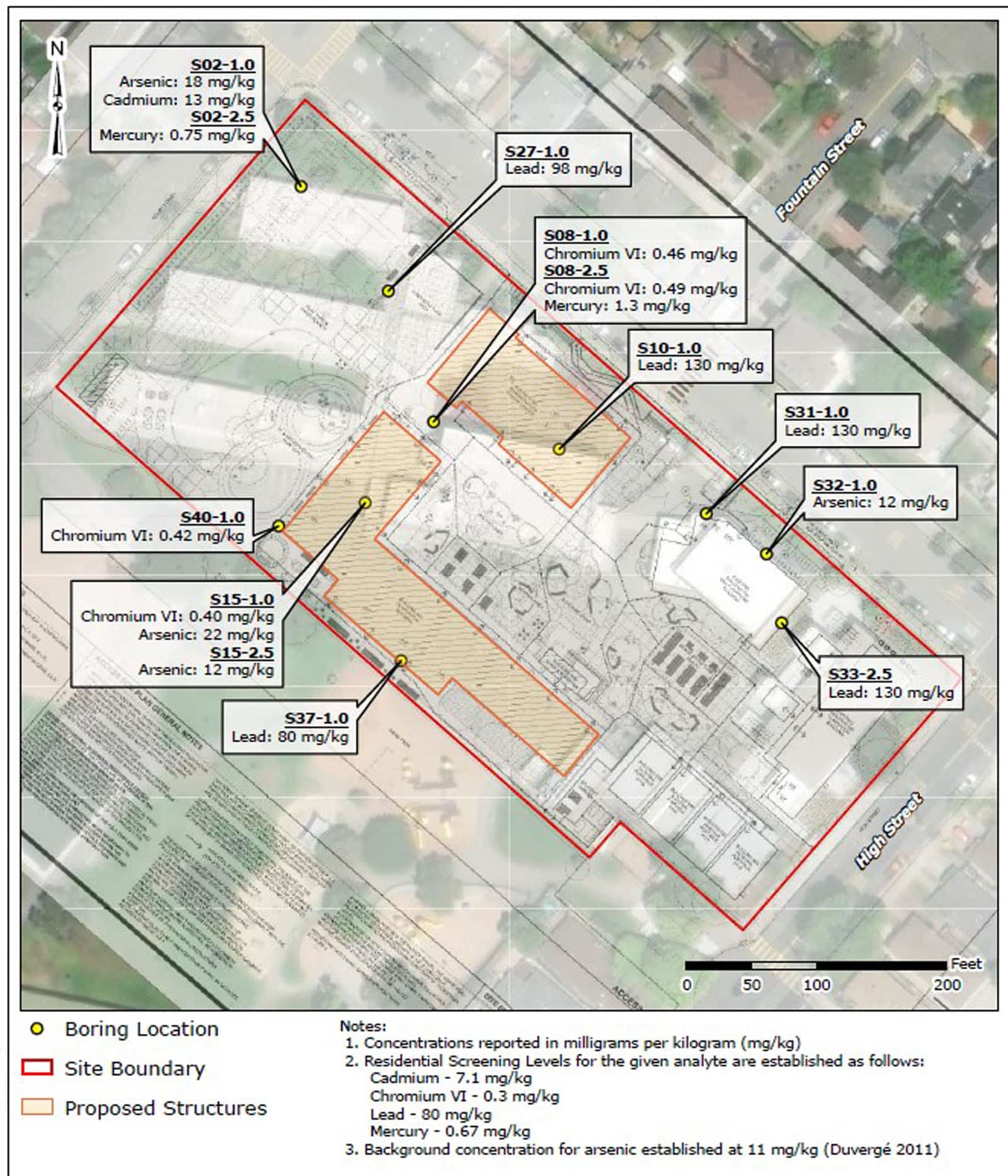
- Approval of an easement on the Otis Elementary School site for the City of Alameda to perform maintenance, as well as discussion of a draft Removal Action Workplan (RAW) in response to a PEA report from fall 2025 that found non-natural levels of certain metals—including arsenic, cadmium, lead, and mercury—on site, which will require the excavation and removal of the affected soil, as part of the Otis New Construction project.
Ken Der is a contributing writer for the Alameda Post. Contact him via [email protected]. His writing is collected at AlamedaPost.com/Ken-Der.

