The complex at 2401 Monarch Street in Alameda Point was buzzing with activity on Sunday, June 21, as Deep Tech Week, an international technology conference, kicked off the San Francisco stop of its tour.
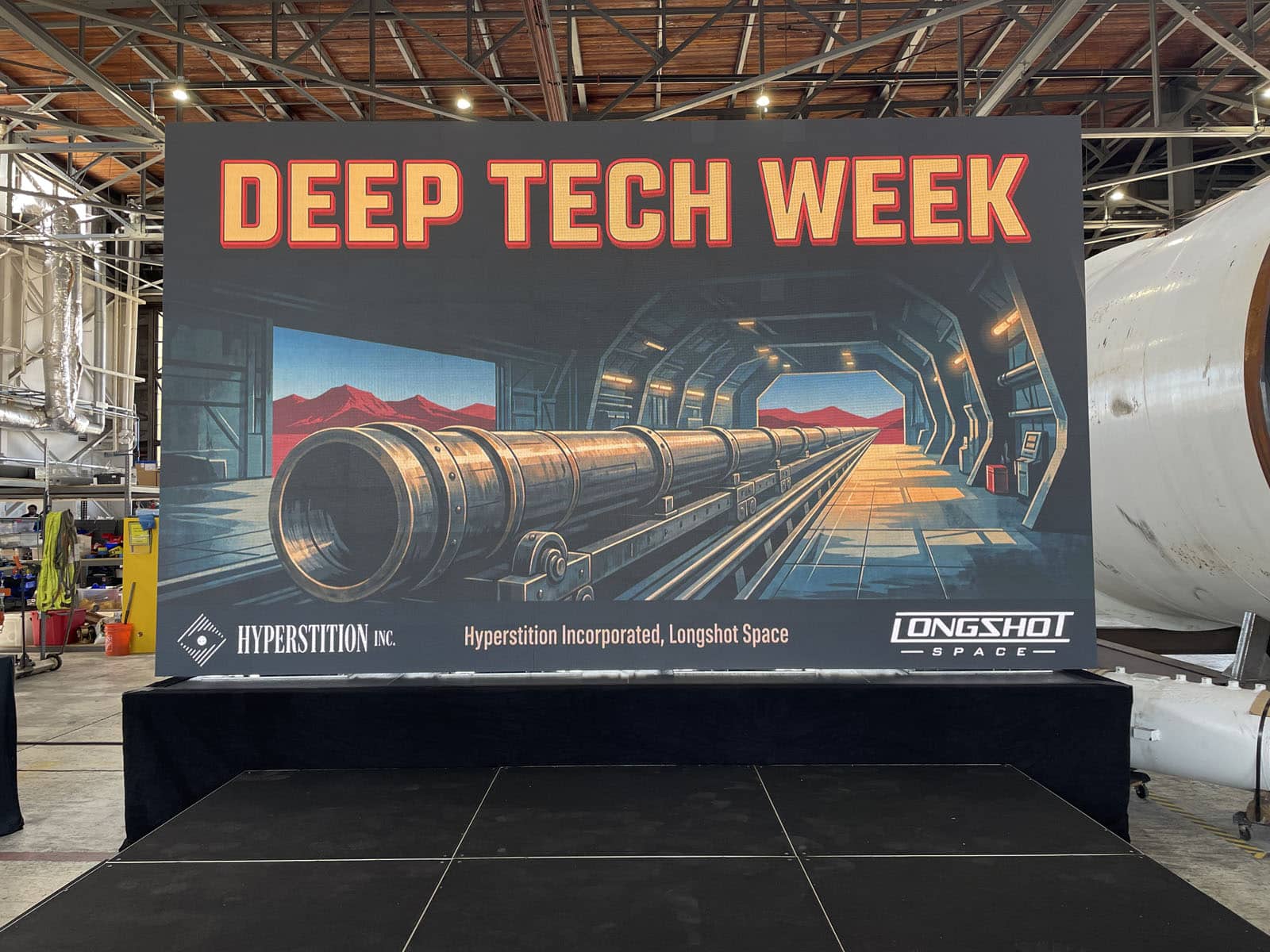
A whirlwind slate of speakers, exhibitors, and demonstrations by well-known tech companies and luminaries will take center stage at venues along Market Street in San Francisco through Friday, June 26. But event organizers chose to hold the Opening Hardware Showcase here in Alameda, behind and within the building shared by Natel Energy, CalWave, and Longshot Space Technologies.
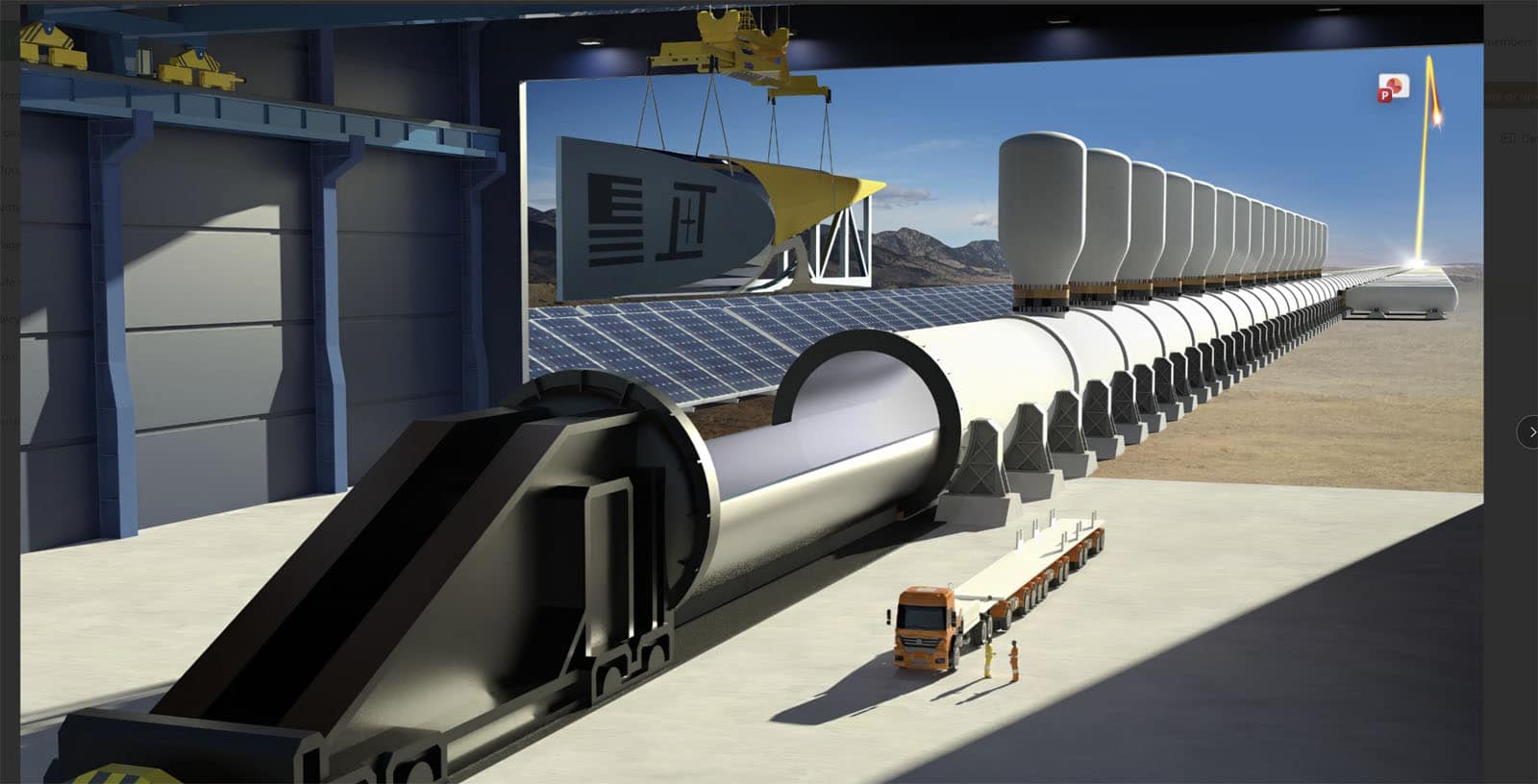
Longshot, which is building a giant space gun that its team hopes will one day be capable of launching a satellite into space, was showcased prominently as part of the event. Brendan Conaway, Longshot’s Chief Operating Officer, said Alameda Point was the perfect place to host the kickoff.
“This is the coolest spot in the Bay Area!” Conaway said. “There is a good community of startups that the city has let in.”
Conaway added that many startups are looking for workers with a high degree of training and engineering experience, and Alameda—as well as the greater Bay Area—is a great place to find talent. Longshot Chief Executive Officer Mike Grace emphasized that point in a conversation with the Alameda Post.
“There is an incredible endowment of infrastructure left over from the Navy, combined with an awesome talent pool,” said Grace, as he explained the company’s recent relocation from West Oakland.
He also revealed that Longshot has built “the largest gun on planet Earth,” currently housed in Building 29, and ultimately intends to scale up to a version that will be 3.5 miles long and be ready for testing out in the American Southwest desert at some point in the future. The intent of the day’s event, according to Grace, was to raise money with the heightened exposure to help fund intermediate building, prototyping, and testing stages to get there.
And that is exactly why founders from a few dozen other startups engaged with curious attendees outside, eager to show off everything about their new product that they believe will solve a key problem somewhere in the world.
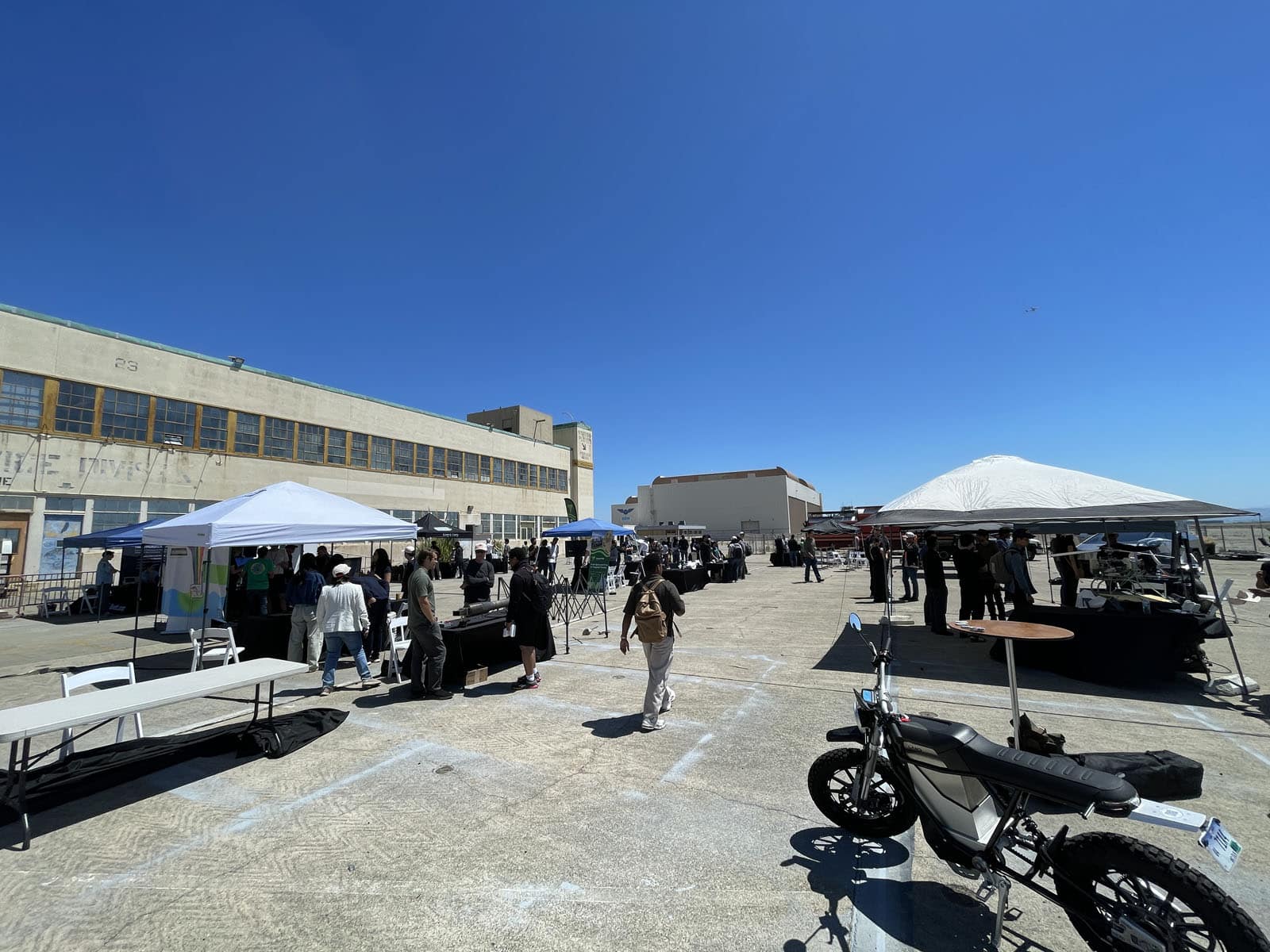
Many were local, including One Jump founder Jessup Jong, who is working on neural networks to solve complex problems like firefighting with drones, as well as San Francisco-based Thalassa Robotics, which is developing high-speed, wireless subsea communications. Others came from much farther away, such as Bionica, an Australian startup developing a pesticide coating that can bind to plants, thereby significantly reducing chemical use.




One booth that generated a continuous flow of intrigued guests was Lit Motors, which describes its core product—a self-balancing, gyro-stabilized two-wheeled electric vehicle—as the “future of transportation.”
“It’s Waymo 2.0,” explained founder and CEO Daniel Kim. Kim told the Alameda Post that the two-seat, fully enclosed autonomous-balancing electric vehicle (AEV) will solve the biggest problems of any city’s transportation network—greenhouse gas emissions, traffic safety, and traffic congestion—due to its electric propulsion, advanced technology, and smaller profile.
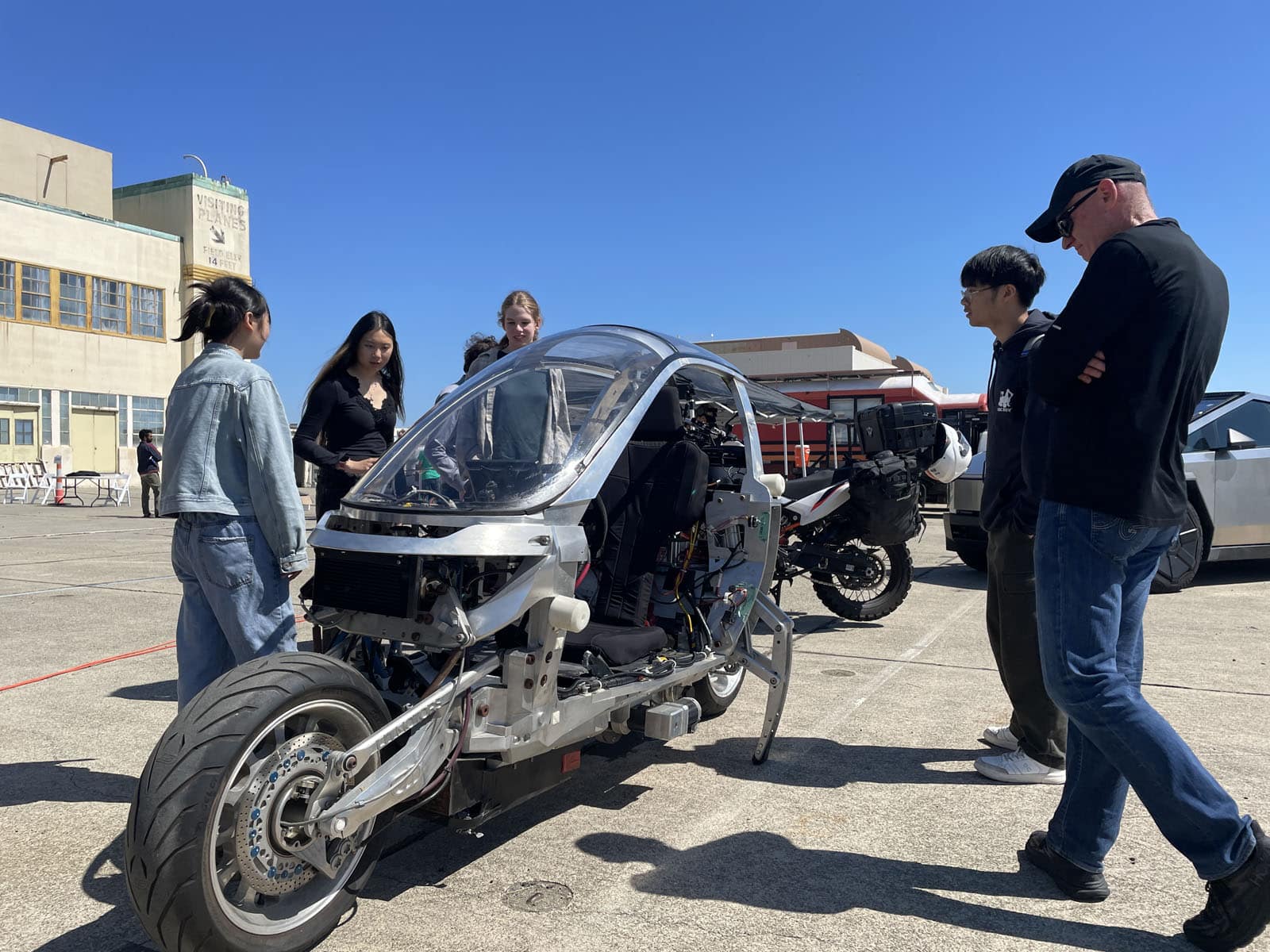
“It could double the capacity of the highway,” said Kim, noting that since about 75% of people drive alone, the company’s AEV could make driving much more financially efficient. He hopes to see a wider-scale production of the AEV, beyond the prototype stage, as soon as late 2028.
Later in the afternoon, attendees gathered to hear founders give brief “lightning talks” about their startups, including Longshot’s Grace.
Andrew Cote, the founder of Hyperstition Incorporated—the company behind Deep Tech Week—welcomed guests to the weeklong event and highlighted the importance of hardware and advanced engineering in innovation.
“Software industries make up 2% of the economy—the rest is things like energy, transportation, chemicals, manufacturing,” said Cote. “So deep tech is kind of like the rest of the economy…and I think in the future, that will really be the future of startups in general.”
Like Grace and Conaway, Cote also made sure to pay homage to the rich history of Alameda Point.
“The Alameda Naval Air Station is a special place in some way, because here is where they launched thousands of aircraft and aircraft carriers all through World War II,” said Cote. “They were actively launching hardware products in the Pacific Theater, and today, there are startups continuing that heritage.”
Ken Der is a contributing writer for the Alameda Post. Contact him via [email protected]. His writing is collected at AlamedaPost.com/Ken-Der.

