At its meeting on Tuesday, April 27, the Alameda Unified School District (AUSD) Board of Education learned about efforts to build more inclusive classrooms for special education (SPED) students and held the first of five budget conversations ahead of the 2026-2027 school year.

Inclusive SPED practices
Organized in an open-ended workshop format, staff and leadership from Paden Elementary School and Lincoln Middle School detailed inclusive SPED initiatives underway at their respective school sites and responded to Board questions in real-time.
First up to the podium was Paden principal Tri Nguyen, who explained how school staff and leadership are working to foster “intentional inclusion” through staffing and collaboration. The teaching team hopes to achieve a definition of inclusion that focuses on “educating students with disabilities to the greatest extent possible alongside their non-disabled peers and ensuring meaningful participation with necessary supports.”
Those necessary supports come in the form of modified curricula—personalized changes in what a student is taught in order to accommodate a disability—that are provided by dedicated staff specialists who serve as case managers for their SPED students. This model has created greater capacity and flexibility to support students and increased collaboration and communication between school staff.
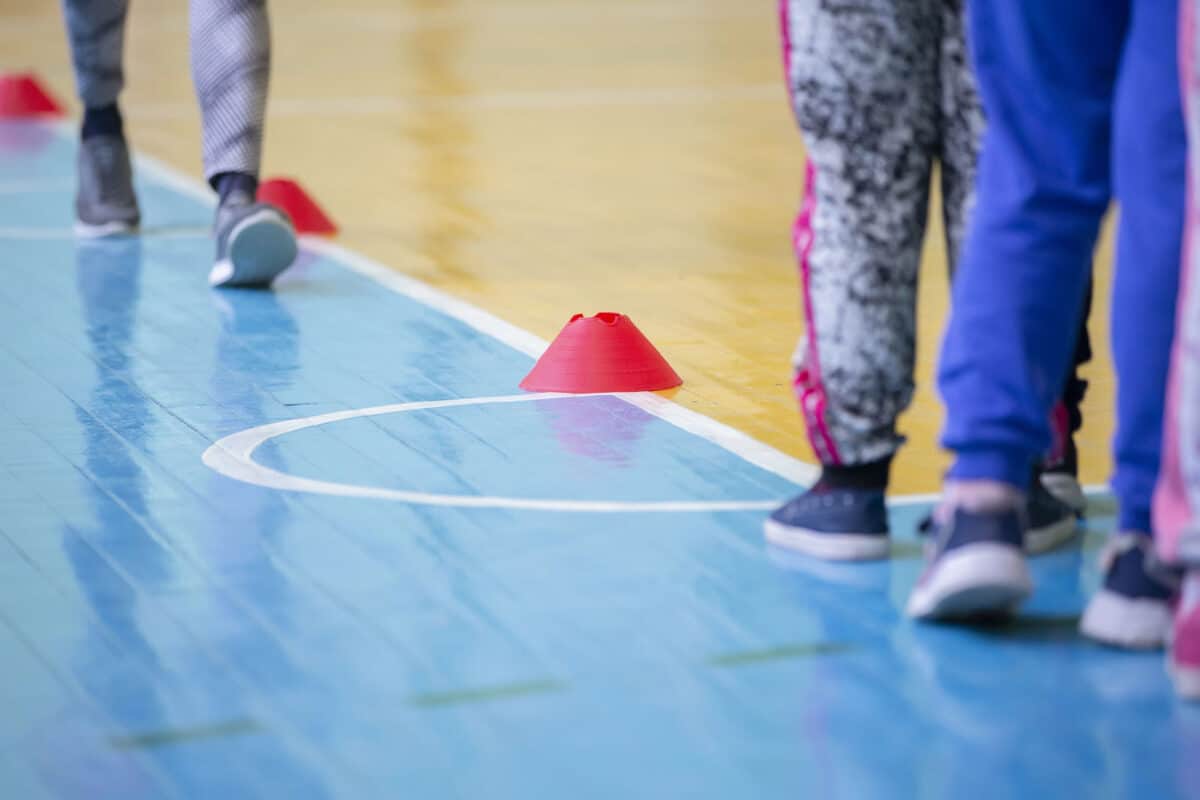
Ultimately, the effort aligns with the district’s goal to limit instances where SPED students need to be pulled out of a general education classroom to receive support. When asked about next steps, Nguyen said he hopes to continue experimenting with the program, collecting additional data, and developing metrics to measure success and bring lessons learned to a future Board meeting.
Meanwhile, at Lincoln Middle School, a group of kindhearted young people are serving as the foundation for an inclusive physical education (PE) class. The new class, currently offered in afternoons, pairs LMS leadership students with seventh and eighth grade students with disabilities to learn with and from one another through shared experiences and foster mutual socio-emotional growth.
LMS PE teacher Allison Leshefsky describes the course as not just another physical activity class, but rather one that also teaches teamwork, generates conversations, and builds bonds between students so that they are more willing to advocate for each other.

“These lessons go far beyond the gym,” said Leshefsky. “They shape the kind of community we want here for our students, and they shape the type of adults that these students will become.”
Barnaby, one of three LMS leadership students who spoke about their experiences during the meeting, recounted brief anecdotes from his experience working with four partners with disabilities so far and revealed he has learned a lot about people through this class, especially that everyone moves at a different pace.
“This is a class where everyone has fun at their own skill level, with people helping one another and making friends without judging books by their covers,” said Barnaby. “My favorite part of the class is being able to help the people around me.”


During public comment, Carolyn offered her perspective as the mother of a child in the SPED practical skills class.
“This program has meant more to my son, Cameron, than I ever expected,” said Carolyn. “With the support of his PE buddies who model, encourage, and genuinely include him, Cameron has felt like he belongs.”
Board members were enthusiastic about the course and looked forward to its expansion districtwide. Vice President Heather Little voiced her appreciation at the chance to hear support for the course from both perspectives, and expressed excitement at the ability of the young leadership students to bring their expertise with them when they enroll at Alameda High School. Trustee Gary Lym indicated he wanted to stop by LMS to observe the course in action.
2026-27 budget assumptions
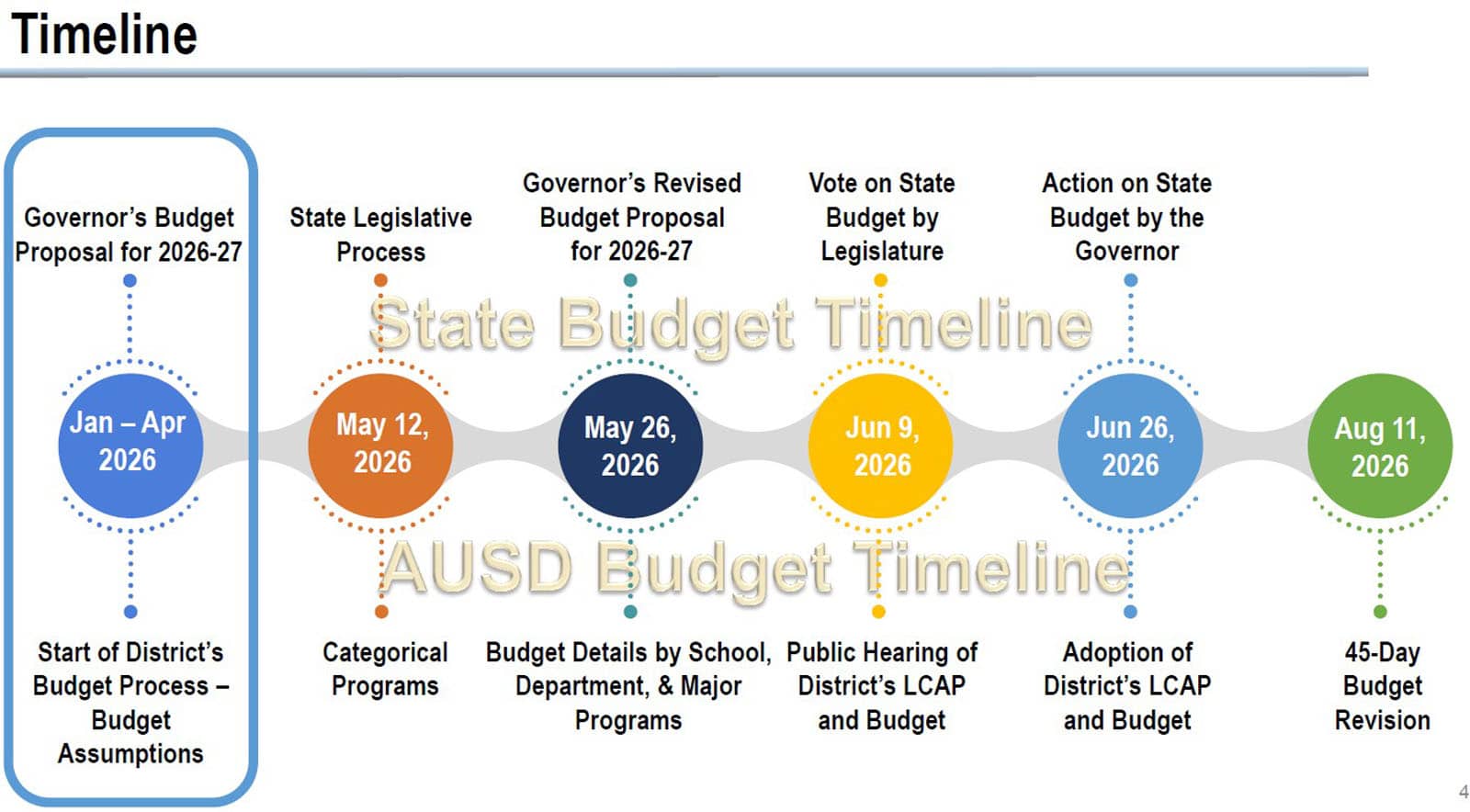
Later in the meeting, Assistant Superintendent of Business Services Shariq Khan joined Superintendent Pasquale Scuderi in kicking off the first of five budget agenda items on the roadmap to approving the budget for the 2026-2027 school year. The evening’s presentation focused on budget assumptions used to estimate revenue, along with staffing details and discretionary funding allocation for each school site.
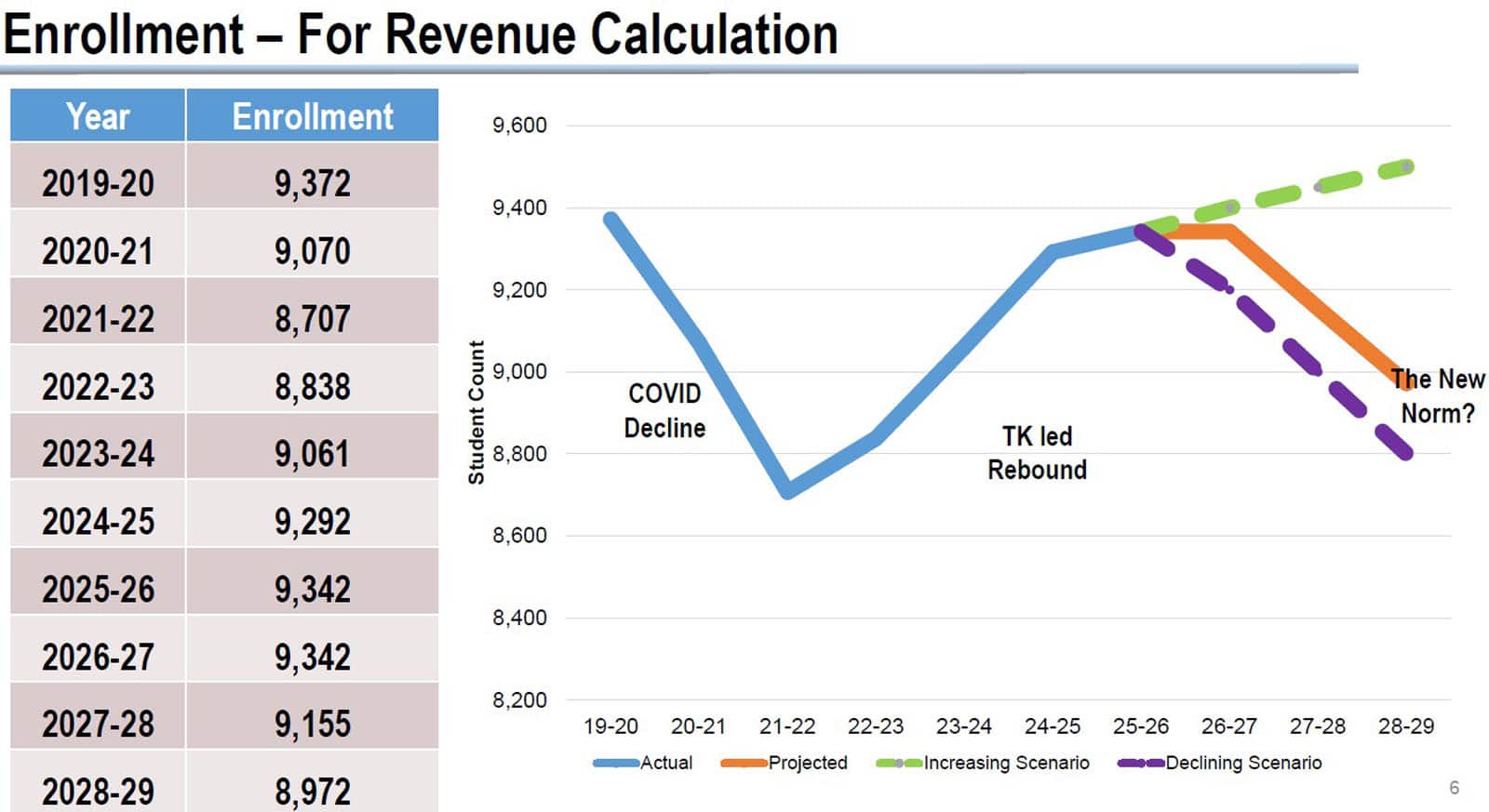
Khan provided the latest update on the Cost-of-Living Adjustment (COLA) and average daily attendance, which are two key factors used to determine the amount of funding the district receives. The district anticipates a decline in enrollment beginning with the 2027-2028 school year based on current enrollment numbers, which show fewer students in elementary schools than in high schools. Meanwhile, COLA is expected to increase from 2.30% this year to 3.34% by 2028-2029, which does mean more revenue for the district but could also indicate economic challenges ahead.
AUSD plans to have a slight increase in the number of certificated staff in both elementary and secondary schools, from 201.3 to 207.0 and from 210.4 to 215.0, respectively. The district also plans to spend about $96 to $110 per elementary student, except for Ruby Bridges, Love, and Paden, which receive additional Title I funding based on a higher percentage of students who qualify for free or reduced meals. Maya Lin also receives additional funding from an innovative block grant. Similarly, funding for secondary schools varies based on student demographics and program mix.
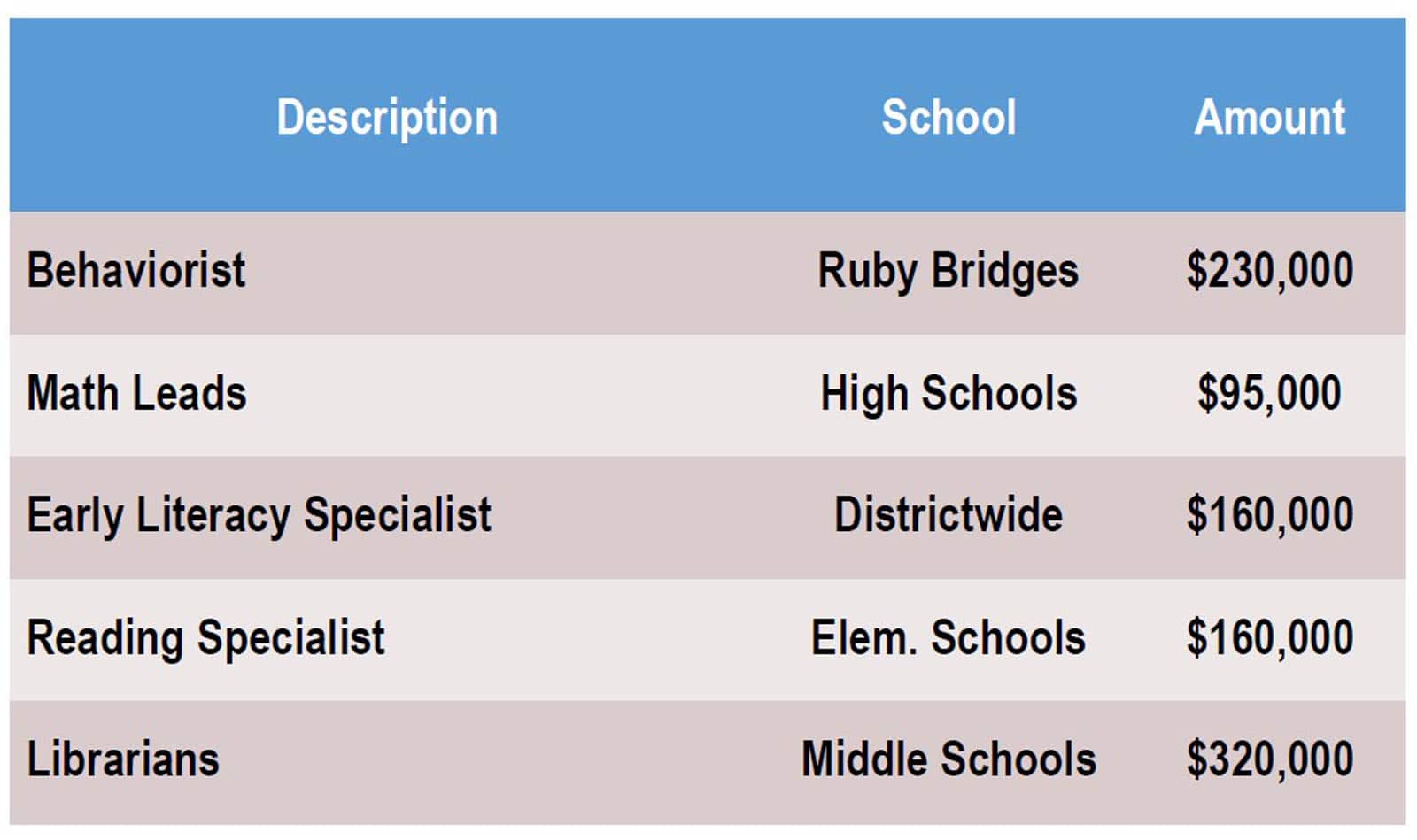
Khan and Scuderi concluded the presentation with a list of unfunded programs, which come from various funding requests that the district currently has no way of paying for. These include $1 million in various staffing positions such as behaviorists or reading specialists, as well as funding for programs such as the Wellness Resources Staffing (WRAP) Team. Although AUSD’s financial team is shifting one-time funding around to address changes in program priorities, Scuderi once again warned that the district faces a deficit in the near-term that may necessitate a “tactful way to bring reductions” into budget conversations.
Other notable items
During the meeting, the Board approved a resolution supporting sustainable funding for school-based health centers in Alameda. It also heard a presentation from the Alameda Education Foundation on the work the nonprofit is spearheading for students in the city and approved a proclamation declaring the fourth Tuesday of April as “Alameda Education Foundation Appreciation Day.”
Ken Der is a contributing writer for the Alameda Post. Contact him via [email protected]. His writing is collected at AlamedaPost.com/Ken-Der.

