During its meeting on Tuesday, October 14, the Alameda Unified School District (AUSD) Board of Education received an update on a newly adopted Early Reading Difficulties Screener and the status of various bond construction projects.

Implementation of Amira
In June 2025, the Board unanimously approved the adoption and implementation of AI instructional assistant Amira as the Early Reading Difficulties (ERD) Screener for AUSD students in kindergarten through second grade. As mandated by the California Education Code, the purpose of a screener is to identify students who are at risk for reading difficulties.
“I cannot stress enough the importance of an early reading difficulties screener in our broader literacy vision because it will allow us to systematically respond early to students who need additional support in their ability to read,” explained Lindsey Jenkins-Stark, AUSD Senior Manager of Research, Assessment, and Data.
In February 2025, a committee of AUSD teachers convened to begin a vetting process that ultimately led to Amira’s selection out of four California-approved ERD screeners. The screener that AUSD has been using for the last two years was not among the list of state-approved screeners, prompting the search for a new one. Out of the two new screeners piloted by AUSD, Amira came out on top, garnering strong feedback from teachers, families, and administrators.
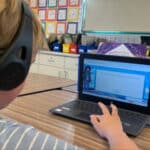
Since the beginning of the school year, AUSD has tested 1,868 students—about 96% of K-2 students—using Amira. During the examination, students interact with “Amira,” the program’s namesake avatar that speaks to the student and asks them to repeat and sound out words into a microphone or select the correct words on screen. The adaptive program helps evaluate a student’s ability in a wide range of reading skills, including phonics, vocabulary, and structures.
Teachers can review performance in the form of scores and percentile ranks compared with students nationwide, track progress throughout the school year, and identify key focus areas. Students that need more support can receive digital tutoring through Amira or intervention from other teacher-directed programs. Parents also receive a summary report with customized tips for helping their student with reading and writing.



Board members had a few clarifying questions on the adaptive nature of Amira. Vice President Ryan LaLonde and Clerk Heather Little both wondered how the program would treat non-native English speakers and if it could differentiate between whether a student has a learning or reading difficulty or just a language barrier. Jenkins-Stark revealed that Amira can test students in Spanish, though at present it remains the only non-English language on the platform.
Bond projects update
Later in the meeting, members of AUSD’s Construction Department spoke briefly about progress on completed, current, and future projects funded by Measure I and Measure B.
Approved by voters in 2014 and 2022, respectively, Measure I and Measure B authorized a total of over $477 million in bonds to support infrastructure and modernization projects at school sites across Alameda. Completed Measure I projects include districtwide roofing and technology projects, fencing and playground updates, and modernization work at multiple schools.
Measure B projects in progress include updates to the Kofman Auditorium Stage and Swim Center at Alameda High School (AHS), a new gymnasium and the renovation of the stadium and field at Encinal Jr. & Sr. High School, and new construction at Wood Middle School and Otis Elementary School. Staff provided the status, next steps, potential challenges, and estimated completion date for each project. Meanwhile, planning is underway for the modernization of Lincoln Middle School and the construction of a new athletic field at AHS. Future projects include further classroom modernizations at Encinal and AHS.
LaLonde sought further information on the completion timeline for the Encinal field and whether AUSD might be able to recoup costs following the need to remove lead-impacted soil from the AHS Swim Center construction site. In response, Monty Patterson, AUSD Director of Maintenance, Operations, and Facilities, confirmed that the Encinal field would likely be complete by the end of November, though staff will likely need to be trained on how to operate the field’s new lighting controls. He also noted that recouping costs at AHS is unlikely, though the experience serves as a lesson to be wary of and account for previous uses at future construction sites.


Other notable items:
- Edison Elementary School Principal Greg Sahakian provided an update on how teachers at Edison have been supporting early elementary reading.
- General Business Item #3, an update on the enrollment process for the 2026-27 school year, was pulled from the agenda due to a presenter’s absence.
Ken Der is a contributing writer for the Alameda Post. Contact him via [email protected]. His writing is collected at AlamedaPost.com/Ken-Der.

