This month, the Alameda Post history walking tours will explore Neptune Beach. We invite you to use your imagination to picture a resort that stretched along Central Avenue from Mountain Mike’s Pizza—the former site of Neptune Theater—to McKay Avenue, created from the “footprint” of the 1916 roller coaster. In the center of it all stood a magnificent tower that welcomed visitors to the resort.

Robert C. Strehlow Sr., August Freese, and Pete Peterson teamed up with the Alameda Land Company in 1916 to transform the old Long Branch Beach and Neptune Gardens property into Surf Beach Park. These men had played an important role in creating San Francisco’s Panama Pacific Exposition. When the expo closed, they purchased its roller coaster and shooting gallery, transported them to Alameda, and opened Surf Beach Park. The Surf Beach Amusement Company took issue with Strehlow, Freese, and Patterson, so the trio renamed the park and opened in 1917 as Neptune Beach. The grounds included a roller coaster, a carnival midway, and a swimming pool. Picnic areas with barbecue pits, and vacation cottages dotted the San Francisco Bay shoreline.
During its five-month season, visitors came to swim and dance, ride the roller coaster, picnic, and enjoy the atmosphere that Strehlow and his partners had created. Success prodded Strehlow to take over from his partners and expand the resort. He added a second roller coaster, the “Whoopee,” a smaller scenic railway for the children, and a second swimming pool. These pools, with their diving platforms, attracted famous swimmers including Olympic gold medalist and Tarzan portrayer Johnny Weissmuller. A dance hall, a Dentzel carousel, beauty contests, and baseball joined an equation that added up to so much fun that people dubbed the resort “The Coney Island of the West.”



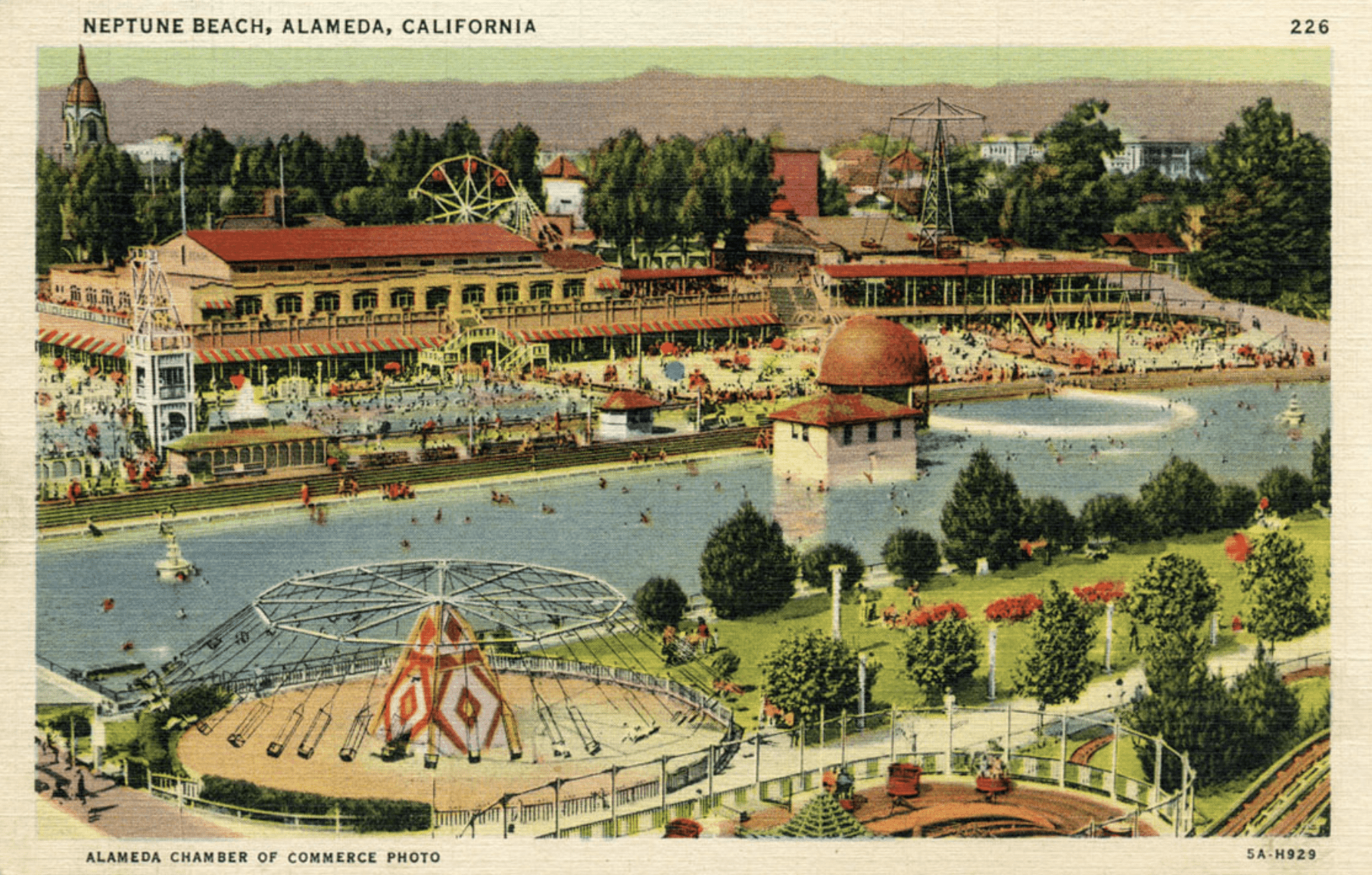
Neptune Beach History Walking Tour with Dennis Evanosky.
Meet at 10 a.m. at the resort’s speedway at the foot of McKay Avenue.
Get tickets online for $20 each for Saturday, August 15, or Sunday, August 16.
Neptune Beach began life in 1916 with a roller coaster and ended after 1939 with an auction. Join Alameda Post’s historian, Dennis Evanosky, who will lead a 90-minute stroll. The Merchant Marines called the ride’s footprint “McKay Avenue” when they created their academy. Did you know that Alameda Land Company, the owners of Neptune Beach, created a breakwater from the rubble of Francis Marion “Borax” Smith’s plant that stood near today’s Ralph Appezzato Memorial Parkway and Main Street? Or that you can clearly see the boundary between where Neptune Beach’s property ended and Utah Construction’s landfill began? Dennis will share stories about all the rides and attractions at the “Coney Island of the West.” Visit AlamedaPost.com/Tours for more information.
The Great Depression, the automobile, and the new Bay Bridge combined to undermine the ferries and rail system that people depended on to get to Alameda. The Alameda Park Company, which operated Neptune Beach, defaulted on a $45,000 bond payment, and on April 7, 1939, bondholders foreclosed. On September 30 that year, the bondholders sold the property to David and Albert Ichelson for $145,000.
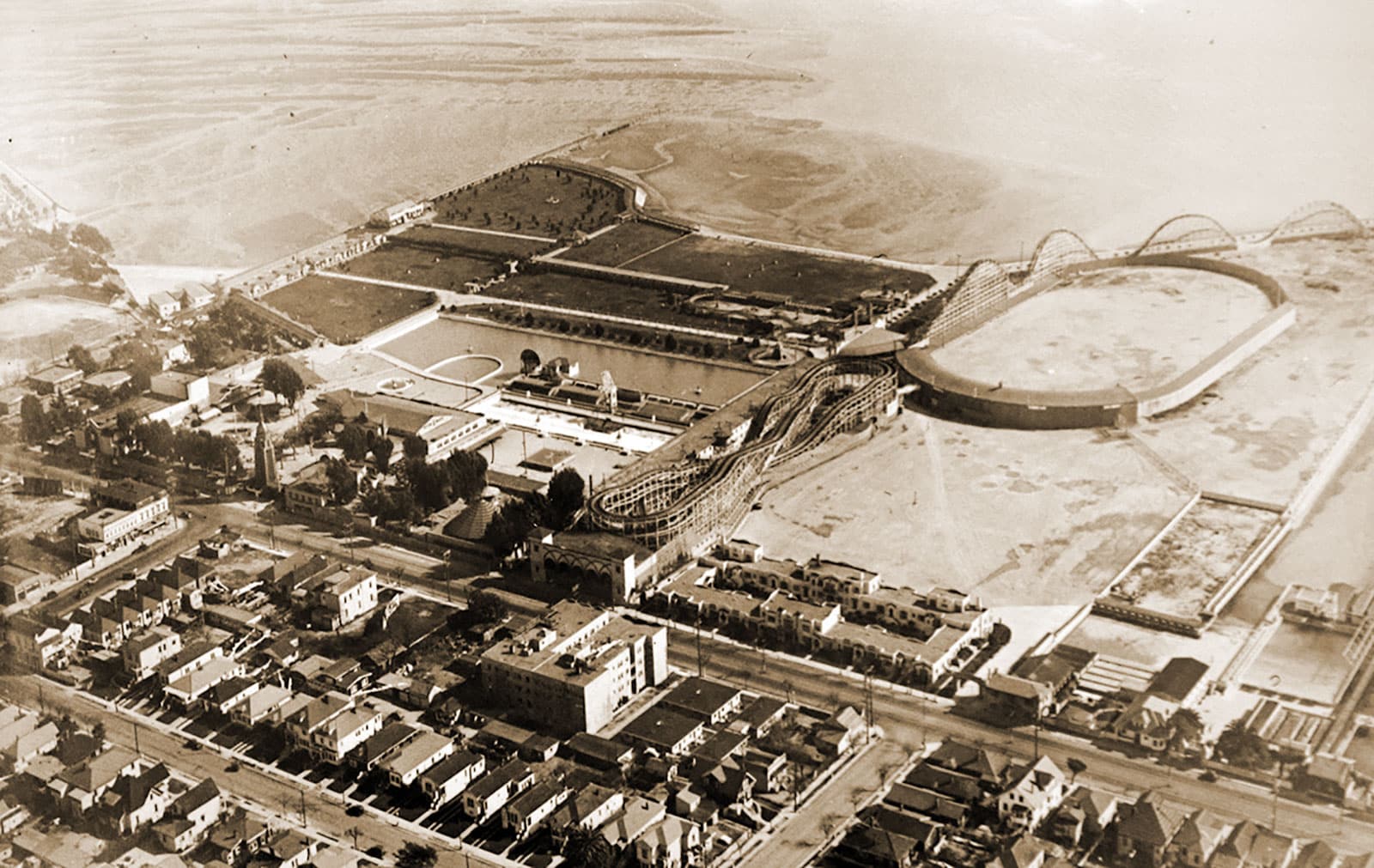
The Ichelson brothers kept Neptune Beach operating for the rest of the 1939 season. They couldn’t make it work, however. On March 25, 1940, they auctioned everything for pennies on the dollar—the 125-acre amusement park with all its accoutrements, the beaches, the stadium, cottages, and theater. By November, most of Neptune Beach had been demolished.
Dennis Evanosky is the award-winning Historian of the Alameda Post. Reach him at [email protected]. His writing is collected at AlamedaPost.com/Dennis-Evanosky.
