Our June history walking tour will take us through an often overlooked and unexplored area of our city. We’ll meet at Grand Street and Clement Avenue, where Charles Minturn’s dock would have taken you out to “deep water.” From there, his small ferry boat Union would have carried you to the small City of Oakland and beyond. I will explain how, as soon as you stepped onto that dock, you were on the City of Oakland’s property.
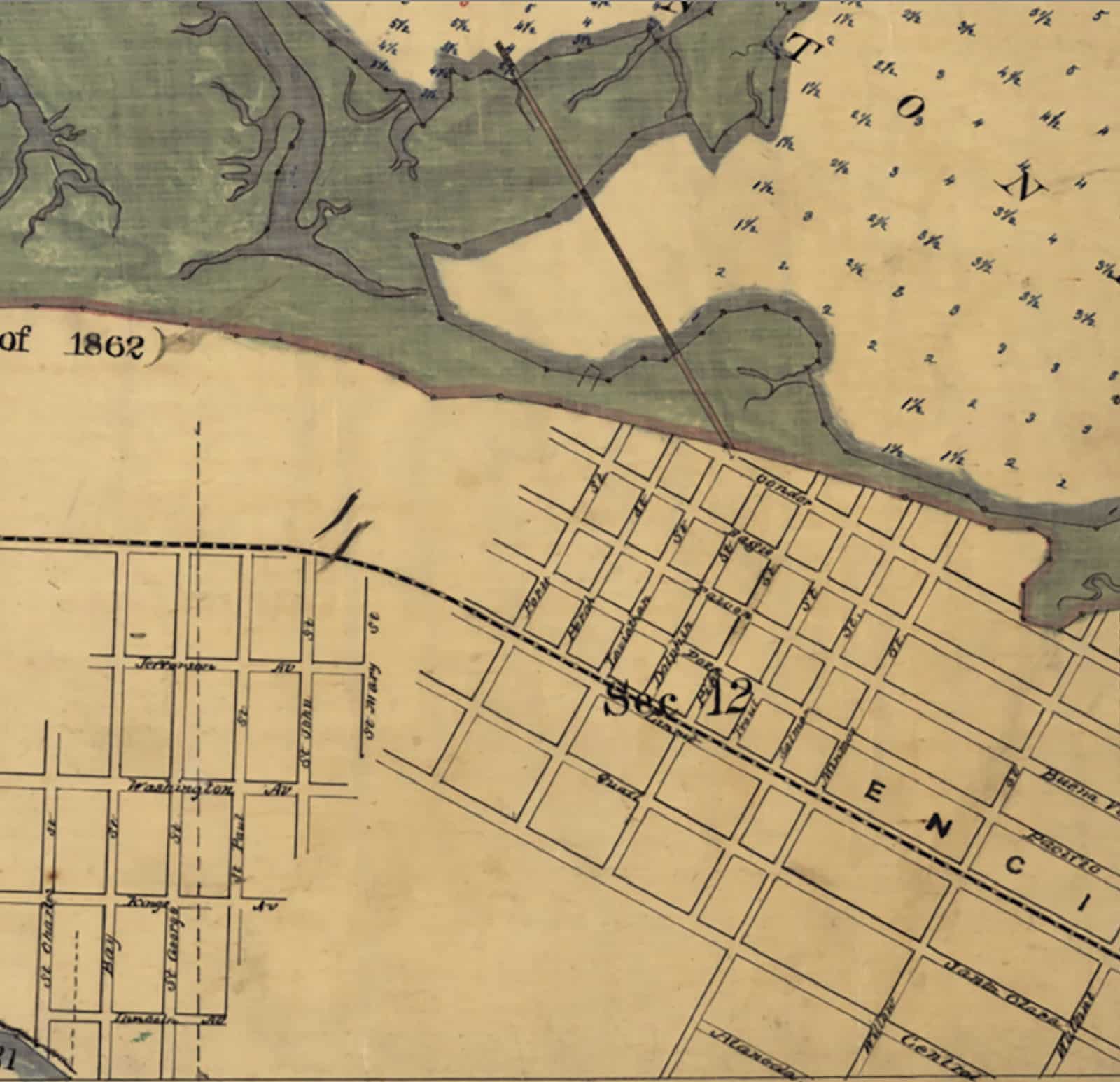
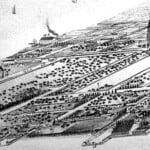
The Town of Encinal grew up around this dock. I will tell you how this small town evolved into a shipbuilding center, which became, in turn, a marina, and a residential area with its brand-new condominiums.
We’ll also explore that part of the neighborhood that once housed industry along Alameda’s “belt” and trace where the Alameda Belt Line once ran along Clement Avenue and past tall Pennzoil tanks on the way to the Del Monte warehouse and the railyards.
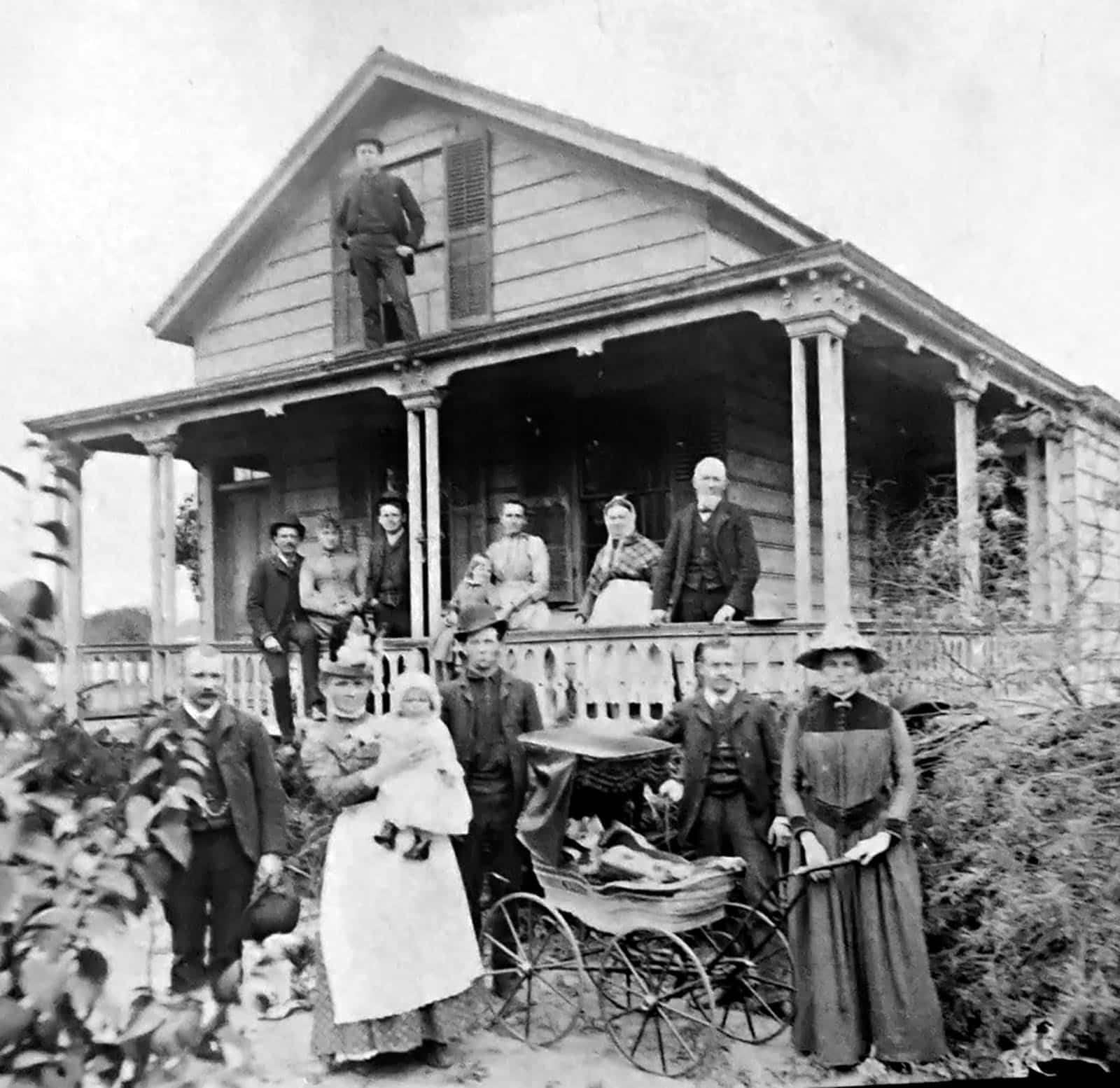
To start, let’s walk the old streets of the Town of Encinal. We’ll start at Leviathan, walk past Falcon and Dove streets and over to Perch, where we’ll see where one of my favorite families called home. On the way we’ll walk past Ellen Craig Avenue. I will explain who she was and why she has a street named for her.
Before we go, I thought you might like to learn some background information.
In October 1851, Don Antonio Maria Peralta sold William Worthington Chipman and Gideon Aughinbaugh the Bolsa de Encinal, a peninsula full of oaks (Encinal) whose shape reminded the Spanish of a purse (bolsa).
Two months later, James Hibberd purchased one-third of this land, a total of 656.6 acres for $4,666.66. The 1852 California census taker misspelled Hibberd’s name as “Hebbrid.” The City of Alameda continued the error by spelling the man’s name “Hibbard.”
This property first appeared in records as “Hibbard’s Third” (note the misspelling even in the 1850s) and later “Lands Adjacent to the Town of Encinal.”
Today’s Oak and Paru streets form the eastern and western boundaries of Hibberd’s property, which stretched south to San Francisco Bay and north to the marshlands that bordered what later became known as “Brooklyn Basin.” On March 17, 1852, Hibberd sold one-sixth of his purchase—about 109 acres—to Joseph Emeric.
Court records in the form of lawsuits filed by Chipman and his brother and law partner, Edward, revealed the good doctor reneged and failed to pay for his property.
In 1854 Hibberd laid out the town along the peninsula’s northern shore at the foot of today’s Grand Street. He named the eight north-west streets for fish: Minnow, Salmon, Trout, Pike, Dolphin, Leviathan, Perch, and Paru. He gave his six east-west running streets bird names: Quail, Linnet, Dove, Falcon, Eagle, and Condor.


Charles Minturn arrived and, either with or without consulting Hibberd, built a wharf that jutted off Leviathan Street 3,000 feet into Brooklyn Basin and water deep enough to handle his small ferry boat, Union. A bird street (Eagle) and a fish street (Paru) still survive from Hibberd’s naming scheme.
Historian Imelda Merlin discovered that Chipman mentioned that Hibberd’s town boasted a tannery and a 15-acre strawberry field. He didn’t stay long. Records from the next year, 1855, show him living in Richmond, Indiana. He had moved back home where he set up a successful medical practice and sat as the town’s mayor for a time. Richmond’s school still bears the family’s name.
June 20 & 21 History Walking Tour – The Town of Encinal
Get tickets for Sat. June 20 or Sun. June 21 at 10:00 a.m. More tour info.
Meet at 1852’s Leviathan and Condor streets, today’s Grand Street and Clement Avenue.
James Hibberd helped himself to all the land from Oak to Paru streets and from the San Francisco Bay shoreline. He created a wharf and the small town we’ll explore. He left in 1855 allegedly without paying for his land. I wonder if the city got even by misspelling his name “Hibbard” when they named that street for him? Our walk has more history and architecture to enjoy along the way.
In 1872, the state of California approved new articles of incorporation that allowed the Town of Alameda to absorb the towns of Encinal and Woodstock. The new articles turned the entire peninsula over to the Town of Alameda. In 1879, the town refreshed its articles of incorporation. By then all but two of the old Town of Encinal’s streets—Paru and Eagle—underwent name changes. Eagle Street became Eagle Avenue to conform to other east-west avenues.
Fish street name changes:
- Minnow became Chestnut Street.
- Salmon was renamed Schiller Street.
- Trout lost its name to Lafayette Street.
- Pike Street now remembers Charles Minturn’s ferry, Union.
- Dolphin Street now bears Minturn’s name.
- Leviathan Street, named for the grandest fish of them all, is now Grand Street.
- Perch Street recalls James Hibberd (albeit spelled Hibbard).
Bird street name changes:
- Quail Street with its horsecar line became Santa Clara Avenue.
- Linnet Street that carried Central Pacific trains was appropriately called Railroad Avenue, then renamed Lincoln Avenue in 1909.
- Dove Street fell in with the rest of Pacific Avenue.
- Falcon was connected to Buena Vista Avenue.
- Condor Street was renamed to honor pioneer Jabish Clement.
“Hibbard’s Third” stretched west to Oak Street. That brought three more fish streets into play, with the following name changes:
- Bass Street became Willow Street.
- Pompino Street changed its name to Walnut Street.
- Mullet Street lost its name to Oak Street.
While the Town of Alameda was finalizing these name changes in 1878, Thomas H. Thompson and Albert A. West published a handsome volume of maps of Alameda County, including a map of the Town of Alameda. Details on this map show how much the town had changed. The company sold their map books by subscription and featured artwork of the businesses and homes of their subscribers. Thompson & West’s representatives also asked the cities and towns included in these works for money to help defray the costs of creating the maps.
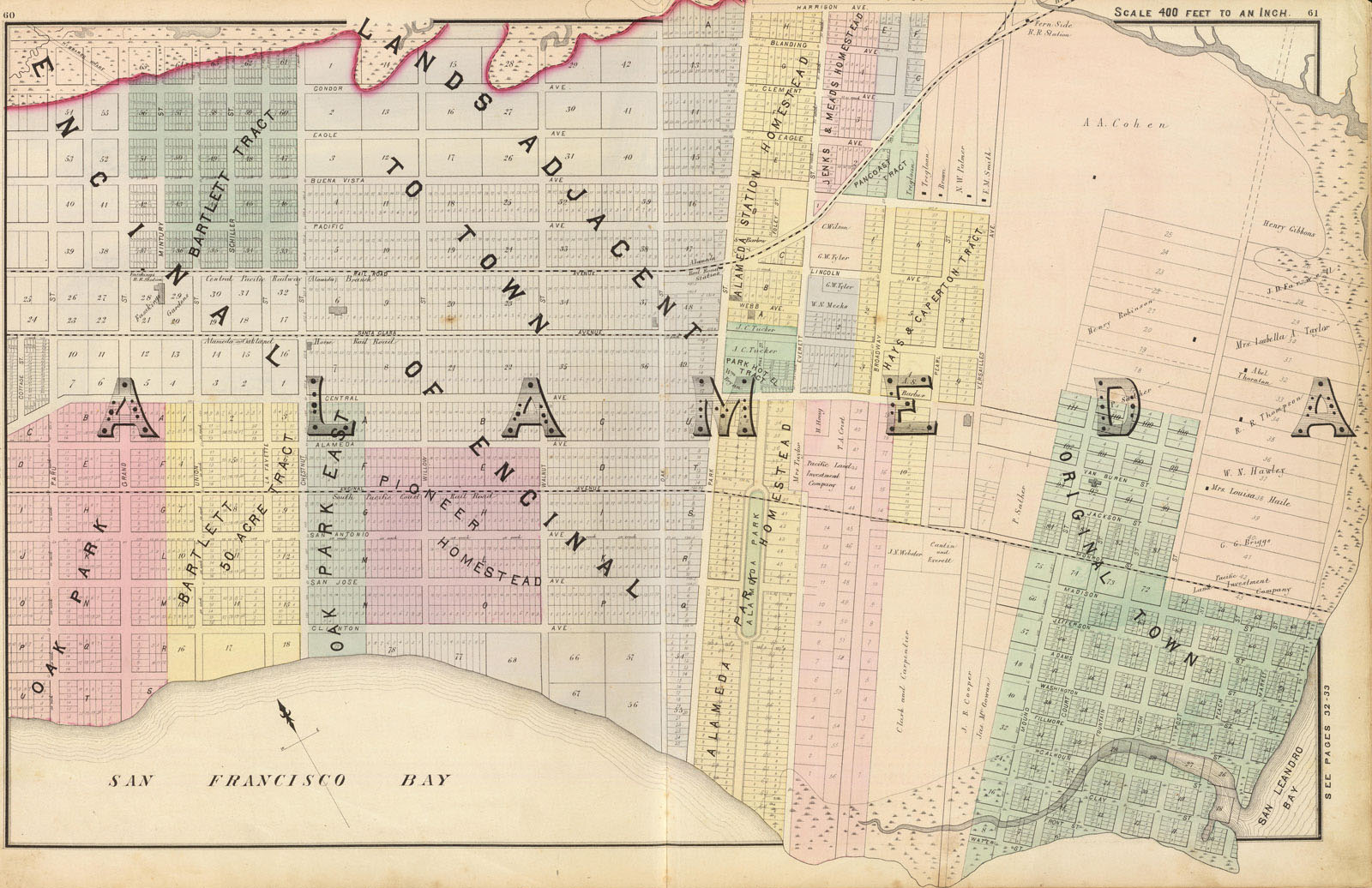
When they approached the Town of Alameda, the Board of Trustees declined the opportunity. However, the publishers did receive support from wealthy Alamedans. This encouraged Thompson & West to include Alameda in their History of Alameda County.
These maps are important because they give us a detailed look at how, by 1878, the Town of Alameda had grown. The name Alameda not only described what Thompson & West called the “Original Town” but included Dr. James Hibberd’s Town of Encinal, and Alfred A. Cohen’s Town of Woodstock. The section of the map that includes “Lands adjacent to the Town of Encinal” shows that much of this land now belonged to a wealthy investor, whose brother, Washington Bartlett, later served as Governor of California.
Dennis Evanosky is the award-winning Historian of the Alameda Post. Reach him at [email protected]. His writing is collected at AlamedaPost.com/Dennis-Evanosky.

