As a play director, the stage is my canvas and people my paint. But I know not what it’s like to hold a narrow brush dipped in colors and tell a story dabbing images on a flat surface. Back in April, the works of seven local artists were unveiled on the middle wall of Webster Park, a project called Throwing Shade, organized by the incomparable Katie Connell. This coming Friday, September 4, from 5 to 8 p.m., a reception will take place there celebrating the art and artists—and you are invited to join them.
To tease and lure you to this joy affirming event I’ve asked each painter to talk about their creation by answering this question: The art you created is now part of a public display, a palpable part of the community. What does that mean to you and how is that different from other pieces you’ve done?
Here are replies from four of them.
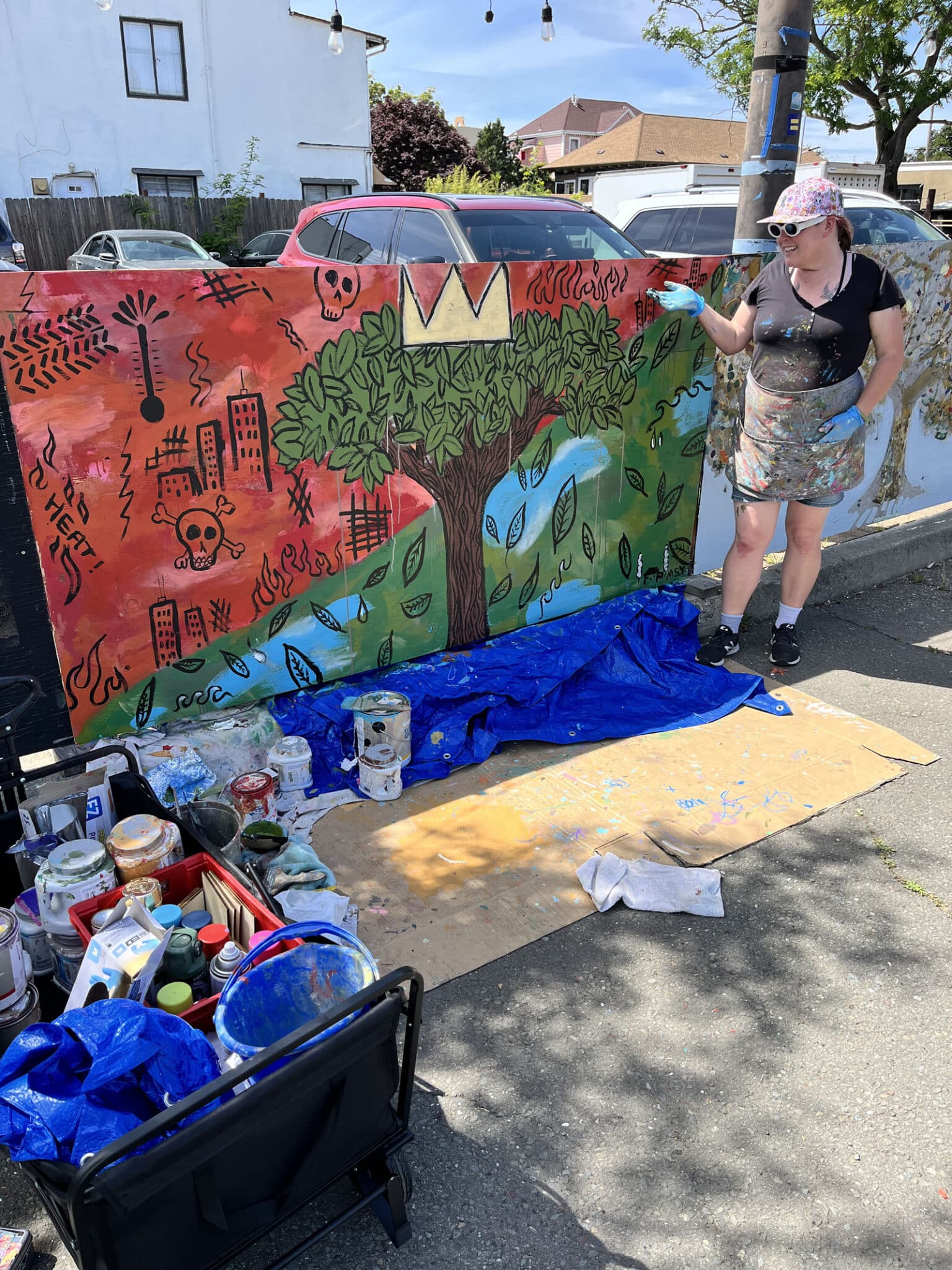
Jo Anne Yada
Most of my art reflects the things I love—punk music, vivid colors, wild patterns, and the visual chaos of collage. This mural takes that same energy and turns it outward. I painted one side red to represent the heat, danger, and increased risk of death in neighborhoods without trees, and the other side blue and green to represent the cool, comfort, and safety that trees provide. At the center is a tree wearing a gold crown because trees are powerful and valuable.
Having access to shade shouldn’t be a luxury. It’s something every human being deserves, no matter their economic status.
Seeing this mural at Webster Park is exciting because its message goes beyond my own typical interests. It’s about something that affects all of us—having access to trees, shade, comfort, and safety regardless of where we live or how much money we have. If my painting can make people stop and think a little differently about something they might normally take for granted, then I’d call that amazing. I’m also honored to be among other local artists’ works, created by not only my peers but my summer camp students as well!
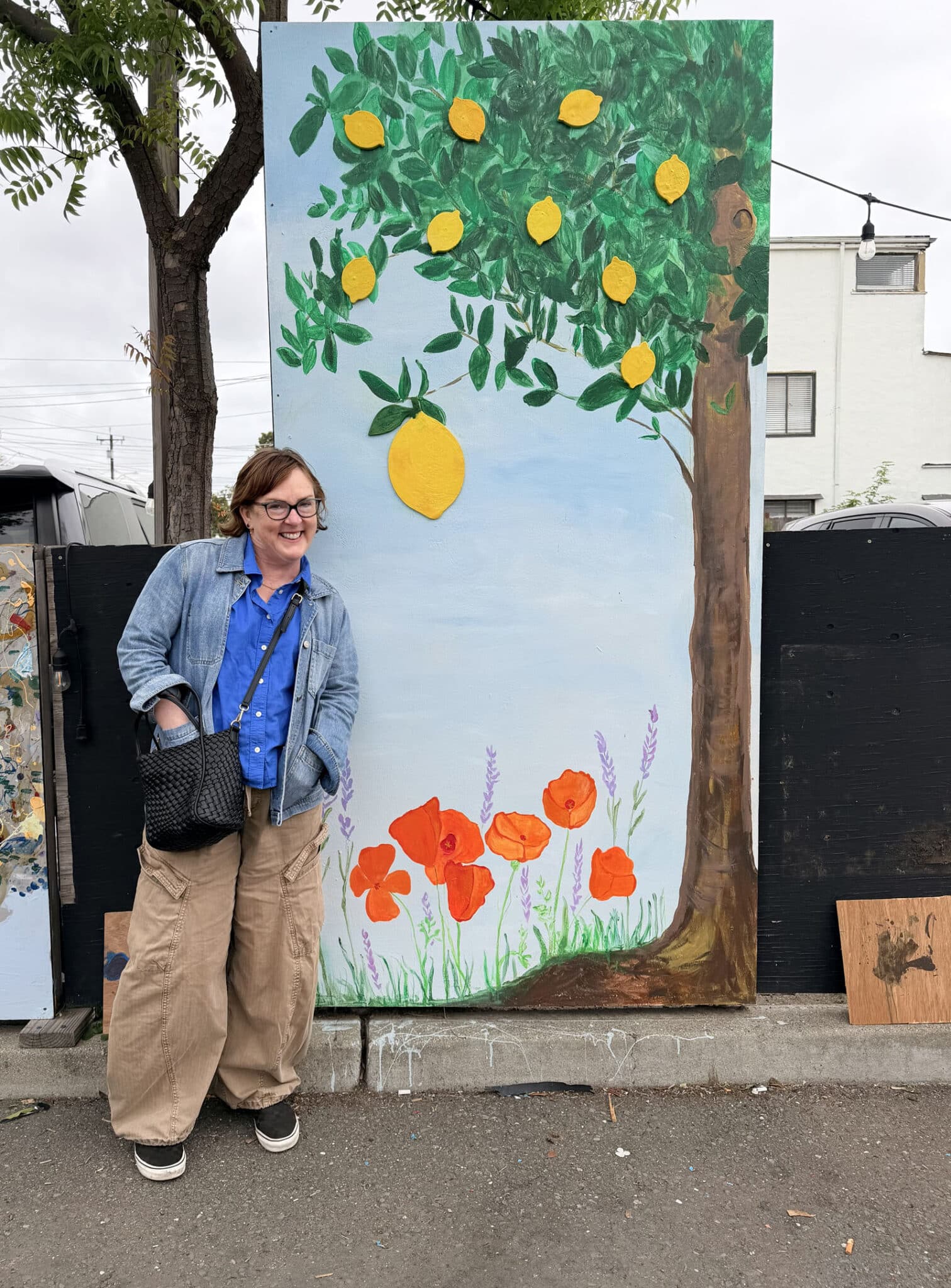
Jenn Doyle Crane
I’ve always been inspired by Alameda’s lemon trees—those generous, familiar, and abundant trees all over our island that seem to quietly give and give. They were part of the inspiration behind Alameda Fruit Co., my community food project as the “Marmalade Mama,” where I turned local citrus into something to share and give back.
So it felt especially meaningful to paint a lemon tree for a community healing garden, for a show themed “Throwing Shade and Planting Trees for Community.” The idea of planting something that will grow, provide shade, nourish others, and continue giving long after we’re gone really resonates with me.
I work primarily in encaustic, using beeswax and damar resin, materials that literally come from nature, and I love that my work keeps bringing me back to the same themes of growth, preservation, transformation, and connection to place.
For me, this lemon tree is more than a tree. It’s a reminder that we can all plant something—an idea, a garden, a work of art, a little generosity—and hope that it gives something back to the community.
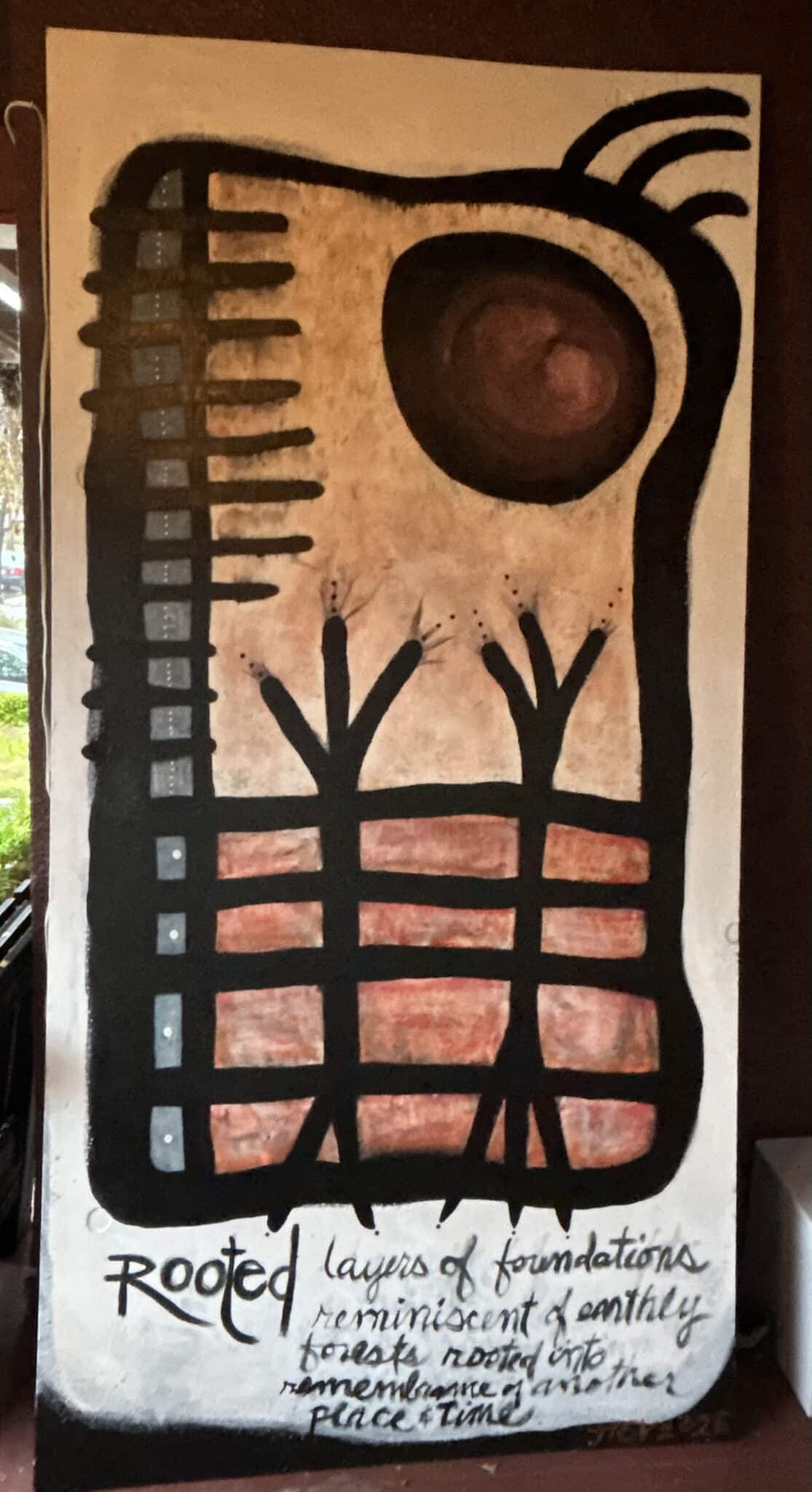
Marcy Voyevod
Our murals in Webster Park are a combination of fantasy, realism, political, informational, and fun. All of the artists put their personalities and beliefs into their work. We spent time together supporting each other and helping when the deadline was creeping up on us.


It is an honor to have my mural in this garden as I was involved from its inception. During the pandemic and the political unrest during 2019 and 2020 there was a group who began planting, weeding, and restoring the former parking lot and transforming it into a community art garden. I remember cautiously handing my succulent cuttings to Michael while we both were wearing masks. We had weeding and watering schedules which gave us the opportunity to meet up and share stories.
It’s so hard to believe that was six years ago. During that time I was able to retire from my job, get involved in local peace movements, travel to Spain a few times, and mainly focus on my writing and art.
My mural began as an abstract sketch in one of my sketch books influenced by my travels in Spain in 2024. I named it Rooted, for what I imagined the land was like before Alameda became what it is today. There must have been forests and animals. I imagined the first people enjoying the clean air and water and the freedom of another time in history.
On the mural is written, ”layers of foundations reminiscent of earthly forests rooted into remembrances of another place and time.”
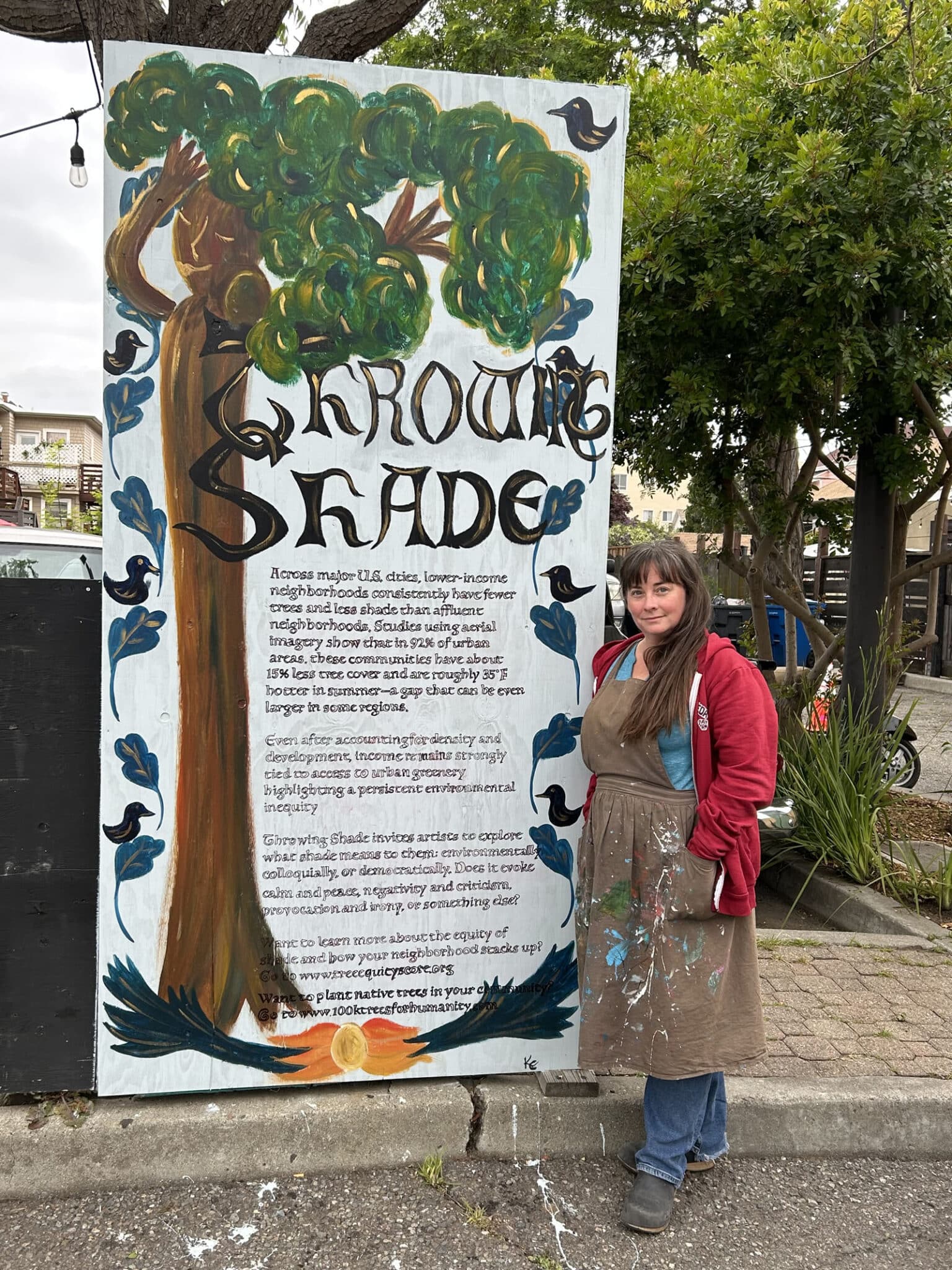
Katie Connell
When I started planning the Throwing Shade art installation, I was thinking about climate, shade equity, and using my skills (art stuff) to bring awareness to these issues. I was not thinking very much about placemaking. Four months later, placemaking is almost all I think about.
I didn’t really know what I was doing when I invited the public to come make art that would go up in the space. Kids and adults of all ages came to paint with us, and their paintings can be seen in the community portions of the art wall. I had a whole plan to make this art wall framed with “bee hotels” where our pollinators could find shelter and support local gardens. However, I was so slow in putting the bee hotels together that the public moved in. In the half-finished chaos I had created, neighbors and visitors began to create order. More art began showing up. Someone would leave a drawing on top of a barrel. Someone else would tape it up to the wall. More paintings appeared. A mask. An origami crane. A poem. The public was taking ownership of our little art space.
People cared about it.
When I go there I can feel all that care. People feel a sense of ownership about a space they have contributed to. In his TED talk, place-maker David Engwicht jokes, “Place is the antidote to our addiction to movement. …Do you know that in America, your forefathers said that each of you has the right to pursue happiness? As Americans, you do not have the right to sit and be happy.”
In Webster Park, I see people sitting. And it seems that most of them are pretty happy. This installation has not only transformed Webster Park, it has transformed my idea of what I can bring to my community, and what is possible with a little paint and a lot of imagination.
Gene Kahane is the founder of the Foodbank Players, a lifelong teacher, and former Poet Laureate for the City of Alameda. Reach him at [email protected]. His writing is collected at AlamedaPost.com/Gene-Kahane.

