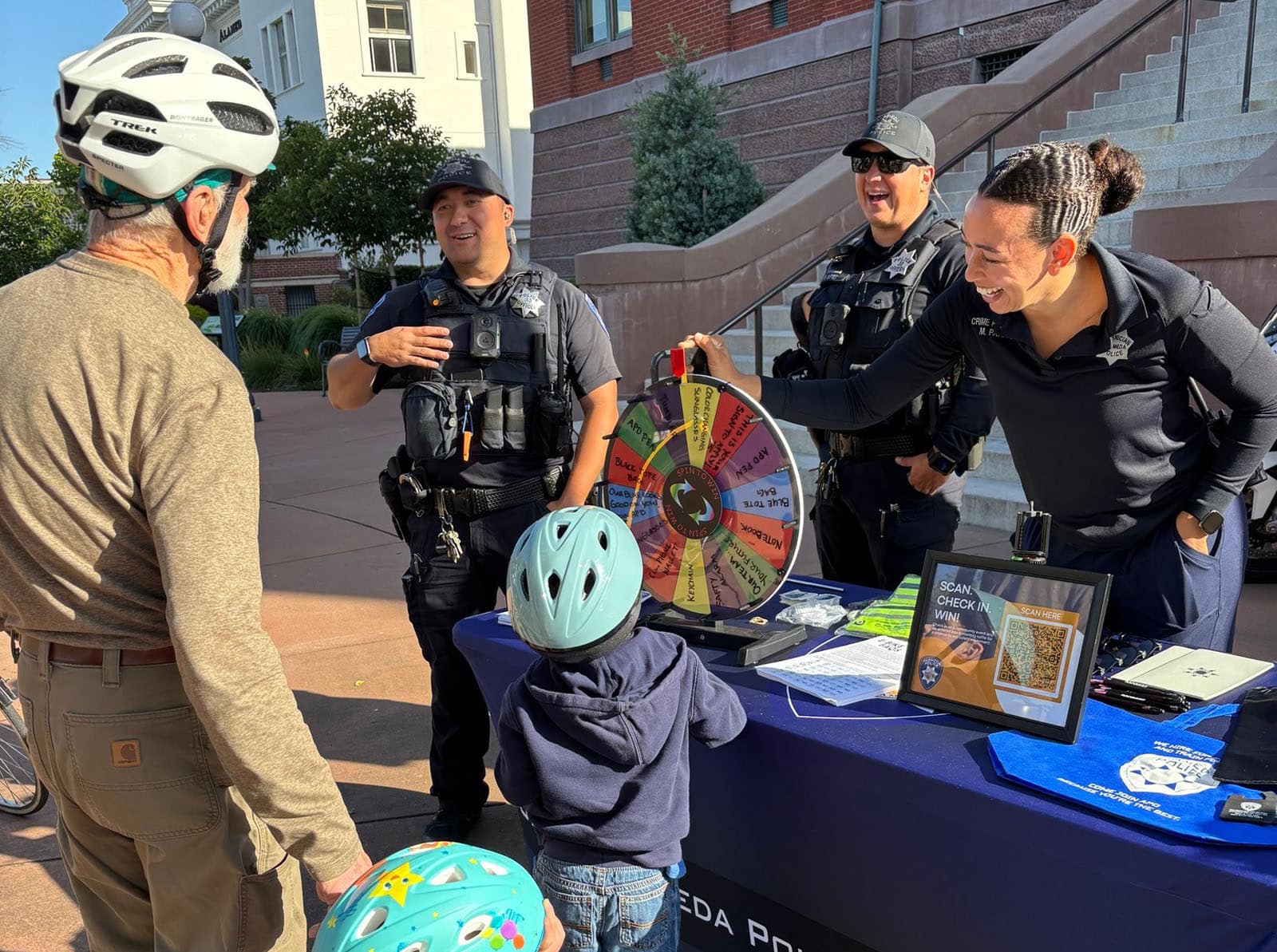
As officers continue their outreach efforts with teens and parents about e-bike safety, Alameda Police Department (APD) posted some resources available to our community.
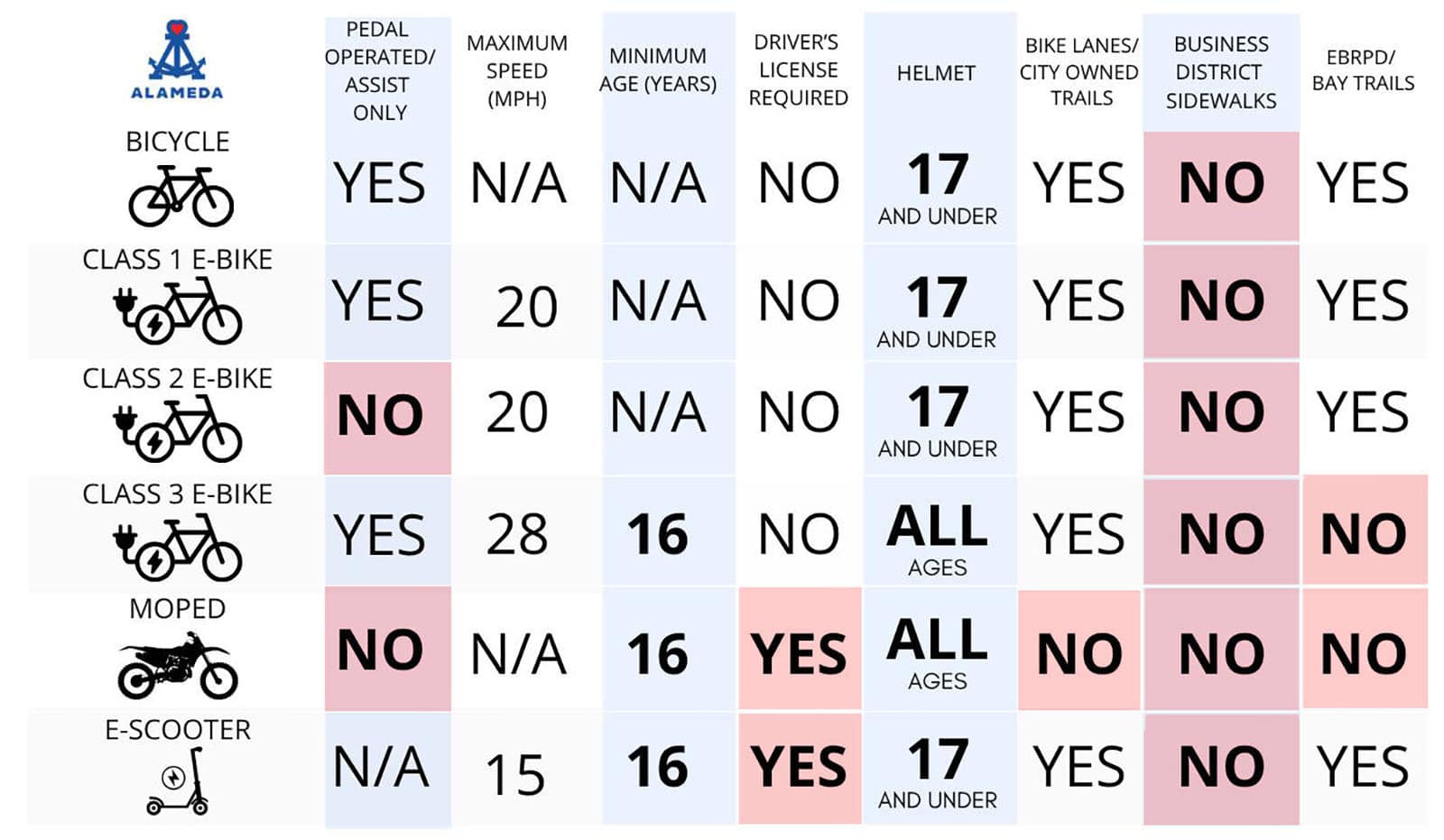
E-bikes have become a popular way to get around Alameda, and safety starts with making informed e-bike purchases and following the rules of the road. Basic regulations for e-scooters, Class 1 and 2 e-bikes, and Class 3 e-bikes are outlined on APD’s Electric Bikes and Scooters webpage.
Free e-bike training
Now through May 31, PeopleForBikes and the Motorcycle Safety Foundation are offering free access to an online e-bike safety course designed to help riders build confidence, understand safe riding practices, and how to share the road responsibly, the APD post stated. Access the course by visiting the Ride Smart e-bike safety course.
The course is about 90 minutes, but you can pause at any time and pick up where you left off. When the course is completed, you’ll get a certificate to show you’re ready for the road, according to the Ride Smart website.



Additionally, APD’s Electric Bikes and Scooters webpage features a link to the California Highway Patrol’s free e-bike safety and training course. That course includes training on general riding safety, emergency maneuver skills, rules of the road, and laws pertaining to e-bikes.
| Types of e-bikes and electric scooters | ||
| E-Scooters | Class 1 & 2 E-Bikes | Class 3 E-Bikes |
| Rider requirement | ||
| • Valid driver’s license or permit • Helmet required for 17 and under |
• No minimum age • No driver’s license required • Helmet required for 17 and under |
• Minimum age 16 • No drivers license required • Helmet required for all |
| Permitted on | ||
| • Bike lanes | • Bike lanes • Trails |
• Bike lanes • Trails – Except EBRPD and Bay Trail |
| Riding regulations | ||
| • Maximum speed of 15 mph • Only one rider at a time |
• Class 1: Pedal assist only • Class 2: Pedal and throttle assist • Maximum speed 20 mph |
• Maximum speed 28 mph • Pedal assist (no throttle) |
Under California Vehicle Code VEH 312.5, e-bikes are classified into three categories based on their maximum assisted speed and whether the motor provides assistance only while the rider is pedaling. Here are the classifications, according to APD’s Electric Bikes and Scooters webpage:
- Class 1: Pedal-assist only (no throttle), with a maximum assisted speed of 20 mph.
- Class 2: Throttle-assisted or pedal-assisted, with a maximum speed of 20 mph (with or without pedaling).
- Class 3: Pedal-assist only (no throttle), with a maximum assisted speed of 28 mph, and must be equipped with a speedometer. Riders must be at least 16 years old and wear a helmet.
An e-scooter is a motorized scooter that typically consists of two wheels, handlebars, and a standing floorboard.
- In California, e-scooter users must have a valid driver’s license or permit.
- The same rules of the road that apply to human-powered bicycles and e-bikes apply to all e-scooters as well.
By staying informed and riding responsibly, we can help keep our streets safe for everyone.

