In the breadth of theater there are many genres, from classical Greek, to Shakespeare, to farce, to melodrama. And often, contemporary directors and companies take a known play and bend it to fit our current lives, hoping the voices and stories of the past can speak to us today. Christopher Nolan’s The Odyssey is the current film example of an historical text purposefully morphed for a modern audience. Then there are comedies of manners, plays set in a certain time and place to where they serve as time capsules of how we once lived long ago. And while they may have some relevance in terms of theme and behaviors, that is secondary to just how charming they were back then. Characters of considerable privilege, armed with wit, banter about making fun of themselves, the mores of their era, all while dressed well and eating and drinking even better. Oscar Wilde’s The Importance of Being Earnest is the Hamlet of this type, and in the same realm is Fallen Angels by Noel Coward, the current play put on by the Altarena Playhouse.
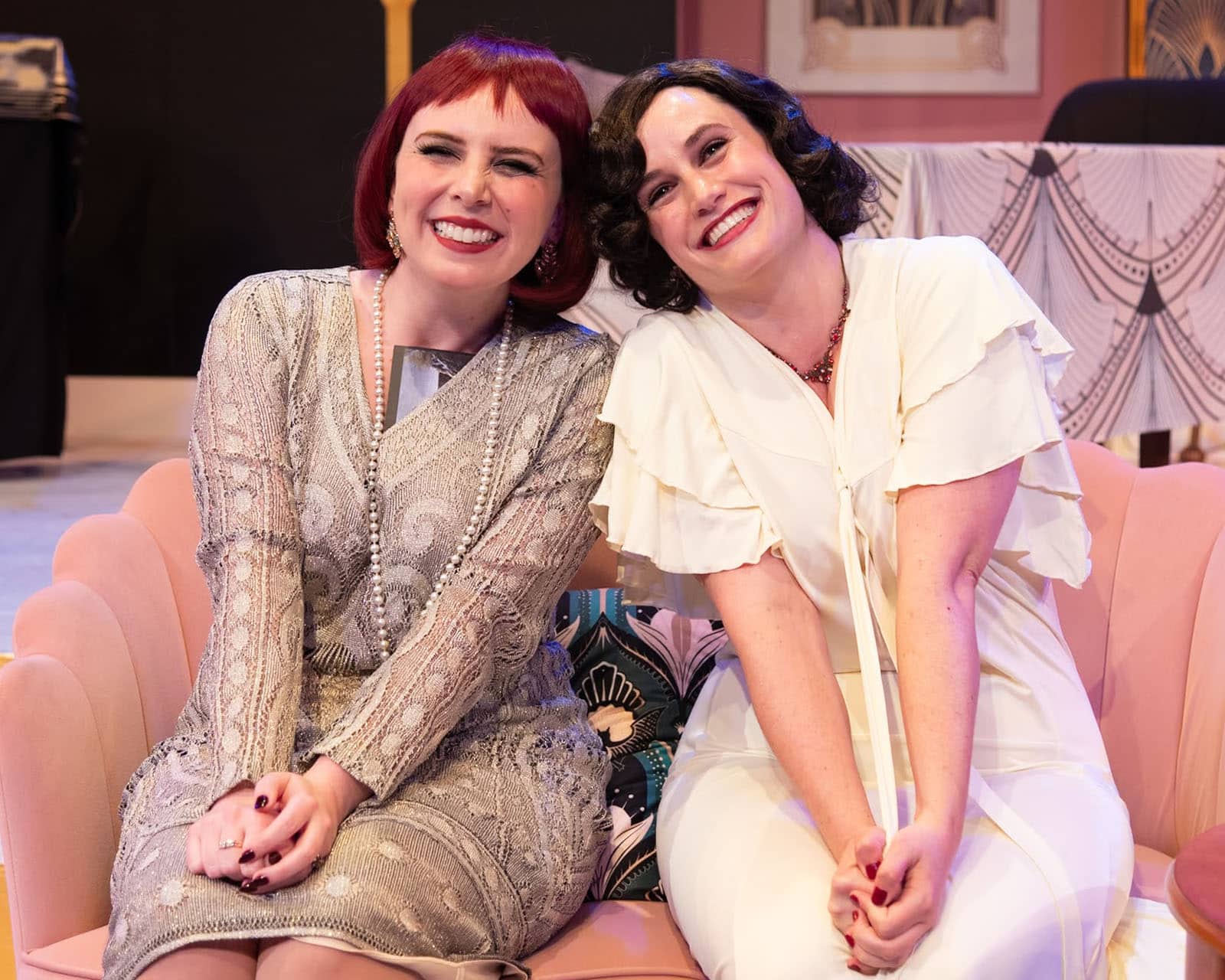
This somewhat lesser known work by Coward (compared to Private Lives and Blythe Spirit) is about two friends, each married for five years, whose marriages have gone stale. Coinciding with this revelation is the engine for the story—the discovery that a lover whom each had been with seven years ago, a Frenchman (of course) named Maurice, is coming to visit! Sort of like Waiting for Godot, the core of the story is their anticipation of his arrival, followed by their struggle of what to do when he does arrive—and what about their boring husbands? The play works in three acts: eager anticipation, further anticipation, then arrival.
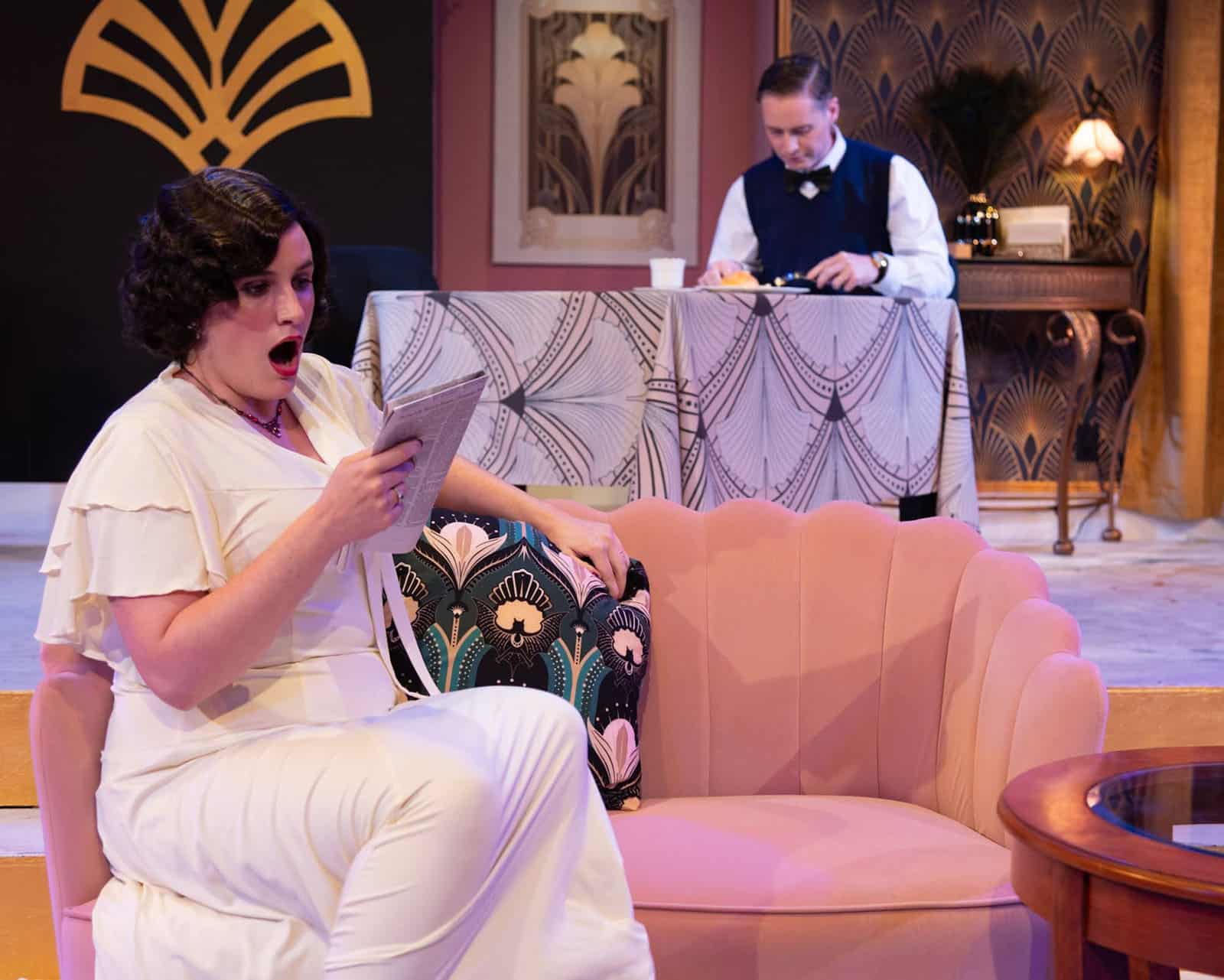
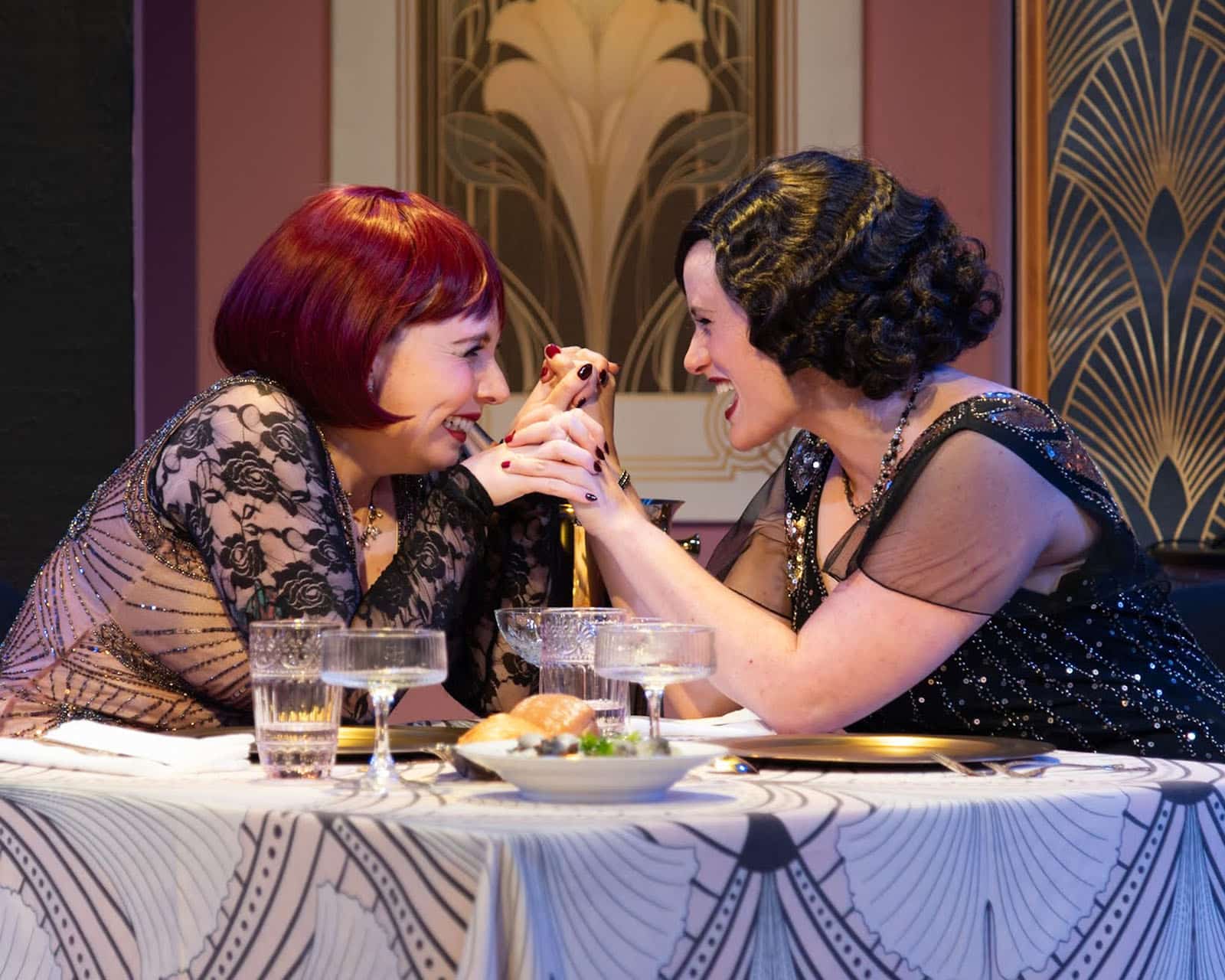
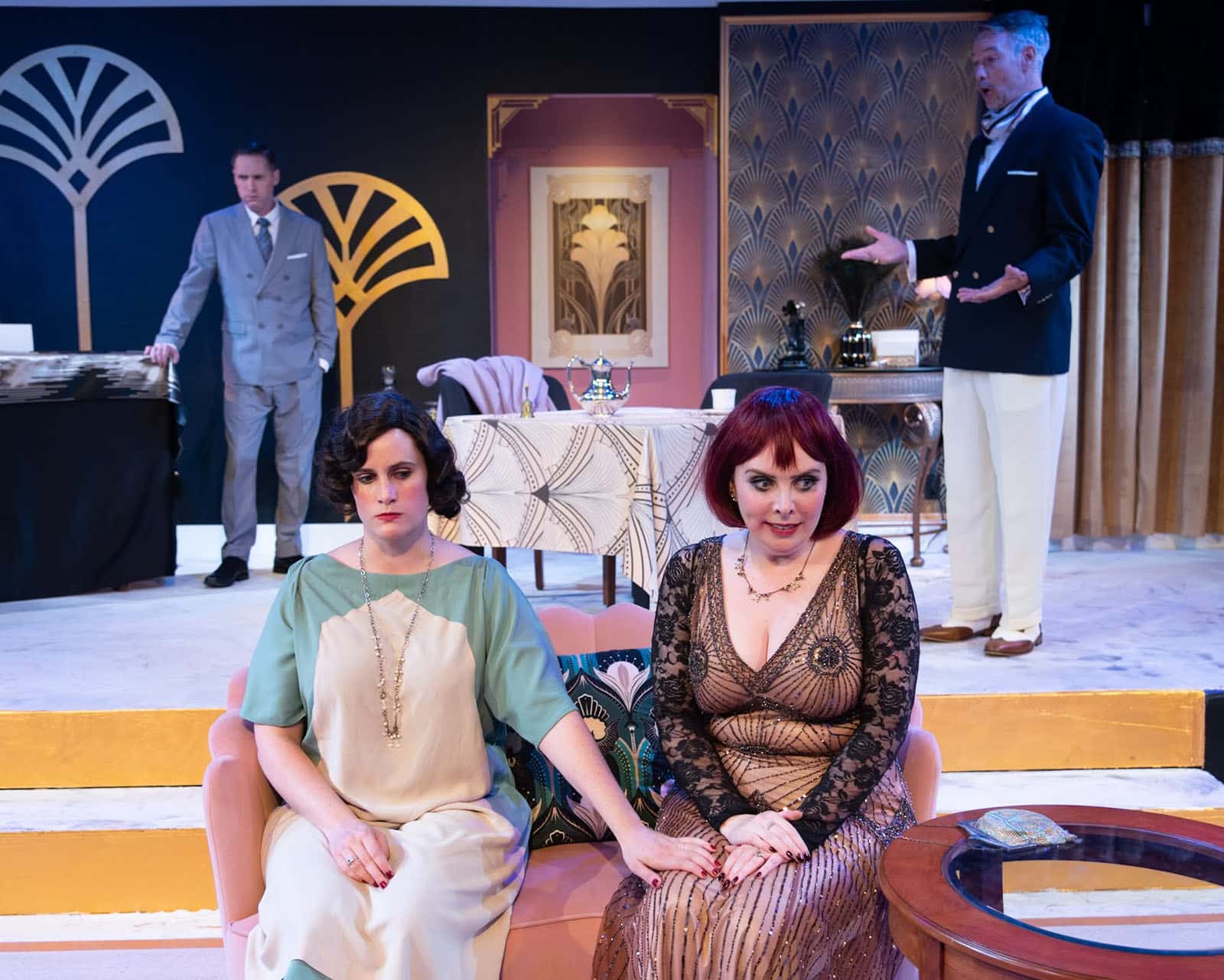
The acting and directing are terrific, the set is stunning and the costumes thrill. The first word that came to mind when I arrived and sat was swanky. Kate Conway and Sarah Zehner play Julia and Jane, and they are the citadels of propriety, gossip, and giggles. They gesture, guffaw, roll their eyes, smoke, drink, and dine wonderfully, their ditziness disguised by glitter. Yes, they do somewhat speak to the very real issue of passion and sex in established marriages, but that gets drowned out by their scandalous shrieks.
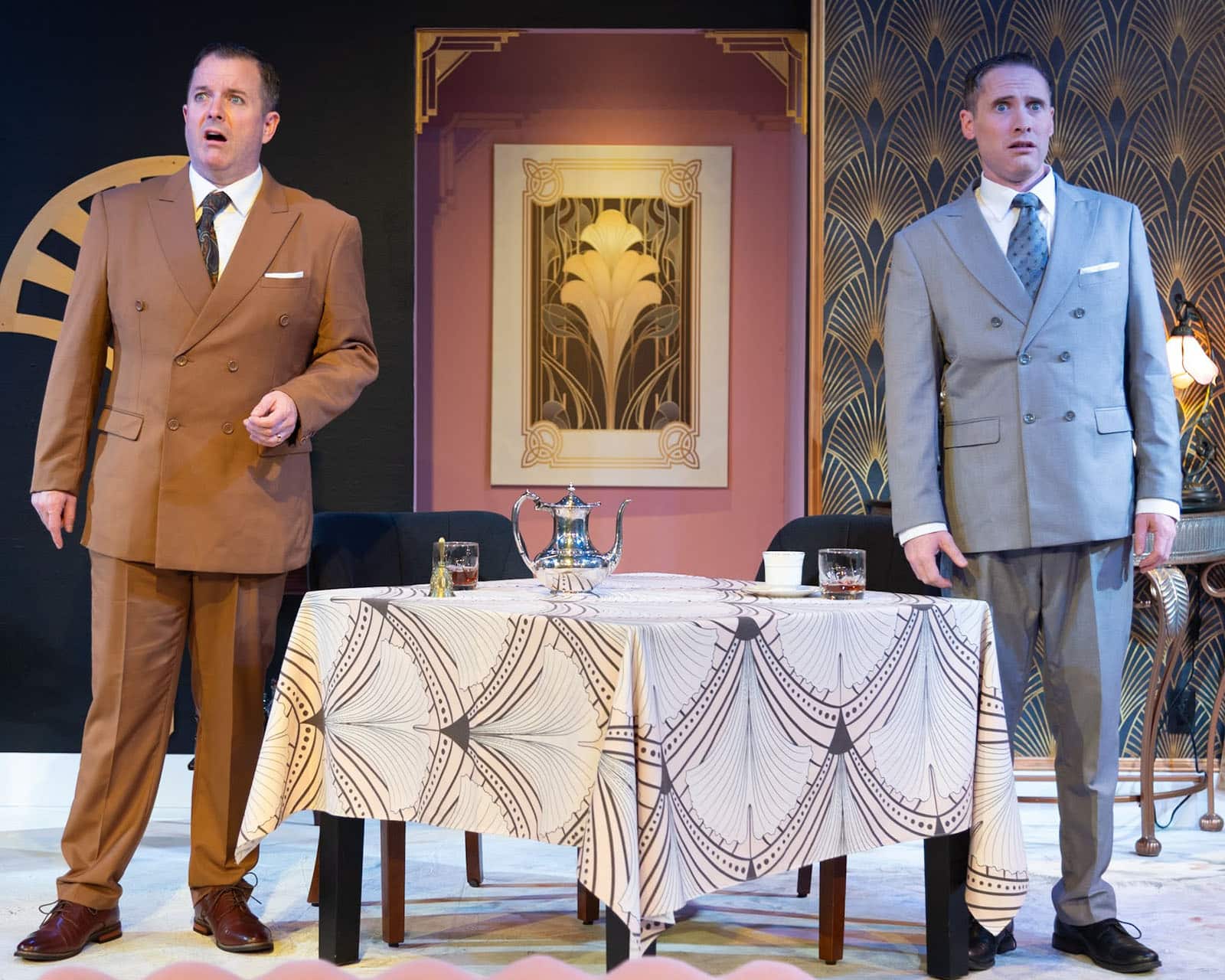
Opposite them are their husbands, played by Joshua Roberts and Dan Allan. They are handsome men, finely suited, but so thoroughly British that they are no match for Maurice. Both actors did a good job playing the straight men to their exuberant wives. Maurice is portrayed by Marcel Degas with a dashing quality and accent that both angers the men and enthralls the women.
Oddly enough, my favorite character is the servant Saunders, played by Elly Grace Hudson. Dressed in simple solid-color suits, she not only handles the serving cart with skill—a lot of plates, bowls, glasses, cups and saucers are brought in and out—but steals many scenes with a know-it-all and done-it-all nature. She plays the piano better than Julia, her French is better than Jane’s, and she’s totally calm when all about her are raving and ranting.



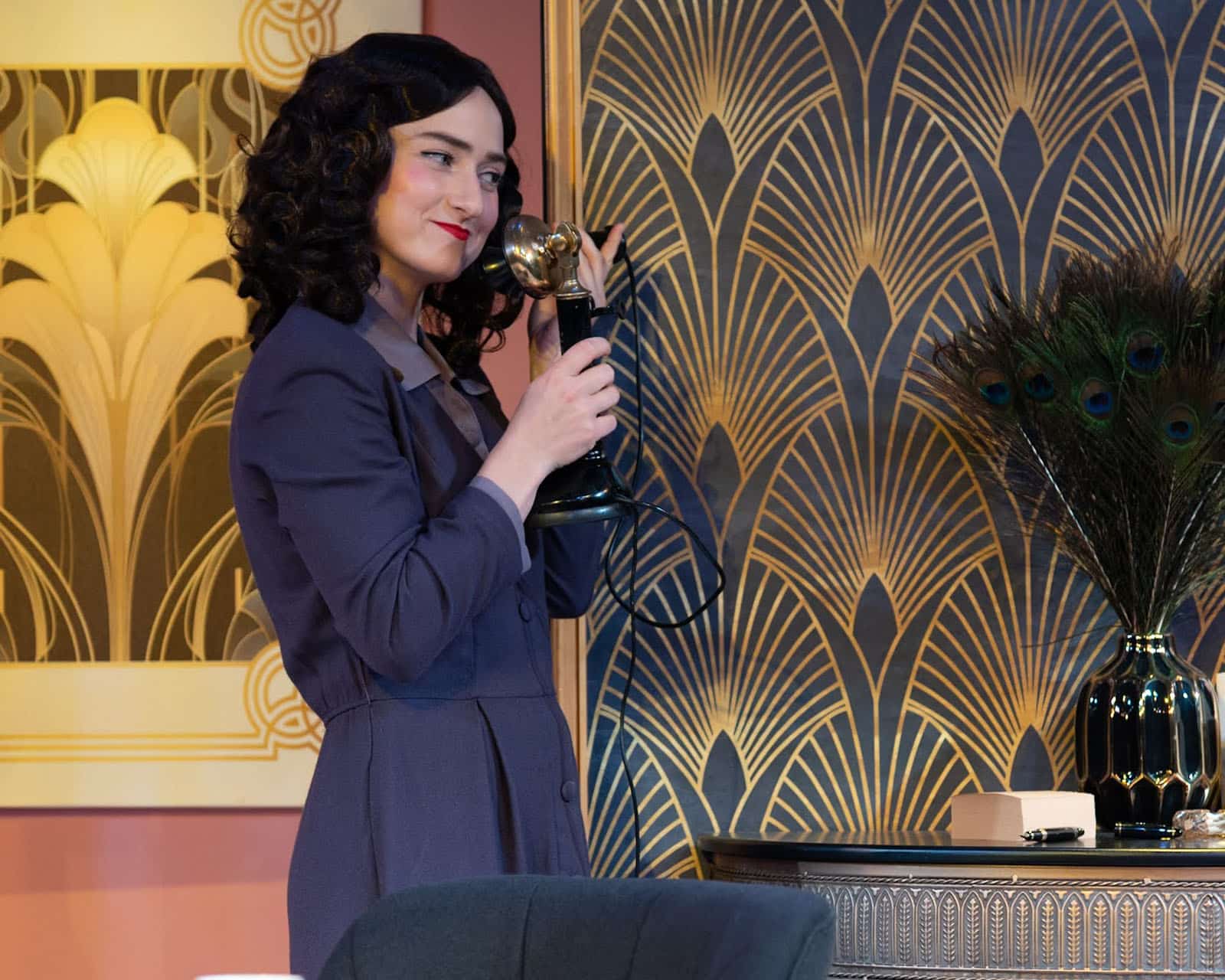
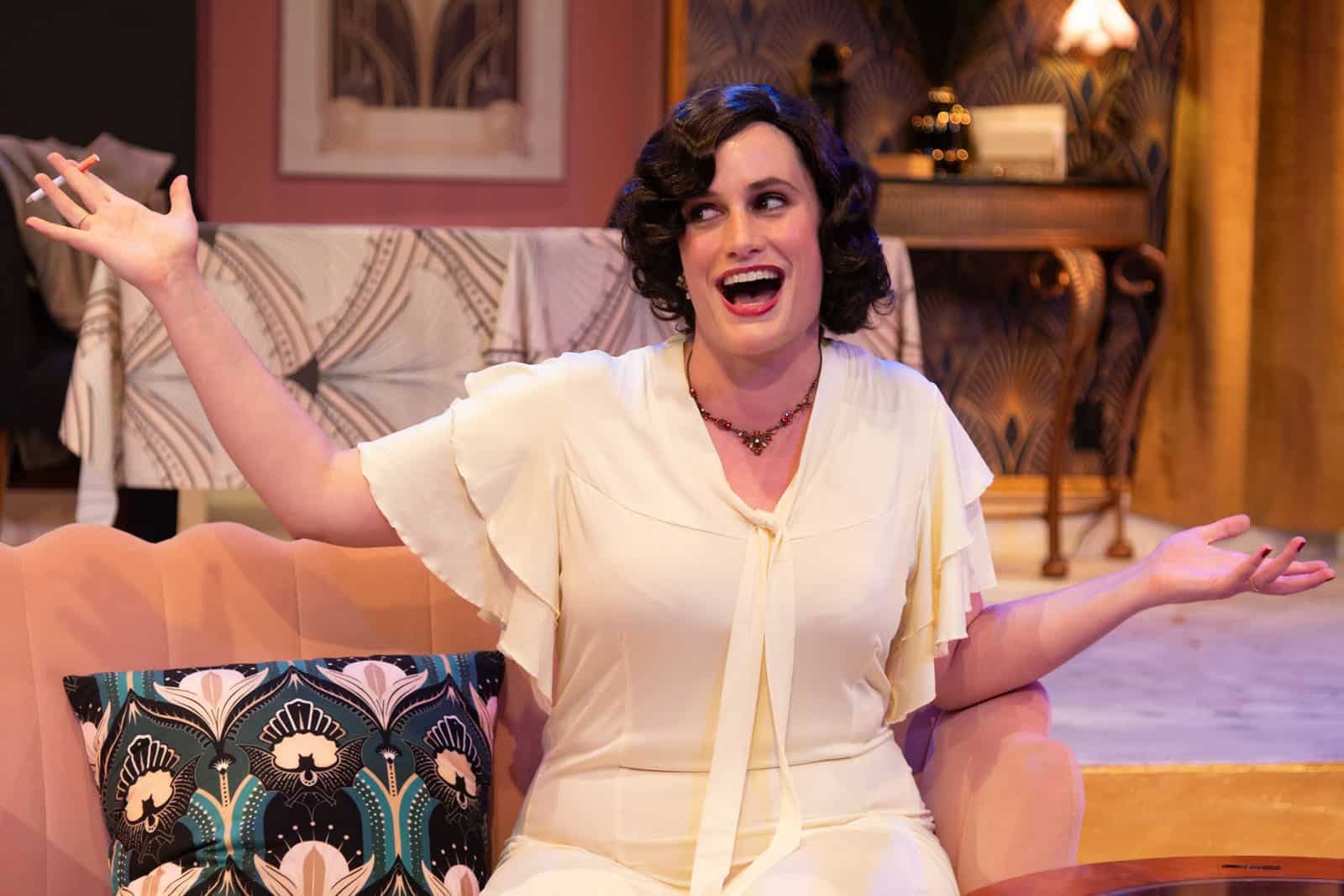
The play was funny but imperfect, though not because of the artists who brought it to the High Street stage. The first act has great energy as we meet the spouses and servant, learn of Maurice’s arrival, and watch the women ponder what they’ll do when their old flame returns. Then there is a long second act where the same women—now dressed to impress—eat, talk, and drink and drink and drink. We learn little more about them, the tension introduced in the beginning wanes, and the comic peak is the search for Jane’s misplaced shoes. They do squabble so there is a kind of arc. The last act I will refrain from describing other than saying all of the principals return, the French hunk shows up, and then, well, there’s a bit of mystery offered when laughter is heard as the lights go low.
I couldn’t help but wonder—before, during and after the show—whether a play written and first performed over a hundred years ago works now. It represents an England that was still an empire, recovering from World War I with World War II not far in the future. Does a play of wit work in our age of vulgarity? And how does showcasing early 20th century privilege speak to our own era of extreme wealth and arrogance? Honestly, Fallen Angels does not answer these questions, nor does it really try to. Rather, six talented actors (with terrific accents), led by a strong director (Katina Psihos), dressed impeccably (Ava Boyd) on a handsome stage (Psihos again) serve as a living museum, representing how some of us once thought and behaved.
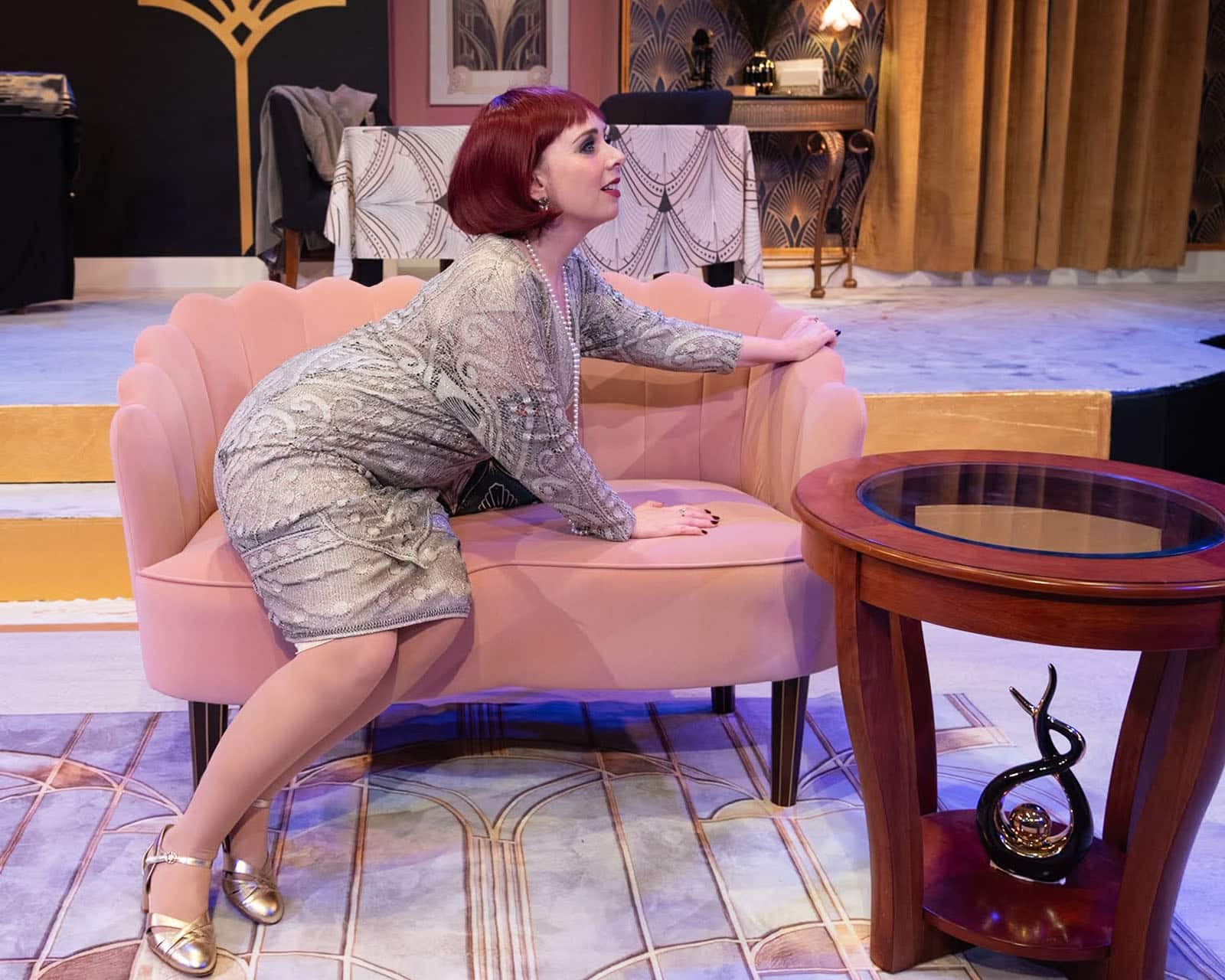
To borrow from Shakespeare as I’m fond of doing, the play is further proof of “Lord, what fools these mortals be.” And in that, they entertain with gusto, delight, and are utterly de-lovely.
Fallen Angels continues through September 20 at the Altarena Playhouse, 1409 High Street, with performances on Fridays and Saturdays at 7 p.m., and Sundays at 2 p.m.. For more information and to purchase tickets, please visit the Altarena Playhouse – Fallen Angels webpage.
Gene Kahane is the founder of the Foodbank Players, a lifelong teacher, and former Poet Laureate for the City of Alameda. Reach him at [email protected]. His writing is collected at AlamedaPost.com/Gene-Kahane.
