Long before the “No Kings” movement, the agitation and advocacy led by Zohran Mamdani and AOC (Alexandria Ocasio-Cortez), and even Bernie Sanders, one of the most magnificent of left-leaning political public troublemaking were (and are) the San Francisco Mime Troupe. Oddly unknown among some Bay Area people, the Mime Troupe has been producing original political musicals for over 60 years. They perform for free in the parks and have earned a regional Tony Award for the quality and sass of their shows. Among the pillars of the troupe is a rather quiet-seeming older gentleman you may see out and about in Alameda, his current home. He is Ed Holmes, and for many, many years he was part of the acting ensemble that railed against unchecked capitalism, the abuse of our environment, and mean and manipulative politicians, as they stood up for the working class in this country. Most recently Ed was seen playing a time-traveling detective in Jeff Raz’s play that was part of the Rising Seas project.
Enjoy his replies to our 5Q4 Ed Holmes questions — then search for him and the SF Mime Troupe. The stories he shares here are wonderful, but you’ve got to see and hear Ed to really appreciate just how incredible he was on stage, show after show, park after park, year after year, acting and singing truth to power.

As someone who served in the U.S. Navy, a presumably patriotic occupation, how did you seemingly flip and become part of arguably the most politically radical theater company in the country, the SF Mime Troupe?
After seven years in the Navy (I was drafted in ’64, signed on for three more years for nuclear power training), became a snipe (engine room) on two pig boats (submarines), then worked on an old bird farm (aircraft carrier), The Hancock, stationed in Alameda. It was my ticket to California in 1969. Having been radicalized by my “patriotic” service and needing to find a different career path, I began my seven-year college adventure at Laney College because it was close by. After a year and a half of sampling the educational buffet, I quite by chance took a class in mime. I never considered a show-biz path but the teacher, Gordon Keller, was the mentor I needed to send me down that path. He had me join his theater group, the Berkeley Mime Troupe, riding the wave of interest in that form of performance. My first time on stage was at Live Oak in 1973, doing group stories and my solo story—and making the audience laugh hooked me. We did white face, white tights, comedy and artsy movement, only mildly political. From there I attended Cal State Hayward where I directed and performed, then got a scholarship for Mills College for an M.A. in Dance.
You were a foundational company member of the Mime Troupe, but you’ve also performed in many other theatrical settings, so can you talk about doing shows in the parks versus on a more traditional stage?
Actually, I didn’t become a Mime Trouper until ’86. I survived 28 years with them until my knees, back, and ability to sit through another collective meeting gave out. Before that, Berkeley Mime Troupe for seven years, mostly stage shows, touring the world. Then seven years with Familia Bologna/Fratelli Bologna, Renaissance Faire in Novato and Hawaii, stage shows in San Francisco and the movie, The Right Stuff, in 1983. After that it was Chris Hardman’s Antenna Theater, avant garde experimental shows for five years. Performing in the park is a different flavor of performance with environmental factors, sirens, dogs, picnic music, the wind, etc. It was another world.

Walk us through your path to becoming an actor. Was it traditional, were you a theater kid, then studied formally, then went to LA or New York? Or was your path different?
I didn’t have a high school exposure to performing, and instead was a football/swim team jock. I was considered the class clown. In my last semester at Laney College I needed to take a class on Tuesday and Thursday, so I leafed through the class list and the only thing that fit was Mime and Movement. I had already been accepted at UC Berkeley for social studies and SF State for arts and was going to choose during the summer. So, again, it was the teacher, Gordon Keller, who steered me to theater. After doing The Right Stuff came the movies Howard the Duck, Tucker, Monkey Bone, and Golden Gate and a small slew of commercials. I was planning on moving to LA, but the Mime Troupe had me audition for their next show. Destiny called.


Two questions in one: The absolute best experience you had on stage, and the one less or least pleasant?
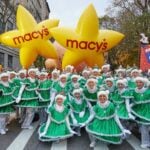
Most of my characters on stage were cheesy rich white guys—CEOs, senators, military dipshits, redneck racists. But doing Dick Cheney for several shows was a big delight. I could look like him easily and the writers gave me wonderful things to say. The first time was “1600 Transylvania Avenue” in 2001. The roar of the crowd on opening day in Dolores Park, 3000 fans—the tsunami of BOOs went on for a minute. I stood there waiting for it to die down, then flipped them off with a double-bird, and said, “F*** you hippies, I know where you live!” and went on with the show. Less pleasant—a few times of “going up” on lines. Too many last-minute scene/line changes from the writer.
You performed in 2024 in the Rising Seas project, in the play directed by Jeff Raz looking at the effects of climate change. That was smaller in scale compared to the Mime Troupe shows, but can you talk about that experience of still being involved in a project hoping to educate the audience?
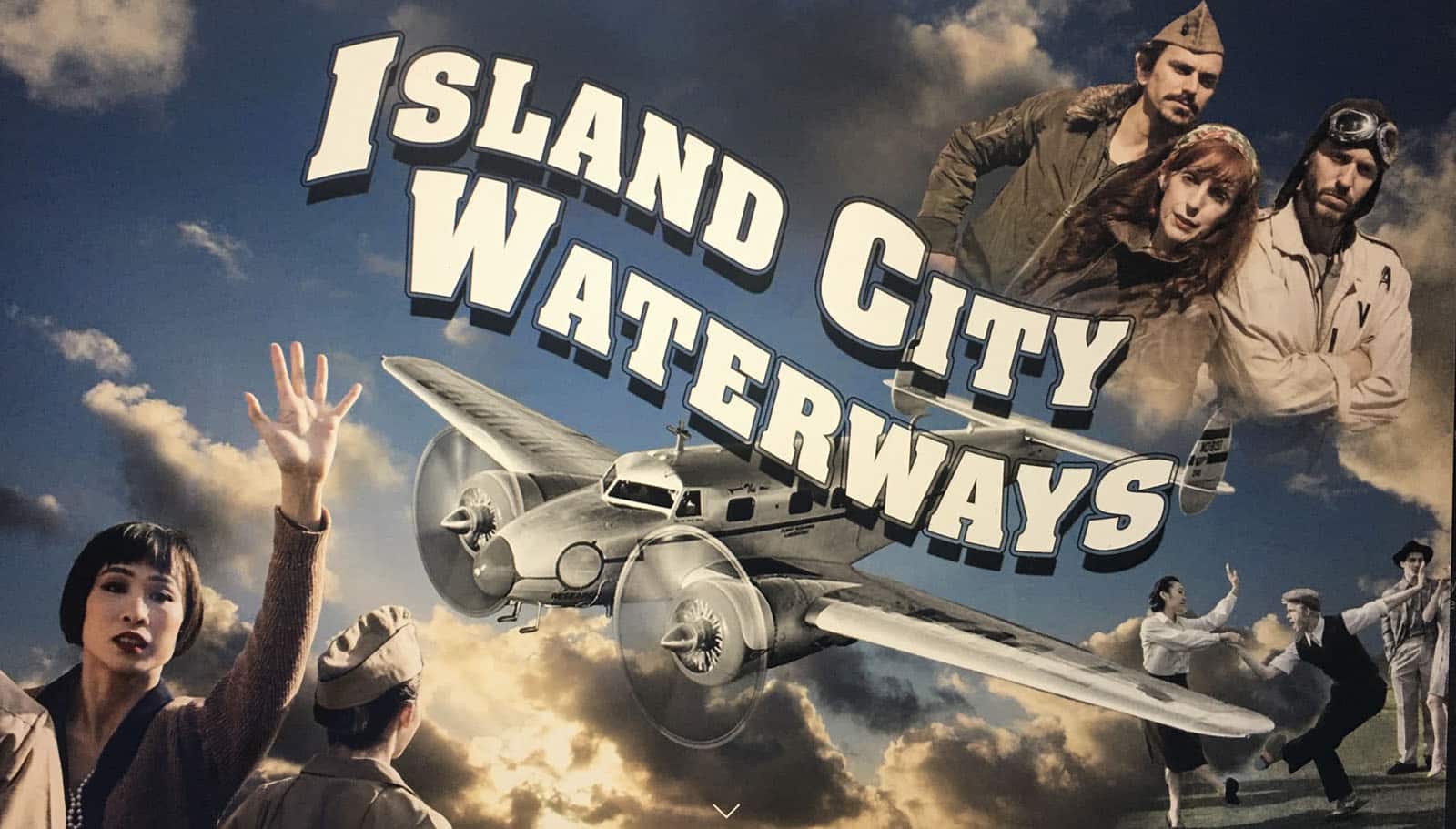
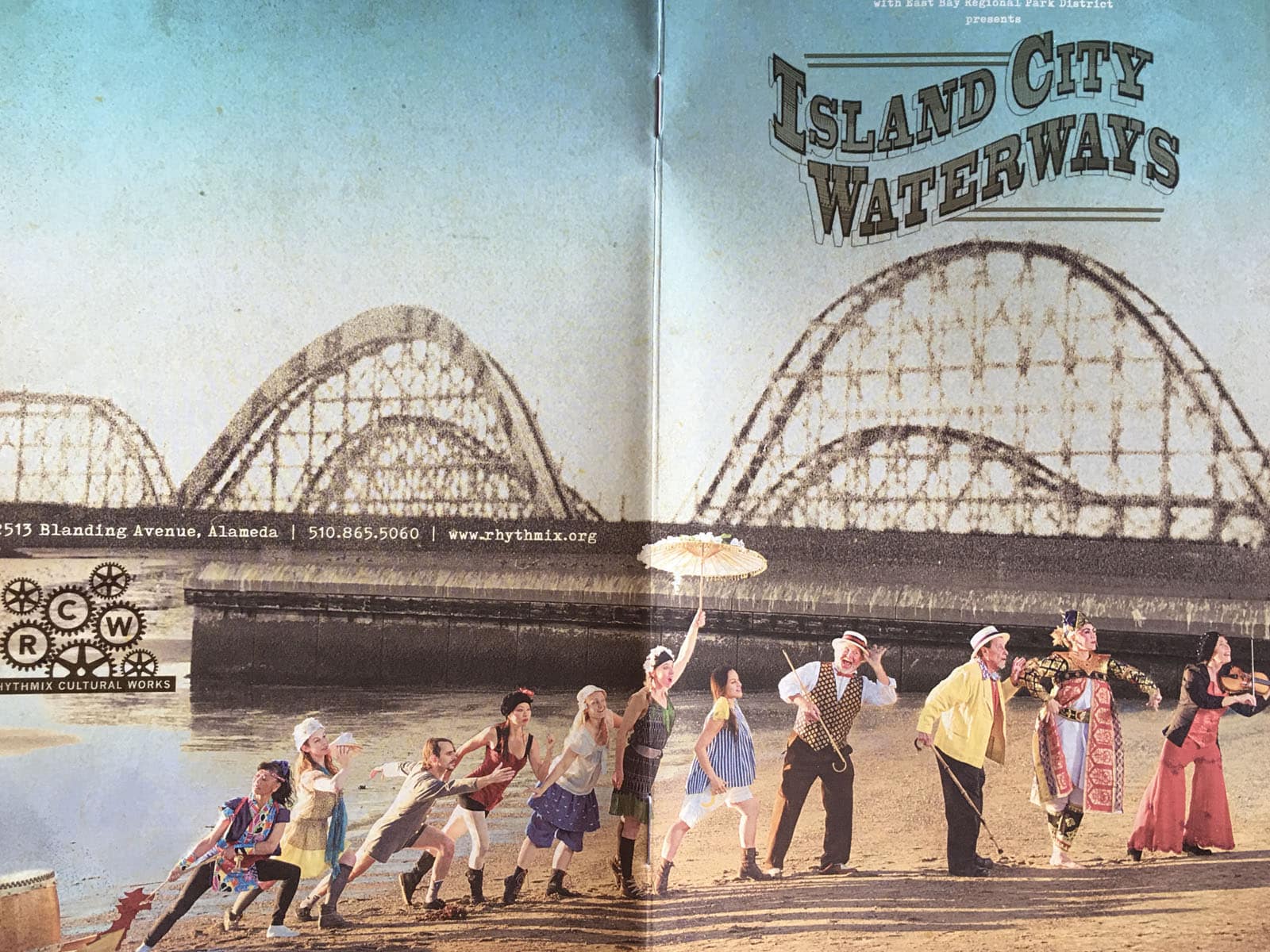
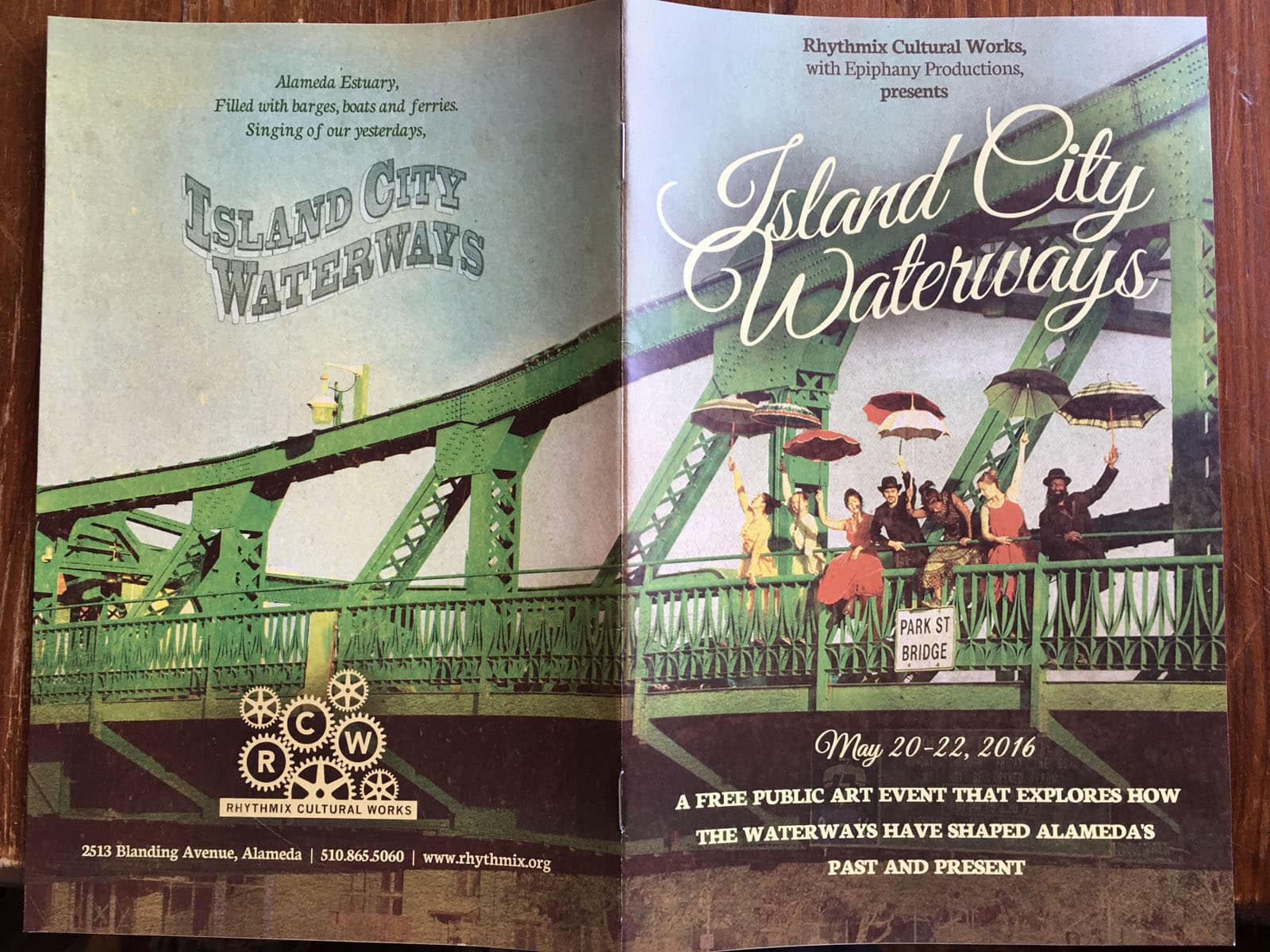
Rhythmix has done Mime Troupe size and style-ish shows. In 2016 Janet Koike instigated/produced the Island City Waterways show about the birth of Alameda from peninsula to island, 20,000 years ago to 1908 when it became an island. “How did we/you get here?” was the theme. I wrote the script for me and 15 dancers—a 70-minute show with me as an old sea captain, leading the crowd from the Fruitvale Bridge to the Park Street Bridge, with a stop at Rhythmix Cultural Works for an elaborate slideshow on the history.
Then in 2018, we did the second 70-minute Island City Waterways show out at Crab Cove. I played a carny barker from the Neptune Beach era, then a naval officer through the Merchant Marine school era in World War II. There were 40 performers, musicians, and dancers. Again, I was the head writer. Then in 2022 we did a show on the former Navy base, with 38 performers, dancers and musicians telling the evolution of the history of flight from the early 1900s thru WW2. All three of these epics were done four times a day for audiences of 100 to 125 people, plus several rehearsals. Great support from the city and ARPD on all these shows. For Rising Seas, I wrote/performed the 15-minute time traveler skit, also four times over several months.
So all in all, similar to the Mime Troupe in that we brought an outdoor entertaining, comedic, and artful look at history and contemporary concerns. Less traveling and loading/unloading. I retired from the troupe in 2014 because my knee hurt, my back gave out, and I couldn’t sit through another collective meeting. But I was a lucky fella.
Gene Kahane is the founder of the Foodbank Players, a lifelong teacher, and former Poet Laureate for the City of Alameda. Reach him at [email protected]. His writing is collected at AlamedaPost.com/Gene-Kahane.
