Alameda’s City Planning Board [1] held a public hearing on September 12 to review the Draft Housing Element and Zoning Amendments [2] to accommodate the Regional Housing Needs Allocation (RHNA) for 2023 through 2031. The RHNA seeks to ensure that California cities plan enough housing to accommodate all economic segments of the community. Alameda’s share is 5,353 housing units.
 [3]
[3]A Compromise Plan
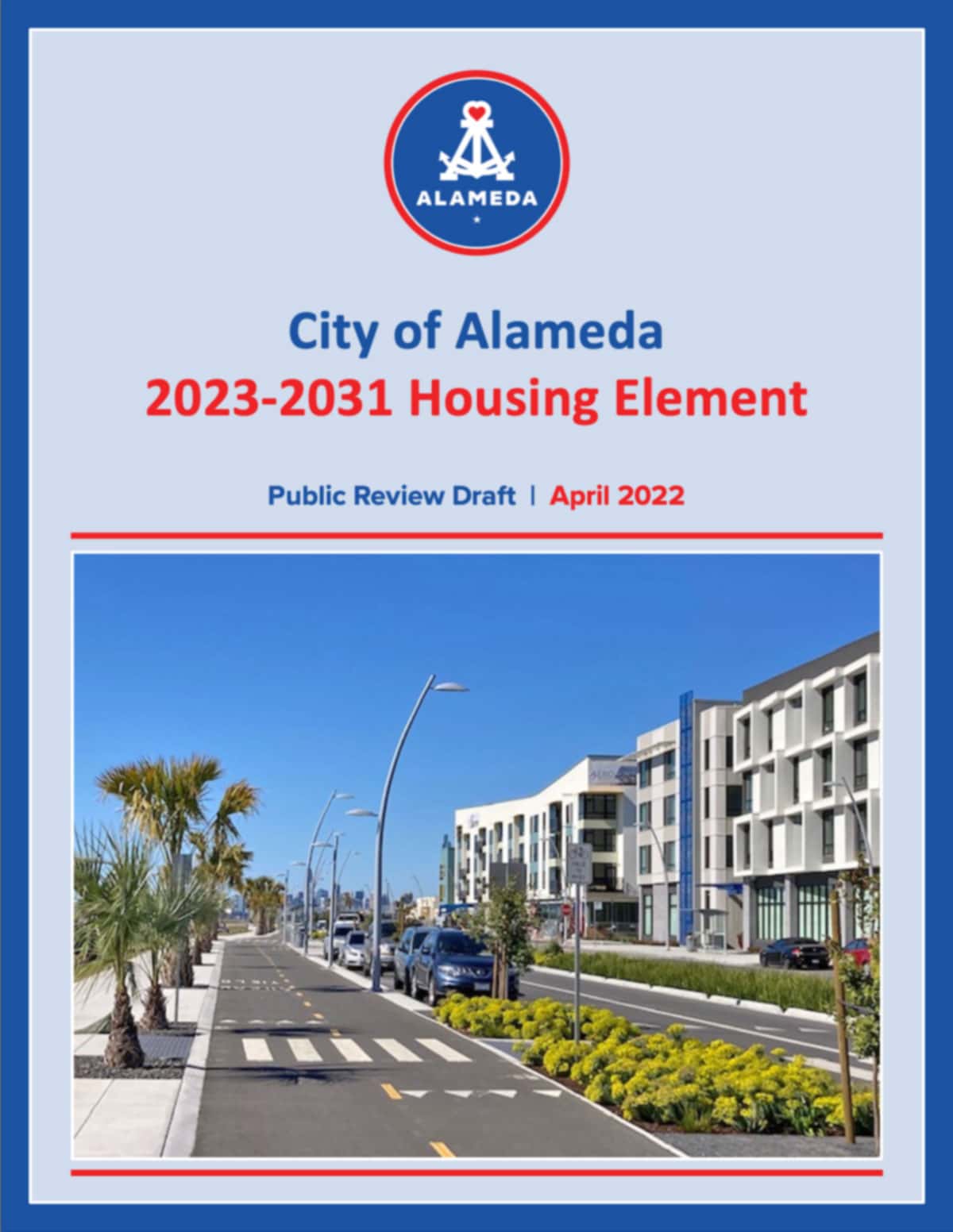
The Housing Element and Zoning Amendments aim to balance RHNA and fair housing requirements with the community’s goals as articulated in public workshops. The City plans to add new housing as follows:
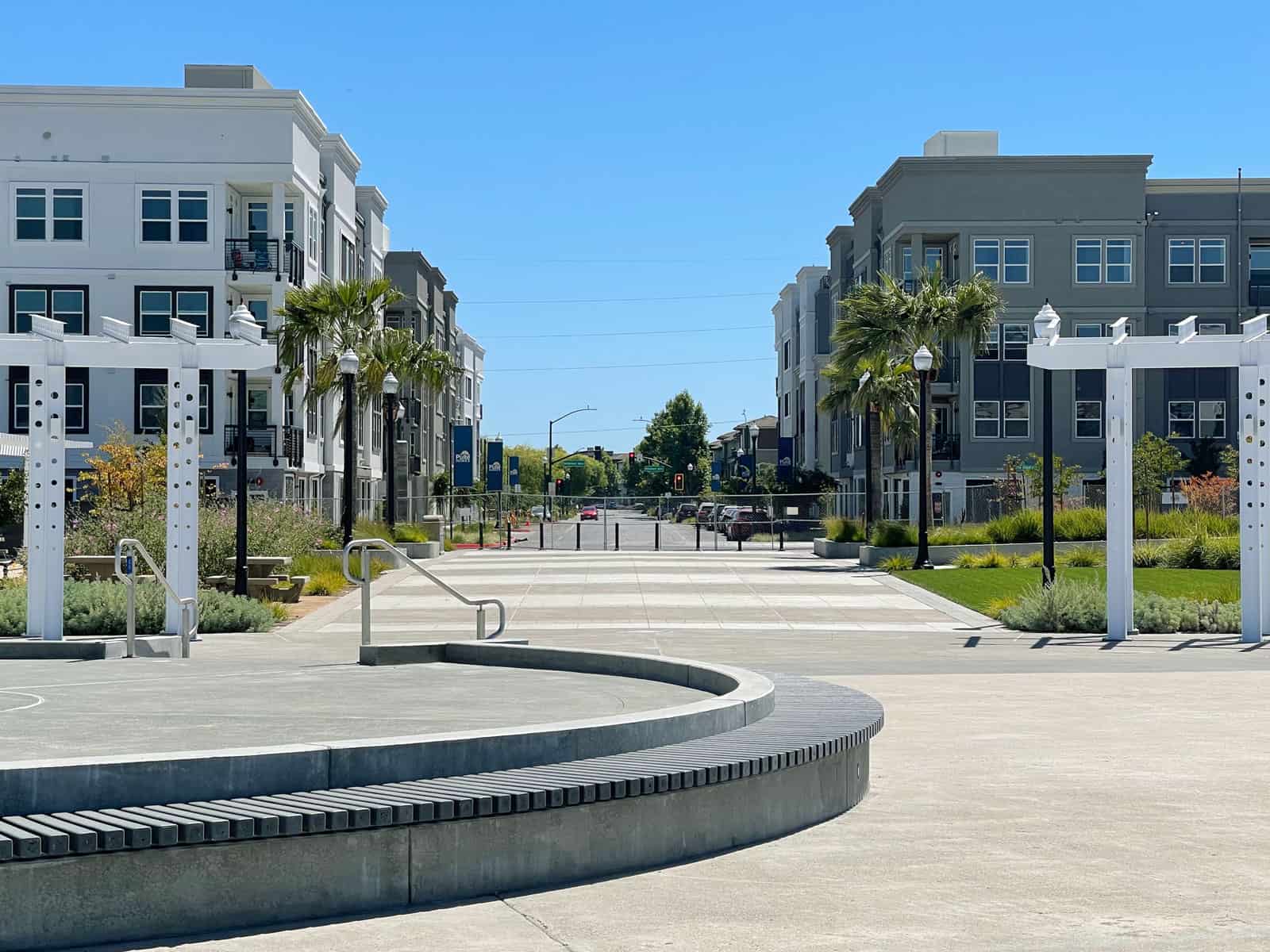
- Naval Air Station (NAS) Alameda Priority Development Area (PDA) – 39 percent. The NAS Alameda PDA will accommodate 39 percent of the RHNA, including 24 percent at Alameda Point and 15 percent at other surplus federal lands.
- Shopping Centers and the Park and Webster Street Corridors – 27 percent: Shopping centers such as South Shore, Harbor Bay, and Alameda Landing will accommodate 19 percent of the RHNA, while the Park and Webster Street Districts will accommodate 8 percent.
- Northern Waterfront PDA – 24 percent: The Northern Waterfront PDA will accommodate 24 percent of the RHNA on sites such as the Encinal Terminals, Alameda Marina, and the former Pennzoil Site.
- Residential Districts – 10 percent: In-fill development in the R-1 through R-6 Districts will accommodate the remaining 10 percent. The existing accessory dwelling unit program will provide 7 percent. Zoning amendments to allow residential property owners to add additional units within existing residential buildings will accommodate 3%.
Fair Housing
State law requires the City to “affirmatively further fair housing” by overcoming segregation patterns and fostering inclusive communities. To accomplish this, the Housing Element and Zoning Amendments:
- Emphasize form-based regulations. The City will focus on regulating form (such as height limits, setback requirements, etc.).
- Apply form-based requirements equally. The City will apply form-based regulations equally to all housing types, such as single-family, multifamily, shared, and assisted living housing, in each zoning district.
- Remove barriers to affordable housing. The City will remove regulations prohibiting multifamily housing and the citywide density limitation of 21 units per acre. Multifamily housing is the most affordable housing type; its prohibition hinders access to housing for lower-income households.
In sum, the City will focus on regulating what housing looks like rather than limiting the types of housing that can be built. On August 25, the State Department of Housing and Community (HCD) found the draft Housing Element substantially in compliance [4] with State Housing Law.
Public Comment
 [5]Four public members commented. Shelby Washington asked if the additional housing would come with additional schools and other services such as police, fire, and transportation. Planning, Building, and Transportation Director Andrew Thomas responded that every development project in Alameda must pay development impact fees that support new schools and additional police, fire, and transportation services. He said the City would continue to work on improving its transportation system for a growing population.


Paul Foreman of the Alameda Citizen’s Task Force [6] and Christopher Buckley of the Alameda Architectural Preservation Society [7] both advocated preserving the multifamily prohibition and the 21-unit-per-acre residential density limit. They argued that removing the prohibition would cause widespread displacement of existing low-income residents from residential neighborhoods.
City staff responded that by limiting construction of the most affordable housing types, the prohibitions limit access to housing for lower and middle-income households, which most need housing opportunities. They said the concern about widespread displacement was not supported by the City’s experience with accessory dwelling units (ADUs); the City currently issues building permits for approximately 50 ADUS in the residential district annually, and there is no evidence of displacement as a result. Further, the Housing Element includes specific actions and responsibilities to minimize or prevent displacement.
In a letter to the Board, the Housing Element Working Group [8] opined that the most significant constraint to affordable housing in Alameda is the need for financial subsidies. Staff agreed and recommended amending the Housing Element to consider a local bond measure to help fund affordable housing.
Next Steps
City staff will revise the Draft Housing Element and zoning amendments considering public and board member comments. They expect to return to the Planning Board in October for a second review before the Board forwards its final recommendation to the City Council.
Contributing writer Karin K. Jensen covers boards and commissions for the Alameda Post [9]. Contact her via [email protected] [10]. Her writing is collected at https://linktr.ee/karinkjensen [11] and https://alamedapost.com/Karin-K-Jensen [12].