Financial Status Workshop, Sidewalk Vending Permit Program
On October 21, City Council will hold a workshop to review the City’s current financial state and seek feedback on revenue measure opportunities, a more equitable collections process, and a Budget and Financial Accountability Policy.
Council will also consider a Sidewalk Vending Permit Program to regulate non-motorized sidewalk vendors.
Below is a summary of the issues and how to participate.
 [1]
[1]Financial sustainability workshop
Overall, the City is financially stable but stretched. The fiscal year 2025-27 Biennial Budget remains balanced, with revenues covering 96.5% of ongoing expenses. The shortfall is offset by the residual fund balance. The City, fortunately, projects a $3 million to $5 million improvement in the residual fund balance, thanks to stronger than anticipated one-time revenues. Property transfer taxes, interest income, and property taxes exceeded projections, while sales taxes declined more than expected. Looking ahead, there is uncertainty about the availability of federal grants and the rate of inflation. Nonetheless, staff recommend no significant budget changes at this time.
To address $1.4 million in unpaid receivables, primarily related to fire prevention, business licenses, the rent program, and traffic mitigation, staff propose a formalized three-step collections process:
- Past due notice (after 30 days).
- Collection notice with $50 fee.
- Enforcement action (e.g., small claims and liens) with hardship and appeal options.
Staff expect a 75% recovery of delinquent debt as a result.
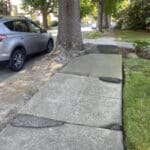
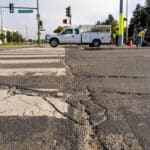
Staff will further seek Council direction on which revenue measures to explore to address significant infrastructure needs [2] and ongoing public safety demands. This summer, the City launched a “Stronger Together” campaign, inviting public input on infrastructure and public safety needs via a series of ongoing workshops. Following the workshops, the City will conduct polling and community outreach to gauge voter support for potential revenue measures. Based on feedback received, Council will determine whether 2026 is the right time to proceed with a revenue measure to address pressing needs.
 [3]
[3]Possible revenue options are a $200M general obligation infrastructure bond, resulting in an assessment of about $29 per $100K of assessed value, or a public safety parcel tax modeled after Berkeley’s Measure FF to fund fire, emergency, and mental health services.
Finally, staff will seek feedback on a draft budget and financial accountability policy.
Sidewalk vending ordinance
Staff will present a draft ordinance to establish a Sidewalk Vending Permit Program to regulate non-motorized sidewalk vendors, with the goal of balancing economic opportunity with public health, safety, and neighborhood concerns. Vendors will need to obtain a city permit and show proof of required licenses (business license, health permits, seller’s permit, and insurance).
Two vendor types are defined—stationary (fixed location) and roaming (mobile). Stationary vendors will be prohibited in residential areas; roaming vendors may operate in both residential and commercial zones, but not after sunset in residential areas. General operational rules include maintaining ADA clearance, adhering to noise limits, staying clear of intersections and schools, and prohibiting the sale of tobacco, alcohol, and cannabis. Vendors must provide trash and compost containers and comply with the Compostable Foodware Ordinance.


The vending ordinance specifically excludes vendors on Christmas Tree Lane (Thompson Avenue) during high-traffic December evenings to maintain pedestrian safety. Enforcement will be complaint-based, initially focusing on education, with fines escalating from $100 to $500 and potential permit revocation after multiple violations.
The proposed permit fee is $50 per year, subsidized to support low-income vendors, and City Council may consider adjustments.
How you can participate
The meeting will be held on Tuesday, October 21, at 7 p.m. at City Council Chambers, located on the third floor of City Hall, 2263 Santa Clara Avenue.
Members of the public are welcome to participate in person or via Zoom. They may comment on the Non-Agenda, Consent Calendar, and Regular Agenda portions of the Meeting Agenda [4] (link downloads document).
The Non-Agenda portion of the meeting provides an opportunity to address the Council regarding any matter not on the agenda over which the Council has jurisdiction. The Consent Calendar is intended for routine items and is approved by a single motion. The Regular Agenda is the central portion of the meeting, where each issue receives a presentation and time for Council discussion and public comment.
Complete this online form [5] to request reasonable accommodation.
Click here [6] for Zoom registration. The Zoom phone number for telephone participants is 669-900-9128; the Meeting ID is 814 7082 0932.
Information to assist with remote participation is available online in the Public Comment and City Council Meeting Guide [7]. The meeting can also be viewed on the City of Alameda’s Facebook page [8]. Note that comments posted there are not monitored.
For each issue, public speakers will have three minutes to speak if there are fewer than five speakers, or two minutes to speak if there are five or more speakers.
Community members may also email Council Members [9] on issues of interest before meetings.
Contributing writer Karin K. Jensen covers boards and commissions for the Alameda Post [10]. Contact her via [email protected] [11]. Her writing is collected at https://linktr.ee/karinkjensen [12] and https://alamedapost.com/Karin-K-Jensen [13].