On July 13, the Planning Board [1] endorsed the direction of a modernization effort for downtown commercial zoning, supporting changes intended to reduce storefront vacancies, streamline business approvals, and make Park and Webster streets more attractive to new businesses. The Board also reviewed a draft short-term rental ordinance, recommending several refinements before forwarding it to City Council.
 [2]
[2]Commercial zoning workshop
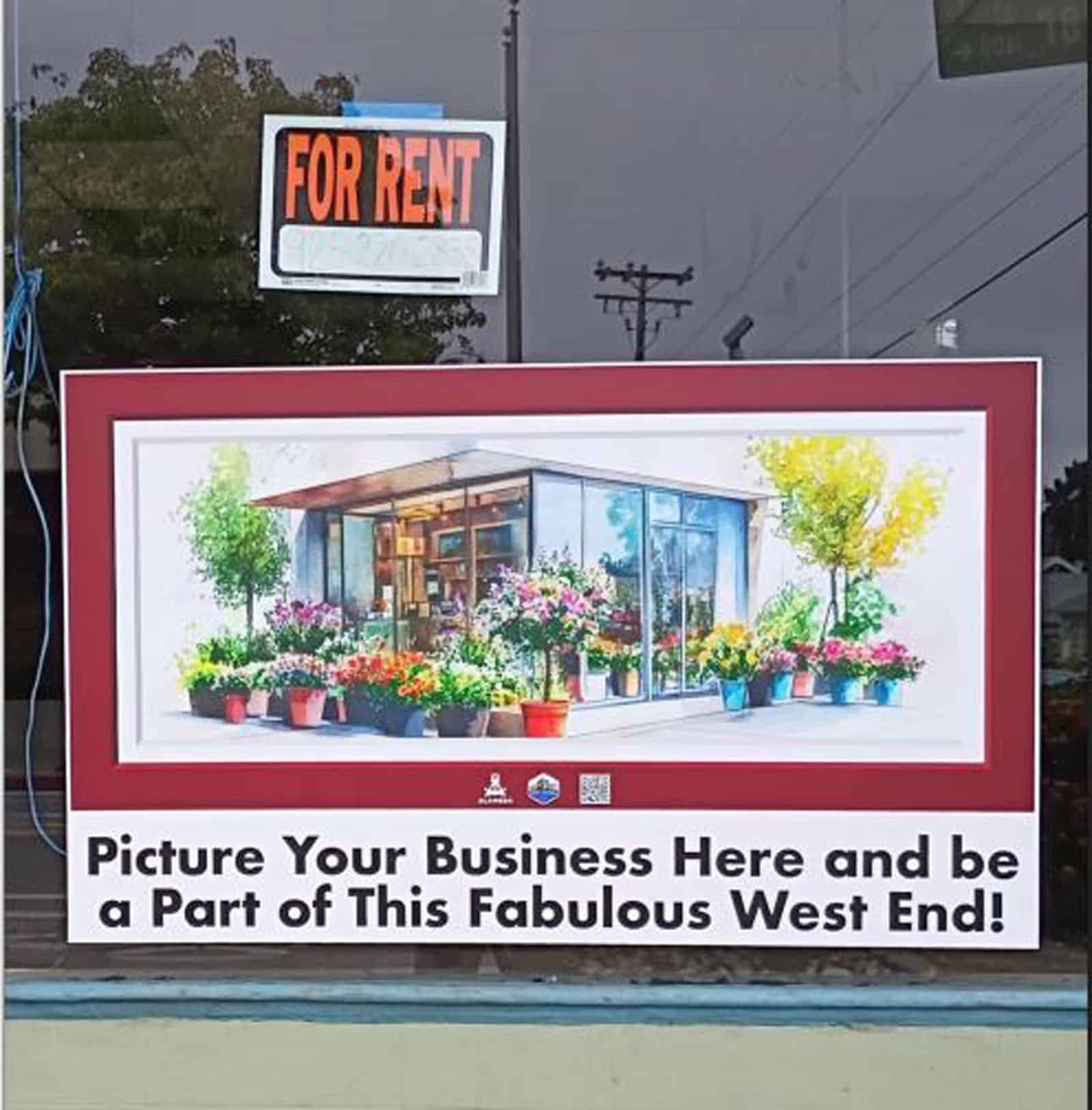
Planning staff presented an overview of a proposed update to Alameda’s downtown commercial zoning regulations for Park and Webster streets, launching a multi-month effort to reduce storefront vacancies, modernize outdated land-use rules, and make it easier for new businesses to open while preserving the districts’ pedestrian-oriented character. The workshop was intended to gather Planning Board and public feedback before staff return with a draft ordinance in September and seek City Council adoption this fall.
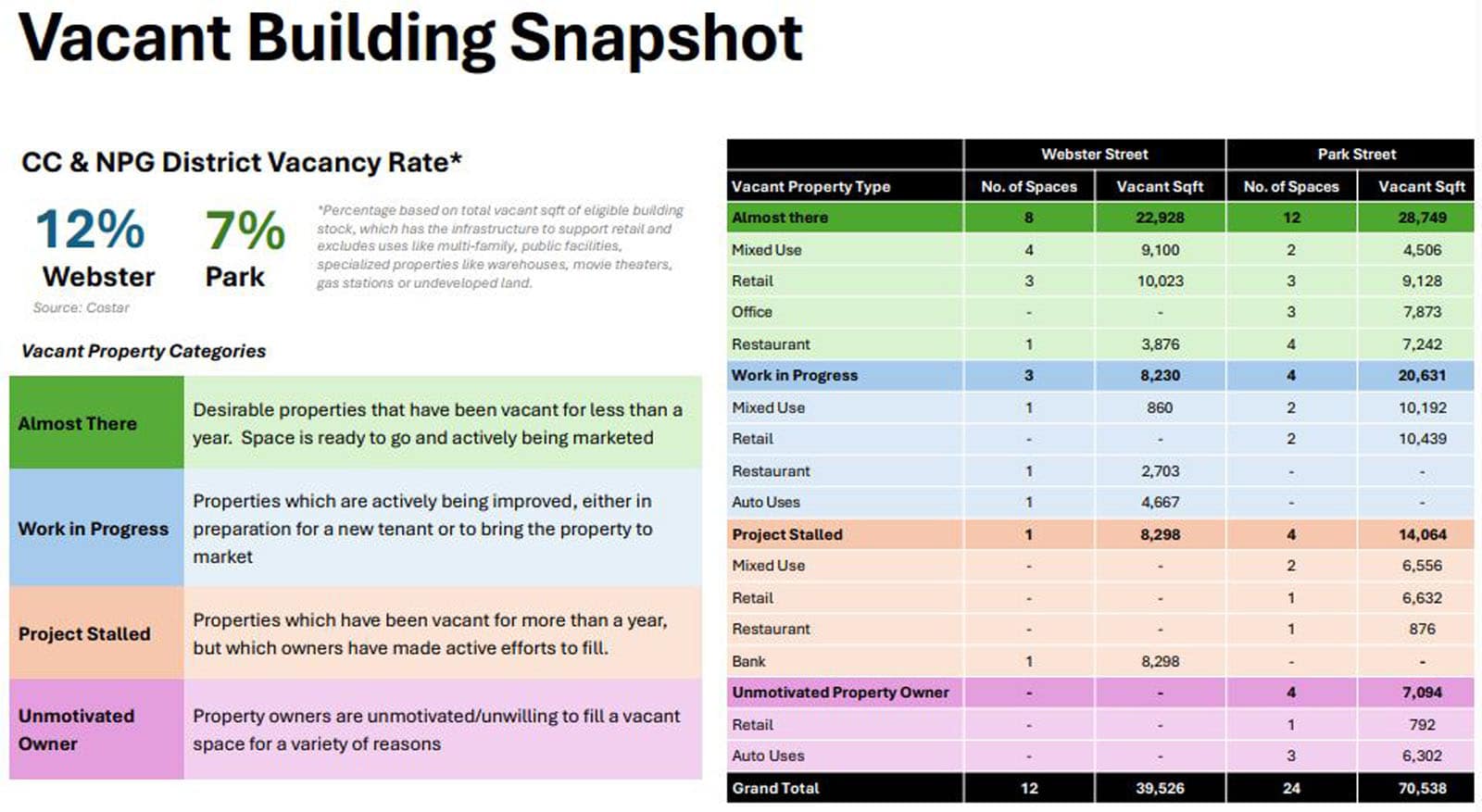
Park Street contains roughly 1 million square feet of commercial space, with more than half of its commercial buildings measuring 4,000 square feet or less. Vacancy rates currently stand at about 7% on Park Street and 12% on Webster Street. Staff said many vacancies could be addressed by updating zoning regulations that currently create unnecessary barriers for prospective tenants.
Among the proposed changes are consolidating dozens of specific retail and personal service categories into broader definitions, eliminating use permit requirements for selected businesses, and reserving public hearings for uses that warrant case-by-case review. Staff noted that obtaining a use permit can add three to 12 months to the approval process, creating uncertainty for businesses deciding whether to locate in Alameda.
Staff also requested feedback on allowing grocery stores, convenience stores, beauty salons, gyms, massage businesses, tattoo studios, small offices, outpatient medical facilities and commercial recreation uses to operate by right under certain conditions. Other proposals include updating regulations for experiential businesses such as escape rooms, permitting billiard halls, requiring transparent storefront windows to maintain active streetscapes, and extending standard business hours from 5 a.m. to 10 p.m., with an option to allow businesses to remain open until midnight on Fridays and Saturdays without a use permit.
 [4]
[4]Board supports downtown zoning reforms
Boardmembers expressed broad support, focusing on refining the proposals rather than questioning their overall direction. They endorsed consolidating dozens of individual business categories into broader definitions for retail and personal services and supported eliminating use permits for many low-impact uses. Boardmembers also favored making zoning regulations more consistent across Park and Webster Streets, reducing outdated distinctions.
Boardmember Sunny Tsou discussed whether offices should be allowed by right [5] on the ground floor. While acknowledging that occupied storefronts are preferable to vacancies, he questioned whether offices generate enough pedestrian activity on primary commercial corridors and suggested limiting them to smaller spaces or side streets to preserve retail vitality.
Boardmembers generally supported allowing uses such as gyms, massage businesses, tattoo studios, commercial recreation, and billiard halls without use permits, noting that many existing regulations reflect outdated perceptions of those businesses. They also backed staff’s proposal to require greater storefront transparency so businesses maintain active, visually engaging street frontages regardless of use. They suggested that larger gathering places should continue to require use permits.
Staff noted that many longstanding vacancies stem from aging buildings requiring costly infrastructure upgrades, while a smaller number remain vacant because property owners have declined assistance in leasing their spaces.
At the workshop’s conclusion, Boardmembers directed staff to continue refining the ordinance and to return with draft zoning amendments for review in September.
Draft short-term rental ordinance
The Planning Board reviewed a draft ordinance to regulate short-term rentals, aiming to balance the preservation of long-term housing and neighborhood character with the ability of homeowners to generate income from short-term rentals.
Shaped by months of Board and community feedback, the draft would generally permit short-term rentals only in owner-occupied primary residences or eligible units on the same property, while prohibiting rentals in accessory dwelling units (ADUs), deed-restricted affordable housing, SB 9 lot splits, and properties with unresolved code violations. SB 9 lot splits are subdivisions created under California Senate Bill 9 [6] [PDF], which allows owners of single-family residential lots to divide one parcel into two.
Planning Services Manager Steven Buckley said staff modeled the ordinance after the City of Santa Monica’s regulations, adopting clear definitions for “home sharing” and “vacation rentals” while eliminating the more confusing “hosted” and “non-hosted” terminology previously discussed. Home sharing refers to renting out space within the home where the owner lives as their primary residence; vacation rentals refer to renting a separate, legal dwelling unit on the same owner-occupied property (excluding ADUs). Eligible rentals must meet building and fire safety standards, comply with occupancy limits, maintain liability insurance, designate a local contact person, and display a City-issued permit number in online listings.


Rather than relying on aggressive enforcement, Buckley said the City would continue its complaint-based approach, giving property owners opportunities to come into compliance before issuing escalating penalties. Operators would obtain an annual permit through a streamlined administrative process tied to the City’s business license renewal. Existing hosts would receive an amnesty period after the ordinance’s adoption to register and meet the new requirements before enforcement begins.
 [7]
[7]Public comment
Public comments reflected broad support for regulating short-term rentals while differing over how restrictive the proposed ordinance should be. Speakers generally endorsed owner accountability and neighborhood protections but urged the Planning Board to refine several provisions before forwarding the proposal to City Council.
Longtime Alameda resident and real estate appraiser Warren Wong praised the ordinance’s safeguards but cautioned that overly limiting short-term rentals could reduce property owner rights, thereby potentially reducing property values. Still, he supported preventing speculative investors from purchasing homes solely for use as vacation rentals and emphasized the need to protect neighborhood quiet.
Several short-term rental operators requested changes. One couple questioned why the ordinance prohibits all ADUs from being used as short-term rentals, noting that earlier discussions referenced grandfathering provisions. One speaker who has operated a backyard cottage rental for 12 years asked the City to clarify that historic cottages with separate addresses on the same parcel remain eligible.
A West End resident described repeated neighborhood disruptions caused by an absentee-owned Airbnb that hosted frequent parties, urging the City to better define what constitutes a “local” contact and to require hosts to live close enough to respond quickly to complaints.
Other speakers argued that well-managed short-term rentals help homeowners afford rising costs while their renters support local businesses, with one saying that nuisance issues should be addressed through enforcement rather than broader restrictions.
Board backs ordinance with revisions
Boardmembers praised the proposed ordinance but recommended several refinements before forwarding it to City Council. Much of the discussion centered on the treatment of ADUs.
Staff explained that, while state law prohibits many ADUs from being used as short-term rentals, determining which units qualify is administratively complex due to changing state laws and the variety of Alameda’s historic housing stock. To simplify enforcement, staff recommended prohibiting all ADUs from being used as short-term rentals. Several Boardmembers supported preserving ADUs for long-term housing but suggested adding language to better explain the rationale and clarify how older, legally established secondary units would be treated. Notably, not every older secondary unit, such as a backyard cottage, is considered an ADU.
The Board aimed to preserve legitimate historic secondary units where appropriate, while continuing to prohibit short-term rentals in ADUs specifically created under modern ADU laws to support long-term housing. The Board directed staff to clarify this distinction before the ordinance goes to City Council.
Boardmember Andy Wang also discussed strengthening the enforcement of the primary residence requirement. He recommended requiring applicants to affirm under penalty of perjury that a property is their primary residence, treating false representations more seriously than routine operational violations, and ensuring that operators who lose eligibility cannot immediately reapply. Boardmembers also favored clarifying that only one short-term rental may operate on a property at a time and that local contacts must be able to respond in person within 60 minutes.
Staff asked whether existing “legacy” short-term rental operators who have operated responsibly without complaints should be allowed to continue even if they would not qualify under the new rules. Boardmembers expressed general support for grandfathering operators who had been in good standing for at least 1 year, while agreeing that any grandfathered status should end if a permit is revoked.
The Planning Board unanimously voted to recommend that the City Council adopt the proposed short-term rental ordinance, incorporating the revisions discussed during the meeting.
Contributing writer Karin K. Jensen covers boards and commissions for the Alameda Post [9]. Contact her via [email protected] [10]. Her writing is collected at https://linktr.ee/karinkjensen [11] and https://alamedapost.com/Karin-K-Jensen [12].