Appoints new City Manager, approves Encinal Terminals EV storage
On May 5, following a lively debate over how Alameda balances economic activation with neighborhood liveability, City Council unanimously upheld an appeal that modifies Park Station’s use permit by requiring outdoor music events to comply with the City’s Noise Ordinance.
Council also approved a three-year Bay Wheels bike share pilot for West Alameda ahead of major Posey Tube construction, appointed Gerry Beaudin as the new City Manager, and authorized temporary electric vehicle storage at Encinal Terminals.
 [1]
[1]Park Station permit controversy
Park Station, located at 1200 Park Street, originally received approval in 2023 to operate an outdoor patio with amplified entertainment, subject to review. Following review earlier this year, the Planning Board allowed the music to continue [3] and even added one extra event per month, while permitting outdoor performances up to 85 decibels. After a neighbor appealed, however, staff reversed course and agreed with the appellant.
The issue is that Alameda’s Noise Ordinance sets sound limits based on the receiving property’s zoning and the duration of the noise. Noise generally cannot exceed the ambient noise level for more than 30 minutes in any one hour in residential areas. Louder sound is permitted for brief periods, but continuous or repeated sound must stay near the lower threshold. If amplified music crossing property lines exceeds the residential standards for too long, it is a code violation regardless of whether a use permit exists.
Consequently, staff recommended that Council both uphold the appeal and later revisit the City’s broader noise ordinance. Staff proposed modifying the use permit so that all outdoor entertainment must comply with the City’s ambient-noise-based ordinance standard [4], adding professional sound monitoring, limiting events to no more than four days per month and three hours per day within specified afternoon and early evening hours, and requiring a four-month Planning Board review of collected noise data and mitigation measures.
Interim Planning Director Abby Thorne-Lyman framed the issue as a balancing act between “the economic vitality of our two downtown districts” and the quality of life of nearby residents, while acknowledging that Alameda’s existing noise rules “do not really allow…a level of nuance” for modern mixed-use commercial corridors.
 [5]
[5]Spirited debate
Appellant Kevin Durfee and his attorney, Rebecca Davis, argued that the appeal was not an attempt to shut down Park Station or eliminate live music, but rather to force the business to comply with the same municipal noise standards that apply citywide. Davis stressed that her client supports the brewery, outdoor seating, and even indoor live entertainment. Still, she said the City had unlawfully allowed “a use permit that converts a residential neighborhood into an outdoor concert venue without any study of the impact and without any meaningful mitigation.”
Davis contended that the 85-decibel outdoor music allowance approved by the Planning Board was extraordinarily high for a neighborhood bordered by single-family homes. She said music was plainly audible inside nearby homes, even with windows and doors shut; children were unable to sleep; neighbors could not comfortably hold conversations indoors; and some residents were considering moving because of the repeated disruptions. In her view, these impacts made the permit not merely inconvenient but a public health and nuisance issue.
Park Station owner Melody Thebeau urged the Council not to treat the issue as a simple code violation, but as part of a larger collision between an outdated municipal noise ordinance and Alameda’s evolving vision for active outdoor commercial districts. She noted that she and her husband purchased the long-vacant property in 2022, spent years and substantial resources transforming it into a “dream” neighborhood gathering place, and did so with the understanding that live music was explicitly contemplated. She emphasized that Park Station did not invent the 85-decibel figure, but accepted a threshold previously used by the City for another entertainment establishment.
Thebeau argued that the current ordinance—written more than a decade ago—does not reflect post-pandemic changes in urban life, including Alameda’s embrace of outdoor dining, parklets, and more activated street-level business environments.
Public comment ran heavily in favor of preserving some form of outdoor amplified music at Park Station. However, speakers repeatedly acknowledged that a compromise would be needed to address neighborhood impacts.
Appeal upheld
Council moved decisively toward staff’s compromise, with members signaling that Park Station should not retain the Planning Board’s 85-decibel approval but also should not lose outdoor music altogether. Special counsel Cara Silver clarified that the recommended resolution would uphold the appeal while rewriting the permit to require outdoor performances comply with Alameda’s Noise Ordinance, using its ambient noise criteria. That means sound levels would be tied to the area’s background noise, which staff estimated falls in the high-60-decibel range.
Mayor Marilyn Ezzy Ashcraft emphasized both the value of protecting neighborhood peace and the importance of sustaining one of Alameda’s revitalized downtown gathering spaces. She reflected on the site’s prior years of vacancy, and the broader struggle of small businesses, arguing that Alameda is fortunate to have active downtown districts worth preserving.




A key takeaway emerged during questioning: Staff indicated that some amplified outdoor music does appear feasible under the ambient-noise standard, citing encouraging data from Park Station’s quieter Saturday bluegrass performance, but that further experimentation will be needed with instrumentation, sound orientation, and mitigation techniques.
Council voted unanimously to support staff’s recommendation.
 [6]
[6]West Alameda bike share pilot
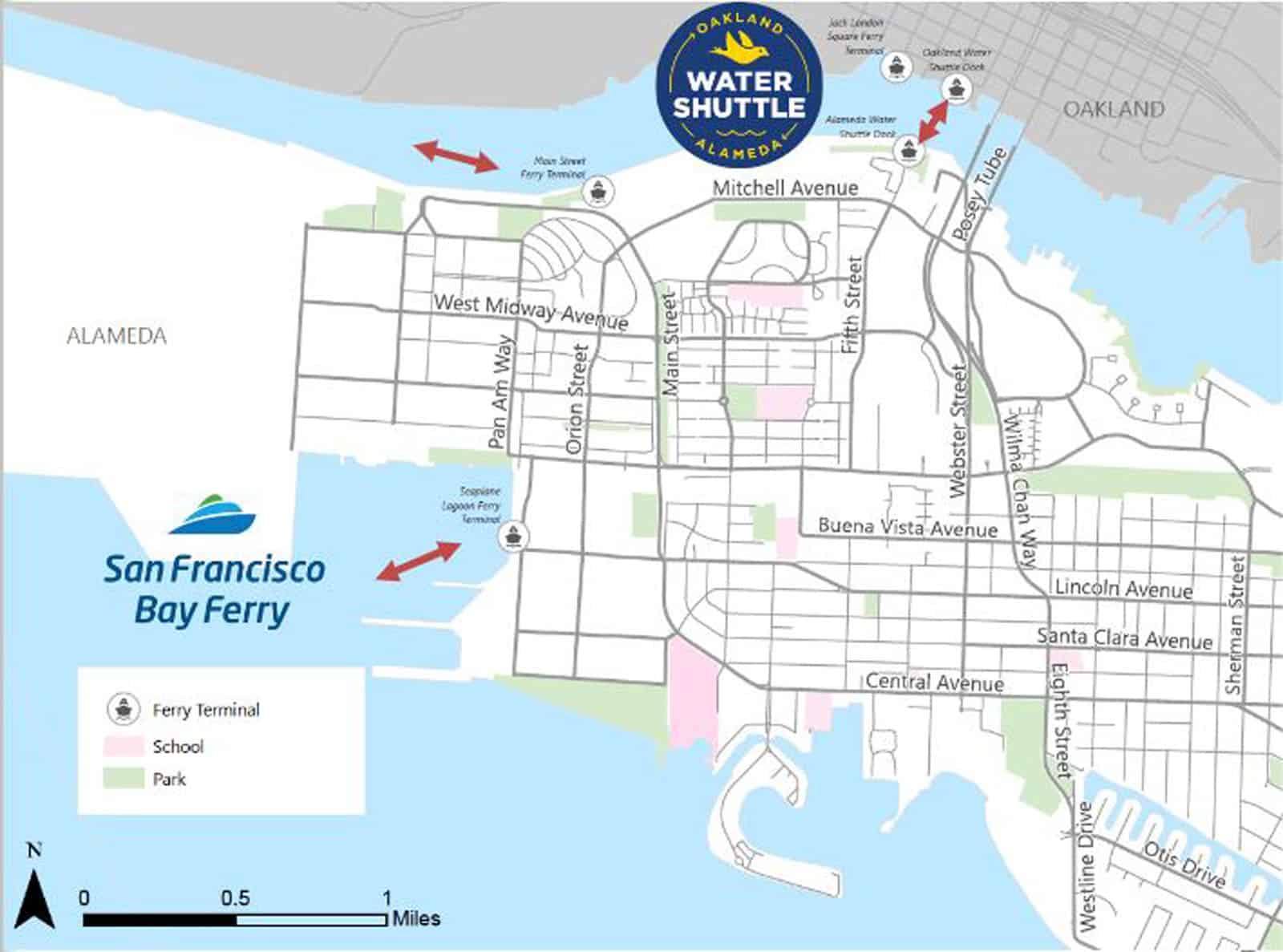
Senior Transportation Planner Susie Hufstader asked Council to endorse a three-year West Alameda bike share pilot project as a mitigation measure for the upcoming Oakland Alameda Access Project [7], which will bring extended single-lane closures in Posey Tube beginning early 2027. The pilot aims to strengthen the “first and last mile” connection between West End neighborhoods, Alameda Point, and the area’s ferries and water shuttle service so residents have alternatives to driving during tube disruptions.
Hufstader recommended joining the regional Bay Wheels bike share network through agreements with Lyft and the Metropolitan Transportation Commission. The proposal would install eight docking stations and 52 electric bikes, each capped at 15 miles per hour, across West Alameda. Because Bay Wheels already operates in Oakland, Berkeley, Emeryville, and San Francisco, Hufstader said the regional interoperability was a major advantage, allowing users to ride seamlessly between Alameda and neighboring cities. Hufstader emphasized that the pilot could serve as the foundation for a broader citywide bike-share system if demand proves strong.
Before launch, staff plan a summer outreach campaign including online surveys, stakeholder meetings, and education on low-income membership options. The City aims to finalize siting and design work later this year and open the program in early 2027.
Council unanimously approved staff’s recommendation. However, Mayor Ashcraft pressed staff to retain Alameda’s long-term flexibility in case Lyft exits the market, or another vendor offers a stronger citywide solution in the future. She was particularly interested in extending service to the East End to improve “last-mile connectivity” to destinations such as Harbor Bay Ferry and BART.
 [8]
[8]New City Manager appointed
After delaying Girard “Gerry” Beaudin’s appointment as Alameda’s new City Manager at its April 24 meeting [9] over unspecified fiduciary concerns, Council unanimously approved his contract, effective June 30, after making three compensation-related amendments that modestly scaled back portions of the original package. The proposed agreement included a $383,111 base salary, guaranteed to remain at least 5% above the base salary of any executive management employee, a monthly automobile allowance, standard benefits, and a 12-month severance provision.
Amendments included reducing the City’s deferred compensation contribution from 3% to 1% pending review at Beaudin’s first annual evaluation; removing language that would have required a “facilitated” performance evaluation to preserve Council flexibility over how reviews are conducted; and lowering the monthly automobile allowance.
Councilmember Tony Daysog noted that although he had concerns about the guaranteed 5% salary differential above executive management, he did not want that objection to overshadow the broader importance of welcoming a highly qualified incoming city manager, adding that Beaudin’s previous Alameda experience and overall qualifications [10] made it important to “welcome our new City Manager with open arms.”
 [11]
[11]Encinal Terminals EV storage approved
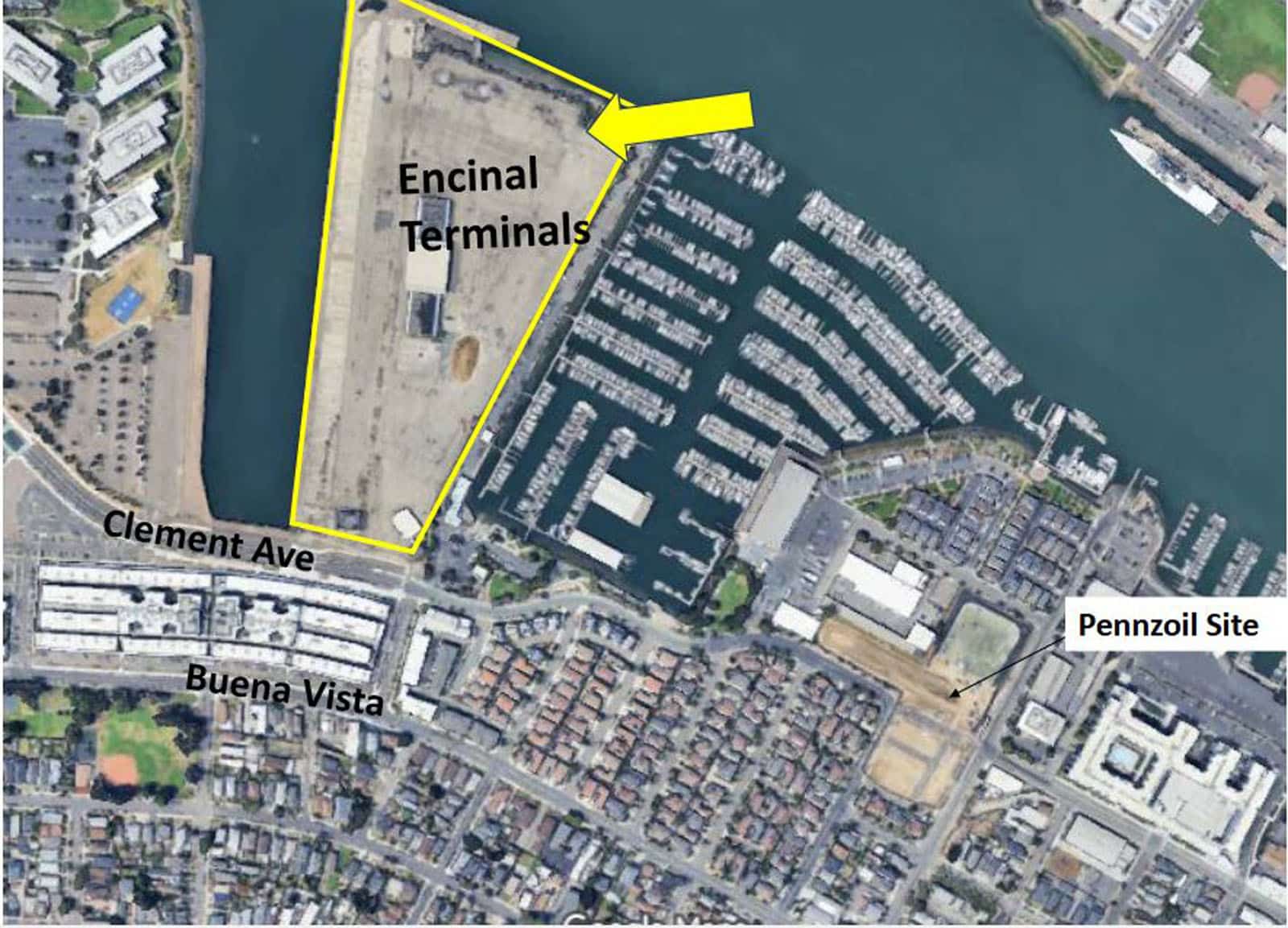
Community Development Manager Walker Toma recommended approval of a third lease amendment for 6.4 acres of City-owned public trust tidelands at Encinal Terminals, 1527 Buena Vista Avenue, allowing the temporary storage of electric vehicles on the waterfront parcel. Toma said the proposed use is consistent with a Planning Board use permit approved in March [12] and would generate about $4,500 per month in lease revenue for the City.
All vehicle loading, unloading, and parking will occur entirely on the site, with no spillover staging on adjacent public streets. Toma characterized the EV storage operation as a low-impact, revenue-producing temporary arrangement while longer-term waterfront planning continues. Council unanimously approved.
Contributing writer Karin K. Jensen covers boards and commissions for the Alameda Post [13]. Contact her via [email protected] [14]. Her writing is collected at https://linktr.ee/karinkjensen [15] and https://alamedapost.com/Karin-K-Jensen [16].