Reviews Civic Center overnight parking, workforce vacancies, technology disruption policy
On May 19, City Council unanimously approved significant updates to the City’s two-decade-old Inclusionary Housing Ordinance, adopting new affordability rules intended to revive stalled housing projects, increase low- and very low-income rental housing and low- and moderate-income ownership housing, and give developers more flexibility in compliance amid a challenging housing market that has made many new housing projects infeasible.
Council also approved overnight closure authority for the Civic Center parking garage, reviewed persistent police staffing vacancies, and adopted a new technology disruption policy to establish procedures for handling remote participation failures during City Council meetings.
 [1]
[1]Inclusionary Housing Ordinance
Interim Planning, Building, and Transportation Co-Director Abby Thorne-Lyman presented proposed updates to Alameda’s Inclusionary Housing Ordinance, opening a discussion over rules that have largely remained unchanged since 2004. Since that time, the Bay Area housing market has transformed from a pre-recession boom [3] to a competitive, supply-constrained environment [4] in which median rents have surged, creating an affordability crisis for lower-income workers [5]. Inclusionary Housing requires developers to set aside a percentage of affordable units in new market-rate housing developments.
Thorne-Lyman noted that Alameda has a Regional Housing Needs Allocation (RHNA) target of more than 5,300 housing units by 2031. Yet, the City has produced only 447 units during the first two-and-a-half years of the current housing cycle. Alameda’s slowdown mirrors a statewide trend, with many California cities struggling to meet RHNA production targets as interest rates rose sharply after 2022, construction costs escalated, and lending for multifamily housing tightened.
Proposed updates would eliminate moderate-income rental housing requirements in favor of increasing low- and very low-income units, reflecting findings that some moderate-income units remain vacant because rents are comparable to market rates. Currently, all projects with more than four units must provide 4% very low-, 4% low-, and 7% moderate-rate units. The update will allow developers to instead choose one of four options:
- 15% low income units.
- 5% very low + 5% low.
- 8% very low.
- An economically equivalent option that provides some combination of low- and very low-income housing.
All are of roughly equal cost.
By contrast, ownership housing requirements would shift toward moderate- and low-income households, reflecting findings that very low-income households generally cannot afford down payment requirements, even when units are income-restricted. The current requirement is that all projects with four or more units provide 4%very low-, 4% low, and 7% moderate-income units. The revision will provide four options to developers:
- 15% moderate.
- 6% low and 6% moderate.
- 10% low.
- An economically equivalent option that provides some combination of low- and moderate-income housing.
All are of roughly equal cost.
A potentially far-reaching change would extend the required affordability period for rental units from 55 to 99 years. Thorne-Lyman flagged this as urgent, noting that affordable units across the Bay Area are quietly aging out of their income-restricted periods — effectively disappearing from the affordable housing stock.
The update will clarify the City’s “cluster development” process, allowing developers to dedicate land within projects for 100% affordable housing. This approach could leverage outside subsidies to produce more housing.
The ordinance also creates a process for already-entitled projects to revise their inclusionary requirements to comply with the updated ordinance and for existing projects with vacant moderate-income units to convert them to low-income housing.
Public support
Public speakers urged Council to approve the proposed revisions, arguing the changes would improve housing feasibility, unlock stalled development projects, and better align affordable housing requirements with current market realities.
Sean Murphy of Pacific Development said the ordinance changes are critical to allowing Pacific Development to move forward this summer with the “Foundry Project [6],” a 260-unit development that would complete the Alameda Marina Master Plan’s 801-unit Northern Waterfront buildout. Murphy described the project as unusually expensive and complicated due to waterfront conditions, sea-level rise protections, environmental remediation, Bay Trail improvements, deep soil stabilization work, and maritime parking requirements. He argued that the revised ordinance’s flexible compliance options will make the project feasible.
Architect and Planning Board member Theresa Ruiz, speaking as a private citizen, framed the ordinance revisions as a way to allow the private market to continue producing housing during difficult economic conditions while the government maintains safety-net protections.
Related Articles
 Planning Board Advances Inclusionary Housing Update, Seeks Balance Between Affordability and Feasibility
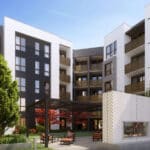 Council Takes Up Inclusionary Housing Reform and $1B Infrastructure Challenge
 Amid Market Challenges, Planning Board Endorsed a Flexible Inclusionary Housing Ordinance Update
 Planning Board Aims to Ease Housing Affordability with Update to Inclusionary Ordinance
Planning Board member Andy Wang, also speaking as a private resident, added that aligning Alameda with state law and regional policies promoted by the Metropolitan Transportation Commission, which encourages cities to allow different mixes of affordable housing so long as they impose roughly equivalent financial obligations on developers, could improve access to grant funding. Wang also highlighted the proposal to exempt projects of 11 units or fewer, saying the change could encourage “missing middle” housing projects by smaller “mom and pop” developers.
Referencing a recent New York Times editorial [7], resident Thushan Amarasiriwardena argued that increasing housing supply is one of the most effective ways to address affordability.
Council approves
Councilmembers broadly supported the proposed revisions, describing them as important for addressing the City’s housing shortage, improving flexibility for developers, and aligning affordable housing requirements with current market conditions. Vice Mayor Michele Pryor said the fact that a developer was prepared to move forward with a major project because of the ordinance revisions “speaks volumes.”
Councilmember Greg Boller proposed clarifying the reasoning behind the new affordability options. Staff supported the clarification, explaining that although some options would require fewer affordable units numerically, the units would target deeper affordability levels and therefore impose roughly equivalent financial obligations on developers. Staff stressed that the ordinance was not designed to “let developers off the hook,” but to provide different pathways to achieving the same economic contribution.
Mayor Marilyn Ezzy Ashcraft emphasized that affordable housing should not carry stigma and defended the concept of cluster developments, in which affordable units are grouped into separate buildings rather than fully integrated into market-rate projects. She argued that affordable and market-rate housing are often indistinguishable in quality and appearance in Alameda developments such as Bayport. Ashcraft also highlighted the importance of locating affordable housing near transit and jobs, particularly in a high-cost region like the Bay Area.
Council unanimously approved updates to the ordinance, adopting the clarifying language proposed by Boller.
 [8]
[8]Civic Center parking hours
Parking Manager Ricardo De La Torre presented a proposed ordinance updating Alameda’s Municipal Parking Code, primarily to authorize overnight closure, midnight to 6 a.m., of the Civic Center parking structure. De La Torre said the parking structure has experienced repeated vandalism during overnight hours, especially around the elevators, leading to service disruptions and prompting the Council to previously approve funding for security enhancements and the ability to close the garage overnight. Renovations and aesthetic improvements are underway.
Vice Mayor Pryor raised a concern about people who choose not to drive after drinking downtown and might leave their cars in the garage overnight. De La Torre responded that the City plans to clearly post operating hours and noted that users could still retrieve their vehicles the next morning if they choose to leave them in the garage overnight.
Assistant City Manager Amy Wooldridge clarified that the overnight closure aims to address situations where people camp in the garage overnight and become “entrenched,” creating safety and operational concerns. She described the policy as an effort to strike a balance between accommodating legitimate overnight vehicle parking and maintaining security in the facility.
Council unanimously approved.
City workforce report
Human Resources Director Noelle White presented Alameda’s annual workforce vacancy and retention report. The City maintained an average vacancy rate of 10.44% during 2025, which she described as within a healthy range. Alameda increased its full-time equivalent positions from 598 to 608. White highlighted 30 internal promotions as a positive indicator of employee development and said Alameda’s average hiring timeline of 85 days was roughly 50 days faster than comparable agencies despite lengthy civil service hiring requirements.
The report focused heavily on the 27.05% vacancy rate within the Alameda Police Officers Association. White said Alameda averaged 21 police vacancies in 2025 and received 571 police applications, but the average police hiring process still took 224 days because of extensive testing, background investigations, and academy requirements. Police retention, particularly among officers with five to 10 years of experience, was a major focus during labor negotiations. Human Resources is working with the department on recruitment strategies, including job fairs, ride-alongs, and the implementation of a new electronic background investigation platform called “Vetted,” intended to streamline hiring and reduce administrative burdens.
Technology disruption policy
City Clerk Lara Weisiger presented a proposed “technology disruption” policy required under Senate Bill 707, which amended California’s Ralph M. Brown Act to establish procedures for handling remote participation failures during City Council meetings. Under the policy, the Mayor or City Clerk must announce disruptions, call a recess, and allow staff up to one hour to restore service before the Council decides whether to adjourn or continue the meeting. Council unanimously approved.
Contributing writer Karin K. Jensen covers boards and commissions for the Alameda Post [9]. Contact her via [email protected] [10]. Her writing is collected at https://linktr.ee/karinkjensen [11] and https://alamedapost.com/Karin-K-Jensen [12].