At its meeting on Tuesday, February 24, the Alameda Unified School District (AUSD) Board of Education heard from two separate teams of educators working to provide academic and social support to students in need.
 [1]
[1]WRaP program update
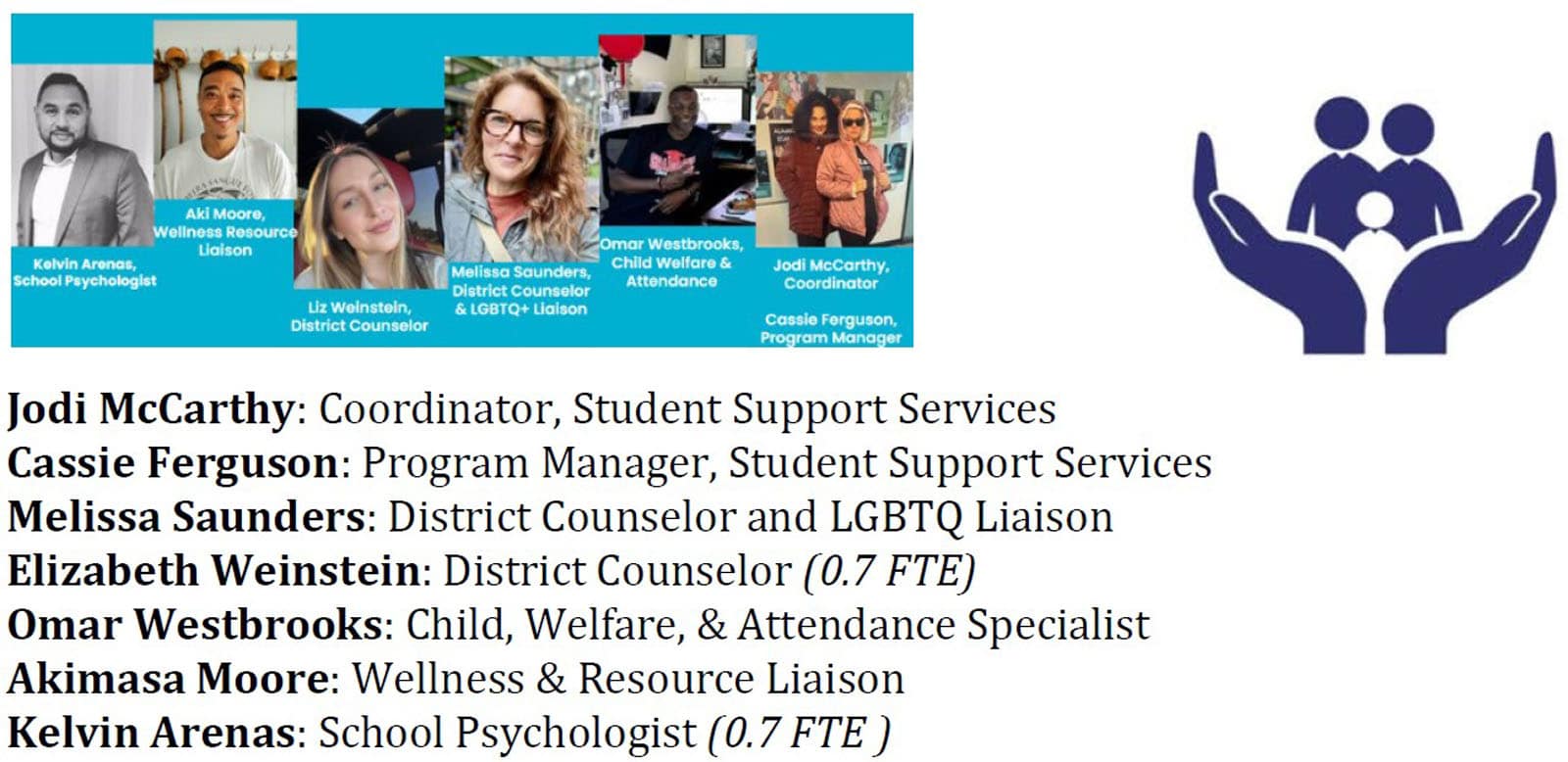
First, Jodi McCarthy, AUSD Coordinator of Student Support Services, introduced the Wellness, Resources, and Partnership (WRaP) Team [2], a “small, but mighty” group of psychologists, counselors, and specialists who partner with a school site to eliminate barriers to school attendance and increase engagement and wellness. The team works with specific students by making home visits and providing individualized counseling services in an effort to address chronic absenteeism and increase academic achievement.
The program, which began during the 2023-24 school year and is funded primarily through grants obtained by the Student Support Services department, now includes seven AUSD staff offering their services across the district. McCarthy introduced the team members, along with the work each is leading at their respective school sites. Highlights include Young Men’s Groups as safe spaces for students to connect, lessons on stress and anxiety, and connecting unhoused students and McKinney-Vento [3] designated families with necessary resources.
 [4]
[4]A small group of Spanish-speaking Wood Middle School students, whose families originate primarily from South and Central America, took to the podium to describe the program’s impact on them, with translation from school psychologist and WRaP member Kelvin Arenas.
“She really enjoys the part where she can be herself, where she has a voice, where she has a psychologist who can help her work things out,” Arenas translated for 13-year-old Sofia, who is from Venezuela.
For 12-year-old Hilary from Guatemala, Arenas translated: “She enjoys that she can truly be herself, where she can have no shame about where she’s from, and can be authentic.”
During Board discussion, members reflected on the importance and timeliness of the program.
“There is so much fear and anxiety in the world and we want to show how being at school, you don’t have to have that,” said President Ryan LaLonde. “You can leave all the baggage at the door when you walk in, and be yourself.”
However, Assistant Superintendent of Student Services Kirsten Zazo stepped in to point out that although McCarthy has helped the program secure about $3 million in funding over the past four years, its future is uncertain.
“While the WRaP team has been amazing and I think we really do need it, there is no funding after next year,” said Zazo. McCarthy and Zazo both described ongoing efforts to obtain health insurance information from students’ families, as the services provided by the WRaP team are billable to healthcare providers that can reimburse AUSD.


Office of Equity update
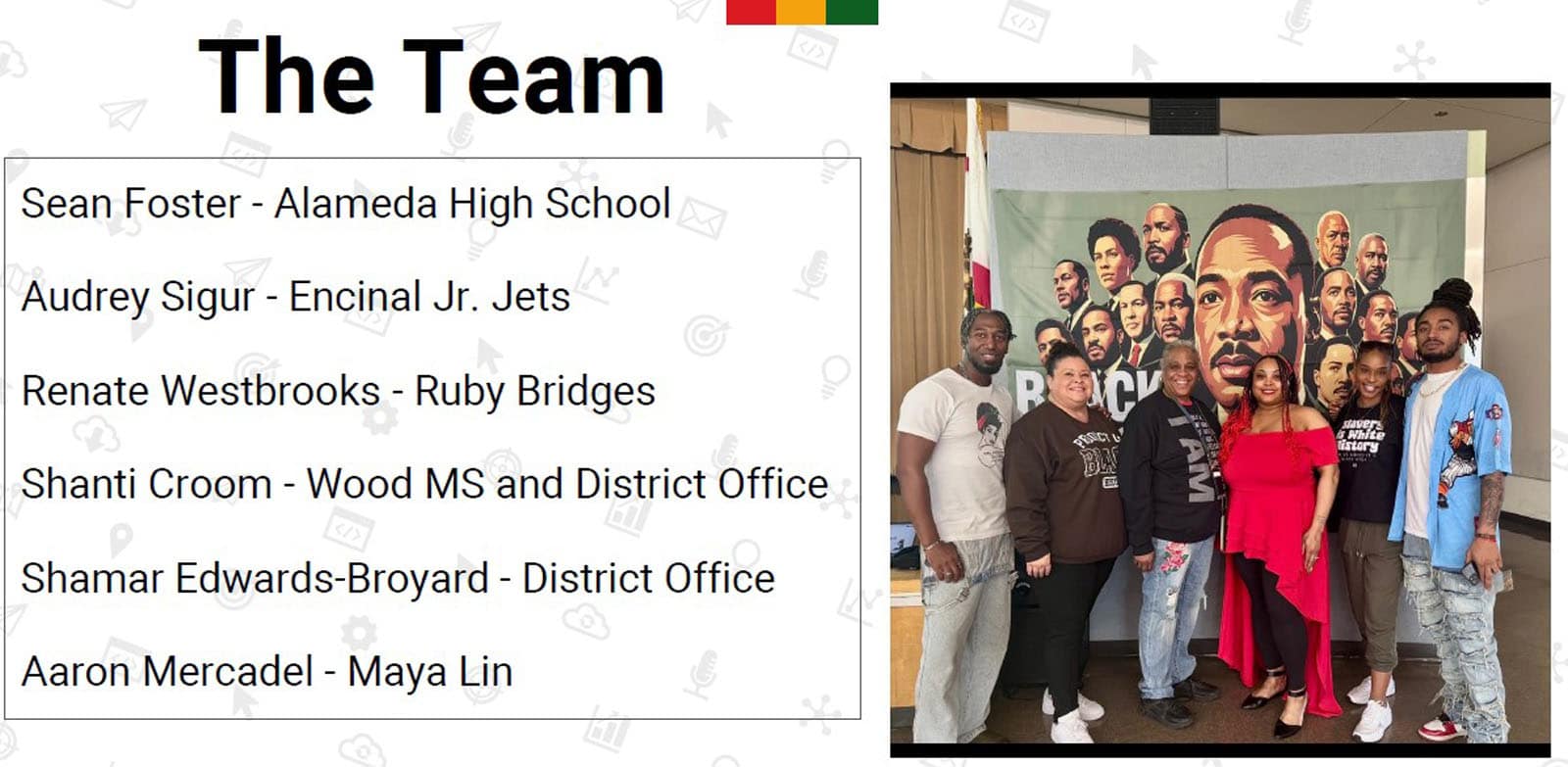
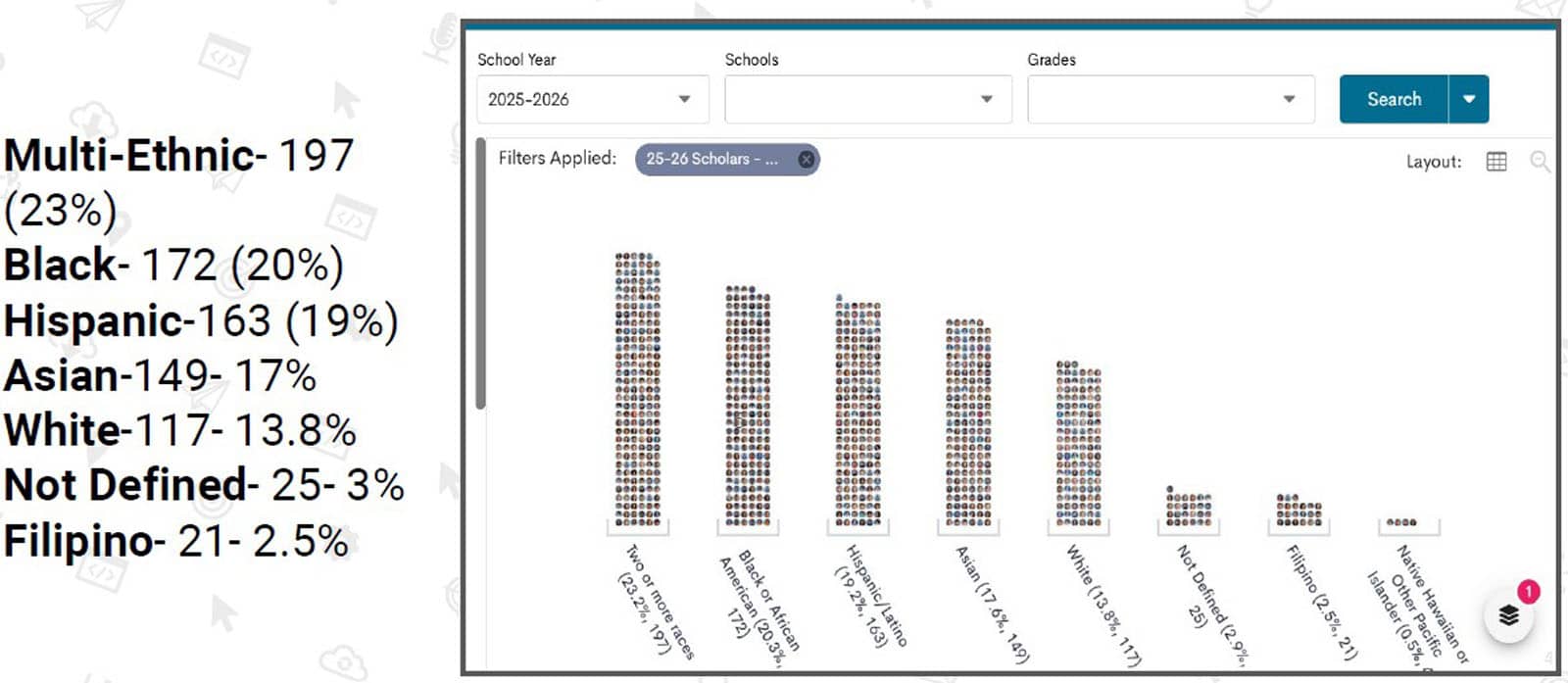
Later in the meeting, Shamar Edwards—AUSD Director of Equity for African American & Multi-Ethnic Student Achievement—provided a mentoring and advising update from the Office of Equity [5]. The team’s six advisors work with 849 focal scholars, mostly in elementary or middle school, from a range of racial and socioeconomic backgrounds at school sites across AUSD. That figure is up from just 70 elementary focal scholars when the program first started in 2021.
 [6]
[6]Edwards highlighted the team’s efforts in providing targeted academic support in math this year, which he said has made a significant difference in helping decrease the number of students in need of “urgent intervention.” As part of designated math groups, focal scholars work on math quizzes, games, and activities in a curriculum led by advisors.
 [7]
[7]At Alameda High School, Equity Coordinator Sean Foster is helping the campus “navigate the complex issues of race, identity, and belonging.” Foster explained that in response to incidents where students repeat harmful words without fully understanding context or origin, he is working to challenge students to learn and grow, rather than just resorting to discipline.
Families are largely supportive of the work the Office of Equity is doing in schools, though Edwards recognizes there is room for growth based on feedback received.
“Everyone listened to ideas and different methods to enhance learning experience for my child,” read feedback from a special education family. “I really appreciate that.”
Another comment, from a Black family, pushed for more support: “Raise the standard for Black students. Believe in black excellence instead of normalizing black failure.”
The Office intends to continue working with focal scholars and families, in line with its Scholar Practices and Advisor Success Guide [8].
Board authorizes decrease in employees
Finally, the Board voted to approve two resolutions to decrease the number of certificated employees by 28.55 Full Time Equivalent (FTE) and decrease the number of classified employees by nearly 5 FTE.
Though this is an annual procedure, it drew a considerable amount of attention, leading Board members to emphasize that the move would not leave students unserved. Furthermore, because many of these are local positions funded by individual school sites, largely with support from parent-teacher associations (PTAs), there is no guarantee that funding—or even the position itself—will be extended into the next school year due to changing priorities. Therefore, as a technicality, the Board must legally issue pink slips, but may rescind them once commitment letters continuing those positions are received from school sites later in the school year.
Ken Der is a contributing writer for the Alameda Post [9]. Contact him via [email protected] [10]. His writing is collected at AlamedaPost.com/Ken-Der [11].