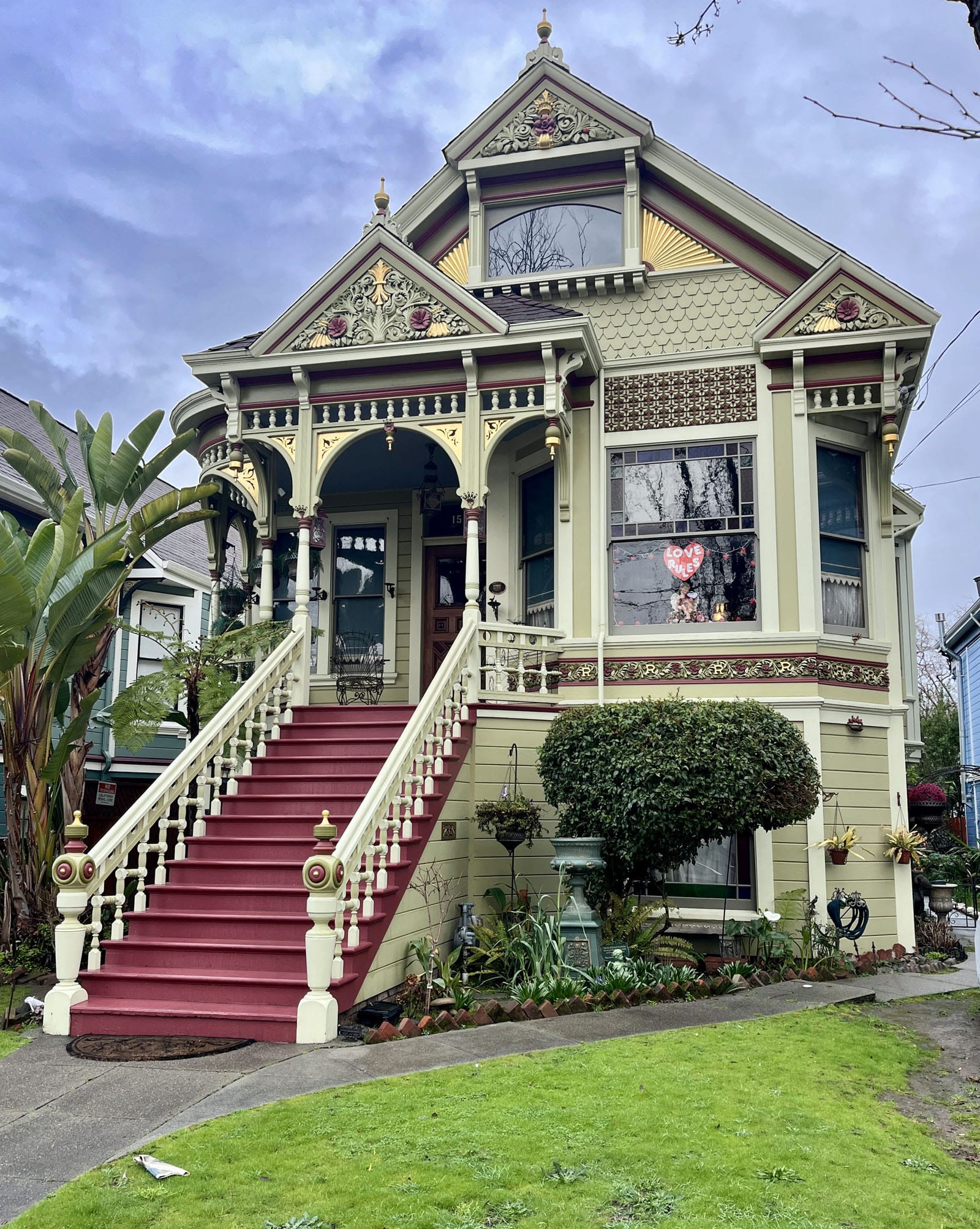
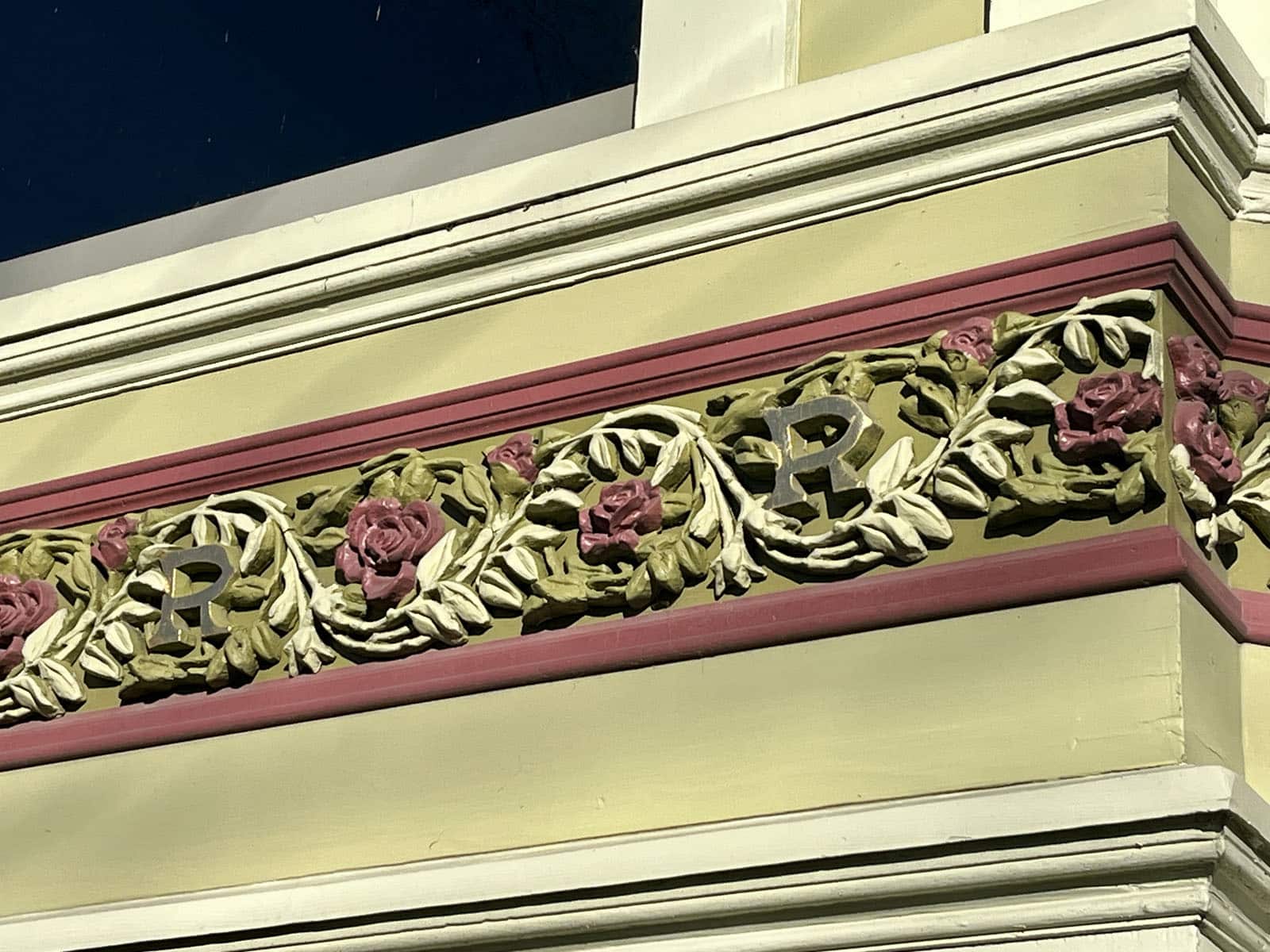
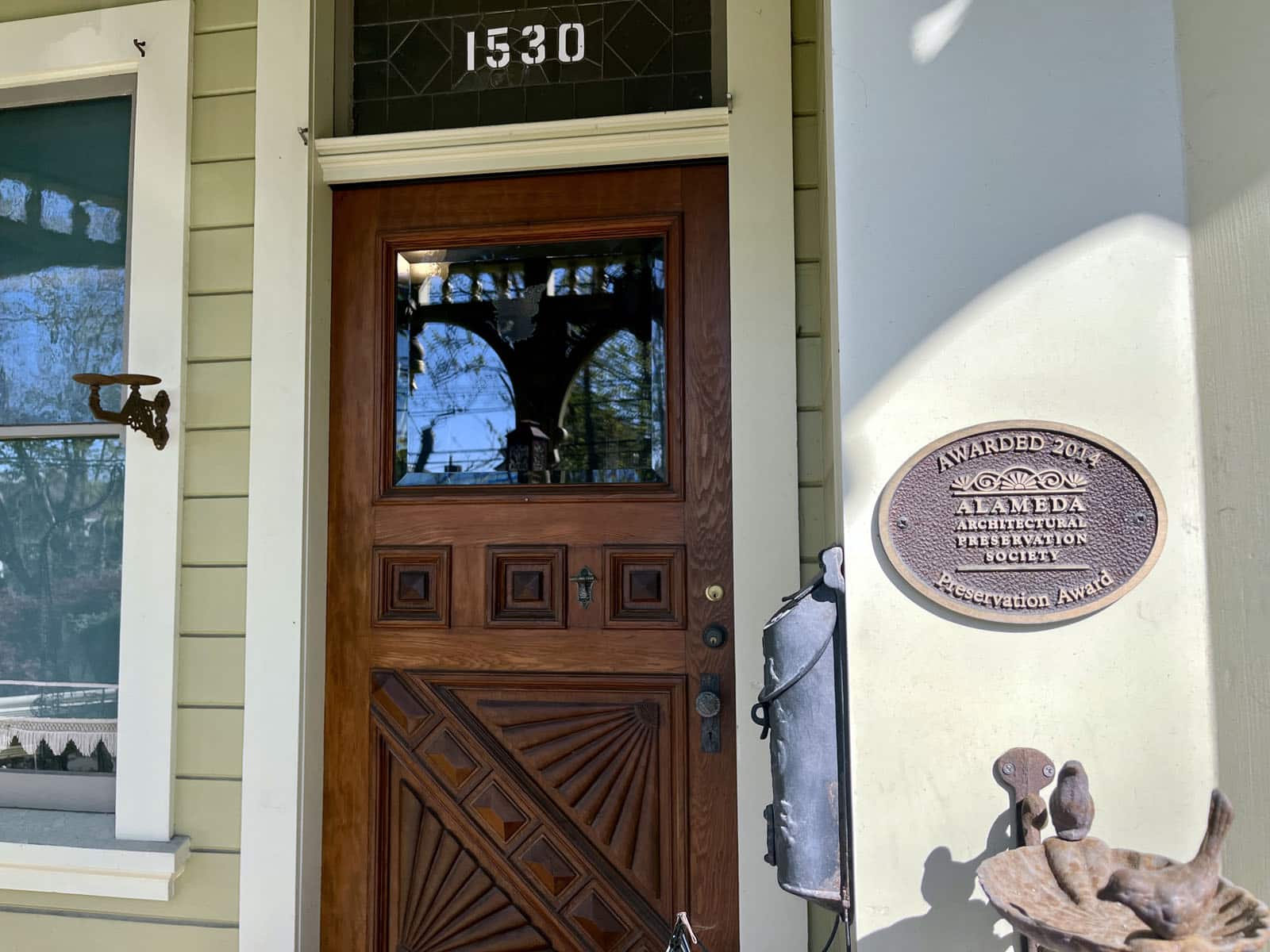
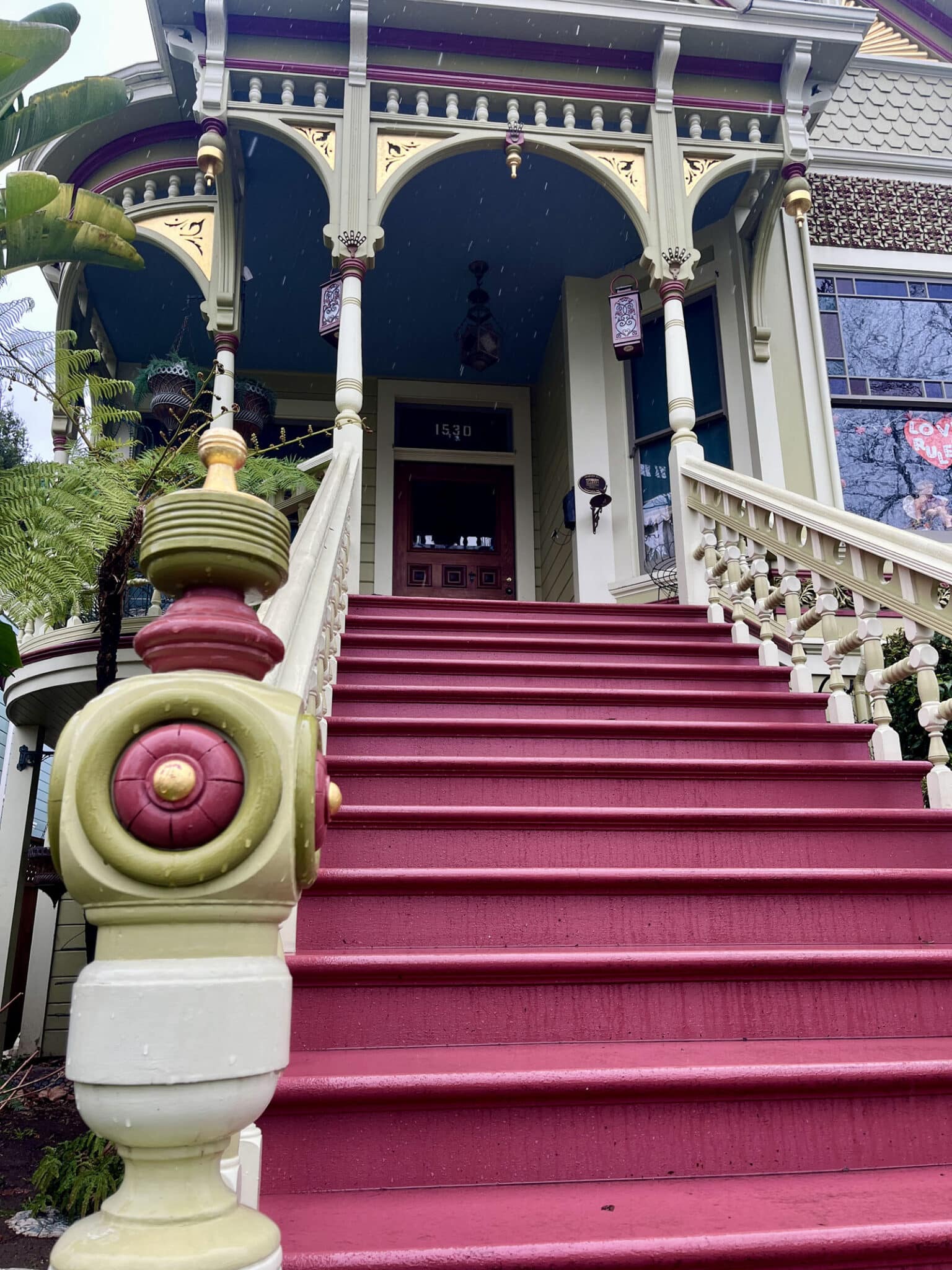
There is a house on Mozart Street that has the letter “R,” along with carved roses, appearing in a decorative frieze band below its bay windows. The average passerby might not notice these details, or if they do, may not understand the meaning. But to Tommie Veirs, the longtime owner of 1530 Mozart Street, these little details are an important part of the project of restoring and honoring the history of the 132-year-old house that she first fell in love with 50 years ago. We introduced the house in Part 1 [1] of this series, and in this installment we’ll dig a little deeper into its very first owner.
 [2]
[2]Why the Rose Cottage?
When Tommie learned that the first owner of her home was named Robert Rose, she began calling it the Rose Cottage in his honor. Not much is known about the origins of Robert A. Rose, but the first record found of him is an 1878-79 Oakland-Alameda directory listing him as “Student, State University, Berkeley.” Assuming a college student’s age as between 18-21 years old, that could mean that Rose was born around 1859-61. By 1896, Robert A. Rose was listed in the directory as an “agent,” with his residence at 1530 Mozart Street.
 [3]
[3]Further clues
In searching for clues about those who came before us, every little tidbit of information is important. While I found no marriage announcement regarding Robert Rose, I did find a wedding anniversary announcement in the Alameda Daily Argus, dated December 17, 1895. It stated: “Mr. and Mrs. R. A. Rose celebrated the Crystal Anniversary of their wedding last evening by inviting a large number of friends to their home, 1530 Mozart Street. The rooms were handsomely decorated with ferns, greens, and red berries, and the host and hostess made everyone feel thoroughly at home. Supper was served in the basement and there toasts were many. An Italian orchestra discoursed the music while the supper was in progress.”
This short announcement is valuable, because the crystal anniversary is the commemoration of 15 years of marriage, which tells us that Rose and his wife Carrie were married in December 1880—probably shortly after Rose graduated from college. It also adds color to our understanding of how life was lived in these Victorian-era high-basement cottages, with the lower level sometimes used for entertaining, sometimes with Italian orchestras and large numbers of guests. It should be noted that these “high basements” were not basements in the traditional sense, and were not underground. They were simply lower, ground-level spaces, albeit with lower ceilings, and often used for storage. But they had windows, fresh air, and could also be used for living space and even anniversary parties. Incidentally, although Rose’s wife Carrie’s name was not revealed in this anniversary announcement, I found it in later real estate announcements regarding 1530 Mozart Street. The clues come from many places, but ultimately the picture starts to emerge.
 [4]
[4]Agent Rose
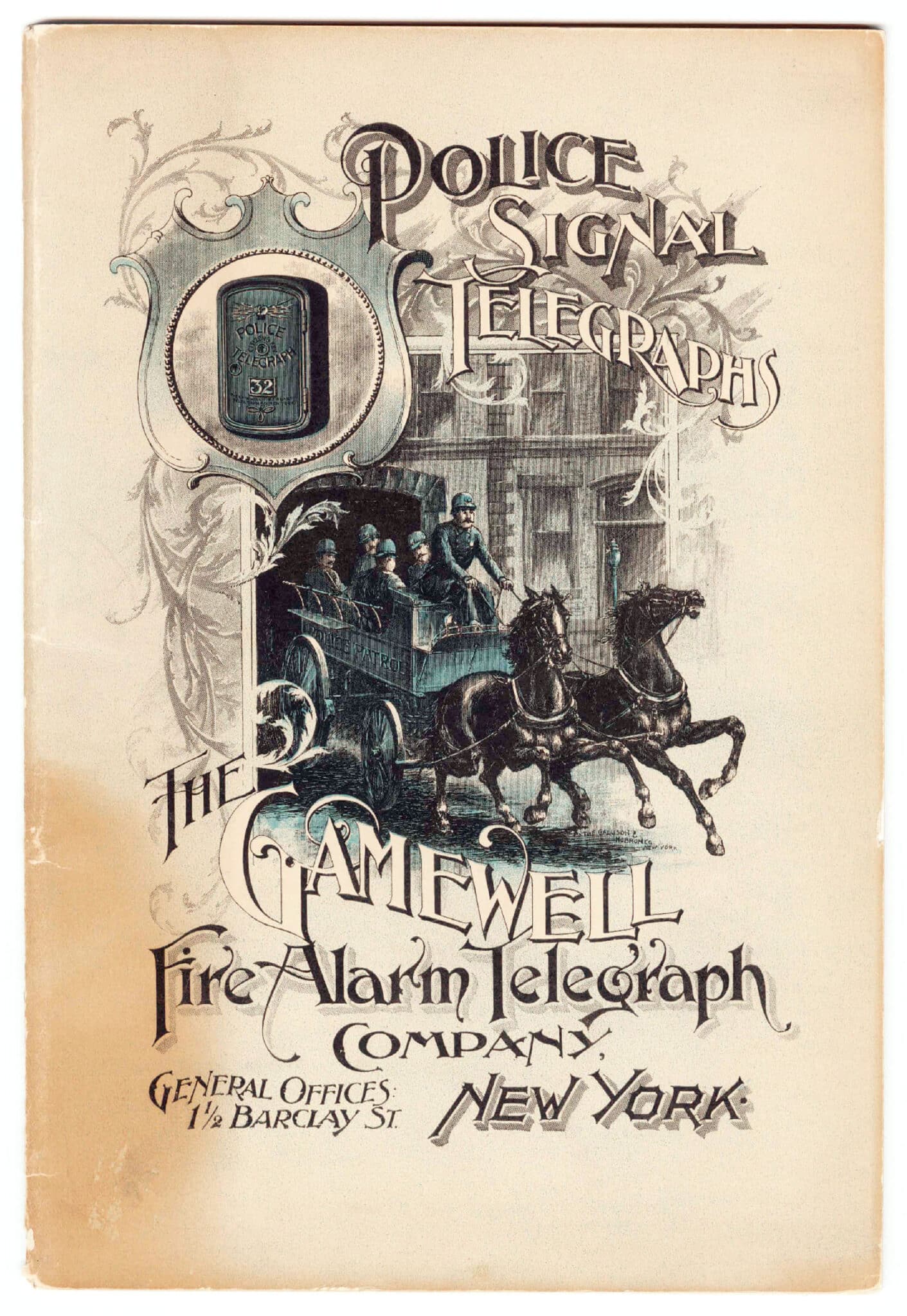
Newspaper reports tell us that Robert Rose was the Pacific Coast agent for the Gamewell Fire Alarm Telegraph Company, a New York firm. Rose’s office was in San Francisco, in the historic Crocker Building, built in 1891 (and sadly, demolished in 1968). Among the contracts he had was one with the City of Alameda, which had been renting a fire alarm system for $20 per month. This system consisted of a series of fire alarm call boxes around town, connected to a central dispatch point by telegraph wires.
 [5]
[5]Dropped from sight
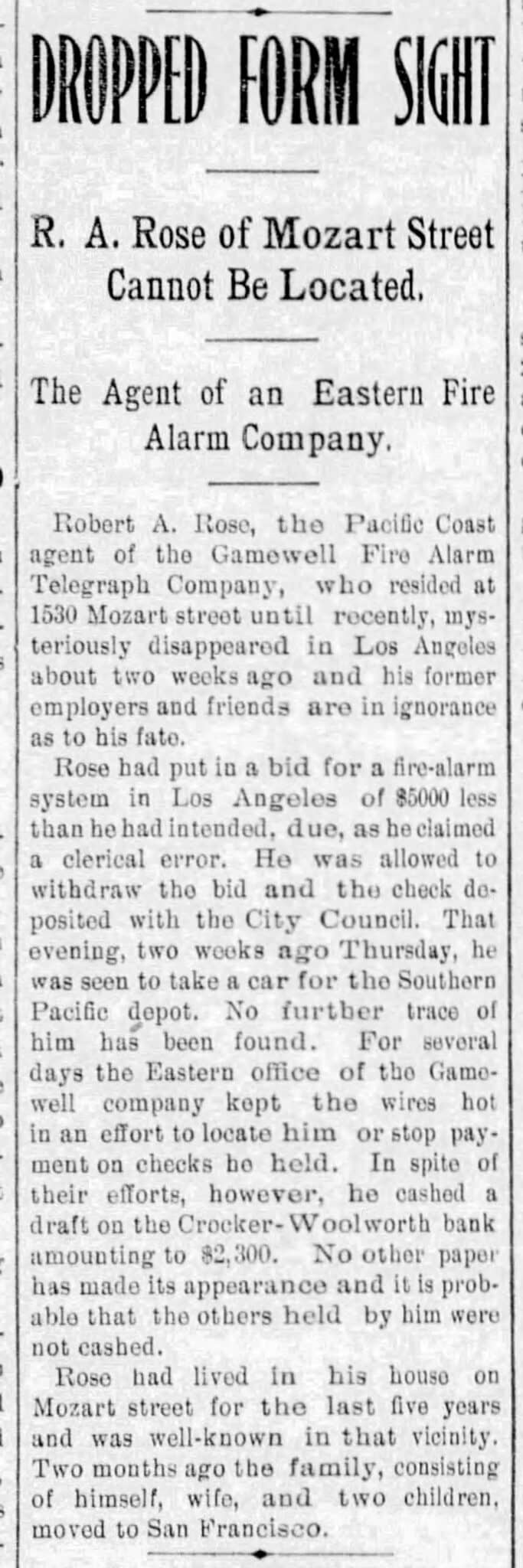
On December 17, 1898, the headline “Dropped From Sight” appeared in the Alameda Times Star, with the sub-heading, “R. A. Rose of Mozart Street Cannot Be Located.” The story goes on to report that Rose had mysteriously disappeared in Los Angeles two weeks earlier, while he was there on business. He had cashed a check amounting to $2,300 on the Crocker-Woolworth account before being seen taking a streetcar to the Southern Pacific train depot and “dropping from sight.” According to the article, “Rose had lived in his house on Mozart Street for the last five years and was well-known in that vicinity. Two months ago the family, consisting of himself, wife, and two children, moved to San Francisco.” This is the first inkling we get that the Rose family had left their Alameda house and decamped for San Francisco by late 1898, and also the first sign that something might be amiss between Rose and his employer.
 [6]
[6]Rose’s wily methods
Further light was cast on the mystery when the Alameda Times Star continued the story on December 20, 1898, with the headline “Rose’s Wily Methods,” and the revelation that Rose had been keeping his New York employers in the dark about his accounting scheme. While Rose had reported that the City of Alameda had been considering purchasing the fire alarm system outright, he didn’t report that the sale had actually occurred. In April 1898, the City paid Rose $820 to close out their account and thus own the system, but Rose never reported that to the Gamewell Company. Instead, he continued sending his employers $20 a month, as though the City was still renting the equipment. In addition, he also pocketed $132 from the sale of an additional alarm box and keys. In all, it was said that “Rose evidently kept $812 of his employer’s money out of the $1160 paid to him by the city of Alameda.”
Mrs. Rose’s faith in her husband
The above heading was the headline in the Alameda Times Star on December 21, 1898, as Joseph W. Stover, president of the Gamewell Company arrived in town to take over the San Francisco office and straighten out the tangle caused by Robert Rose. Communication with the City of Alameda had confirmed their suspicions about Rose, and with him now missing, this prompted the president of the company to travel cross-country by train to address the problem. As Stover took over the San Francisco office, he announced that Rose no longer represented the company, and requested that all communication be sent to him directly, at the company’s office at 230 Kearny Street.

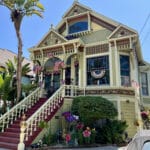


Mrs. Rose, living in San Francisco by this time, professed her confidence in her missing husband, and said to a reporter, “I know my husband will be in town within two days. I have heard from him, but I do not know where he is now, except that he is on the train headed for this city. It is true that he made a great mistake, and it has cost him his position with the company, but I am positive that he will come back and will make a full settlement. He only wants a chance to redeem himself and I know he will do so.”
 [8]
[8]Fire alarm muddle
The final article in this “soap opera” appeared in the Daily Encinal on December 21, 1898, with the headline “Fire Alarm Muddle,” in which Rose’s deception was described as a “defalcation of the funds of the Gamewell Fire Alarm and Telegraph Company of New York.” Defalcation is defined by Merriam-Webster as “an intentional or reckless misuse of funds in violation of a fiduciary duty.” The article reported, “An effort was made to see members of the Rose family this morning by an Encinal reporter, but he was informed that they had rented their house more than a month ago and moved to 781 Sutter Street, San Francisco.”
No further explanation was found as to why Mr. Rose engaged in this deception, or whether he attempted to make restitution. However, about four years later an announcement in the Oakland Tribune, dated February 21, 1903, reported on a Judgement of Foreclosure brought against Robert A. Rose, et al., defendants, by Commercial Building and Loan Association, plaintiff. The judge decreed that the defendant’s house on Mozart Street would be sold at auction, in order to “raise sufficient money to satisfy said judgement, with interest and costs, to the highest and best bidder, for Gold Coin of the United States.”
 [9]
[9]The bloom is off the rose
And so, it seems likely that Robert A. Rose, dealing with the loss of his job and the need to pay restitution to his former company, ultimately had to sell his Mozart Street home to pay off its mortgage and make good on his other debts and judgments. We don’t know the whole story, or how Rose got involved with this muddle, but one thing we do know is that he was only human, and humans make mistakes. His life should not be judged based on this one incident, and as Tommie Veirs says, “He did give us this house, and for that I’m grateful.”
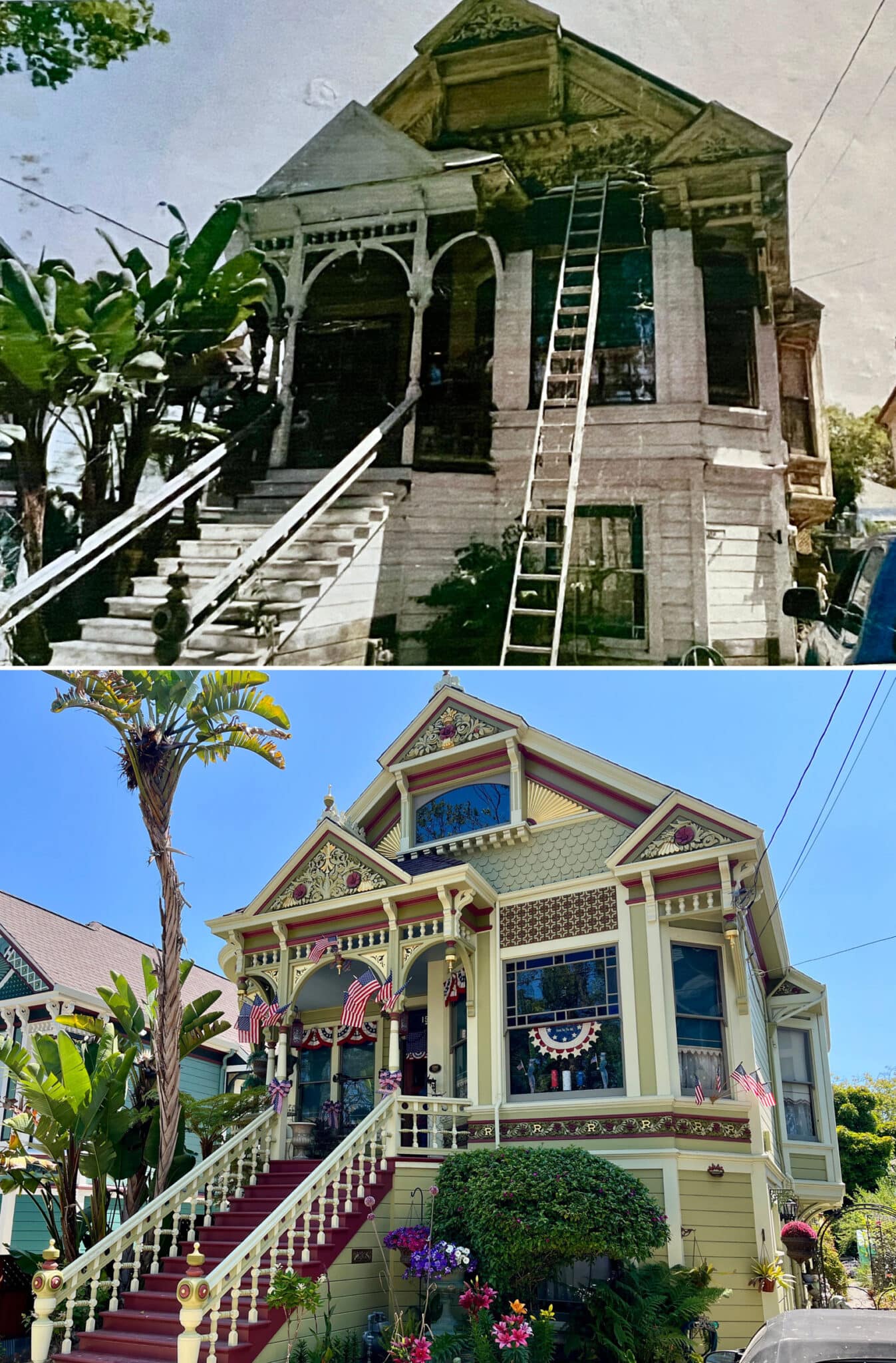
The Roses ended up owning their Alameda home for under 10 years, and living in it for only about four years. Its sale opened the door on its next chapter, one that would be the longest one thus far, that of the Munro family. As the Rose family departs their former home for the last time, we start tracing the trail of the new owners, and see what we can learn about them.
 [10]
[10]Next up
In addition to learning about the Munro family, whose residency at 1530 Mozart Street lasted 57 years, we’ll also see more interior photos, and explore some of the renovation and restoration projects Tommie Veirs has taken on over the decades. Her commitment to restoring the Rose Cottage to its most complete expression of Victorian-era design and style is evident in every square inch of this 132-year-old house. She even sought out the Verdi Street home of Felix Marcuse himself, to get an accurate example of the plaster work for her home’s façade restoration. We see examples of that, and more, when our story continues.
Contributing writer Steve Gorman has been a resident of Alameda since 2000, when he fell in love with the history and architecture of this unique town. Contact him via [email protected] [11]. His writing is collected at AlamedaPost.com/Steve-Gorman [12].