From punk rock to Luther Burbank and Charlie Brown, to serene lakes, hiking and historic districts, a trip to Santa Rosa can pack a lot of variety into just a few days. Recent trips this winter and spring have taken us to Napa [1], Calistoga [2], and Sonoma [3], and we continue these North Bay adventures with a visit to the Bay Area’s fifth largest city, Santa Rosa.
 [4]
[4]Disturbing the peace
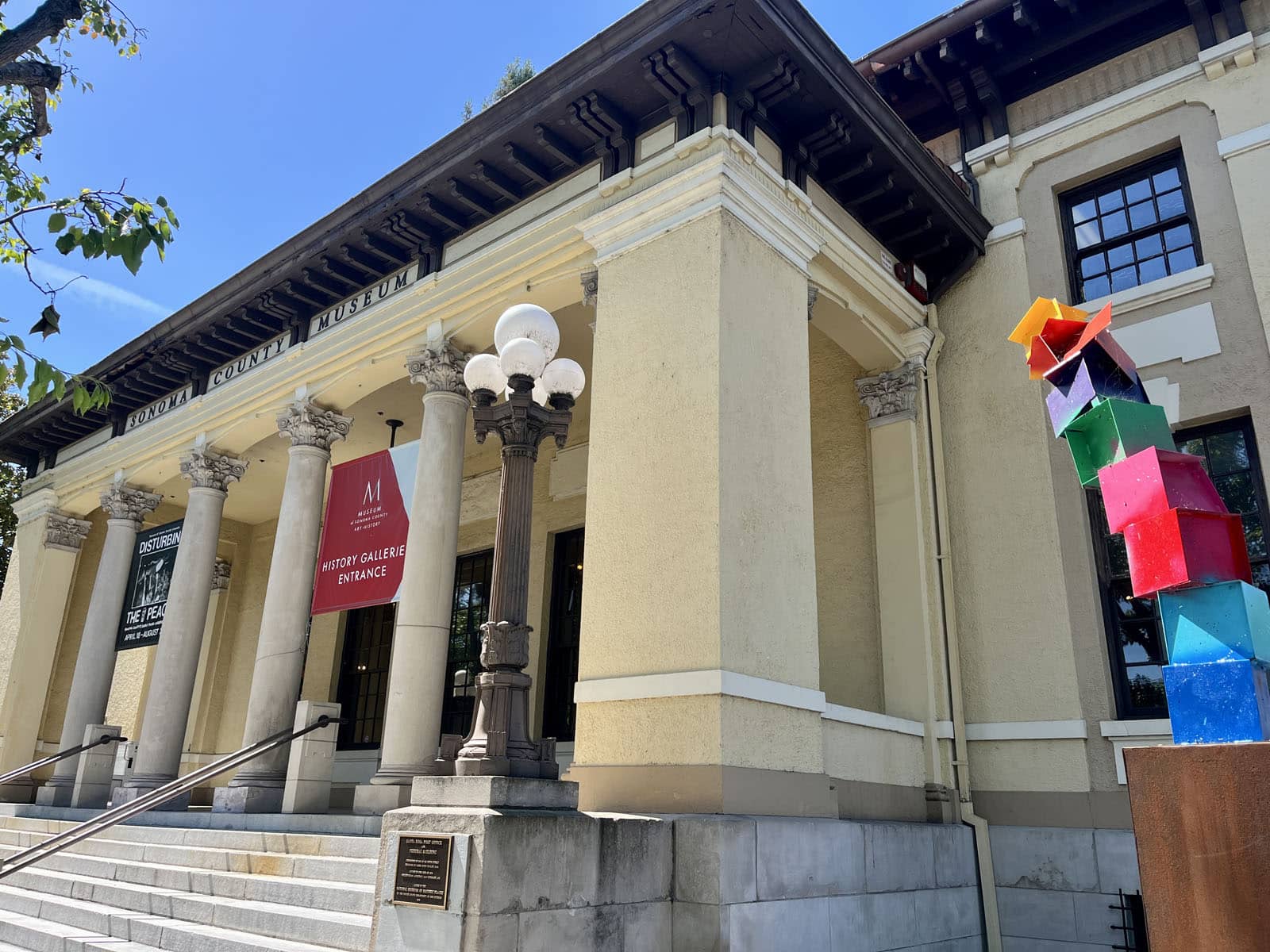
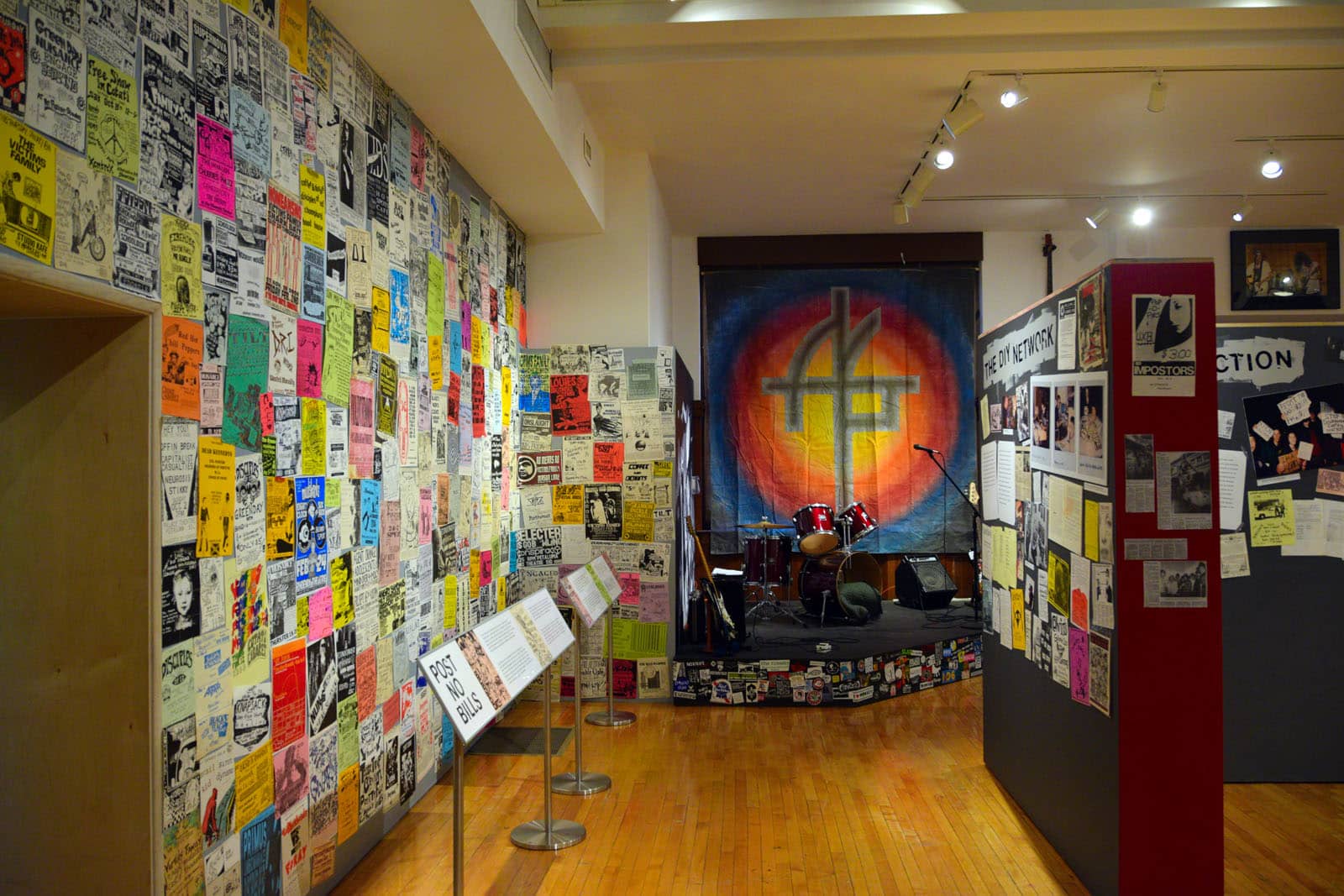
Our first stop upon arriving in Santa Rosa was the Museum of Sonoma County [5], housed in the historic 1910 former Post Office building, and an adjacent newer building. Along with a fascinating look at Santa Rosa’s early history, and the 36th annual Artistry in Wood show, there is also an exhibit running through August 23, entitled, Disturbing the Peace: Sonoma County’s Early Punk Underground. According to the museum’s website, “In the 1970s and ’80s, as their parents settled in the suburbs or got ‘back to the land,’ a generation of disaffected youth in Sonoma County channeled their alienation into a subculture that would grow to become a cultural force: the underground punk scene. With photos, flyers, records, zines, videos, listening stations and more, Disturbing the Peace chronicles the impact of Sonoma County’s burgeoning punk movement that continues to reverberate today.”
We thoroughly enjoyed this look at a period of Sonoma County’s history that I hadn’t previously been aware of, and there was even a stage setup where visitors could pick up a guitar, bass, or drumsticks, and channel their own inner punk rocker. History has so many different layers and stories, and this show just added another layer to my understanding of the long and colorful history of our area.
 [6]
[6]Finding peace
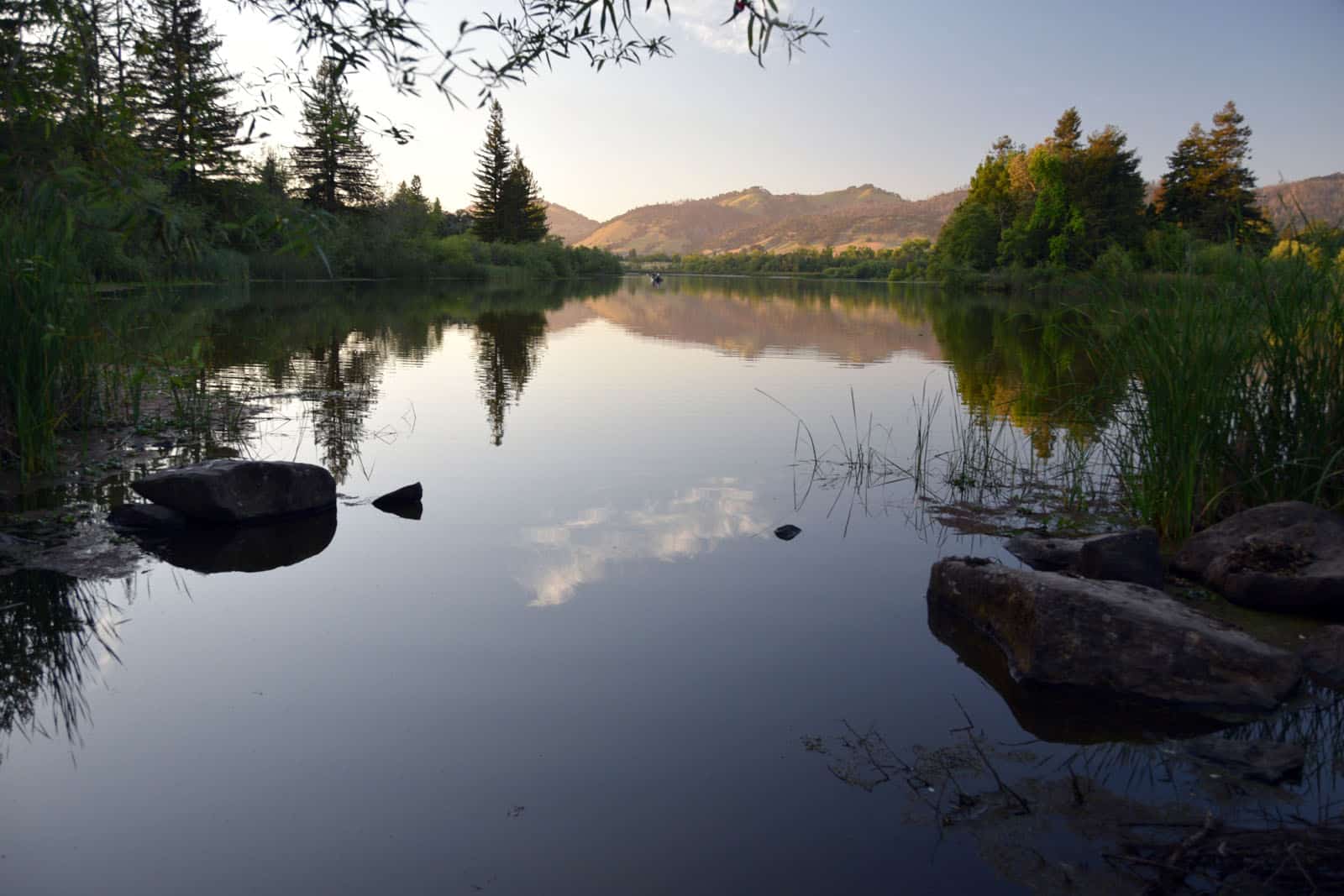
Our home during this stay in Santa Rosa was Spring Lake Regional Park [7], a part of Sonoma County Parks. Here, we enjoyed a peaceful spot in the campground, just a short walk from the lake and numerous trails that also take hikers into the adjacent Trione-Annadel State Park [8].
Spring Lake park itself features 10 miles of trails, including a 2.3-mile paved loop that circles the entire lake, picnic areas, a separate swimming lagoon with water park, the Environmental Discovery Center museum, a boat ramp, and the Spring Lake Café.
Located on the eastern edge of town, this beautiful park feels like it’s a world away, yet it’s only 15 minutes from downtown Santa Rosa.
 [9]
[9]The house Charlie built
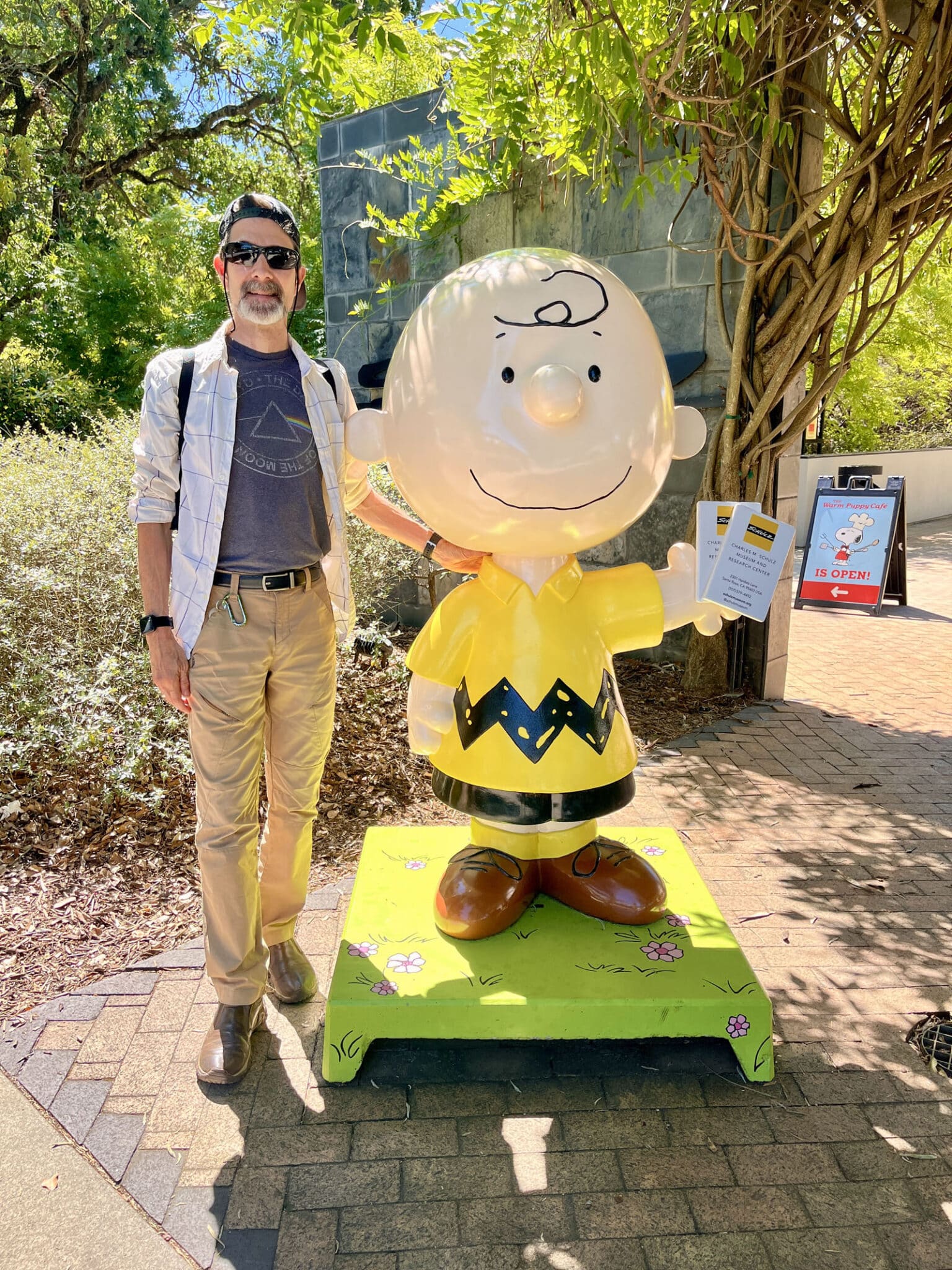
The very first toy given to me when I was an infant was a nine-inch-tall, soft vinyl Charlie Brown toy figurine. I still have that doll to this day, so making a pilgrimage to the place where Charles M. Schulz created the Peanuts comic strip for so many decades felt more meaningful than the average museum visit.
Born in Minneapolis, Minnesota, in 1922, Charles Schultz—known to his family and friends as “Sparky,” after the early 1900s comic-strip horse Sparkplug—moved to Sonoma County in 1958, first settling in nearby Sebastopol. After his studio there burned down, he settled in Santa Rosa by 1968, where he lived and worked for over 30 years.
Today, visitors can experience the world of Charlie Brown, Sally, Lucy, Linus, Schroeder, Woodstock, Peppermint Patty, and of course, Snoopy, as they explore the beautifully designed Charles M. Schulz Museum and Research Center [10]. Featuring original Peanuts comic strips, galleries of historical items interpreting the life of Charles Schulz, a theater, gift shop, and garden, the museum opened in 2002, two years after “Sparky” died.
For anyone interested in the history of comic art, and in the life of one of the world’s most influential comic artists, this museum is a must-see while in Santa Rosa.
 [11]
[11]Luther Burbank, pioneering horticulturist
There was a time when Luther Burbank (1849-1926) was one of the most famous people in the United States, and in the world. His pioneering work developed over 800 varieties of plants during his 55-year career, as he focused mostly on fruits, flowers, and vegetables. Burbank worked on a genetic variant that created the potato known as the Russet Burbank, which has become the world’s predominant potato used in food processing.
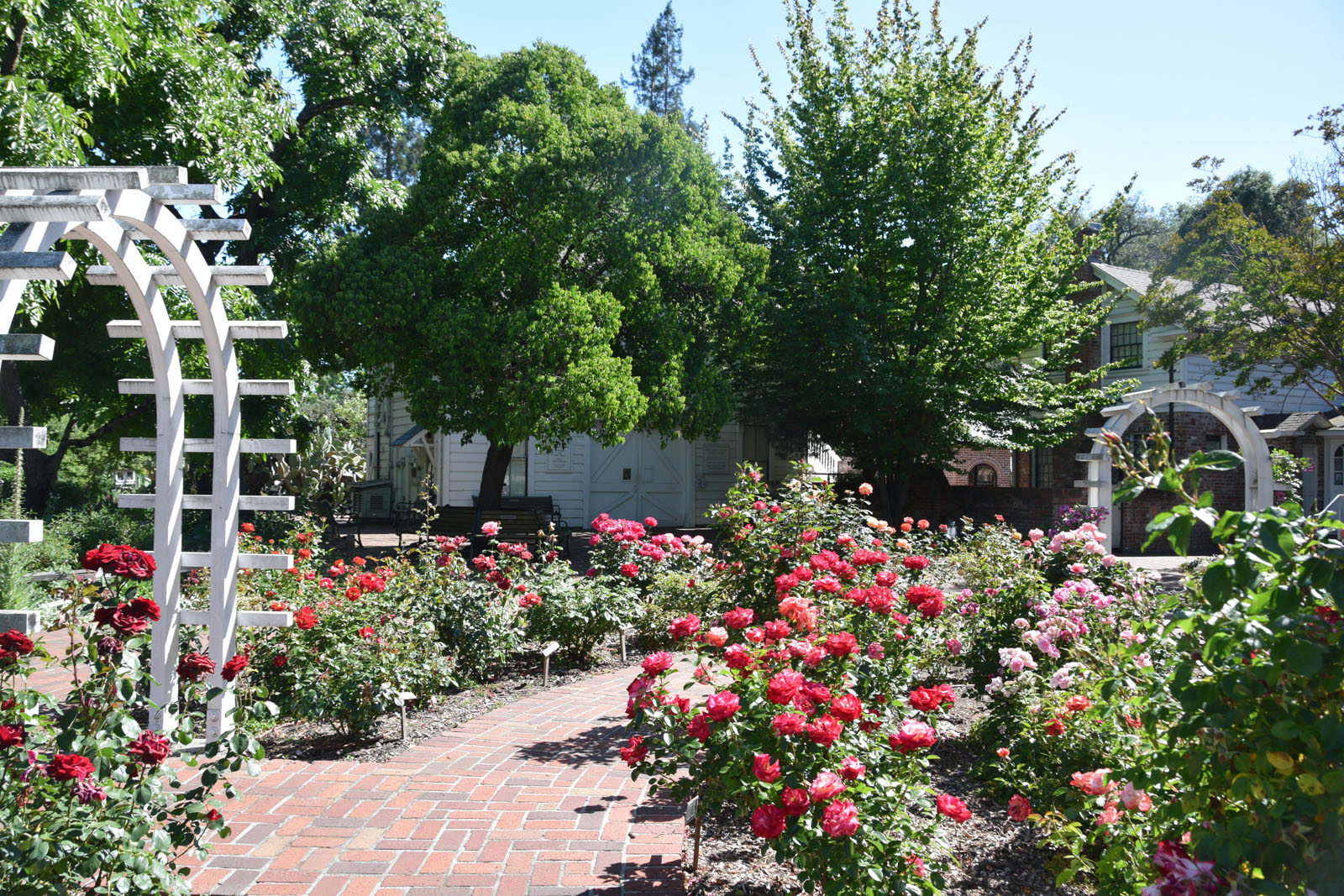
In 1884 Burbank established a four-acre farm on the site of today’s Luther Burbank Home and Gardens [12], and he and his wife Elizabeth lived in the Greek Revival style home here. There was also a carriage house and greenhouse, which can still be seen and toured to this day. The original four-acre gardens are now down to 1.6 acres, but are still a pleasant place to spend some time and experience the horticultural and botanical legacy left for us by Luther Burbank. It is free to visit the gardens and carriage house, and guided tours of the original Burbank home, with its original furnishings, along with the greenhouse, are available for a $12 donation. (See website [12] for hours.)
 [13]
[13]A rare round barn
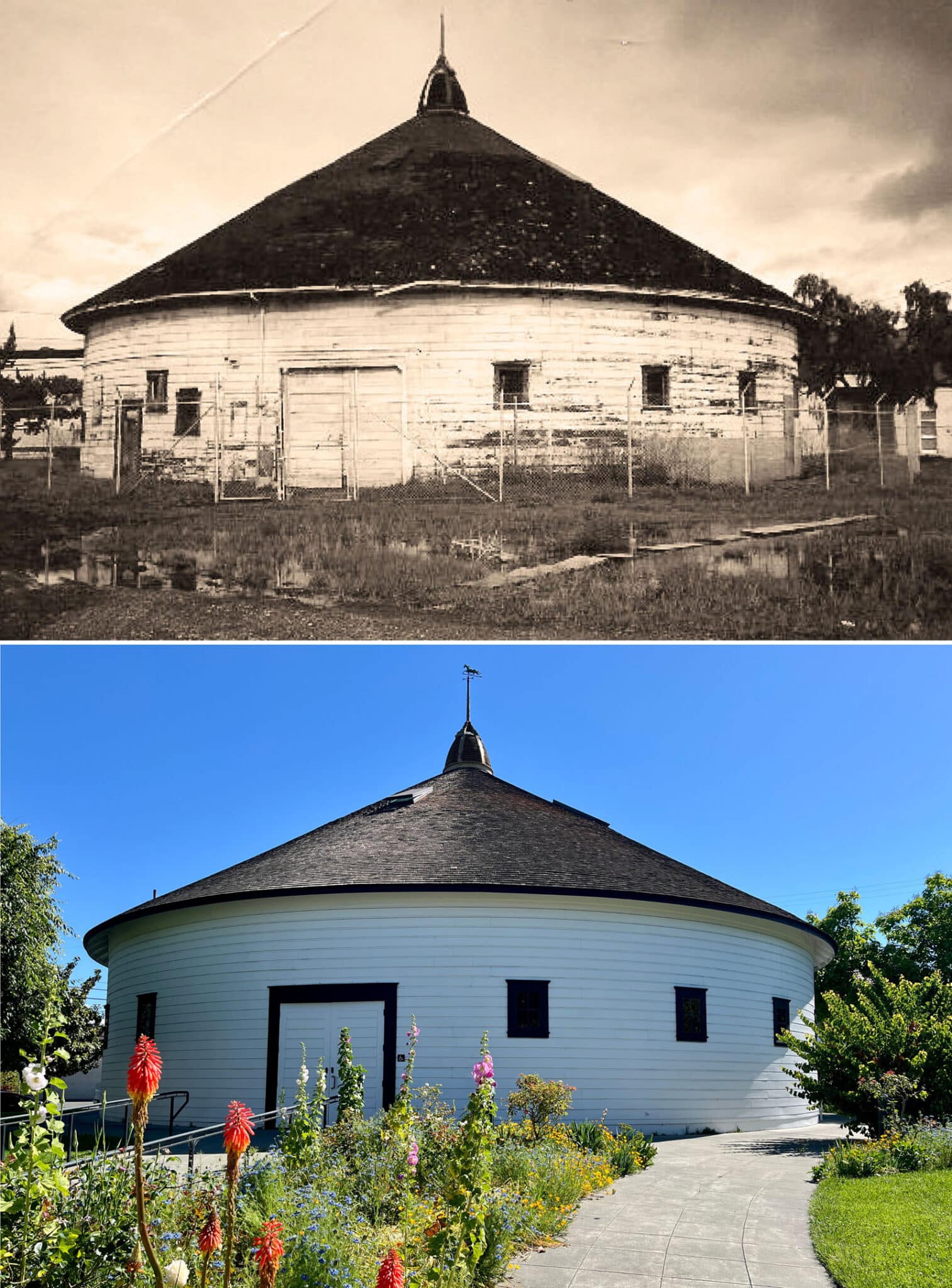
Santa Rosa has a number of designated historic districts, one of them being the West End Preservation District. It was there that we found the DeTurk Round Barn [14], a local landmark. Isaac DeTurk (1843-1896) came to California from Indiana in 1856. As the son of a viticulturist, he was one of the first to recognize the favorable conditions for growing wine grapes in this area. He established Belle Mount Vineyards, and also got into horse breeding and racing, building a round barn across from his successful winery in 1891.
The barn served as the home of DeTurk’s prized racing horses, and later, after his death, it served as a livery stable business until 1910. At that time, the City of Santa Rosa purchased the barn and property, and it became the city corporation yard for maintenance equipment and vehicles. Around 1996 it was turned over to the recreation and parks department, and plans began to hatch about how to save the unique structure and turn it into a community asset.
The old barn was in bad shape, and it was determined that it would probably not survive the next earthquake, or even a strong windstorm. But as a rare surviving example of a round barn, preservationists pushed to have it saved. At the time it was one of only three round barns surviving in Sonoma County, and now there are only two, with the loss of the Fountaingrove round barn in the 2017 Tubbs Fire.
 [15]
[15]The DeTurk Round Barn Community Center
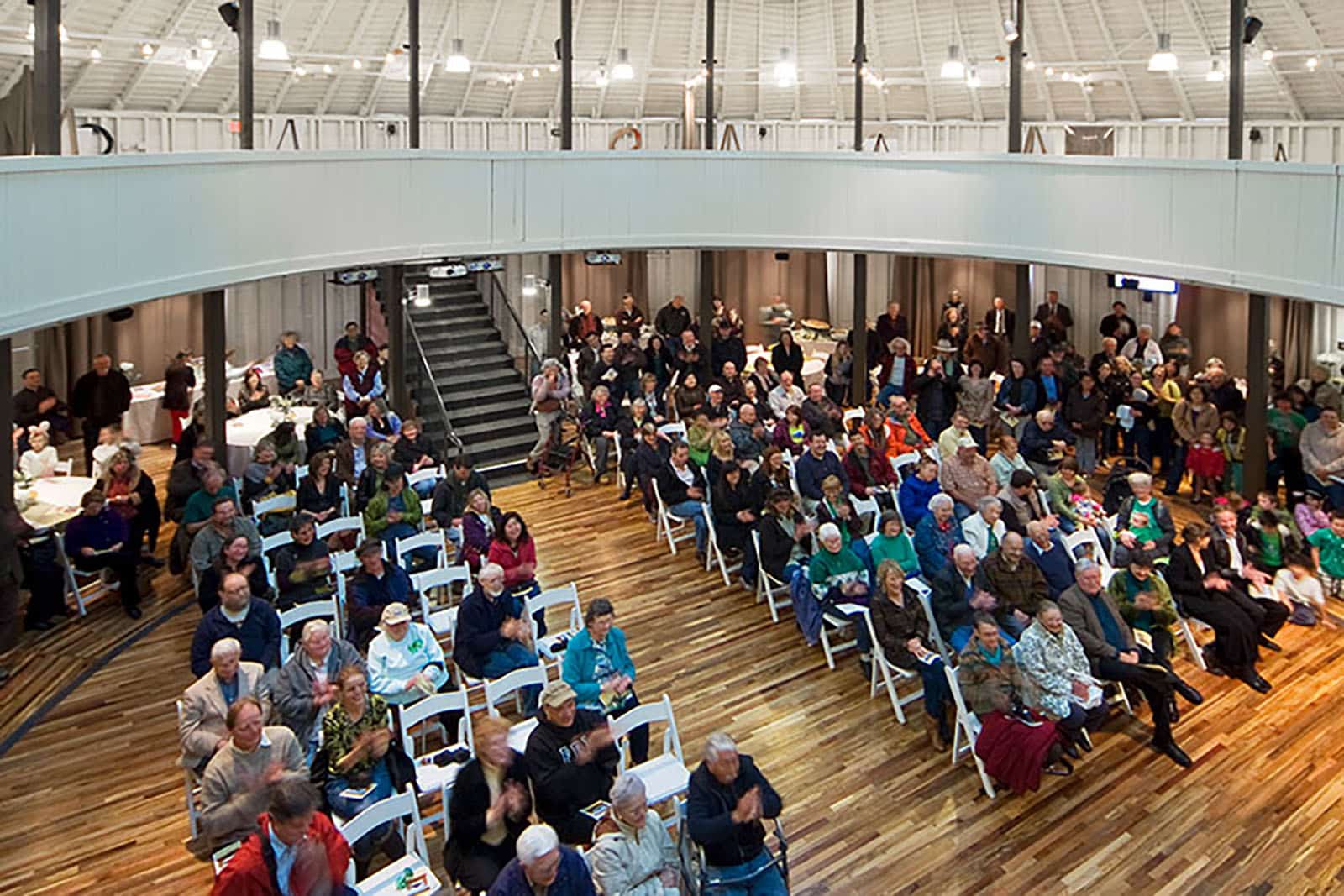
It took many years of effort, but after much planning and fundraising, and with the expertise of the TLCD Architecture firm, DeTurk’s round barn found new life as a community center, with its grand re-opening taking place in 2011. Today, the flexible space is used for meetings, events, weddings, and other functions. The facility features amenities like a catering kitchen, elevator, and audio-visual system, while still maintaining its exposed beams and 19th century architecture. As a rare surviving example of a round barn, the DeTurk Round Barn is a success story for preservationists, and the park it anchors is a gathering place for visitors and residents of the West End Preservation District.


 [17]
[17]Time for a hike
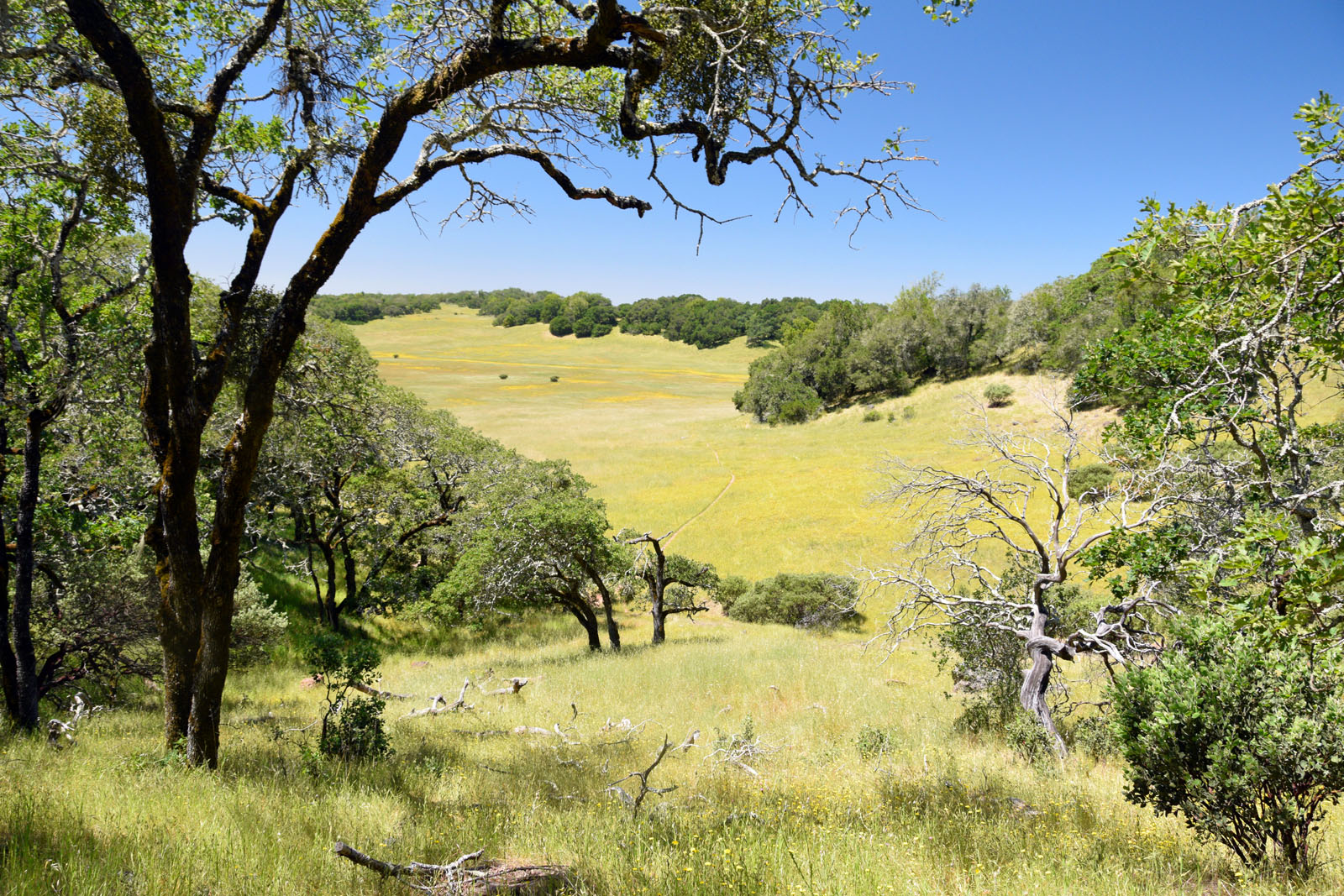
After all that culture and history, it’s time for some communing with nature. In addition to the ten miles of trails available in Spring Lake Regional Park, hikers can also take advantage of the 5,000 acres and 45 miles of trails in the adjacent Trione-Annadel State Park.
Originally the land of the Wappo and Southern Pomo, these woodlands and grasslands eventually were taken over by the Mexican land grant system in the early 1800s, before passing through the hands of a number of private landowners. Irish immigrant Samuel Hutchinson named his ranch by combining the name of his daughter Annie with “dell” (a small, secluded and wooded valley) to create the name “Annadel.” These lands were officially established as a state park in 1974, and later honored the name of businessman Henry Trione, who was instrumental in purchasing and preserving this gorgeous landscape for a park.
And so, on a beautiful spring morning, Edie and I set off on a hike in the landscape named for Samuel Hutchinson’s daughter Annie, and the developer Henry Trione, who put up his own time and money to preserve this land for all of us. Starting in Spring Lake Park, we found a way to connect to the Cobblestone Trail in Trione-Anndel State Park, through oak forests and meadows to the Orchard Trail, onto the Burma Trail, and then the Lake Trail to Lake Ilsanjo where we stopped for lunch before taking the Spring Trail back to our starting point. It was a great day of hiking, and we put in 8.5 miles over the course of six relaxing hours.
 [19]
[19]McDonald Historic District
One of my favorite things to do in a new city or town is to seek out its main historic districts, and one of the finest ones in Santa Rosa is the McDonald Historic District. Mark McDonald (1833-1917), a Kentucky native who became one of Santa Rosa’s most prominent early citizens, purchased 160 acres of land to the northeast of downtown Santa Rosa in the late 1860s. This area came to be known as McDonald’s Addition, and once he established a streetcar to provide ready transportation, his addition flourished as Santa Rosa’s premiere residential area.
Today, McDonald Avenue is an excellent stroll for the history and architecture buff, as the wide, tree-lined street is a treasure-trove of 19th and early 20th century architecture. From Queen Anne to Colonial Revival and Craftsman, this historic district doesn’t disappoint, and has served as the filming location for movies like Alfred Hitchcock’s Shadow of a Doubt.
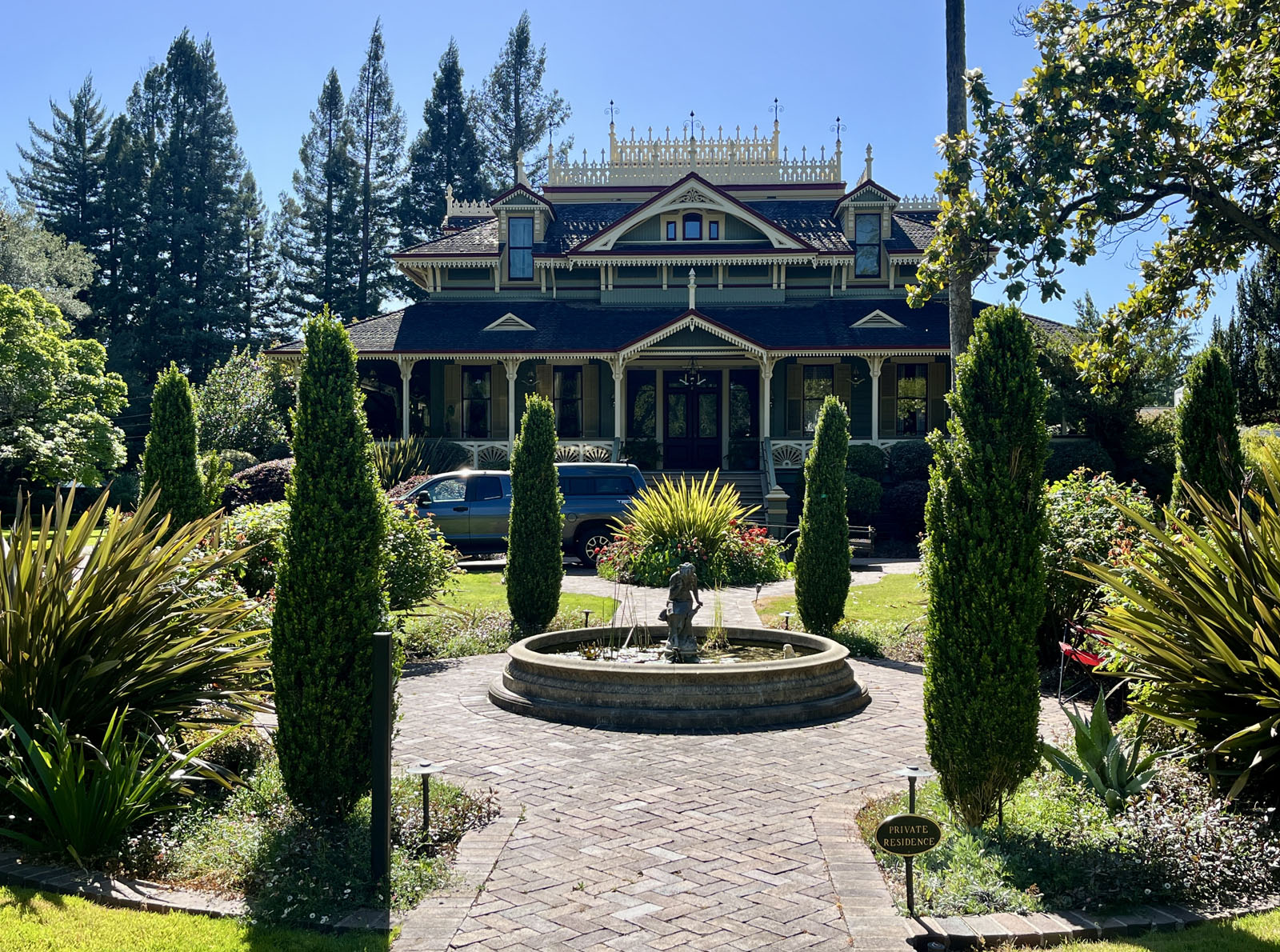
One of the most impressive stops on a walk through this historic district is Mableton, the mansion Mark McDonald had built for himself and his family in 1879. Though it’s a gated private residence, the unique and massive home can be seen from the street, and a historical plaque provides information to passersby. Named in homage to his wife Raphine’s family home in Mississippi, Mableton is a unique large-scale adaptation of a “Raised Southern Cottage,” with a single main level over an above-ground basement (intended as a flood precaution), and an attic level with sloping ceilings and dormer windows. The Mableton mansion takes up almost an entire block, and we walked around all three accessible sides of it to take in different views of the house and gardens. This mansion and neighborhood harken back to a gilded age in Santa Rosa’s history, and now takes its place among a variety of different neighborhoods, housing styles, and income levels in the large and diverse City of Santa Rosa.
 [20]
[20]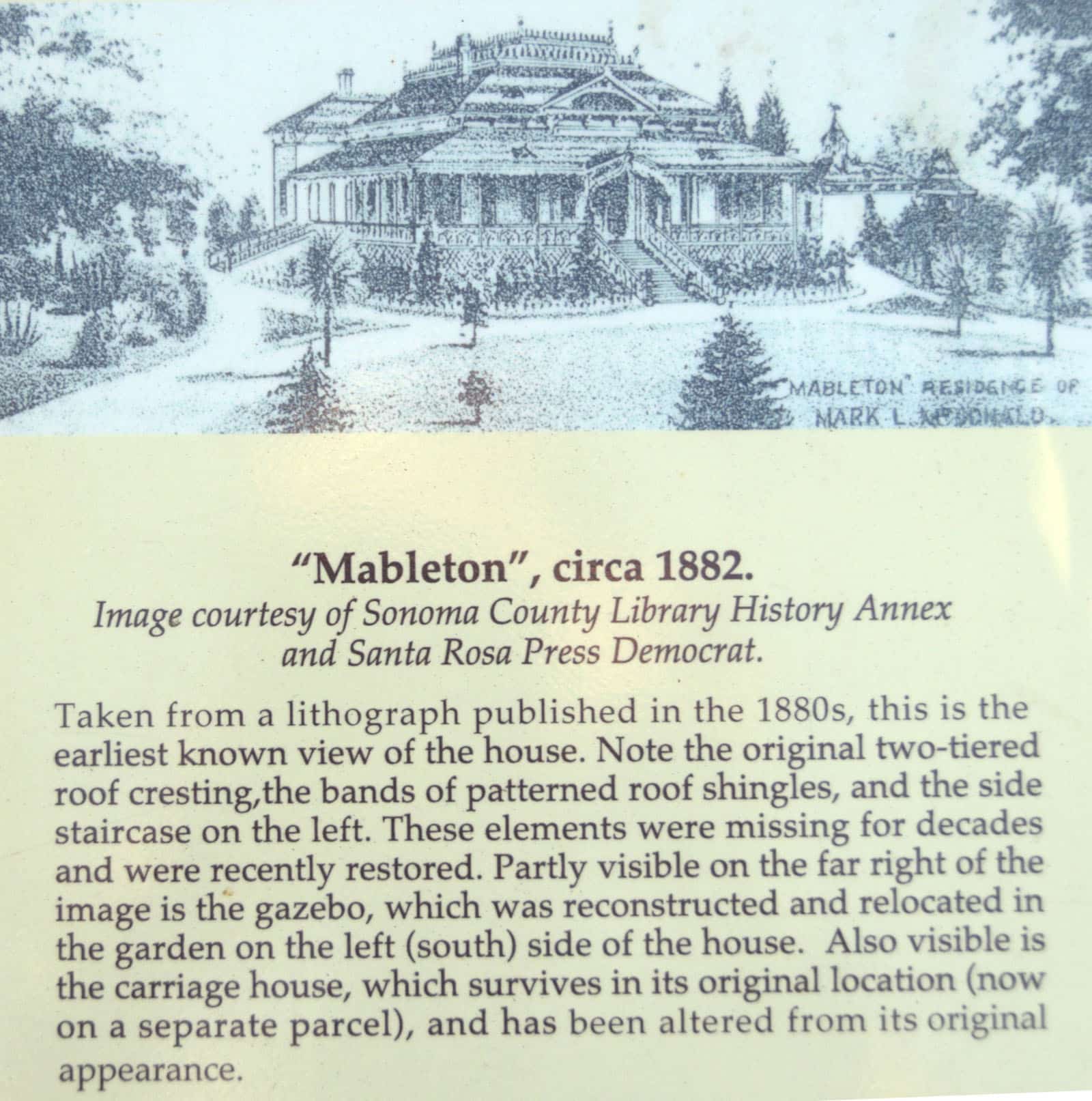 [21]
[21]A varied experience
Our trip to Santa Rosa turned out to be even more than I expected. From the fabulous Museum of Sonoma County with its Disturbing the Peace experience, to visiting Luther Burbank’s home and garden, and being in the place where so many of Charlie Brown’s adventures originated, plus experiencing the peace and beauty of Trione-Anndel State Park, and walking each evening around Spring Lake, this trip left us wanting more.
Things to do on a future trip include bringing kayaks to paddle on Spring Lake (kayaks can be rented there too), and exploring more of the McDonald Historic District, including the Santa Rosa Rural Cemetery, the final resting place for many of the city’s pioneer residents, including the McDonald family. Also on the list is visiting the St. Rose Preservation District, and taking a different hike in Trione-Annadel State Park and seeing its visitor center.
You know it’s been a good trip when you’re already making a list of what you want to do next time.
If you go
Spring Lake Regional Park [7] in Santa Rosa is one of Sonoma County’s most popular parks, featuring trails, boating, camping, picnic areas, a parcourse/fitness circuit, the Environmental Discovery Center and a seasonal swimming lagoon, Water Park and boat rentals. In addition to campsites, there are also a number of rustic cabins for rent in the campground.
The Museum of Sonoma County [5] is open Wednesday-Sunday 11 a.m. to 5 p.m. Admission for adults is $12, seniors (62+) $10, students $6, and children 13 and under get in free.
The Charles M. Schulz Museum [10] and Research Center is open Monday, Wednesday, Thursday, and Friday 11 a.m. to 5 p.m.; Saturday and Sunday 10 a.m. to 5 p.m. Closed Tuesdays. Admission for adults is $15, seniors (62 and over) $10, students (with valid student ID) $7, youth (ages 4-18) $7, and children 3 and under get in free.
The Luther Burbank Home and Gardens [12] are open 8 a.m. to 7 p.m. April-October, and 8 a.m. to 5 p.m. November-March. Tours and the Museum & Gift Shop are open April-October, Tuesday-Saturday 10 a.m. to 4 p.m. and Sunday 1 to 4 p.m. Entry to the Gardens & Museum is free (donations welcome). Tours are $12 for adults, $10 for students and seniors; children under 12 get in free. Street parking only.
Trione-Annadel State Park [8] spans more than 5,000 acres and features over 45 miles of trails. It continues to be a cherished space for hiking, biking, horseback riding, and enjoying nature—serving both the local community and the region’s wildlife. There is a vehicle day-use fee. Regular sized autos are $8.
Contributing writer Steve Gorman has been a resident of Alameda since 2000, when he fell in love with the history and architecture of this unique town. Contact him via [email protected] [22]. His writing is collected at AlamedaPost.com/Steve-Gorman [23].