My earliest memory of watching a bird was actually a memory of listening to a bird. My grandmother, who had 10 grandchildren—I was one of her youngest—took me for a drive from her home in Novato to the coast. I think this was the first time I got to spend time with her, just she and I.
The pretext for the drive was to go to the coast and watch for whales. My grandmother drove a diesel-powered Mercedes that seemed like a big luxury, since our family car required me, the youngest of four, to sit in the front seat between my parents on any drive we took. I remember looking out the window in my early teens and seeing green grassy hills. We drove along with our windows rolled down.
At one point in our drive my grandmother turned to me and asked, “Do you hear that?” We pulled over to listen and she told me that what we were hearing was the song of the meadowlark. What I remember wasn’t so much the song, but that my grandmother knew what the song of this bird sounded like. We never saw the bird nor did we see any whales while we parked overlooking the ocean, but this day has stayed with me my whole life.
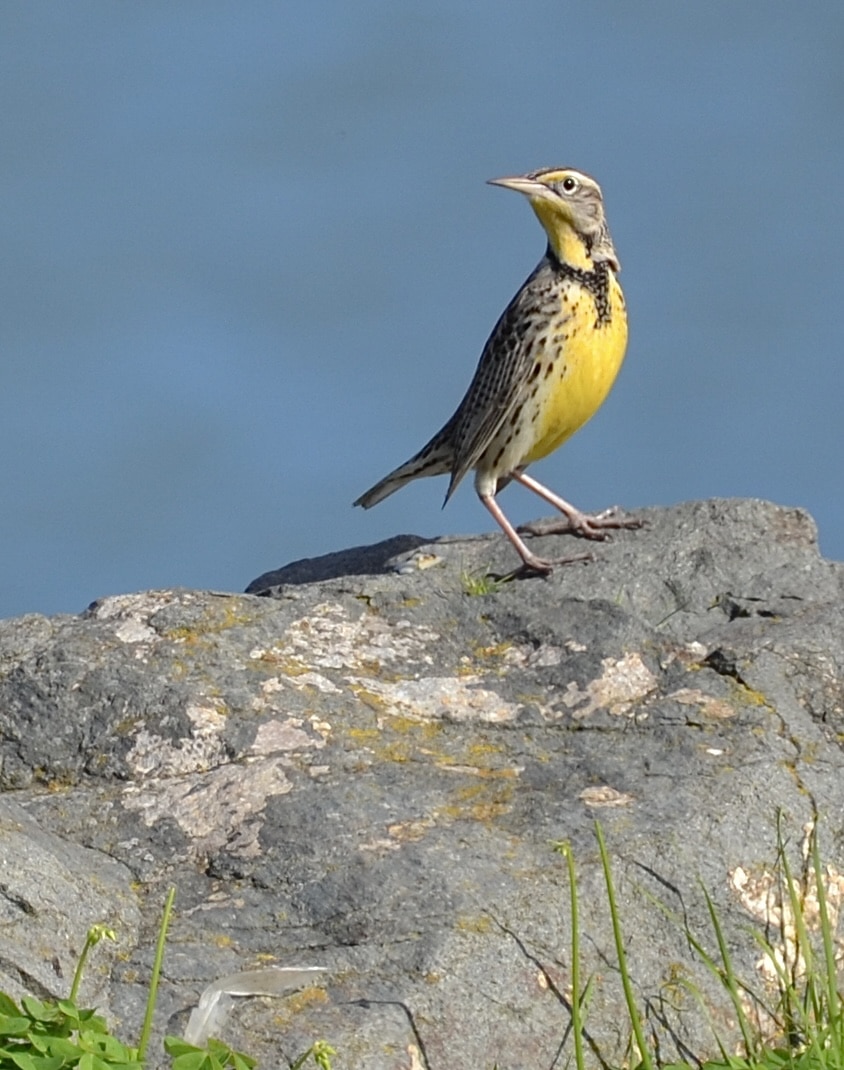
Meadowlarks became one of my favorite birds. My favorite place to find them is at Miller/Knox Regional Shoreline [1]. I am never disappointed when I go there. These strikingly yellow ground birds with their handsome V-shaped black chest markings are hard to miss.
 [2]
[2]Nature was certainly important to my young life, but birds did not figure in as the main attraction. I spent my formative years, age 4 to 9, in Eugene, Oregon. We lived in a new housing tract that was on the edge of a conifer forest. I have very vivid memories of wandering deep into the forest with my brother, who is eight years older, hiking down the forest service logging roads. He would have his butterfly net with him and barely paid attention to his 6-year-old sister. But I remember the sun and the wildflowers and the tall pine trees and the wild creeks.
Given my connection to the natural world I chose to enroll in the UC Davis Wildlife Biology program. The classes were very research oriented. The ornithology class consisted of studying stuffed birds to learn to identify them. The exam required us to use scientific names in our answers when identifying the species of stuffed birds that were laid out on a science lab table. I spent hours studying these birds in the ornithology room glass cases.
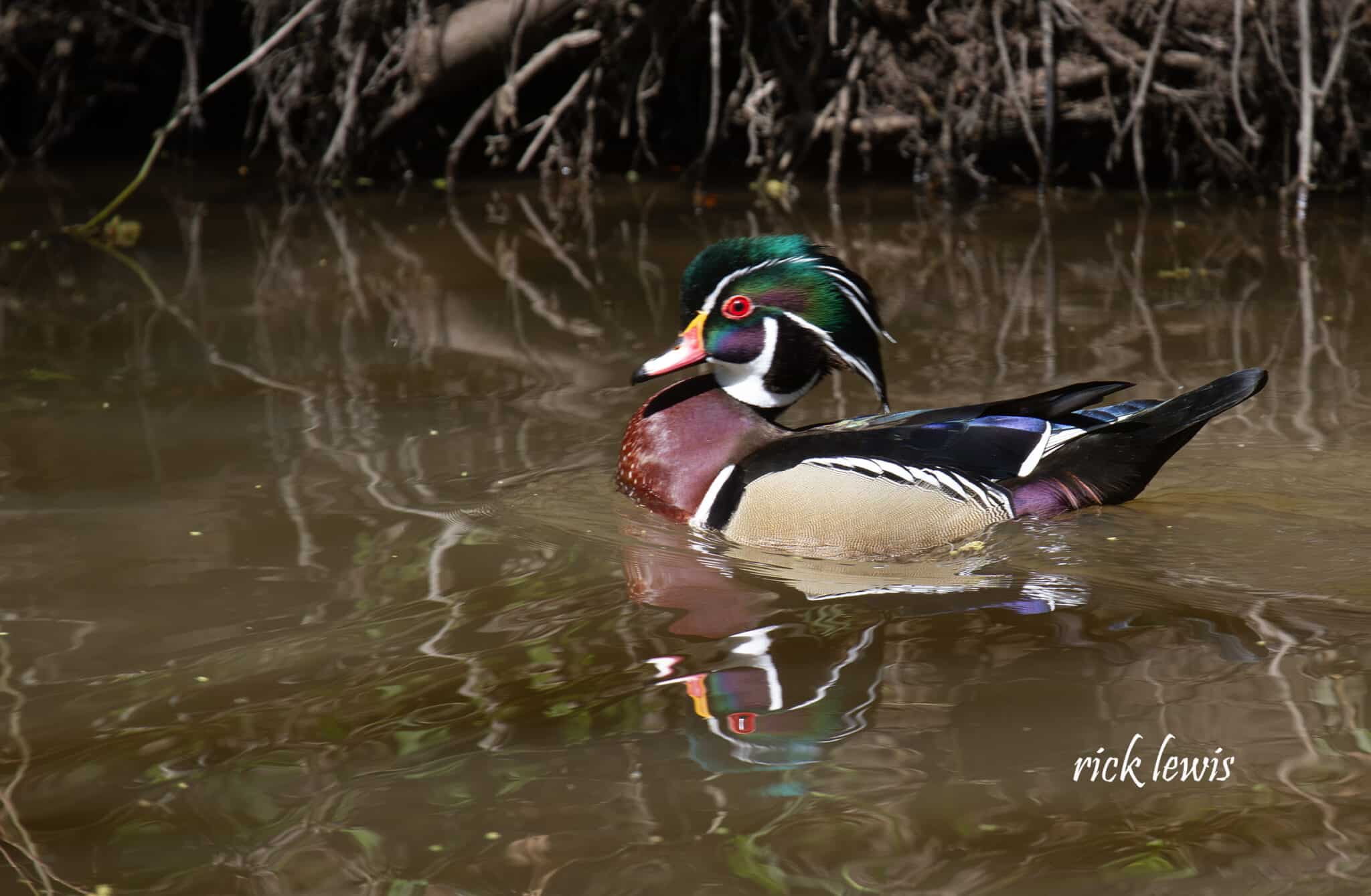
During this time I remember going out to the beach with a friend who was a birdwatcher. I couldn’t identify the birds very well until we came upon a dead bird whose very weird feet helped identify it as a grebe. Apparently I could only identify dead birds. Sometime during my college years I began to get up at 4 a.m. and go birdwatching with my Wildlife Biology friends before the sun rose. I have a vivid memory of seeing a wood duck, a spectacular bird with clown-like features. I was pretty amazed that such a bird existed. I have spent my subsequent birdwatching years on the hunt for this duck and have seen it several times at the San Leandro Reservoir.
 [3]
[3]In my second year of college I started working during the summer for the U.S. Forest service. I worked with a wildlife biologist in the Sierra National Forest [4]. My college birding friends who also worked in the forest got assigned to the bird team, but I was assigned to the plant team. I spent three summers surveying plots in the forest recording the height and age of trees, the diameter of bushes (noting if they were grazed by cattle or deer. You can tell by the way the branch had been chewed off or snipped). My favorite days were spent measuring the meadows where we did quadrant surveys and line transects identifying any plant that was in our plot or line. The flowers were in full bloom for much of the summer and breathtakingly beautiful.
I did have a very memorable bird day when I was working in an old growth section of the forest. I was covered in cobwebs because I had been squeezing through the densely packed trees. While I was looking at the ground, stepping carefully to avoid tripping, I found several owl feathers. I looked up and there were two spotted owls looking down at me. There was a lot of excitement amongst the researchers when I reported this because spotted owls had been declining for years because of the loss of these old growth forests, the owl’s main habitat.
One weekend my Forest Service birding friends invited me to join them on a trip to Southern California to try to find a California condor. It was the early 1980s and there were fewer than 50 Condors in the wild. (By 1987, all of the 22 condors left in the wild were captured for a captive breeding program.) We sat an entire day on a southern mountain top with our binoculars as the sun burned our skin. Near the end of the day we saw an enormous bird way off in the distance, whose wings seemed to undulate as it flapped its wings. My birding friends declared that we had seen a condor. I wasn’t completely convinced. The bird was so far away. The next morning I told my friends that I had never seen a roadrunner. On the way home we stopped at a place where my friends said we might see a roadrunner. I remember standing by the car when this enormous bird flew right over our heads. I knew immediately what we were seeing, one of the last remaining California Condors left on Earth. I am pretty sure this is when I became a bird watcher.
 [5]
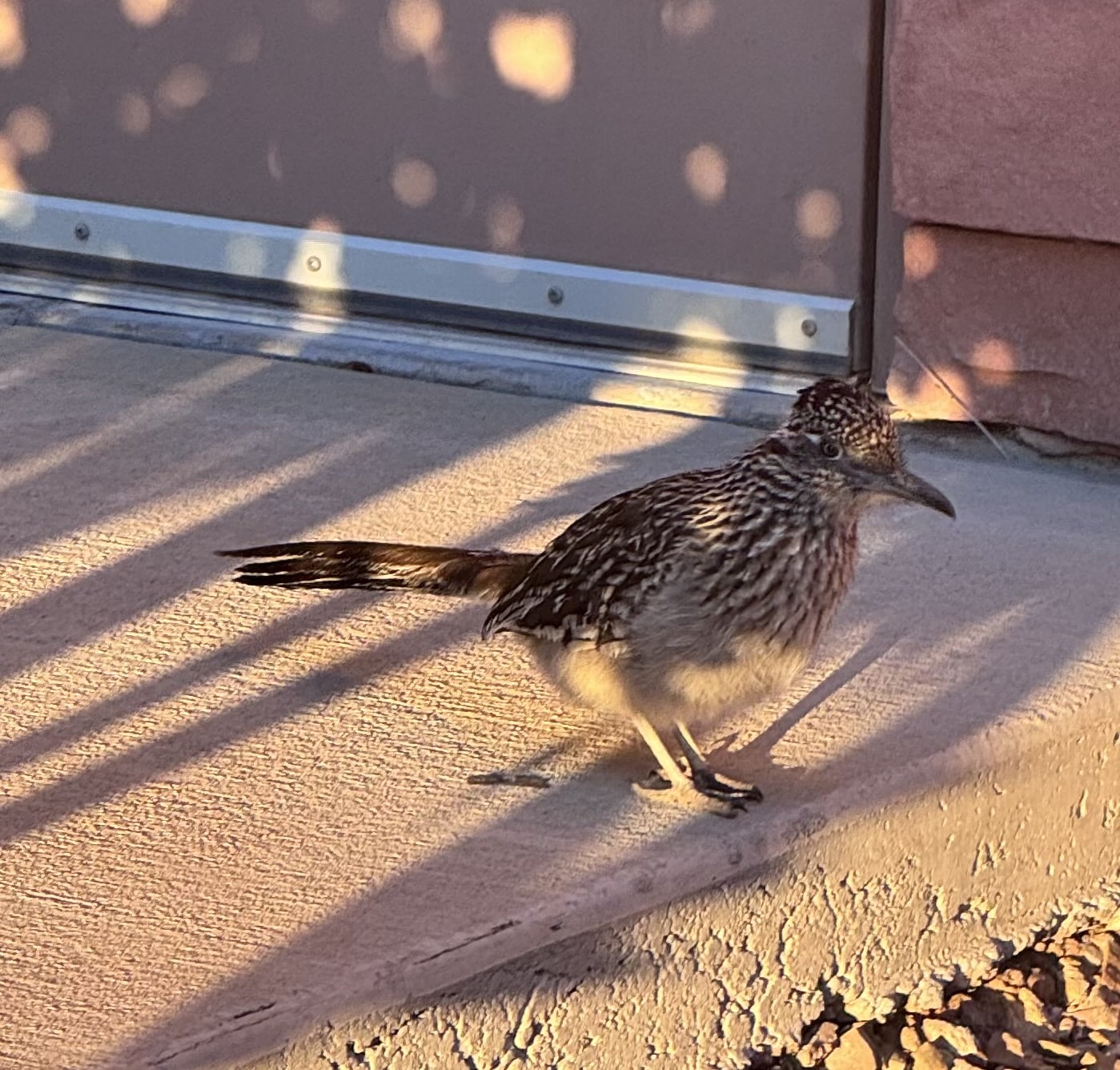
[5]Since that trip in the early ’80s I have spent much of my free time with binoculars in hand, deeply engaged with watching birds. This spring I spent time in Utah visiting Zion and Brice national parks. My traveling companions knew that I still had not seen a roadrunner. They told me that there was one seen by the hotel in the morning. The next morning I had my binoculars ready and there it was, this weird not-quite-a-chicken-looking creature running through the parking lot seemingly almost domesticated. It certainly was unconcerned with me.

 [6]
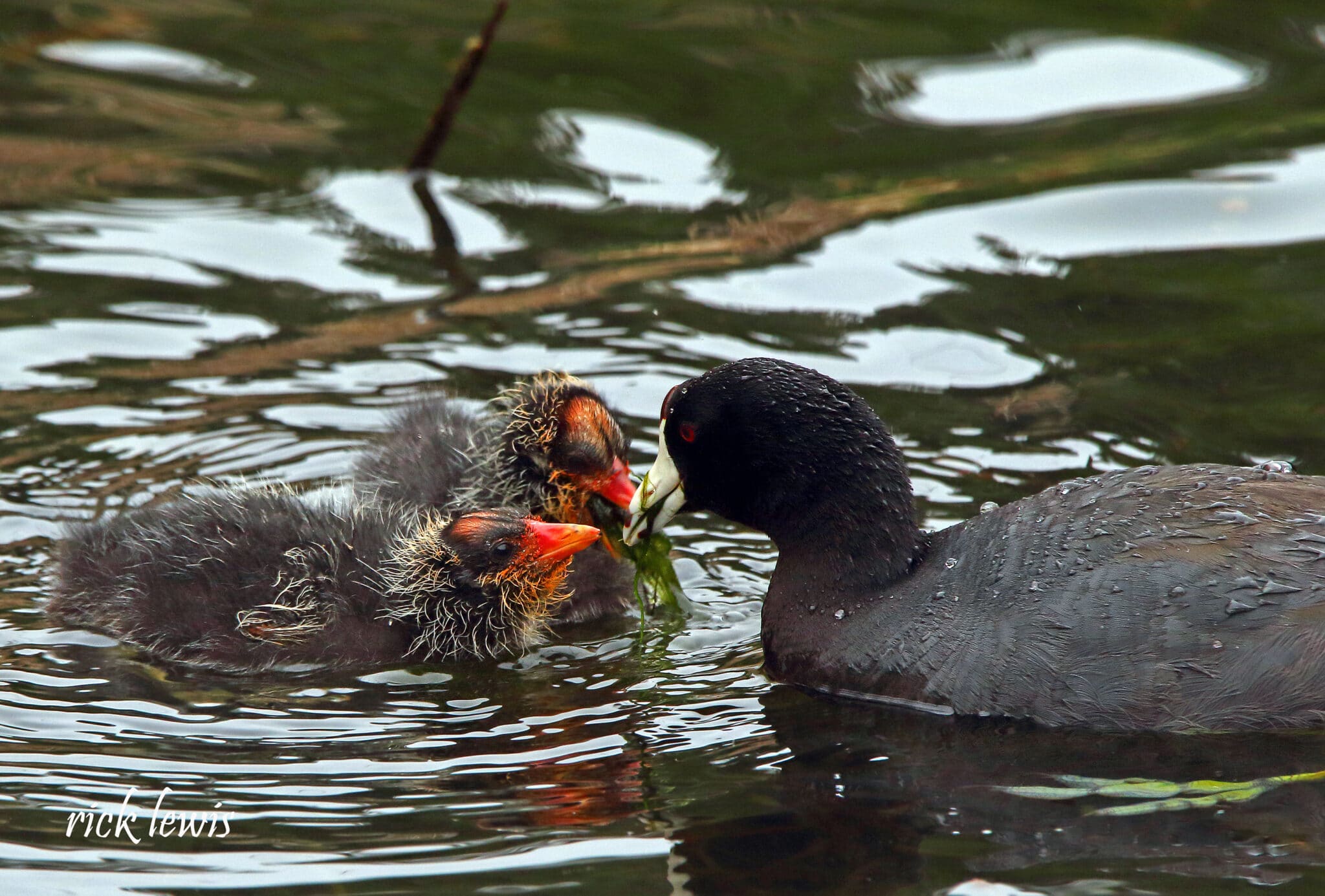
[6]A month after that, my husband and I took a day trip to the Pinnacles National Park. We were hoping to see a condor there, but were mostly on our current quest to visit another national park. There are about 400 wild California condors now with about 600 total condors if you include those in captive breeding programs. We spent a beautiful day hiking up to a reservoir that involved going through caves that at times required me to scoot along on my back side. The reservoir had baby coots and I spent an enjoyable time with someone with a bird book, who also was wearing binoculars, sorting out that this was in fact a baby coot. This person told me that they had been seeing condors right around the corner. I had seen a lot of turkey vultures that day and many people on the trail had reported seeing condors.
 [7]
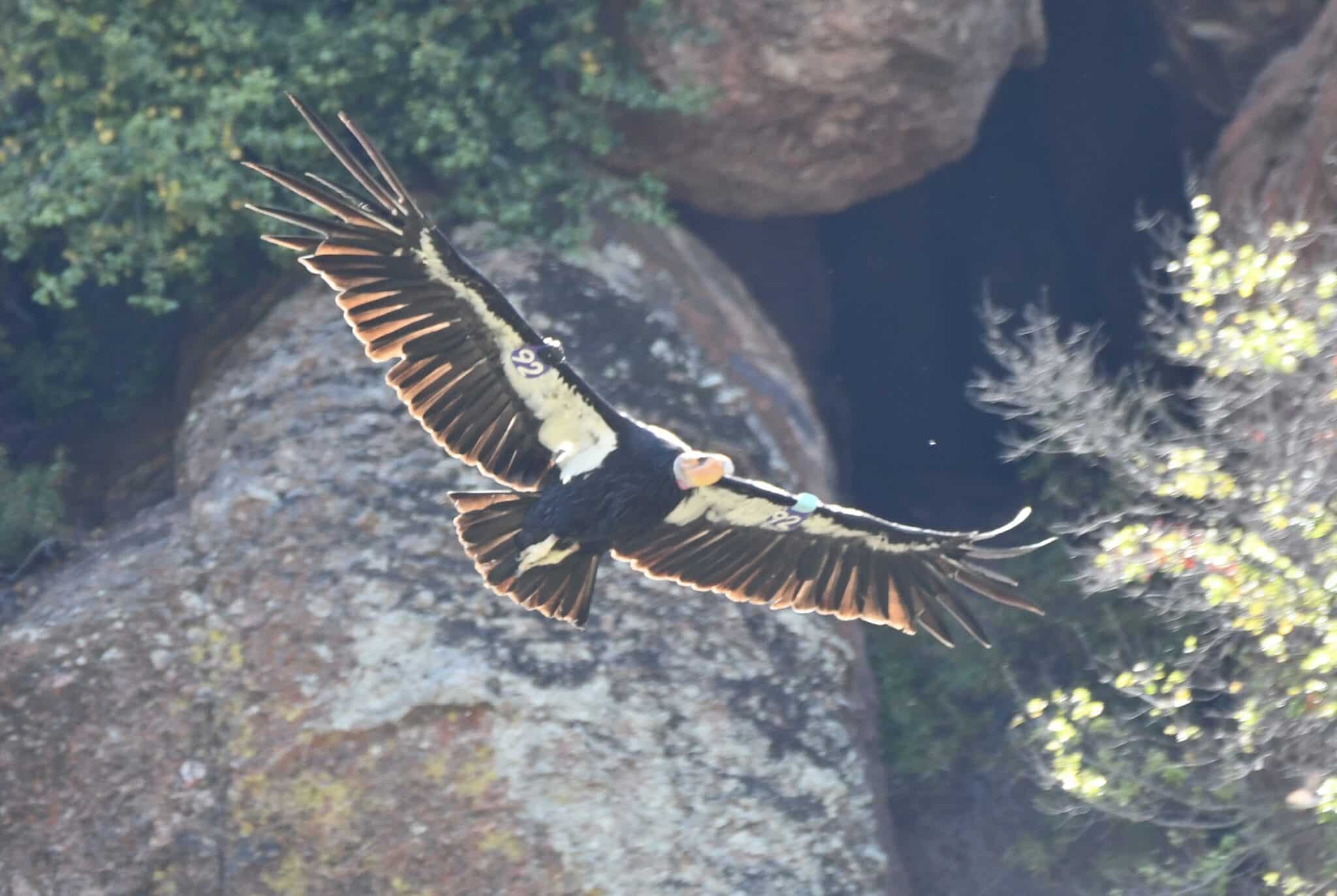
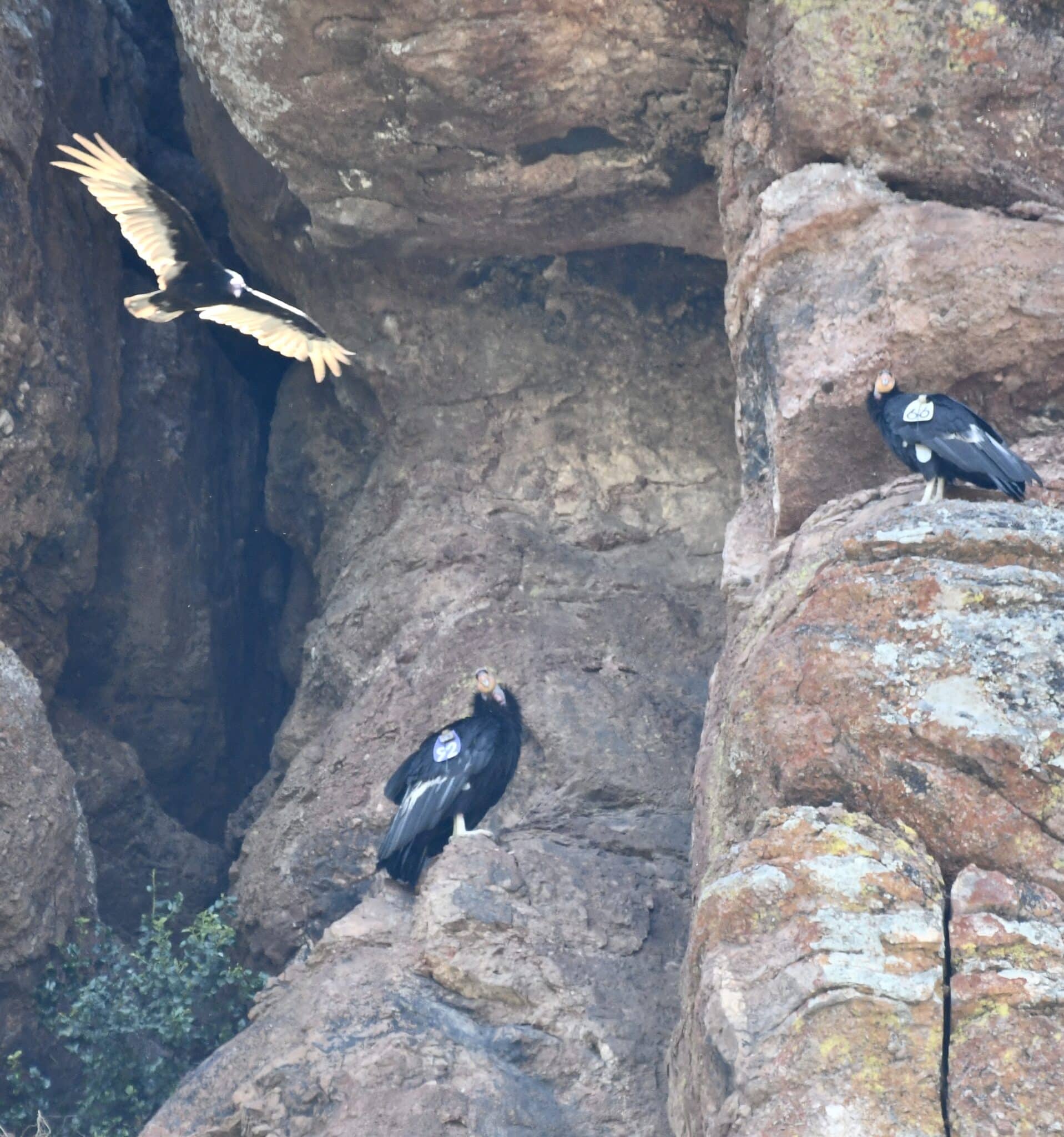
[7]Back to the car and no condors in sight. As we were about to get in and drive home, three California condors arrived and perched on the rocks in front of us. They stayed for about 30 minutes, alternately flying around with the turkey vultures that were also there and resting on the rock faces.
Nowadays all condors wear what looks like a kind of jewelry. Attached to both the front and the back of their wings are colored numbers. Two of the birds we saw had purple numbers.The other had a black 66. You can look these birds up on condorspotter.com [8]. The two birds with the purple numbers were hatched in 2013 at the Oregon Zoo and were identified as part of the Pinnacles flock. The bird with the black 66 was hatched at the Los Angeles Zoo in 2010 and is identified as part of the Big Sur flock.
 [9]
[9]Several people at the parking lot were also enjoying the condors. We marveled at these enormous, fairly weird-looking birds while exchanging cell phone numbers so we could exchange pictures of these birds once we were able to download our pictures at home.
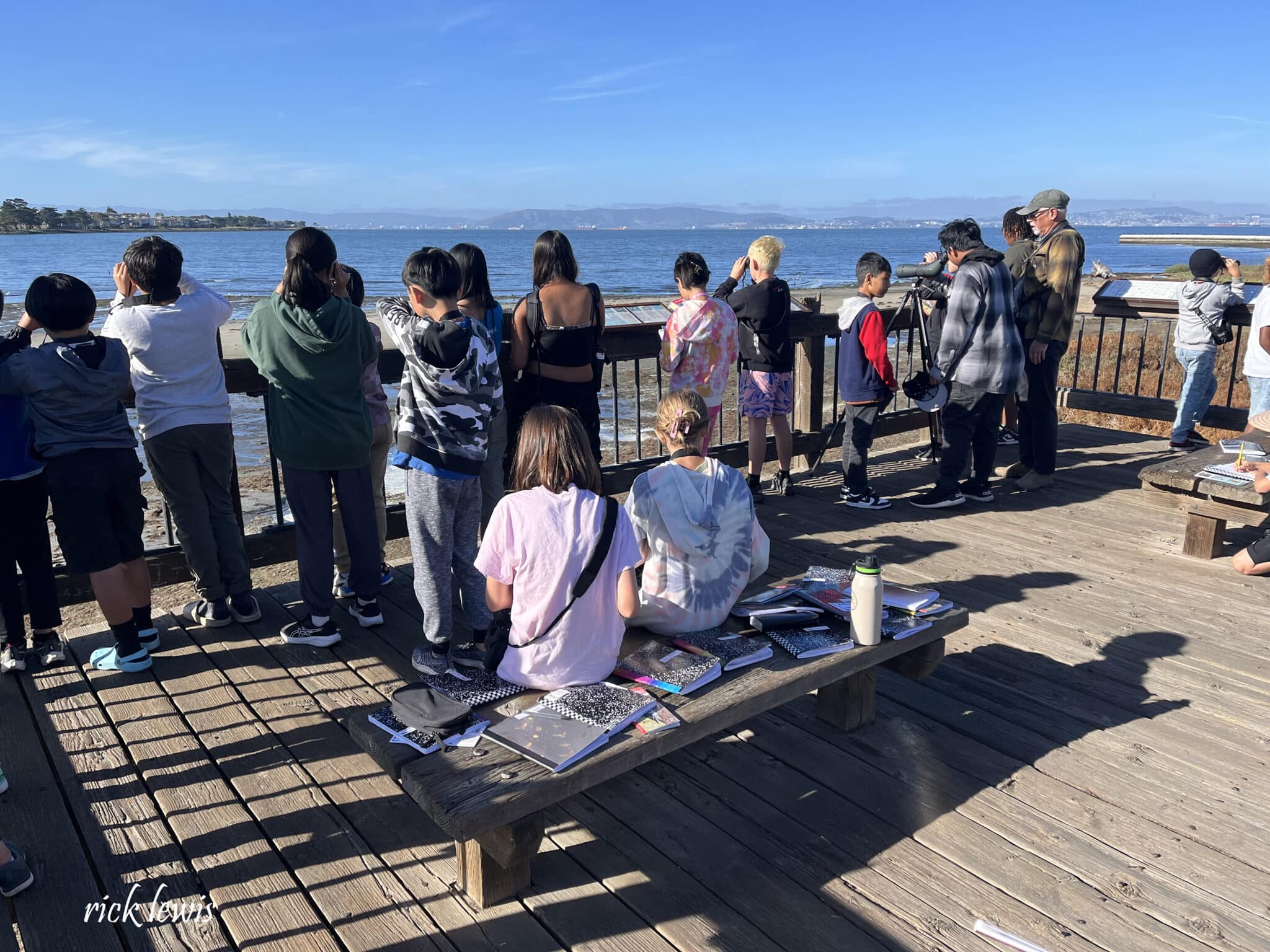
I am currently spending time with my newest birdwatching friends, whom I met when I joined the Friends of the Alameda Wildlife Reserve, a committee of The Golden Gate Bird Alliance. We spend our time advocating for wildlife habitat in Alameda, monitoring the nesting birds in Alameda (When I heard that this group of people knew where the nesting birds were, I knew I had found my people!), leading bird walks at Corica Park and working with Alameda school groups taking any interested class out on bird watching field trips. Maybe some of those Alameda kids will become birdwatchers too.
 [10]
[10]So, why did I become a birdwatcher? It seems there are many reasons. One is my relationship with the birds. It does not matter how often I see a western meadowlark. Every time I see one I am thrilled to be watching this spectacular bird and usually, once you see this bird, if you look around and there is another and then another.
Another reason I became a birdwatcher is my lifelong connection to nature and a deep desire to protect and advocate for the protection of our natural world. The experiences I share with those who marvel at the birds with me, whether they are friends or family or just people I meet out in nature carrying binoculars, always leave me feeling connected and hopeful for the health of our natural environments.
If you are interested in finding out more about the Friends of the Alameda Wildlife Reserve (FAWR) or are an Alameda teacher interested in taking your students out birdwatching to learn about the local birds, email us at [email protected] [11]. A recent article about how FAWR supports Alameda students is available online: Wood Middle School Program Teaches Students to Love Birding [12].
Patricia Williamson is a retired Alameda science teacher and a member of the Friends of the Alameda Wildlife Reserve.
This is part of a series of articles about Alameda wildlife by the Friends of the Alameda Wildlife Reserve, a Conservation Committee of the Golden Gate Bird Alliance. Follow FAWR on Instagram @friends_of_alameda_wildlife. Learn more about the Golden Gate Bird Alliance online [13].