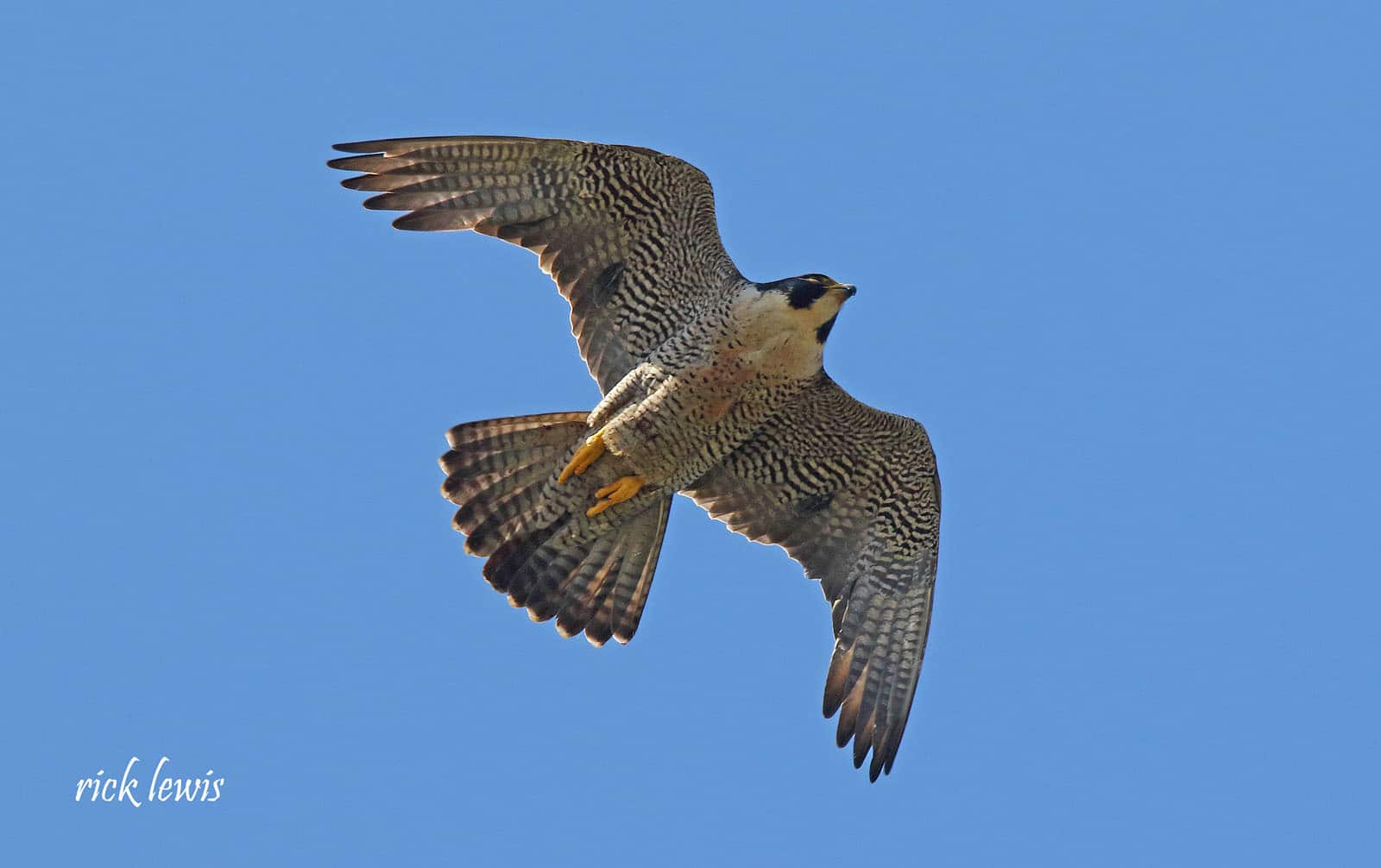
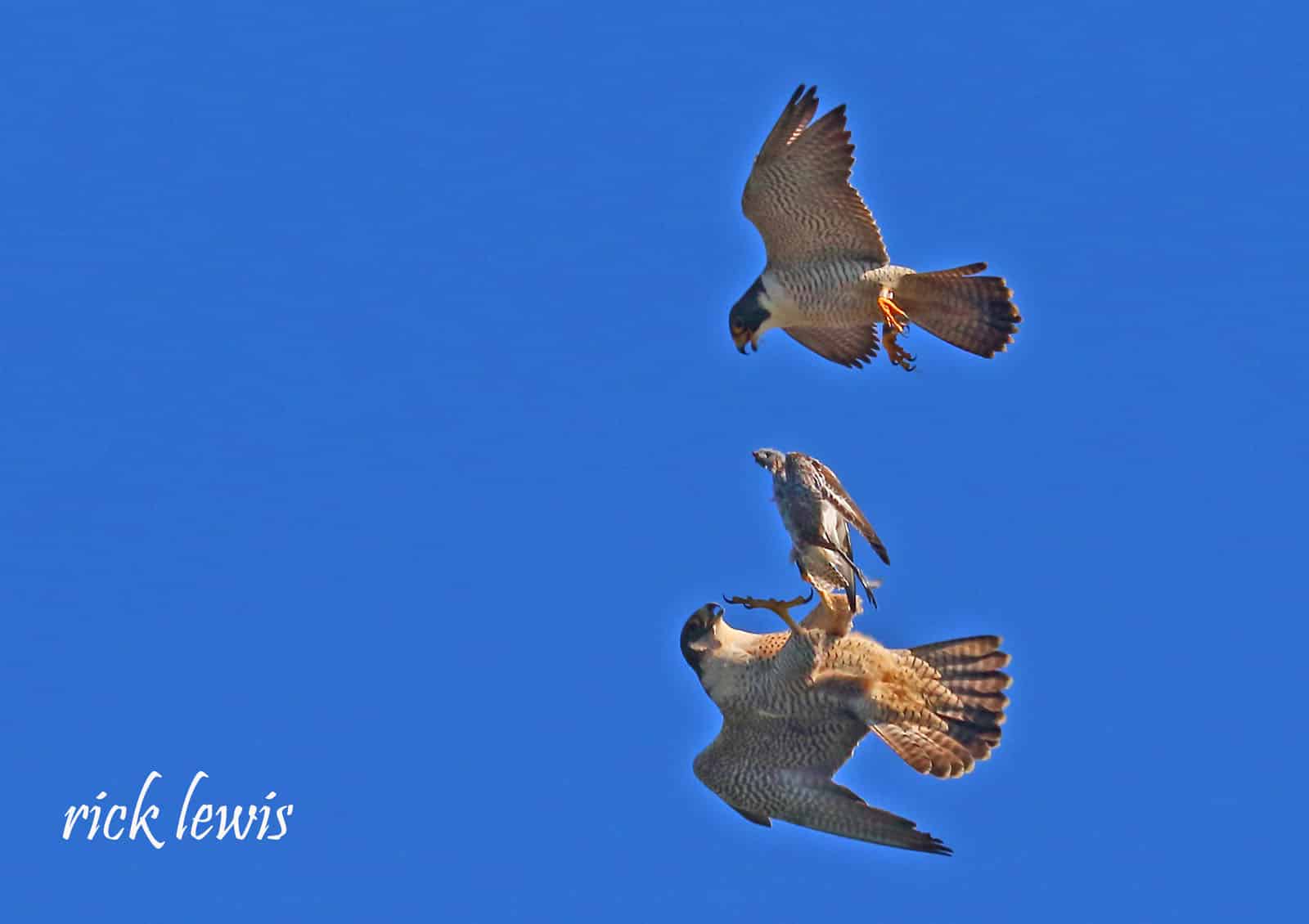
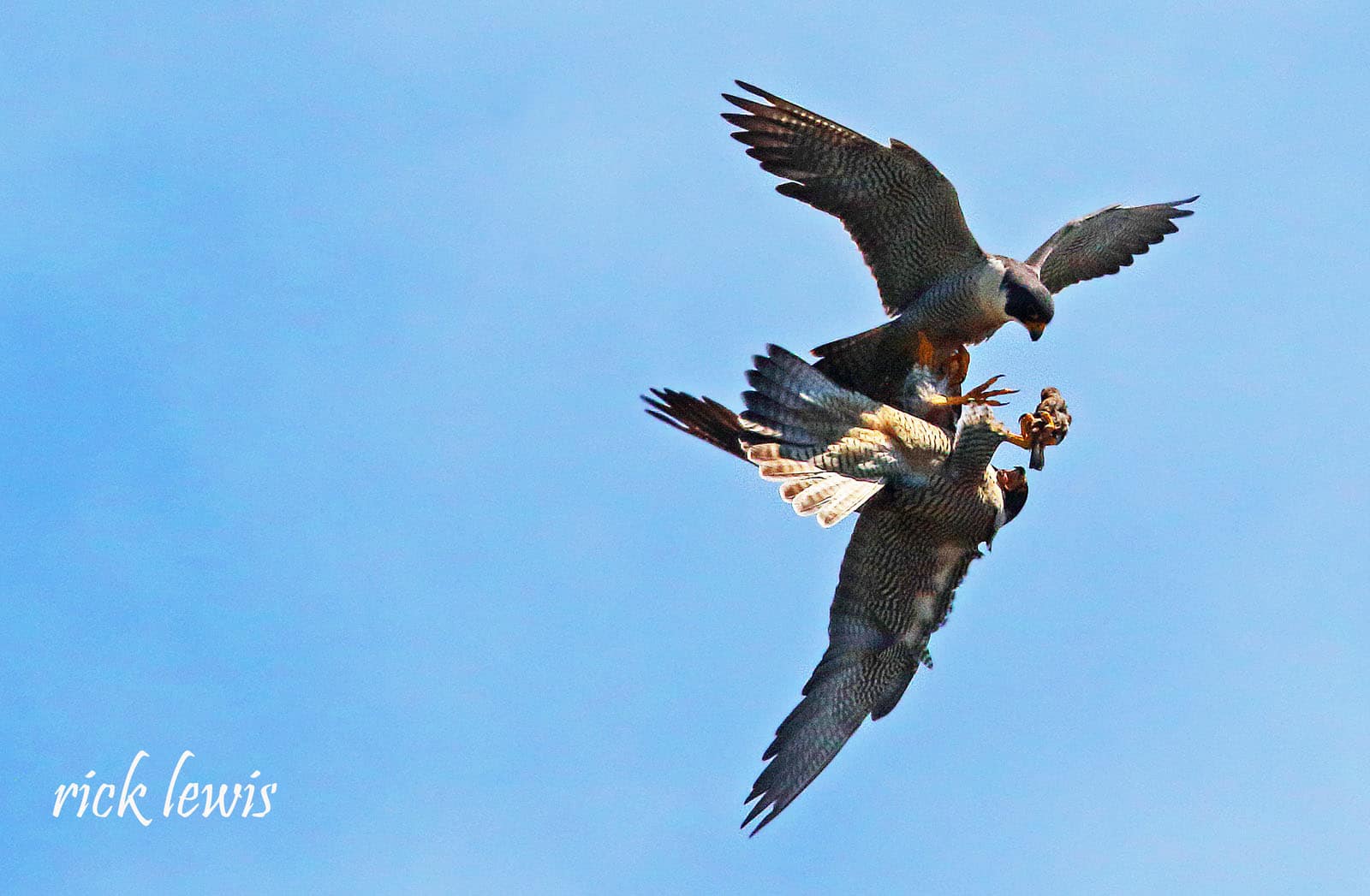
What makes a peregrine falcon so outstanding, so appealing, so memorable? Beauty, power, speed, excitement. The beauty is obvious in flight or perched. The power is demonstrated in their explosive strikes. Speed, in the blink of an eye, is loaded in a peregrine’s launch and maximized in its stoop. Think of them as Mike Tyson with wings. Quick, powerful, and hungry. BONUS – they are right here in Alameda!
 [1]
[1]How is their speed measured? It’s too complicated for me to completely understand but there is universal consensus that the peregrine falcon is the fastest animal on earth. Having said that, the reported speed of peregrines is difficult to believe, flying in the face of reason — 200 to 240 mph is simply staggering. We’re talking about a bird after all, not a human engineered and manufactured aircraft. This is flesh and blood and feathers. Some of the methods used to measure speed are radar tracking, small computer chips, triangulation, GPS transmitters, and high-speed cameras.
According to the California Department of Fish & Wildlife (CDFW) “the peregrine falcon (Falco peregrinus) was listed as endangered in 1970 under the federal Endangered Species Act, and listed as endangered in 1971 under the California Endangered Species Act. Due to diligent conservation and recovery efforts, the species was federally delisted in 1999 and was delisted in California in 2009.”
In 1975 there were only 324 nesting pairs in the USA. Today, it is estimated that there are over 4,000 nesting pairs. This is very good news and important. It is recognized that healthy numbers of raptors & predators is a good indicator of overall health of the ecosystem in which they live. And, they often live where we live.
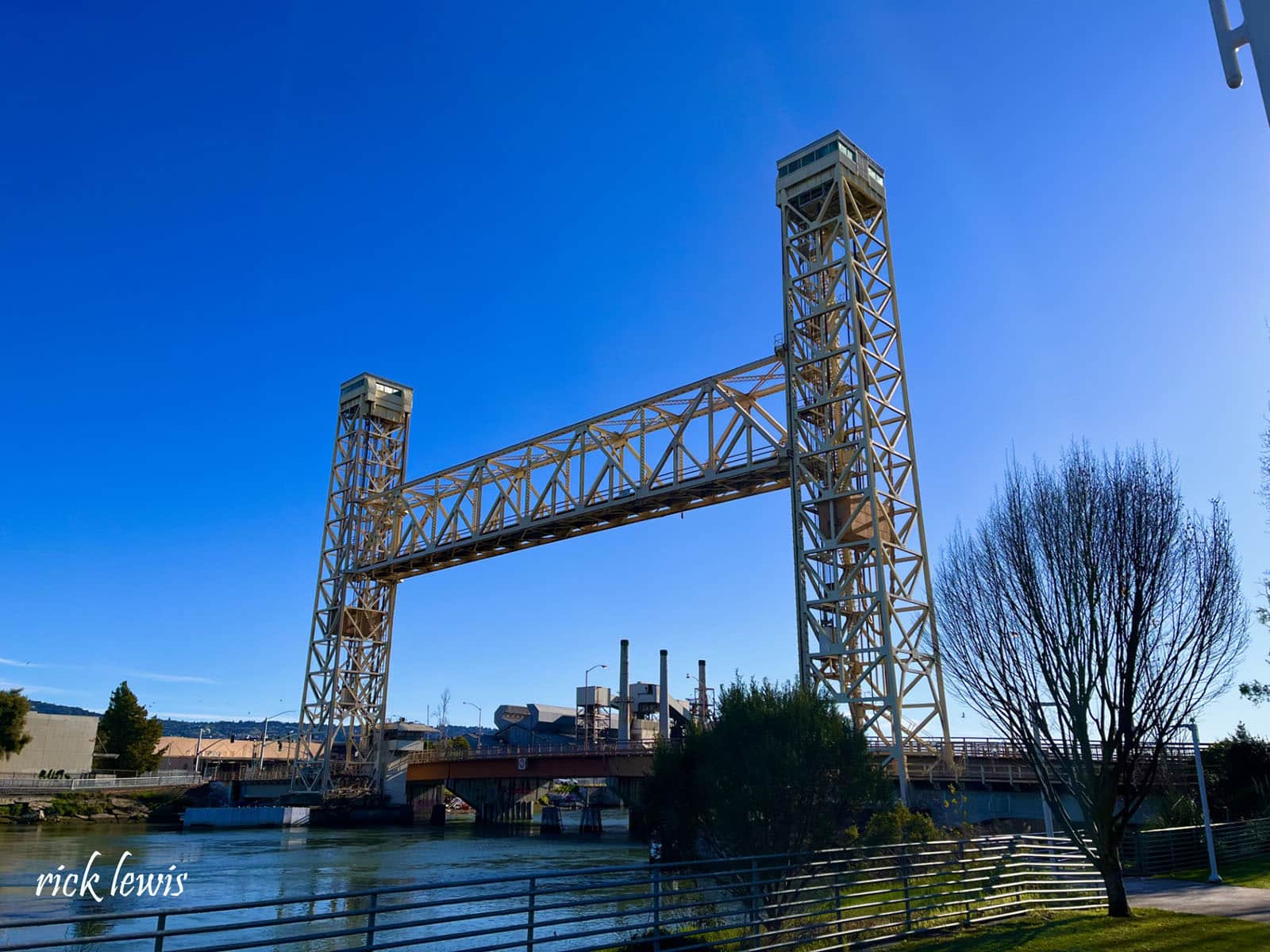
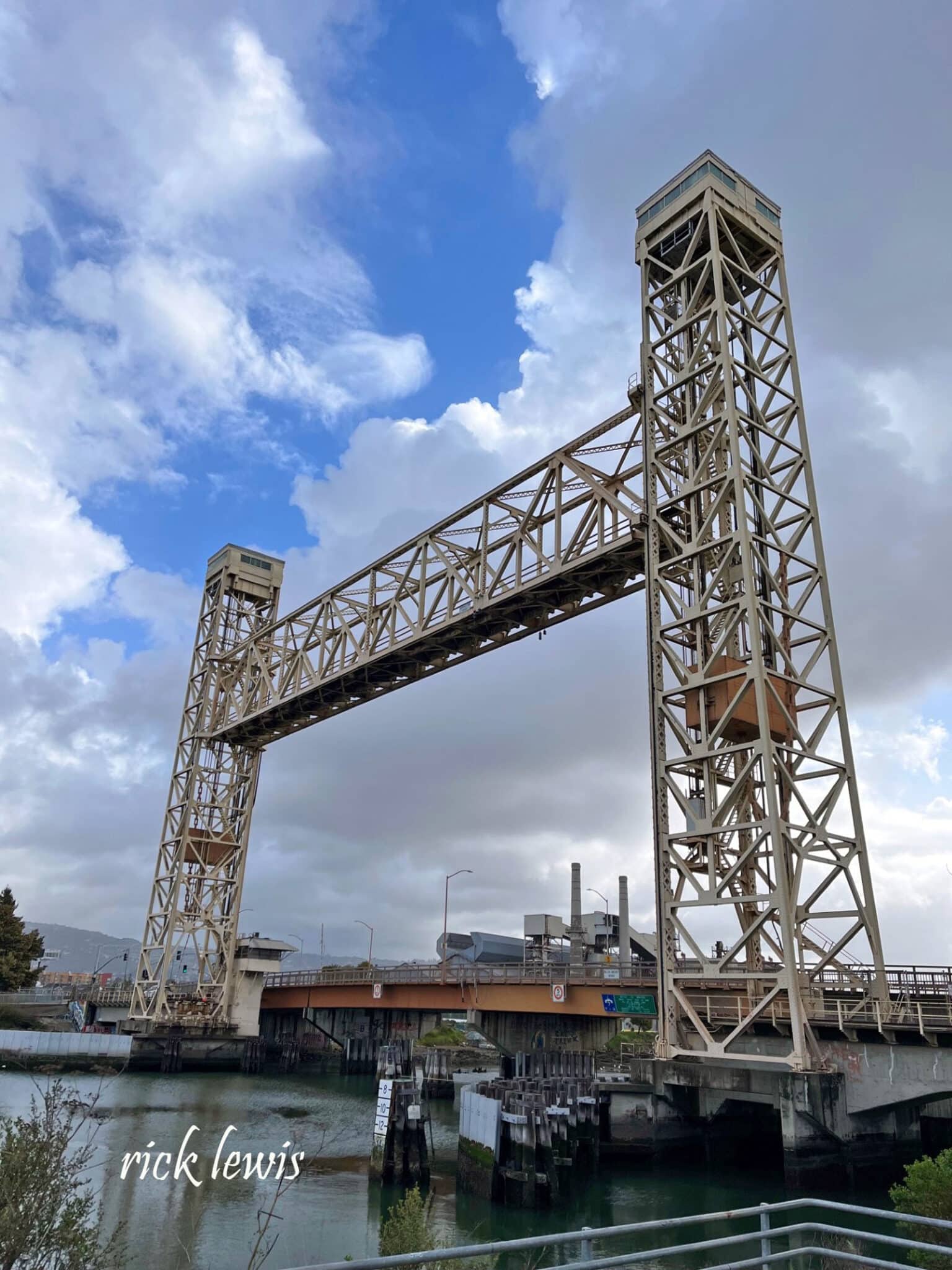
“Synurbic.” I first heard this word at a terrific folk opera called Flight Lessons [2], presented by Rhythmix Cultural Works. The opera, written and performed by Deborah Crooks, is an exciting story of an unfortunate event involving the peregrines who nest at Fruitvale Train Bridge. The “Synurbic” song was wonderfully done and made me explore its definition and impact on both species, birds and humans. It illustrates well our close connections and versatile ways to adapt to the changing environment that affects life around us.
 [3]
[3]
 [4]
[4]Looking up at the Fruitvale Train Bridge and seeing peregrine falcons is an awe-inspiring sight. Watching and observing the bonding and breeding behaviors of the adults is sometimes a lesson in exhilarating subtleties. It can be difficult to discern that eggs have been laid, but the dedicated and experienced people who monitor these raptors provide welcome insights and precise timing about these events.
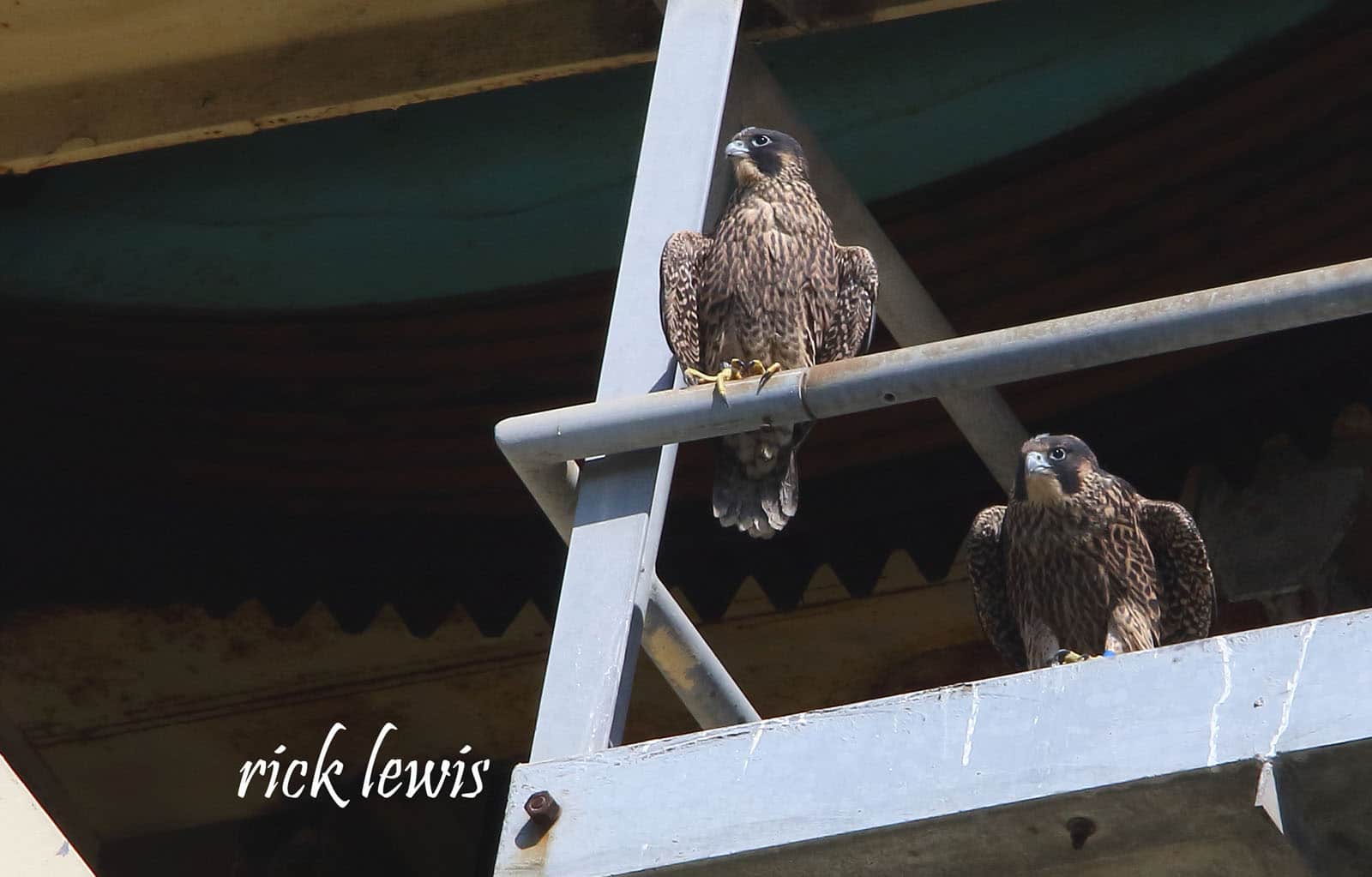
Once the date of egg laying has been determined, the folks at UC Santa Cruz Predatory Research Group are contacted and banding of the chicks is scheduled. Then, all eyes and hearts are laser focused on the new arrivals.
 [5]
[5]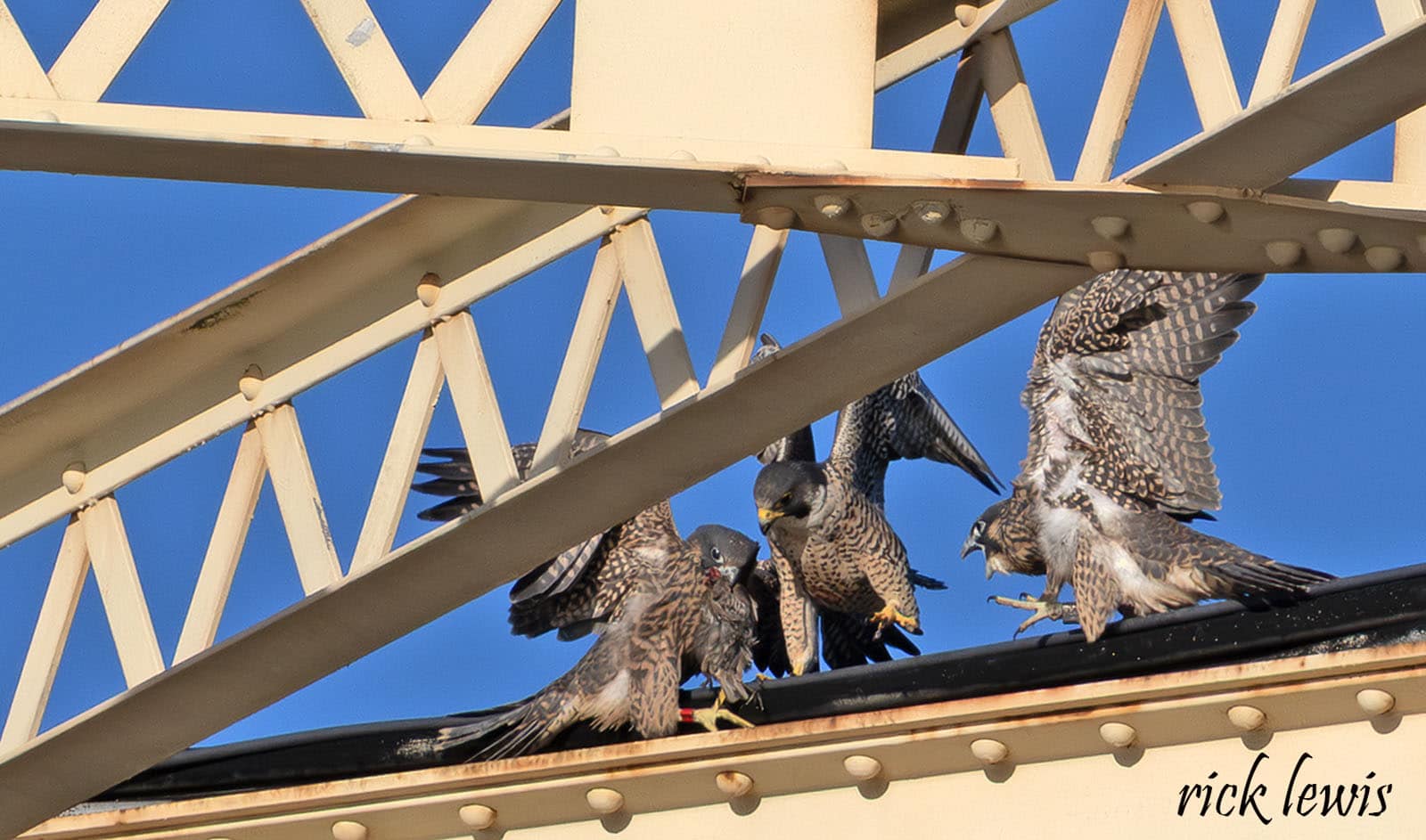 [6]
[6]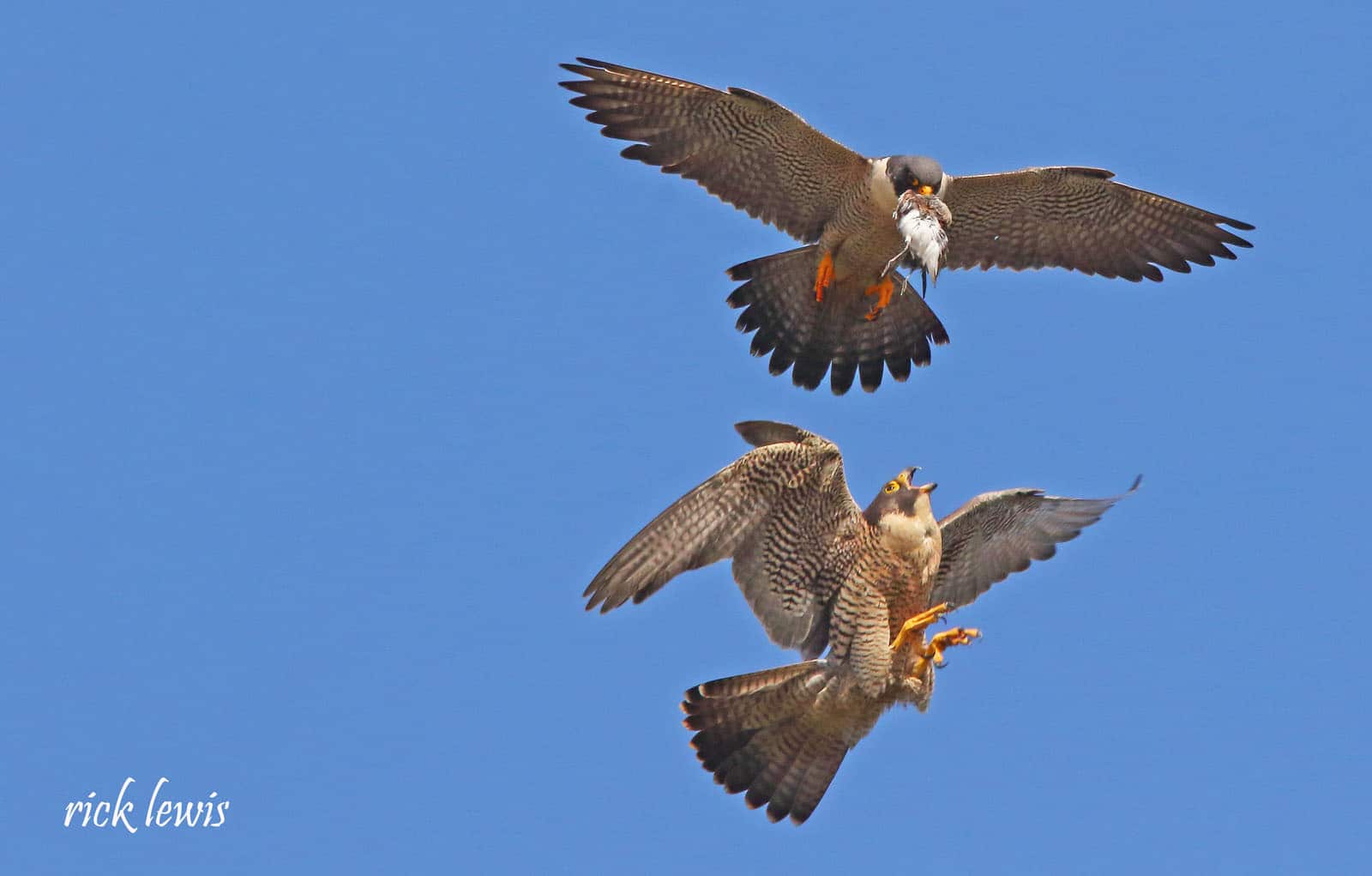 [7]
[7]
 [8]
[8]
 [9]
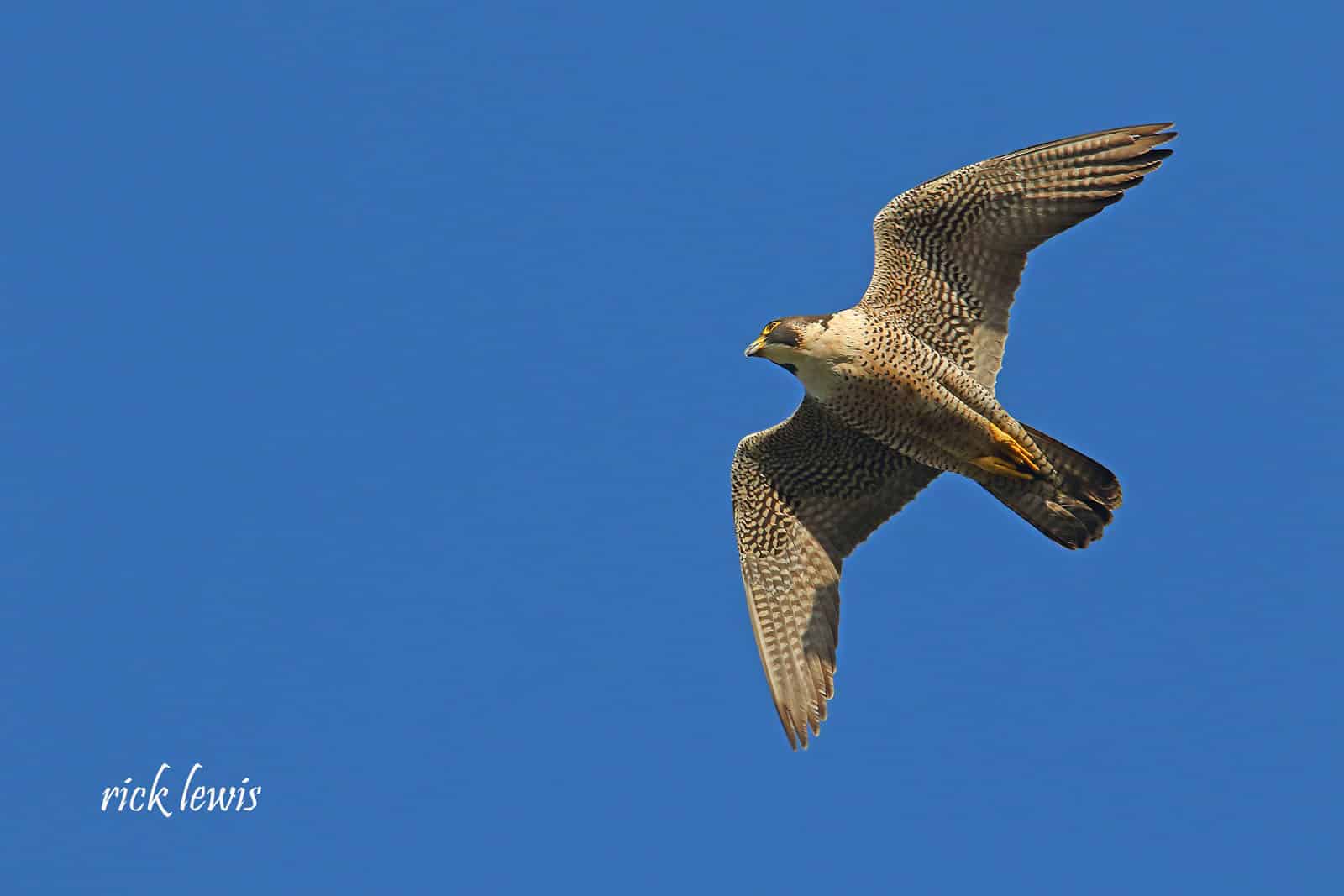
[9]Falco peregrinus in the order Falconidae as described by Peterson: “Recognized as a falcon by its pointed wings, narrow tail, and quick wingbeats not unlike a pigeon’s.” That is a very apt description because I’ve often mistaken a pigeon darting from within the shadows of the bridge as a falcon, only to be disappointed once I’ve established a proper identification.
 [10]
[10]The Sibley Guide to Birds [11] describes them as: “Sleek and powerful, with very pointed wings and relatively short tail.” Peregrines are magic in the best sense and as powerful as Horus, the falcon-headed Egyptian deity worshipped for 5,000 years. It’s no wonder that the treasure in Dashiell Hammett’s famous novel, The Maltese Falcon, is contained within a fabulous statue of a falcon.
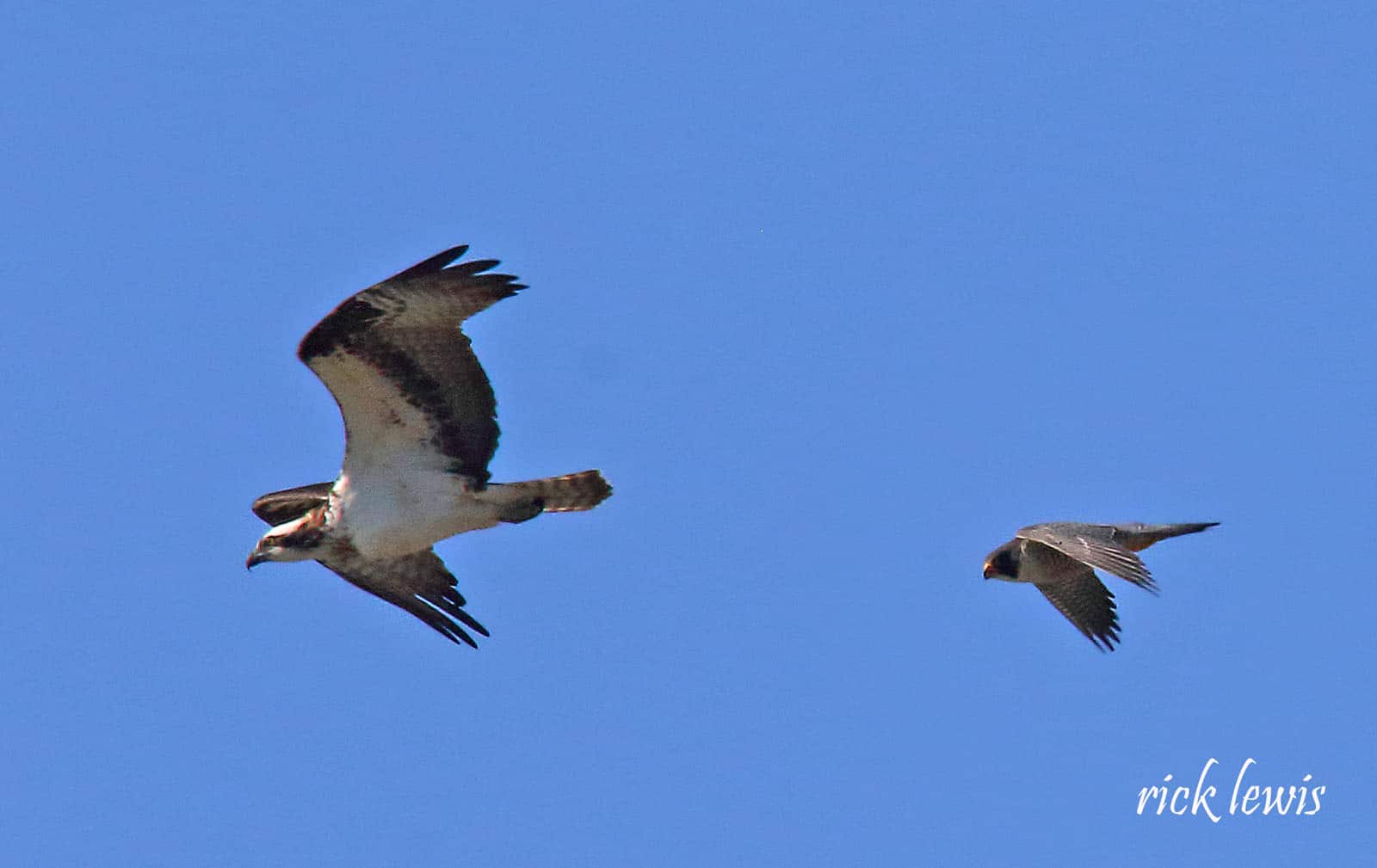 [12]
[12]The Fruitvale Train Bridge peregrines have been nesting there for over 15 years. Success for any nesting birds is the fledging of the brood. The Fruitvale peregrines have been mostly successful over the years but not every year has produced eggs, and some years have experienced other challenges. Last year, the young male initially was struggling to execute his traditional duties and we were very concerned. Despite his perceived failings. However, he ramped up his game and was able to single-handedly finish fledging his two offspring after his mate went missing due to suspected bird flu. It goes to show you that birds face hurdles head-on and inspire us all to greater heights.
A new female showed up this year and the pair produced three eggs. All three hatched and we got to see the chicks come closer to the railing edge of their nest box. There were two females and one male.
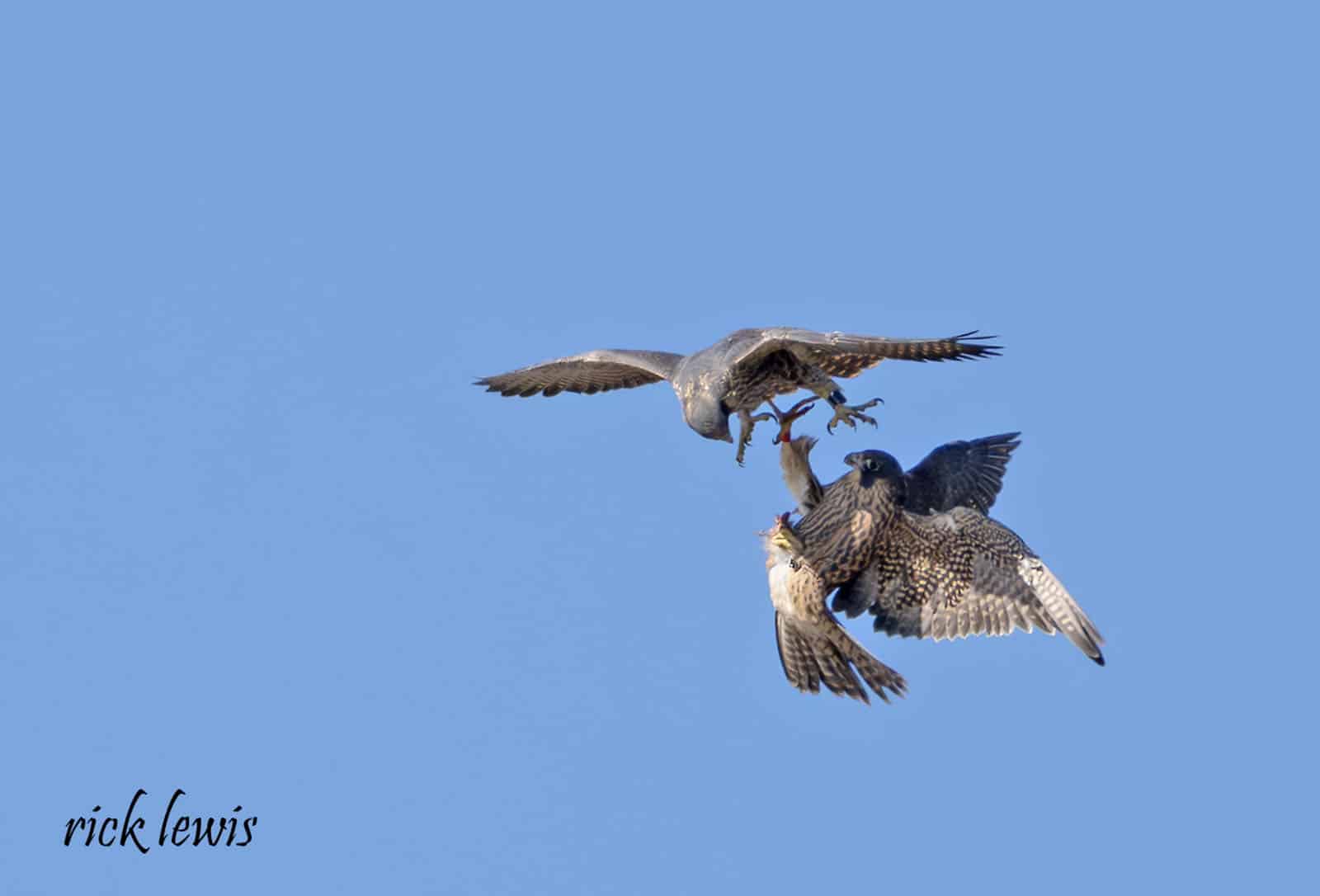 [13]
[13]
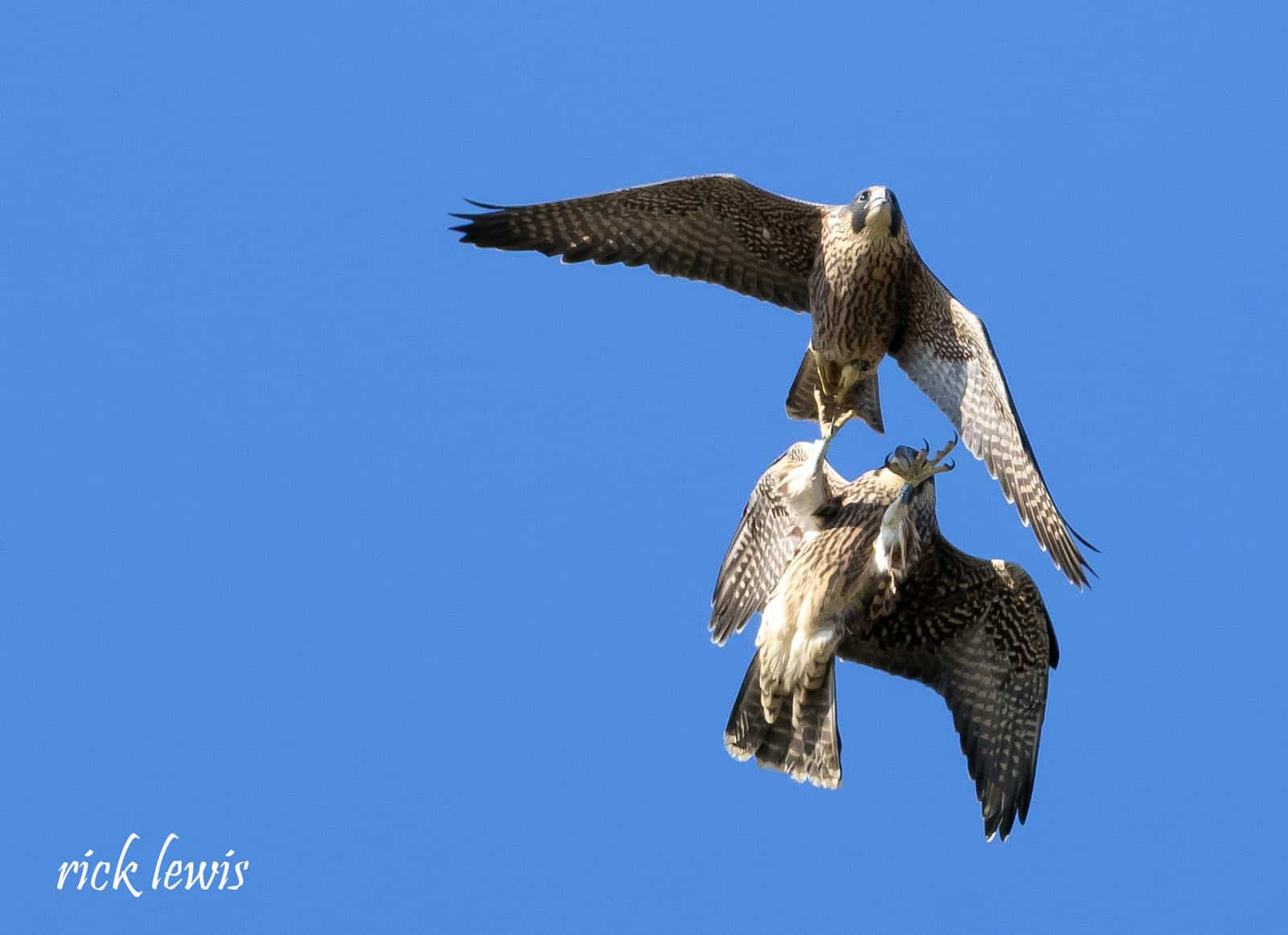 [14]
[14]
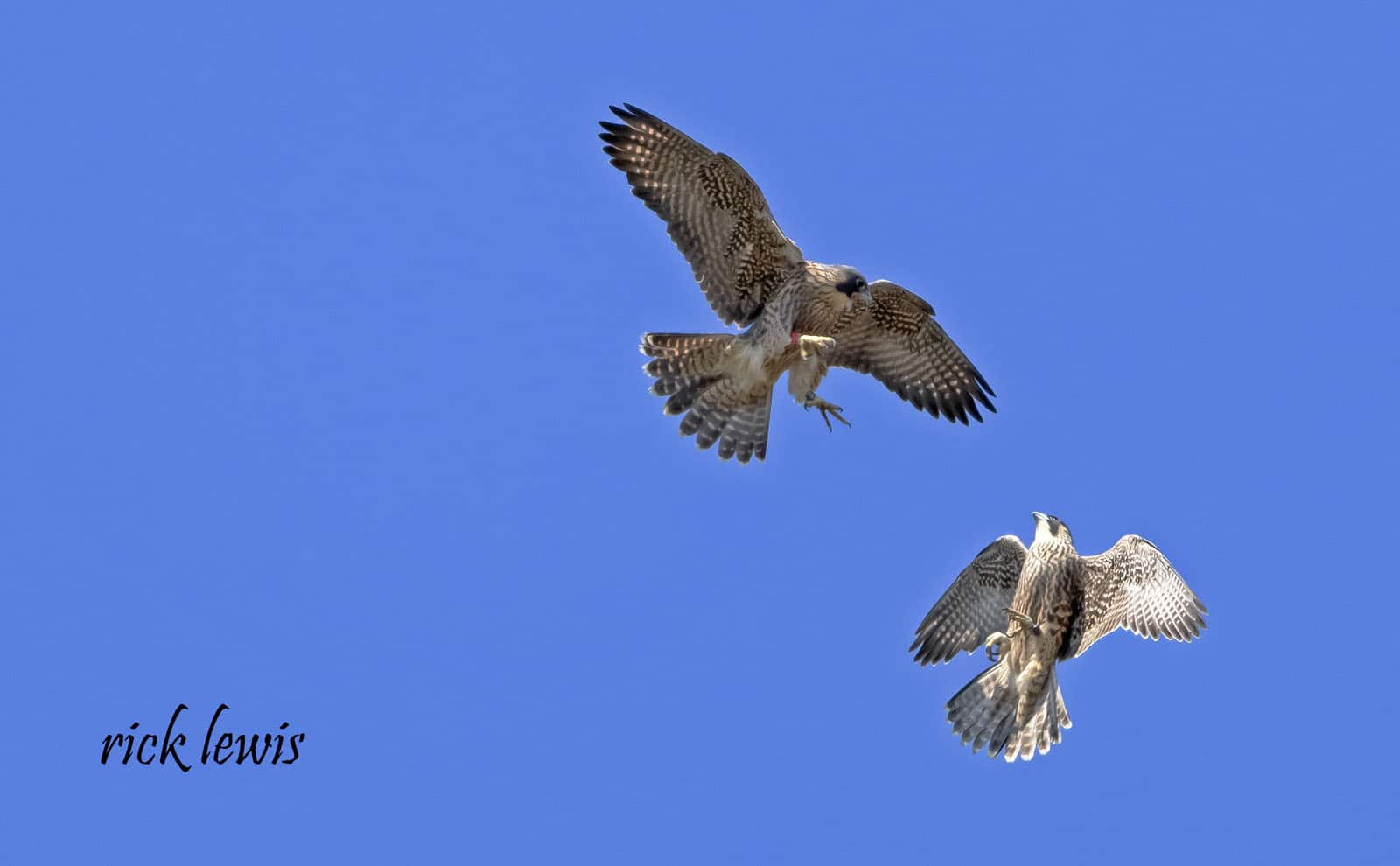 [15]
[15]It soon became apparent that the male named Blue, after the color of his leg band, was struggling. The monitoring team and International Bird Rescue got involved and Blue was rescued. Tragically, Blue was unable to sustain abundant health after his release and died several weeks later. It was heartbreaking. Every bird is precious and the drama of nature is ripe with exhilarating thrills and sometimes heart-rending loss.
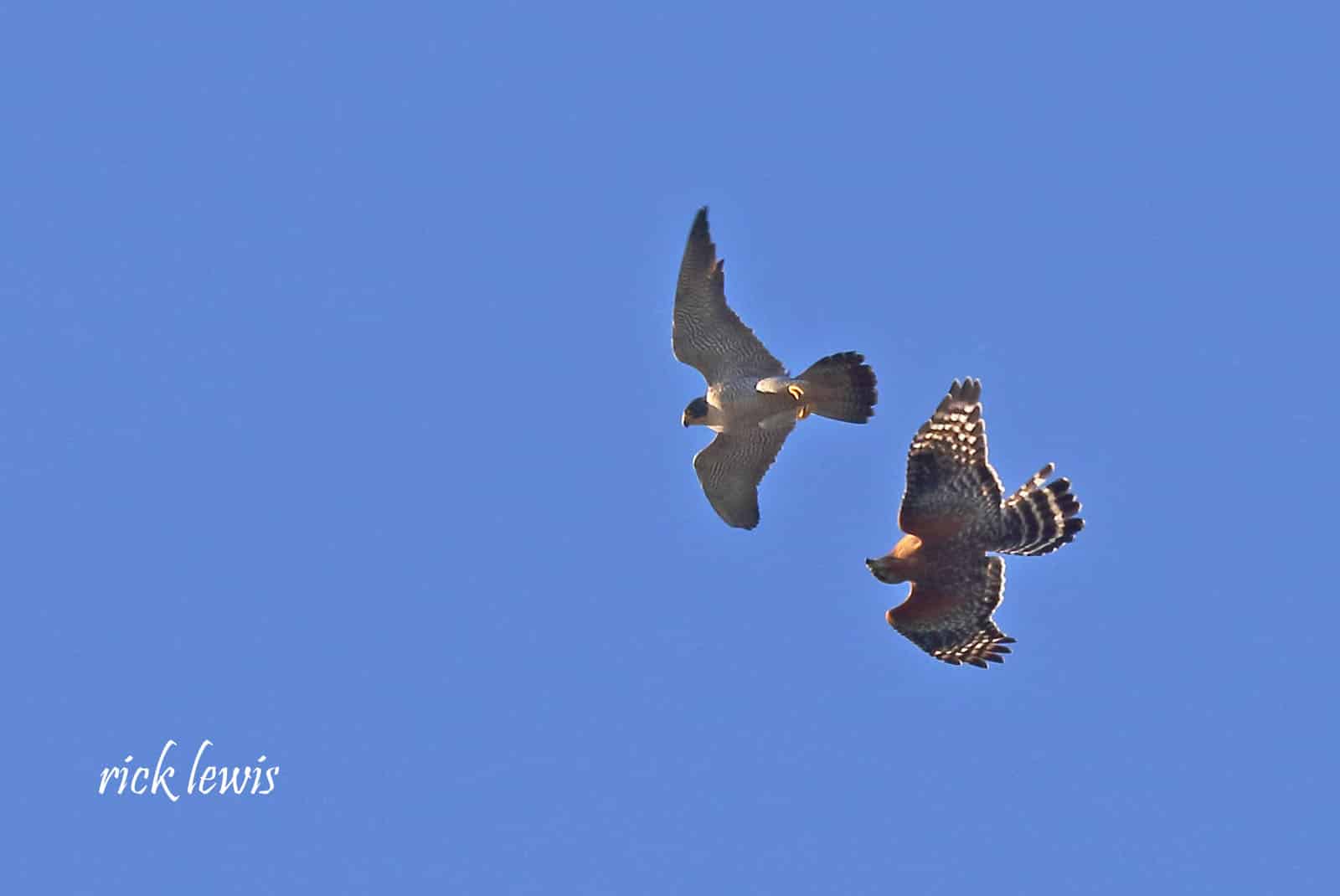 [16]
[16]Sibley states size as length 16 inches, wingspan as 41 inches, and weight as 1.6 pounds. “Nests on cliff ledges or (recently) on buildings or bridges in cities.” Clutch is two to five eggs, incubation is 29-35 days. Fledging occurs after 39-49 days.
It is found on all continents except Antarctica. Perhaps this explains its species epithet peregrinus, which means “wandering.” Lifespan is six to 15 years. The sexes look similar but the female is noticeably larger than the male. The female is called a falcon and the male is called a tiercel. They are avian predators and eat birds almost exclusively.
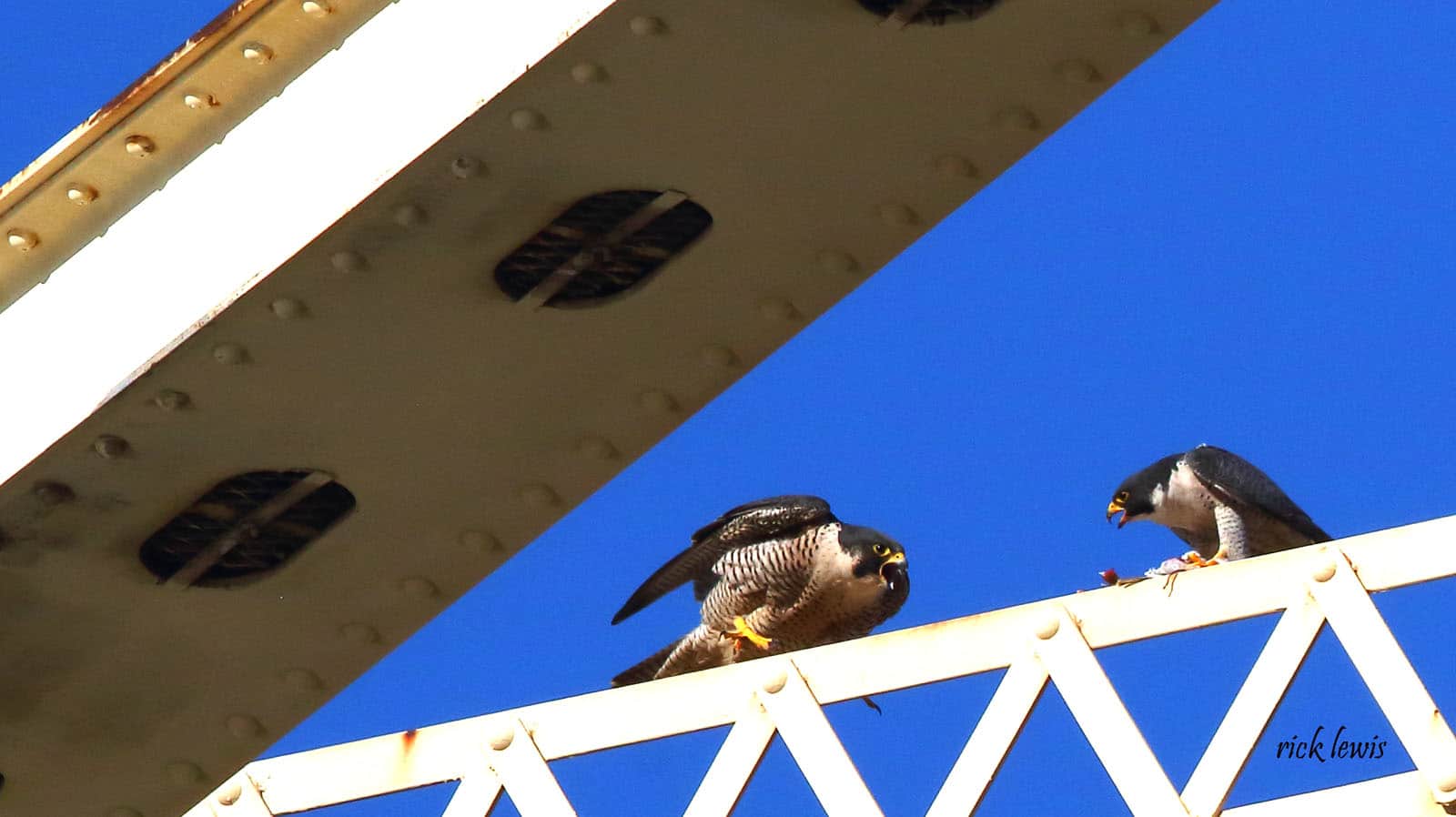 [17]
[17]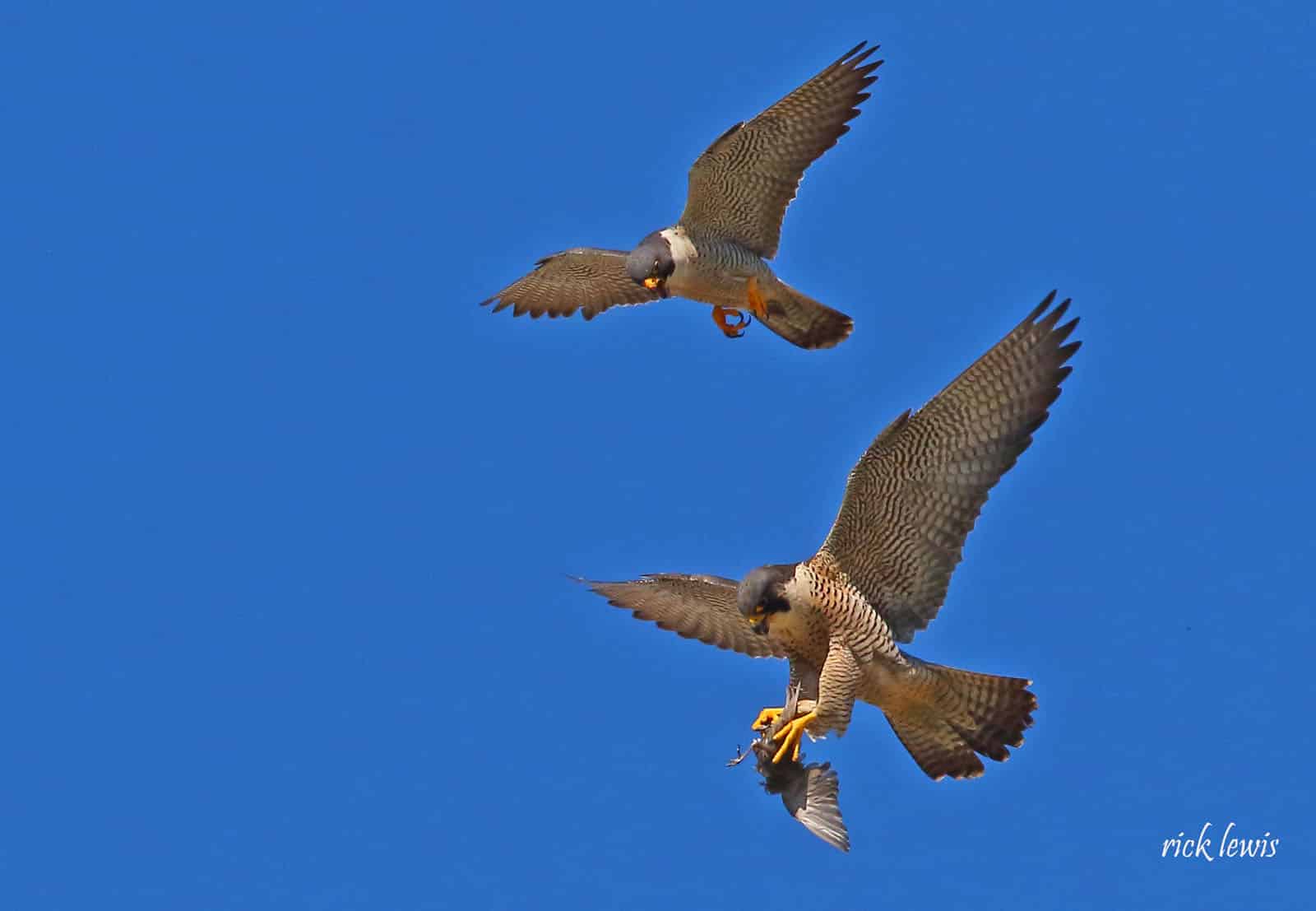 [18]
[18]Peregrine falcons are sensitive to environmental factors such as DDT, and act as critical indicators of our surroundings. They are also susceptible to natural calamities such as highly pathogenic avian influenza (HPAI), or bird flu. And they move us in ways that are fundamental to our well-being. We cannot afford to lose the things that move us. It is perilous to believe that others will act on their behalf. It is no small thing to see a raptor in the sky and it is critical to recognize the speed in which it transits the firmament. No pun intended, it can happen in the blink of an eye, as fast as a peregrine flies across the sky.
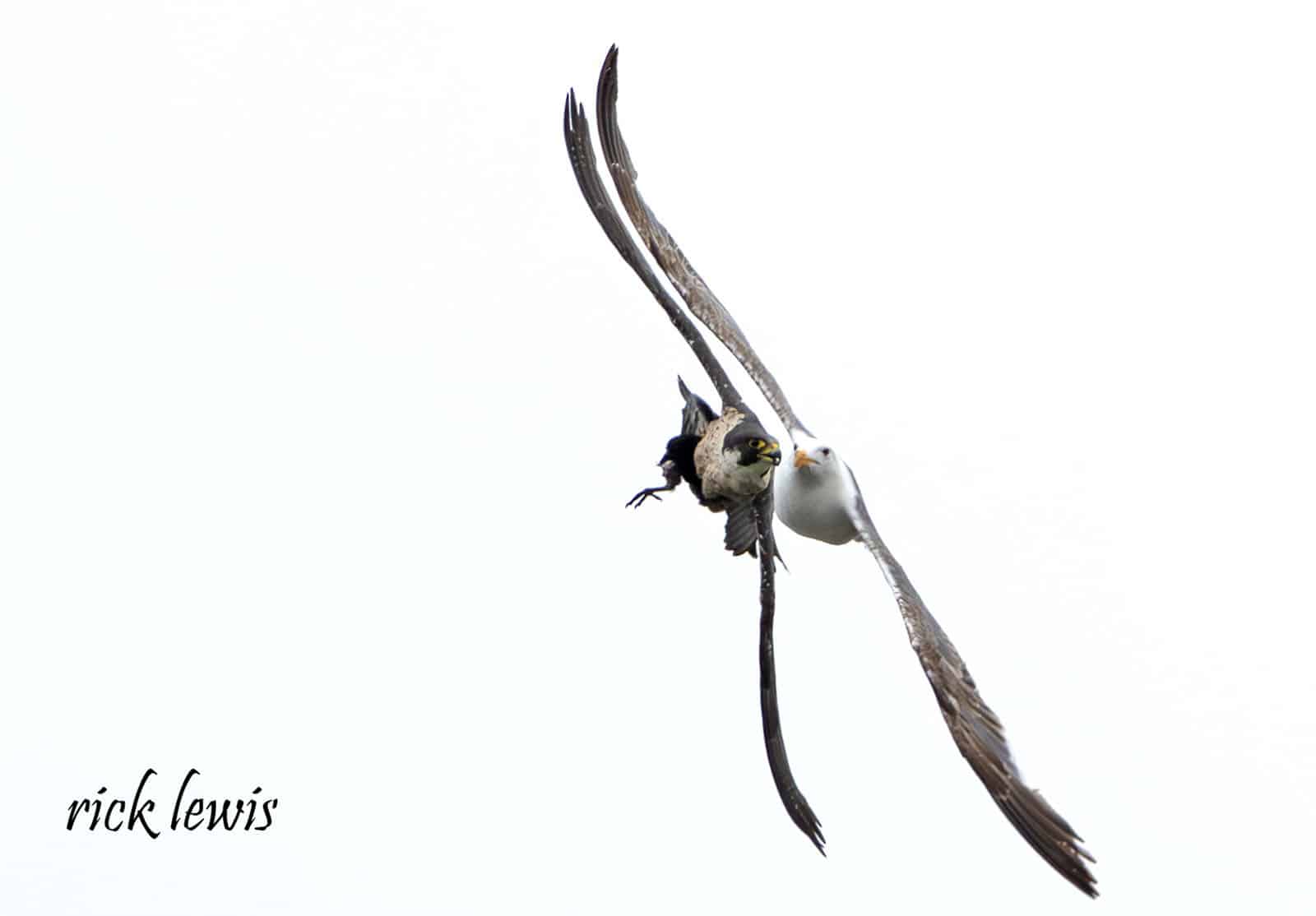 [19]
[19]Alameda remains a phenomenal birding destination. I’ve met people “on the trail” here from Oregon, Florida, Washington, New York, Nevada, China, Germany, Sweden, England, Peru, and even Modesto, where I hail from! We need to celebrate, protect, and preserve to the best of our abilities, the habitat and best practices that sustain our wildlife. Join a local conservation group, go out birding, get excited about it, and embrace advocating for nature.
Suggested reading:
- SF Gate: “Bird flu rips through another beloved Bay Area species [20]”
- U.S. Fish and Wildlife Service: Final Report: 2023 [21]
- BioRxiv: Rapid decline of nesting peregrine falcons in the San Francisco Bay Region [22]
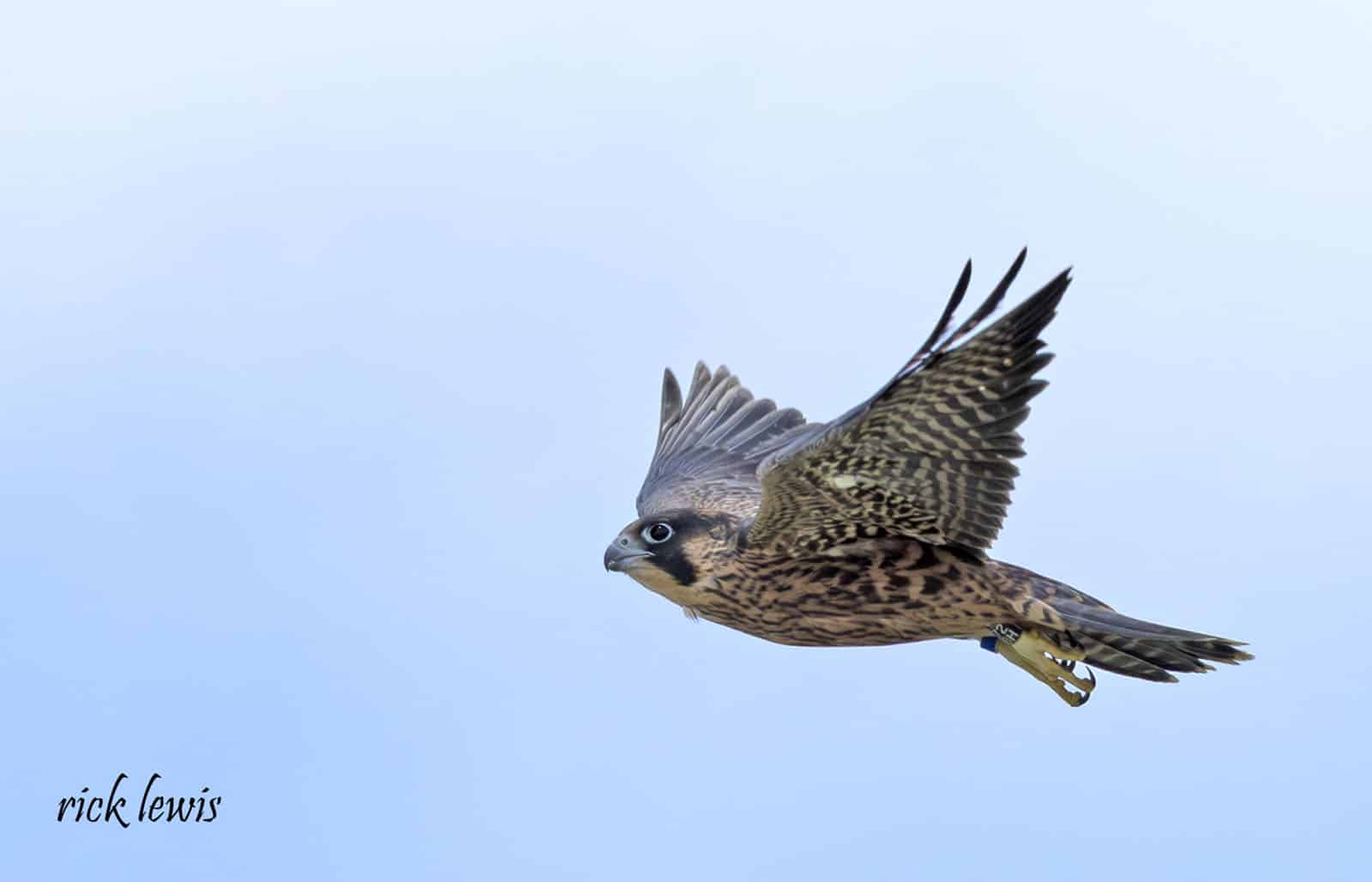 [23]
[23]Rick Lewis is a long-time member of Golden Gate Bird Alliance and other environmental organizations. He contributes often to Bay Area and Central Valley birding groups that promote wildlife and habitat conservation.
This is part of a series of articles coordinated by the Friends of the Alameda Wildlife Reserve [24] (FAWR), a Conservation Committee of Golden Gate Bird Alliance.