These days, signs of development are everywhere at Alameda Point. The former Alameda Naval Air Station [1] now sports shiny new apartment complexes, office buildings, industrial uses in what were former aircraft hangers, beer breweries, and some good restaurants.
 [2]
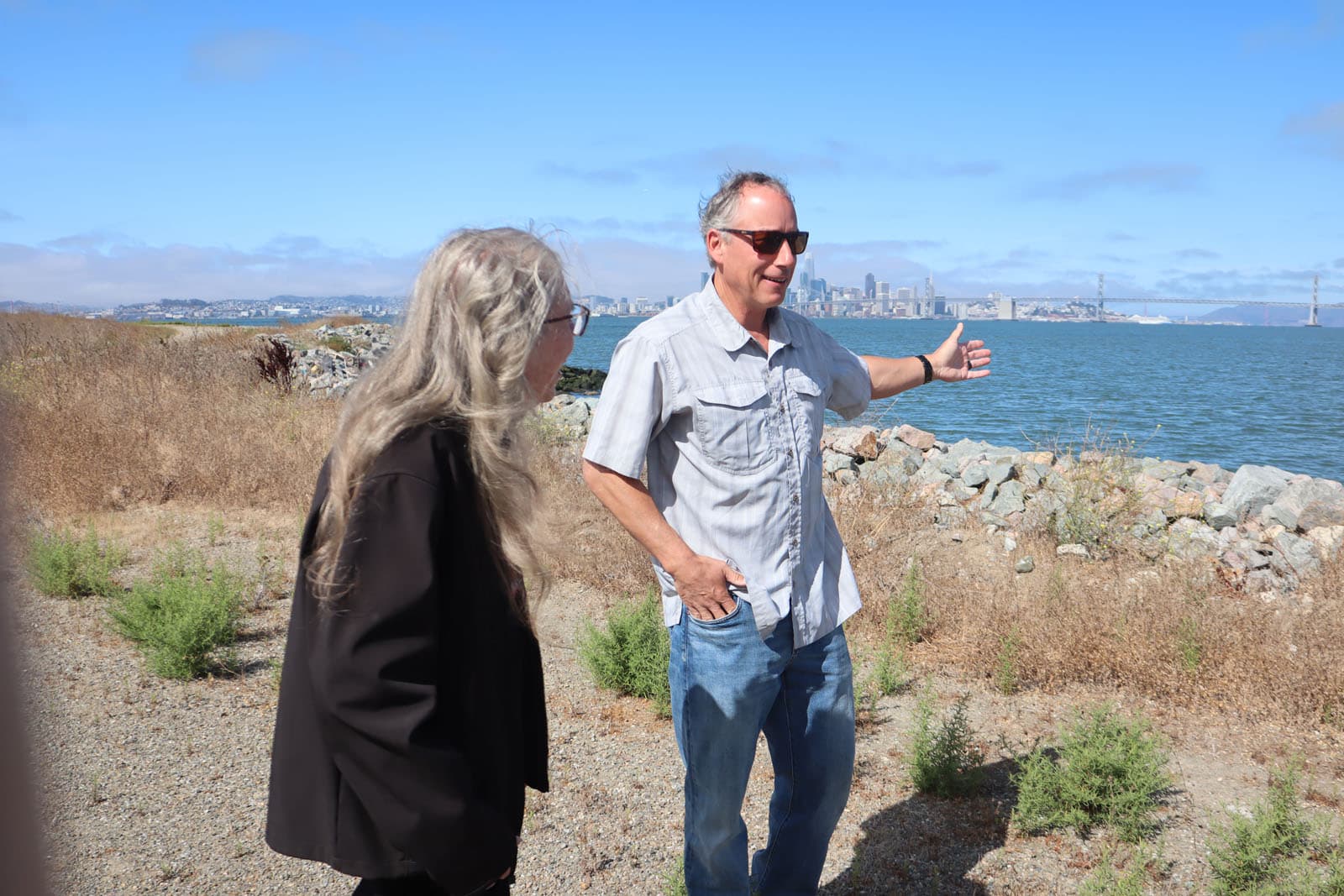
[2]All that progress would not be possible without the help of federal environmental engineers whose efforts are vital when converting a former military base into a civilian community. And on Saturday, August 22, a group of interested Alameda residents, along with one or two officials and some environmentalists, got a glimpse of how they work.
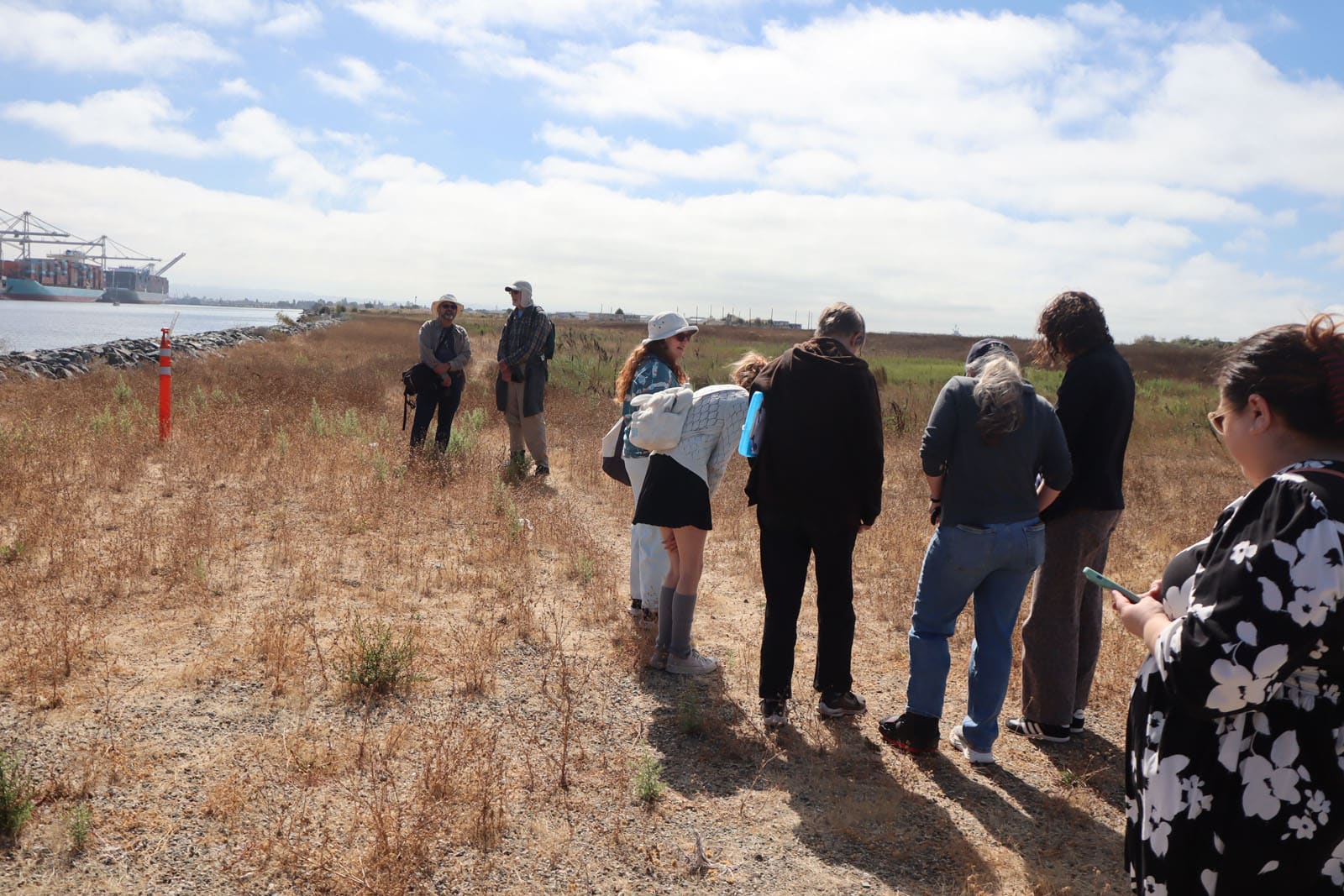
The guests had to pay close attention because the men employed by the Navy often speak in government-generated acronyms. They are part of the BRAC—Base Realignment and Closure—system. The new boss is Curtis Moss, who serves as BRAC Environmental Coordinator (BEC for short). He led the locals on a bus tour of current sites being cleaned up by the Navy. He was accompanied by Alex Bollweg, the Lead Remedial Project Manager who keeps close tabs on how the work is progressing.
When a former military base closes, federal law requires cleanup of chemical contaminants or other toxics left behind. The land cannot be turned over for civilian use until the problems have been solved. When the Navy left Alameda in 1997, more than 35 polluted sites were part of the program.
The tour focused on the last four sites that engineers must deal with before the land is finally conveyed to the City of Alameda. The Navy has so far transferred 92% of the former base’s land with an additional 217 acres to be turned over in the next few years.
 [3]
[3]Alameda became a Navy town in 1936, when Congress authorized purchase of the land fronting San Francisco Bay. Expanding the base required filling in portions of the Bay with soil. During World War II, the base became a Naval Air Station (NAS) [4], supporting aircraft carriers in operations against the Japanese Empire.
After the war, Alameda NAS was a beehive of activity. It employed more than 18,000 Navy and civilian personnel. Jet fighters and other naval aircraft were serviced and repaired in large hangers as part of what was called the Naval Air Rework Facility.
All that industrial activity left behind a lot of toxic chemicals that leached into the soil. Landfills covered up base garbage and other discarded material. The base closure engineers had their work cut out for them.


 [5]
[5]At some sites, soil was removed completely and sent away for disposal. In other cases, the team came up with solutions that involved capping polluted areas to prevent further spread.
The ground at one site, close to the Oakland Inner Harbor, contained high concentrations of toxic PFAS which is used in foam sprayed on shipboard fires. “It’s basically a chemical that doesn’t break down,” Bollweg said. “It’s made to resist natural breakdown.”
The team must come up with a way to clean it up, but in the meantime, they have installed a 700-foot carbon barrier to keep the toxics from leaking into San Francisco Bay. That has yielded some results. Tests have shown some lower chemical levels within the barrier.
“So, it’s been a welcome result for the work we have put in,” Bollweg said.
At other sites, contamination from cleaning solvents has been found where workers scrubbed down machinery, maintained vehicles and even stored small arms. Though former landfills have been covered with dirt, engineers will continue to monitor the sites “in perpetuity” to ensure safety, Bollweg said.
But the pace of new building at Alameda Point is impressive, according to Moss.
“It’s remarkable to see the cleanup alongside all the redevelopment that is happening. I have worked on a lot of BRAC bases and it isn’t always this successful.”
David Boitano is a contributing writer for the Alameda Post [7]. Contact him via [email protected] [8]. His writing is collected at AlamedaPost.com/David-Boitano [9].