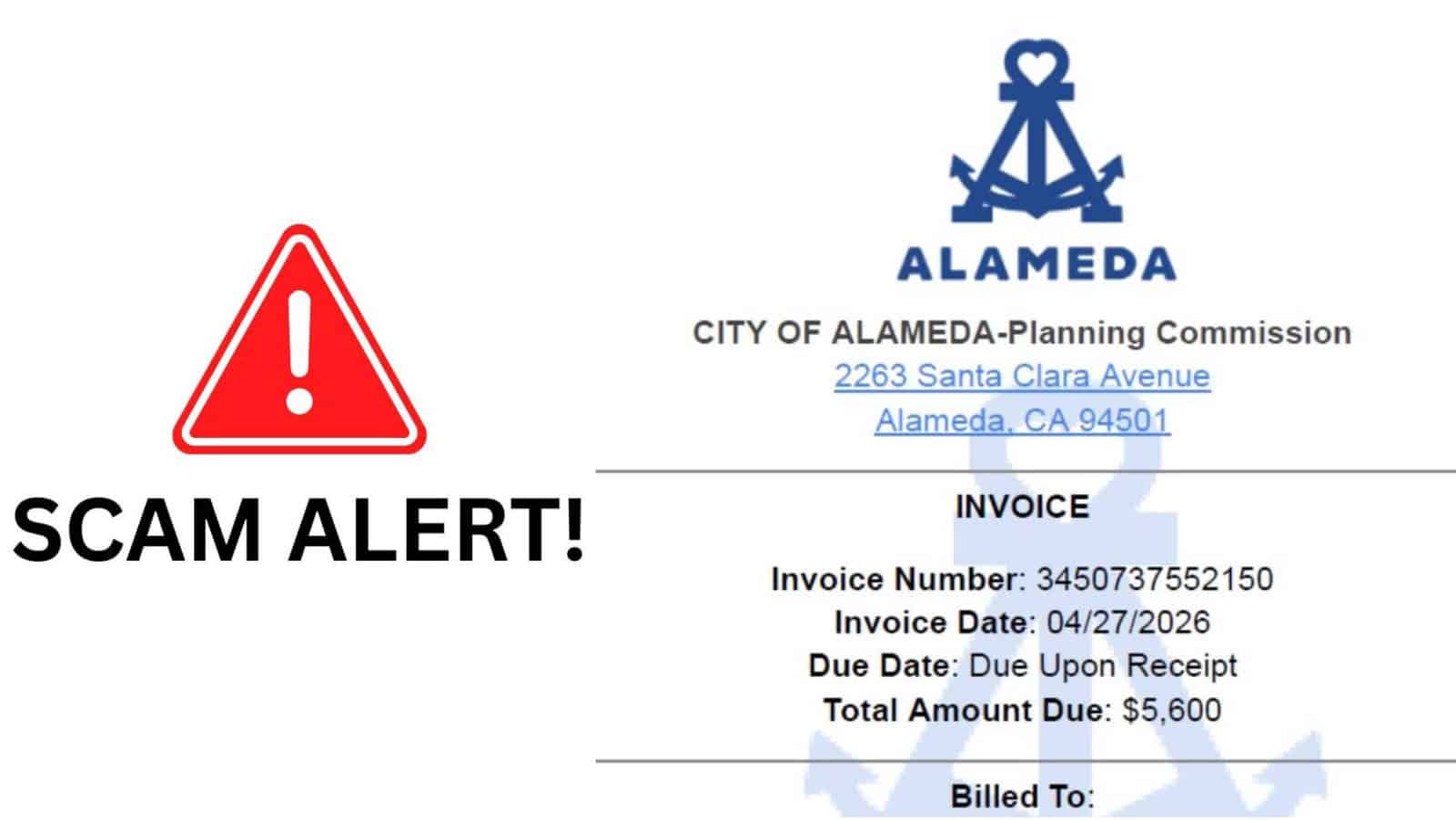
Beware! Scammers posing as the “Alameda Planning Commission” are sending fake emails that solicit fraudulent wire transfers, according to an official City of Alameda warning [1] posted on Facebook.
 [2]
[2]“We’ve received reports of scammers posing as the ‘Alameda Planning Commission,’” The City warned. “These emails may appear official, but they are designed to trick recipients into sending money.”
When you open any email or invoice claiming to be from the City of Alameda, watch out for:
- Claims about project approvals along with “wire instructions.”
- Official-looking logos and professional “auditing” language.
- Sender addresses that do not end in @alamedaca.gov.
If you receive an email like this, call the City of Alameda Planning Department immediately at 510-747-6805 to verify and report it.
Phishing attempts like these are becoming more frequent and more sophisticated. Alameda Police Department (APD) warns, “Never provide personal information (full names, birthdates, social security numbers, or bank information) over the phone or internet.”
If you are unsure about any email or invoice claiming to be from the City, do not reply or make any payment. Contact the City of Alameda directly to verify. If it appears to be a scam, call the APD non-emergency phone number: 510-337-8340.




How to protect yourself from scams
APD offers the following information/advice regarding potential scams of all sorts:
- Be cautious of unsolicited calls and emails.
- Be skeptical when requested to wire money or send money via gift cards.
- Many scams use scare tactics or attempt to pressure you by threatening that you must take action immediately.
- If you believe you have been a victim of a scam contact APD and place a hold on your checking accounts.
Also, at this time of year a number of sophisticated scams may target taxpayers by claiming to be IRS employees, either by phone or email. But the IRS will never send unsolicited emails to the public, nor will the IRS send emails with any sensitive documents containing personal information.
“The IRS will never call you demanding payment or personal information,” APD warned, “Hang up.”
Finally, always trust your instincts. If something seems “fishy,” it probably is.
See the Alameda Post’s previous coverage: Don’t Fall for Email Scams [3].