The Alameda County Mosquito Abatement District (ACMAD) has now detected its first West Nile virus-positive mosquito sample of 2026. The mosquitoes were collected in a trap placed in Newark and tested positive at the District’s laboratory on June 12. This follows the detection of five West Nile virus-positive birds in Newark earlier this season.
 [1]
[1]
In response, ACMAD is continuing its enhanced mosquito surveillance and larval control efforts for native Culex mosquitoes in the area where the positive mosquito sample was collected. Staff will treat standing water in the area and check yards for possible sources of Culex mosquitoes. Newark residents may see ACMAD vehicles and clearly labeled mosquito traps in the area between Christine Street and Cherry Street. See the ACMAD map of all West Nile virus detections in Alameda County [2].
Where Mosquitoes are found
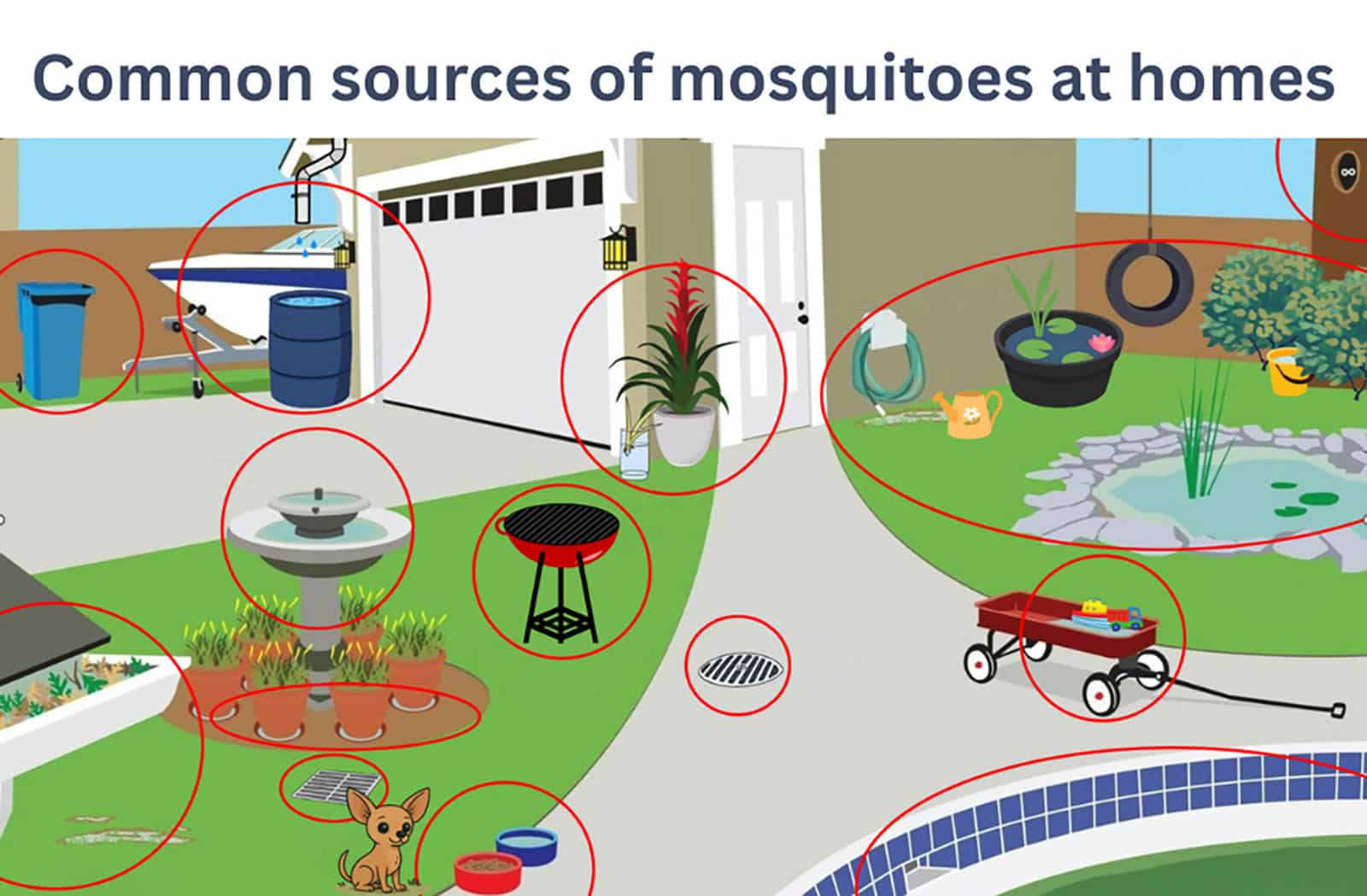
Mosquitoes need standing water to breed. Even small amounts of standing water can become mosquito habitat, especially stagnant water found in outside containers and underneath houses. Unmaintained swimming pools continue to be a significant mosquito source in Alameda County and can produce large numbers of mosquitoes. If you know of an unmaintained swimming pool or other standing water source, please contact ACMAD directly.
“Our staff have found and treated potential mosquito habitats in public spaces, parks, roadways and canals,” said Field Operations Supervisor Joseph Huston. “Our next step is to ask residents in the area to check their properties for any possible standing water. We have staff in the area and are happy to assist with that process.”
 [3]
[3]Reduce your risk of mosquito-borne diseases
Protect yourself and your neighborhood by following these simple prevention measures:


- Dump or drain standing water on your property, as mosquitoes need water to develop. Mosquitoes swim before they fly, their eggs need water to hatch. If there is no standing water, then mosquitoes will not hatch open.
- Avoid mosquito peak hours. Mosquito activity is highest at dawn and dusk, so limit outdoor activities during these times when possible.
- Defend against bites by wearing long sleeves and long pants and applying insect repellent containing EPA-registered active ingredients such as DEET, picaridin, IR3535, or oil of lemon eucalyptus.
- Maintain door and window screens to prevent mosquitoes from entering your home.
About West Nile virus
West Nile virus is transmitted to people and animals through the bite of an infected mosquito. Approximately one in five people infected with West Nile virus will develop symptoms, which may include fever, headache, body aches, joint pain, vomiting, or rash. Fewer than one percent of infected individuals will develop serious neurological illnesses such as encephalitis or meningitis.
There is no specific treatment or cure for West Nile virus. Adults over age 50 and individuals with weakened immune systems are at greater risk of developing severe illness. Anyone experiencing symptoms after experiencing mosquito bites should seek medical attention promptly.
Horses are particularly susceptible to West Nile virus, but effective vaccines are available. Horse owners are encouraged to consult their veterinarians regarding timely vaccination.
More info
For information about mosquitoes, West Nile virus, or ACMAD services, visit Mosquitoes.org [2] or call 510-783-7744. Alameda County residents may also request mosquitofish for ornamental ponds, horse troughs, or neglected swimming pools from the ACMAD office at 23187 Connecticut Street in Hayward.
For information about West Nile virus symptoms, prevention, or testing, contact the Alameda County Public Health Department at 510-267-8001.