On July 7, City Council approved resolutions to place two measures on the November ballot for City Charter amendments and approved construction contracts for the Alameda Aquatic Center [1]. Council also voted to approve an ordinance to place a $300 million general obligation bond measure on the November 2026 ballot to finance critical infrastructure projects, which is detailed in a separate article [2].
 [3]
[3]Minor City Charter amendments
The Council’s Charter Review Subcommittee, which includes Mayor Marilyn Ezzy Ashcraft and Vice Mayor Michele Pryor, introduced two proposed resolutions to place on the November 2026 ballot measures to make amendments to revise or repeal outdated provisions of the City Charter [4]. Another resolution to amend the Charter to eliminate the elected Auditor and Treasurer roles was removed from the agenda before the meeting and postponed until the July 21 meeting.
Ashcraft presented the first item as a “cleanup” of various sections of the City Charter to clarify Council or staff duties, reflect current Council or staff practices, and update the desired makeup of appointed City boards.
For example, a proposed change to Section 28-3 would require that members of the Historical Advisory Board [5] “be one registered architect, one State-licensed general building contractor, and three members shall have an interest in community design,” replacing the previous language that members “have demonstrated an interest in the history, heritage and architecture of the City of Alameda and shall be residents of the City.”
Other Councilmembers reviewed the list of about 20 changes and asked questions to clarify the reasoning behind certain items.
Few attendees spoke during public comment, though one speaker, Carmen, wondered whether there is legal risk in consolidating so many charter amendments into one measure. When Councilmember Greg Boller reiterated the question, City Attorney Yibin Shen assured that omnibus charter amendments are common, especially for cleanup.
The resolution to place the charter amendments on the ballot passed 4-to-1, with Councilmember Tony Daysog dissenting. He expressed concern that there were potentially controversial revisions. Although he did not identify any when prodded by Ashcraft, he said he believed the process was not sufficiently transparent and too rushed for Council or members of the public to provide any meaningful feedback. Councilmember Tracy Jensen agreed with this point, calling it “bad government” to try to jam things through.
Next, a similar resolution focused specifically on Charter Section 3-10 and a proposed amendment to eliminate the supermajority vote requirement for leases not exceeding 10 years and requiring a resolution, instead of an ordinance, to authorize the lease or a sale of City property. Currently, Section 3-10 requires a supermajority vote for the sale or lease of City property for more than one year.
Ashcraft and Pryor reasoned that a simple majority vote could reduce the effect of Council politics and make it easier to attract desirable tenants to Alameda, and especially Alameda Point, and positively impact the City’s reputation as a landlord.
Much of Council’s discussion hinged on the addition of the phrase “except Tidelands” to the Section, which caused confusion among various Councilmembers, since the phrasing made it ambiguous as to whether tidelands would still be subject to a supermajority vote.



Initially, Councilmembers considered removing the term entirely, but City Attorney Shen suggested revising it to “including Tidelands,” so that such properties will continue to be treated the same way as others for leases of greater than 10 years.
Jensen asked whether the supermajority vote could be eliminated outright, regardless of the length of the lease. However, Boller pushed back, arguing that longer-term decisions should require greater consideration and a higher level of vetting from Council.
In the end, Council voted 4-to-1 in favor, with Daysog dissenting. For both measures, Boller and Pryor will author the written arguments, and, if necessary, the rebuttal.
Aquatic Center contracts approved
In what Alameda Recreation and Parks Department Director Justin Long called a “really important stepping stone” for the project, Council discussed the award of three design and construction contracts for the Alameda Aquatic Center.
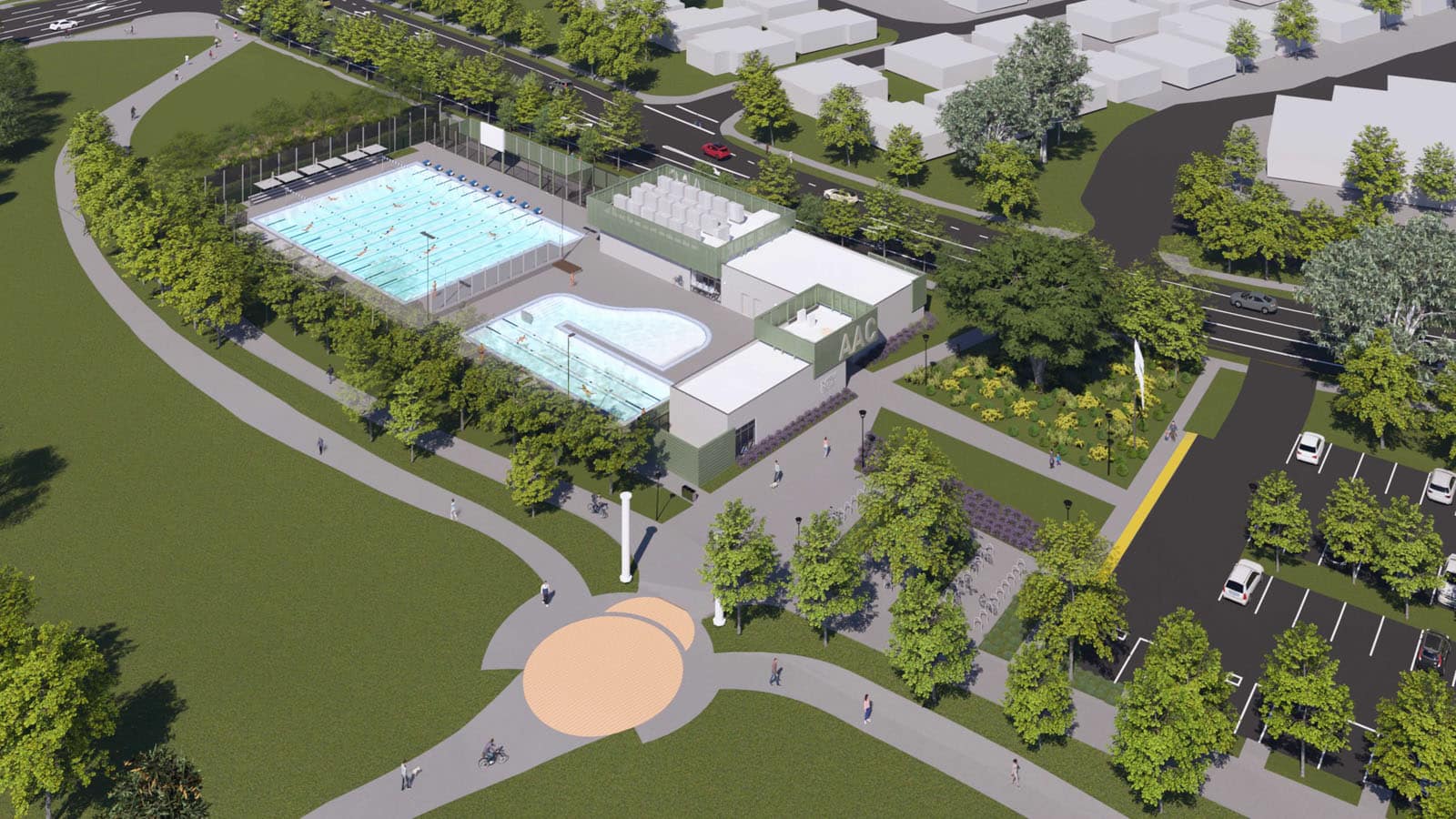
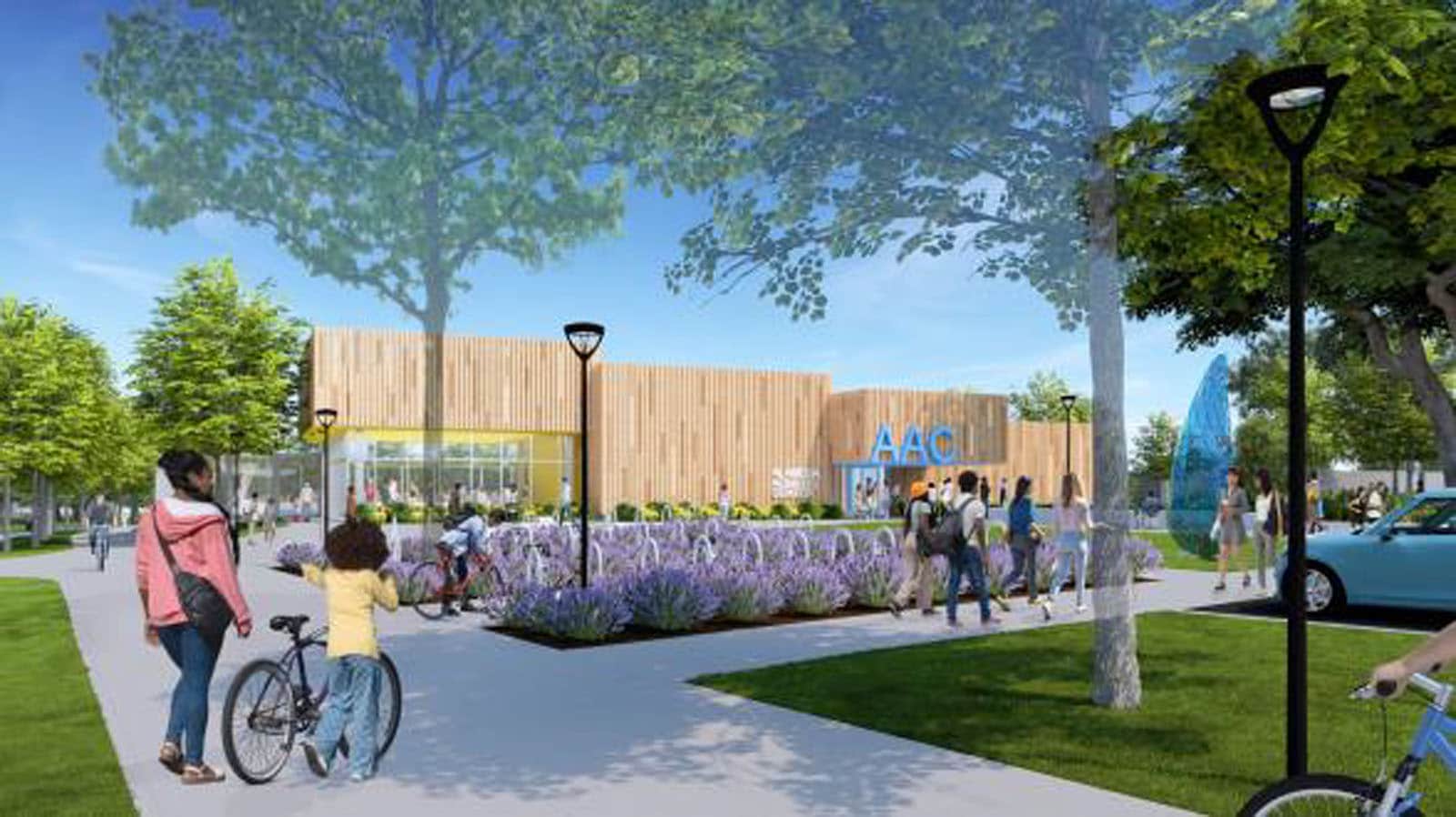
As part of his presentation, Long reminded Council that the project intends to increase pool access for the community and provide year-round, consistent programming for all ages. Key elements include a 30-meter competition pool and a separate activity pool, mechanical and administration buildings, as well as parking for 50 cars and bicycle parking for over 100 bikes.
 [6]
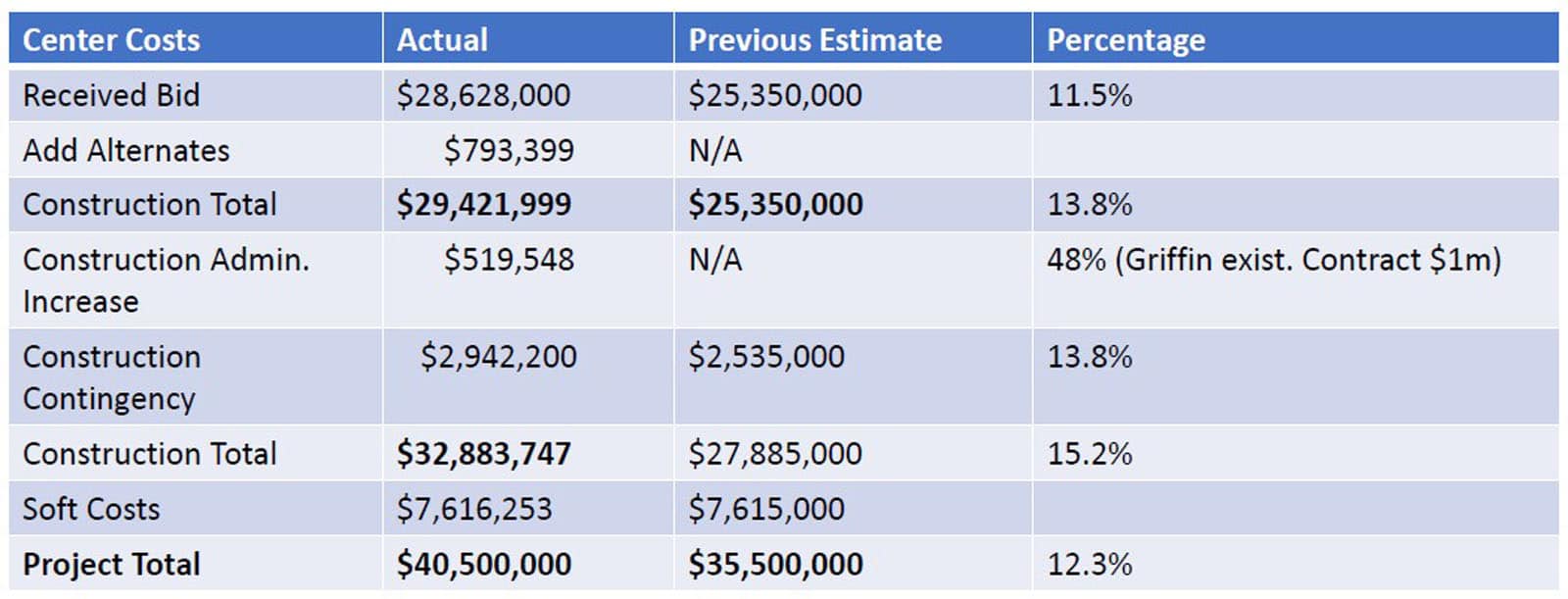
[6]Long also walked through the project’s history, starting in 2019, when public meetings were first held to explore concepts and sites. Since then, the public and multiple City Councils have provided feedback on design and project budget, which has fluctuated over the years due to changing construction costs, electrification, soil conditions, and a shallow groundwater table. Ultimately, the project is expected to have a total cost of $40.5 million, which includes project contingency and soft costs.
 [7]
[7]During discussion, Councilmembers generally inquired about construction details and comparable costs. Boller sought clarification about the risk of water contamination and the need for filtration due to the water table, to which Long acknowledged that the full cost of resolving the issue remains unknown, but that the project contingency budget would be utilized in case the dewatering process draws in contaminated water.
Council voted unanimously to approve an agreement with Wickman Construction, Inc. for $32.4 million, an amendment to the agreement with Griffin Structures, Inc. for $484,798, and an amendment to the agreement with ELS Architects for $171,470.
Ken Der is a contributing writer for the Alameda Post [8]. Contact him via [email protected] [9]. His writing is collected at AlamedaPost.com/Ken-Der [10].