On June 16, City Council voted to approve an ordinance that prohibits the use of ratio utility billing systems (RUBS) for utility charges and provides landlords a process to receive a one-time utility adjustment for rent. Council also approved an amendment to the Alameda Marina Master Plan to reduce the number of required affordable housing units.
 [1]
[1]Proposed ordinance banning use of RUBS
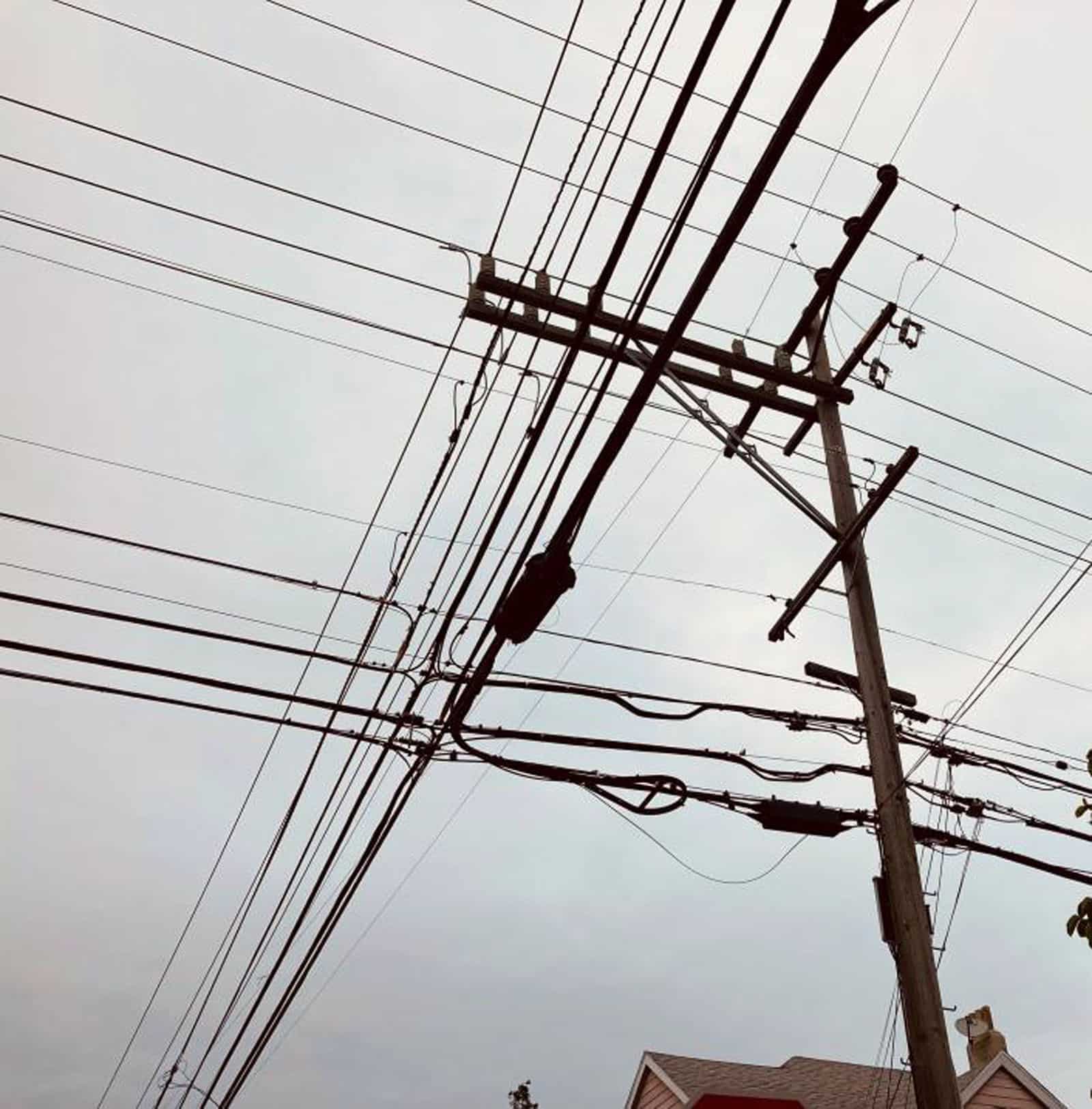
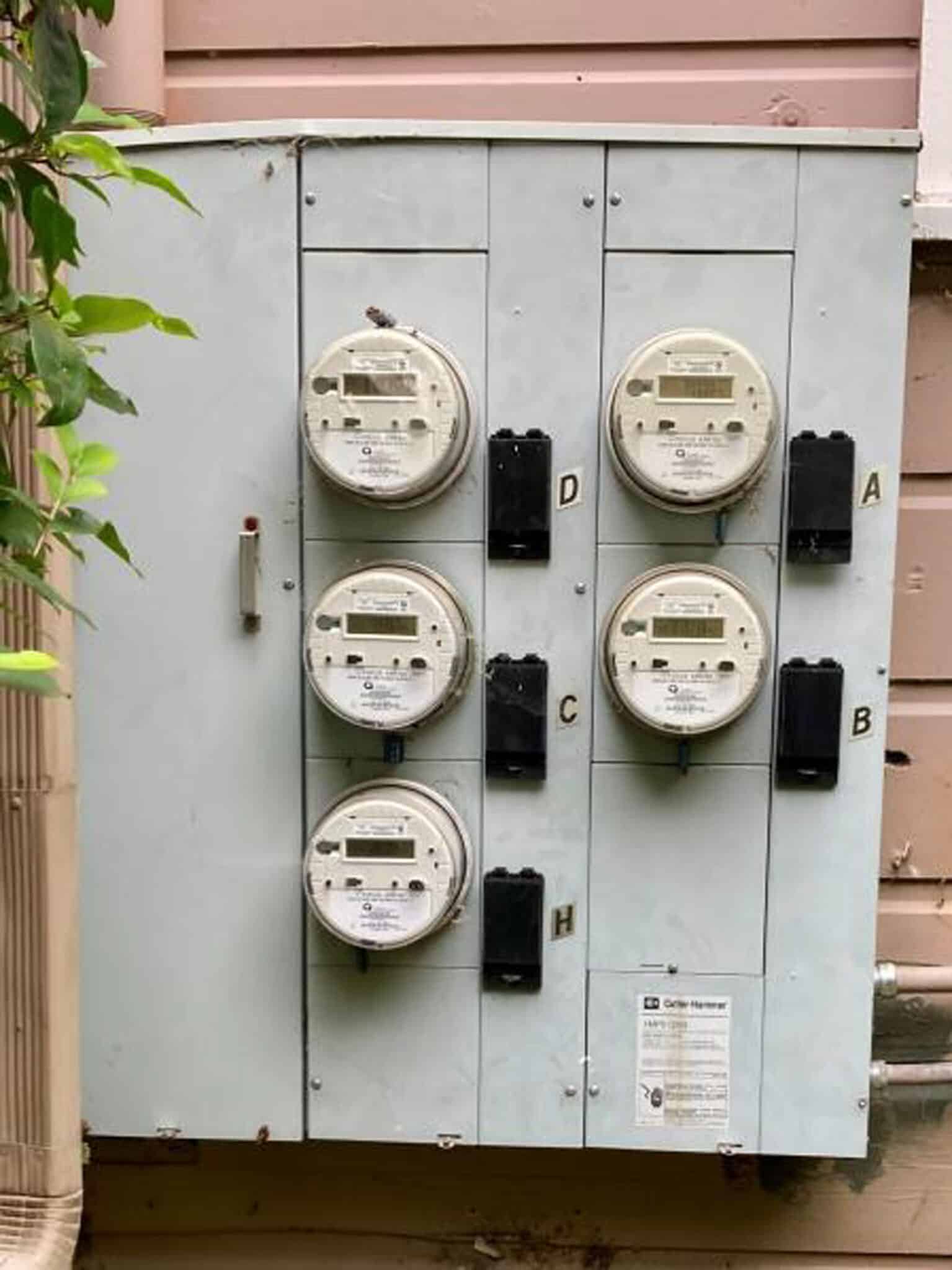
In Alameda, landlords currently employ a variety of strategies to pay for electricity, water, gas service, and other utility bills on their rental units. When each rental unit is separately metered, the tenant often pays the utility provider directly, or the landlord pays the utility and then bills the tenant for usage. When there is one master meter for the entire property, however, landlords can include utilities with the rent, charge a monthly flat fee as established in the rental agreement, or use RUBS to allocate utility costs proportionally based on a unit’s square footage, number of bedrooms, or number of tenants.
 [2]
[2]Over the last four years, the Alameda Rent Program [3] has seen an uptick in tenant complaints about their landlords’ use of RUBS, particularly in cases where utility charges have increased significantly and without transparency. Rent Program Director Bill Chapin highlighted one example where fees increased to exactly $200 and one tenant’s sewer charges quadrupled after a third-party RUBS billing provider took over at a 34-unit property. Investigations into these complaints are ongoing, Chapin noted, but they require extensive staff resources and are dependent on the cooperation of the landlord and RUBS providers.
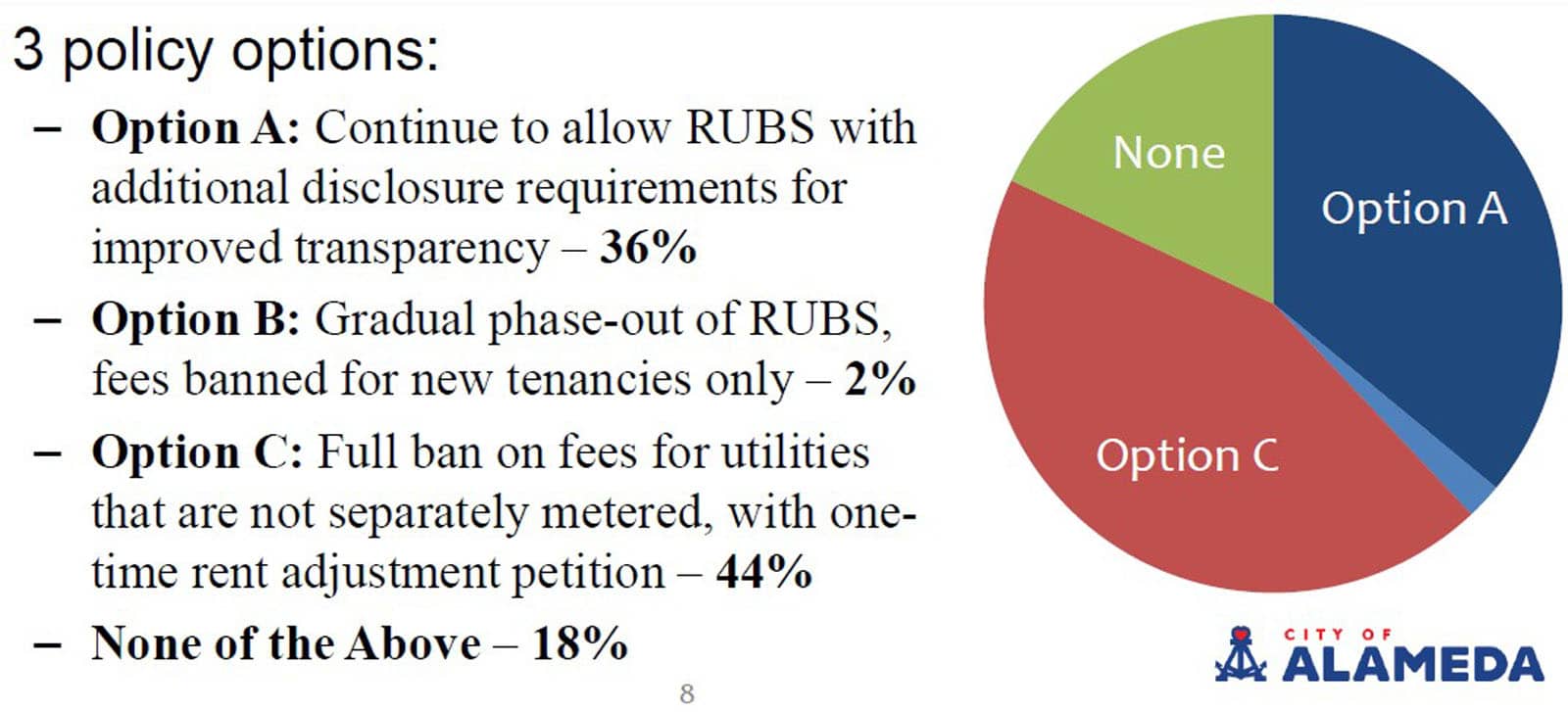
As a result, City staff met with representatives from peer municipalities and solicited feedback from Alameda residents through an online survey during the spring. The survey found that landlords tended to favor a continuation of RUBS but with additional disclosure and transparency requirements, whereas tenants favored a full ban on utility fees that are not separately metered, accompanied with a one-time rent adjustment petition.
 [4]
[4]The draft ordinance that staff brought to Council most closely aligns with tenants’ sentiments, and would prohibit RUBS for new tenancies within 30 days of the ordinance taking effect.
For existing tenancies, it would prohibit utility fees or charges for properties without a separate submeter. However, landlords may continue to use the current system until they have completed a rent-adjustment petition process, for which they would be required to show documentation of one year of utility charges, in order to qualify for a one-time rent increase plus an allowance for inflation.
Finally, the ordinance would include the installation of separate utility meters as a type of project that is eligible for a Capital Improvement Plan [5] (CIP), allowing landlords to pass the cost of installation through to tenants, regardless of the size of the rental property. Per City policy [6], this would be an exception and only rental properties with between two and 24 units are eligible for a CIP pass-through for all other project types.
During public comment, one speaker, Jennifer Rizzo, spoke on behalf of the California Apartment Association to urge Council to reject the ban on RUBS.
“For many older apartment buildings, RUBS is one of the few practical tools available to allocate shared utility costs,” said Rizzo, who also cautioned that such a ban could discourage voluntary conservation of water.
The second speaker, Timothy, described his experience as a renter in a 41-unit property and warned that he himself could be a future complainant to the Rent Program, as he has failed to get a breakdown of RUBS utility charges from his property’s management, after charges stayed the same despite shifts in tenancies.
Council deliberation
“For me, this is a matter of fundamental fairness,” said Mayor Marilyn Ezzy Ashcraft, as she opened Council comment. “What we don’t want is for this system to be used as an end-run around our rent control ordinance that protects tenants—and landlords as well.” She emphasized that the priority is to keep people housed, and that although she generally opposes the CIP pass-through system, she saw the inclusion of submeter installation as an eligible project to be a good compromise for landlords.
“It’s uncomfortable when you’re being charged and you don’t know why or how much,” agreed Vice Mayor Michele Pryor.
Councilmember Tony Daysog expressed skepticism of whether the level of complaints warranted an outright ban on RUBS, and instead suggested that Council focus on making the system more transparent and for the City to hold additional informational workshops for tenants.
“I’m not convinced that 16 concerns [per year] about how their utilities are being charged… rises to a level of doing a wholesale change to the RUBS regime,” said Daysog.



Ashcraft pushed back, asking Daysog what changes he would propose, especially since City staff have already had difficulties even getting in contact with third-party RUBS providers. Daysog responded that he would defer to staff guidance.
Similarly, Councilmember Tracy Jensen also was hesitant and wondered if there was more data available—or if data could be collected—on how tenants are currently paying for utilities. Jensen also extended concerns from landlords that a RUBS ban could reduce their ability to provide housing and wanted staff to return with further research before a decision should be made.
With Councilmember Greg Boller recusing himself as a property owner, those on the dais continued their deliberation to avoid a potential tie vote on the item.
Ashcraft and Pryor reiterated that the 64 complaints are just the tip of the iceberg, and sought the advice of City Attorney Yibin Shen, who noted that even if there were to be additional transparency for utility fees, landlords could just disclose massive fees and still have the authority to charge for them. Pryor added that her priority is to protect renters and keep them housed, and not for landlords to make a “giant return on their investment.”
Jensen sought additional clarification on the ordinance’s details and timing of the petition process for landlords, which would be staggered in three stages of eight months each, for rental properties of varying sizes, in order for the Rent Program to tackle a similar number of properties within each bucket. Appreciating that the process would not be going into effect immediately, Jensen motioned to approve staff’s recommendation, with direction to staff to provide options for streamlining or simplifying the fair return petition process for landlords to maintain their return on investment in the face of significant utility or insurance rate increases.
The motion carried with a 3-to-1 vote, with Daysog dissenting and Boller recusing.
Changes to final phase of Alameda Marina development
Last month, the Planning Board unanimously approved [7] an amendment to the Alameda Marina Master Plan [8] that would reduce the number of affordable housing units required for the project’s third and final phase, the Foundry [9].
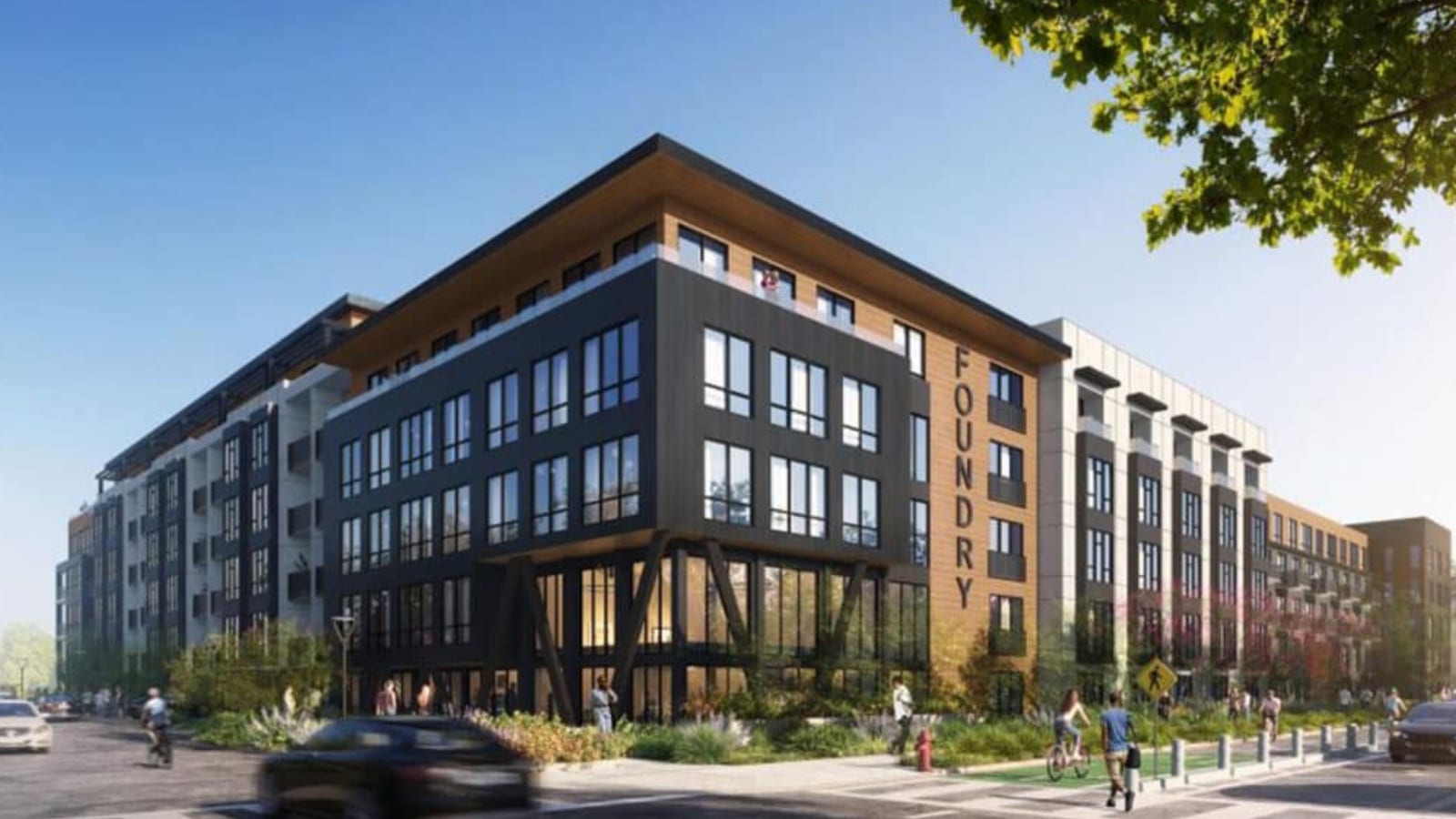 [10]
[10]With the item now before Council, City Planner Tristan Suire explained that financial constraints driven by regional and local economic factors have prompted the developer to request a change to decrease the number of deed-restricted affordable units from a mix of 43 moderate to very low-income units to just 21 very low-income units. These 21 units would represent 8% of the 259 total units at the Foundry, which is consistent with one of the new options included as part of an amendment to the Inclusionary Housing Ordinance recently approved [11] by Council.
“It will deliver 21 important very-low housing units, which are in desperate need today—that is a shift from moderate units that this Island is still struggling to occupy,” explained Sean Murphy of Pacific Development, the lead developer of the Alameda Marina project, during public comment. “The Foundry is truly shovel-ready, all of the financing is in place, and we’re committed to building this important housing project.”
Councilmembers had few comments, other than to acknowledge the importance of the development and its impact on the community.
“I don’t really have much to say, other than to express how excited I am about Alameda reclaiming that part of the shoreline,” said Daysog. “This kind of a project, bringing more people along to that area, is going to make that part of Alameda even more exciting.”
Ashcraft noted that it “is indeed a housing project, but it is much more than that,” and highlighted the commercial space, public shoreline, and sea level rise infrastructure that would accompany the project.
Council unanimously approved the Master Plan amendment.
Ken Der is a contributing writer for the Alameda Post [12]. Contact him via [email protected] [13]. His writing is collected at AlamedaPost.com/Ken-Der [14].