On June 2, City Council [1] approved a parking strategy for the future Aquatic Center in Jean Sweeney Open Space Park, endorsing a 50-space parking lot paired with shared parking agreements and transportation demand measures despite divided public testimony. Supporters argued the plan preserves valuable open space and advances the city’s climate goals, while opponents contended the Aquatic Center is a citywide facility that requires substantially more parking to meet long-term demand.
 [2]
[2]Aquatic Center parking strategy
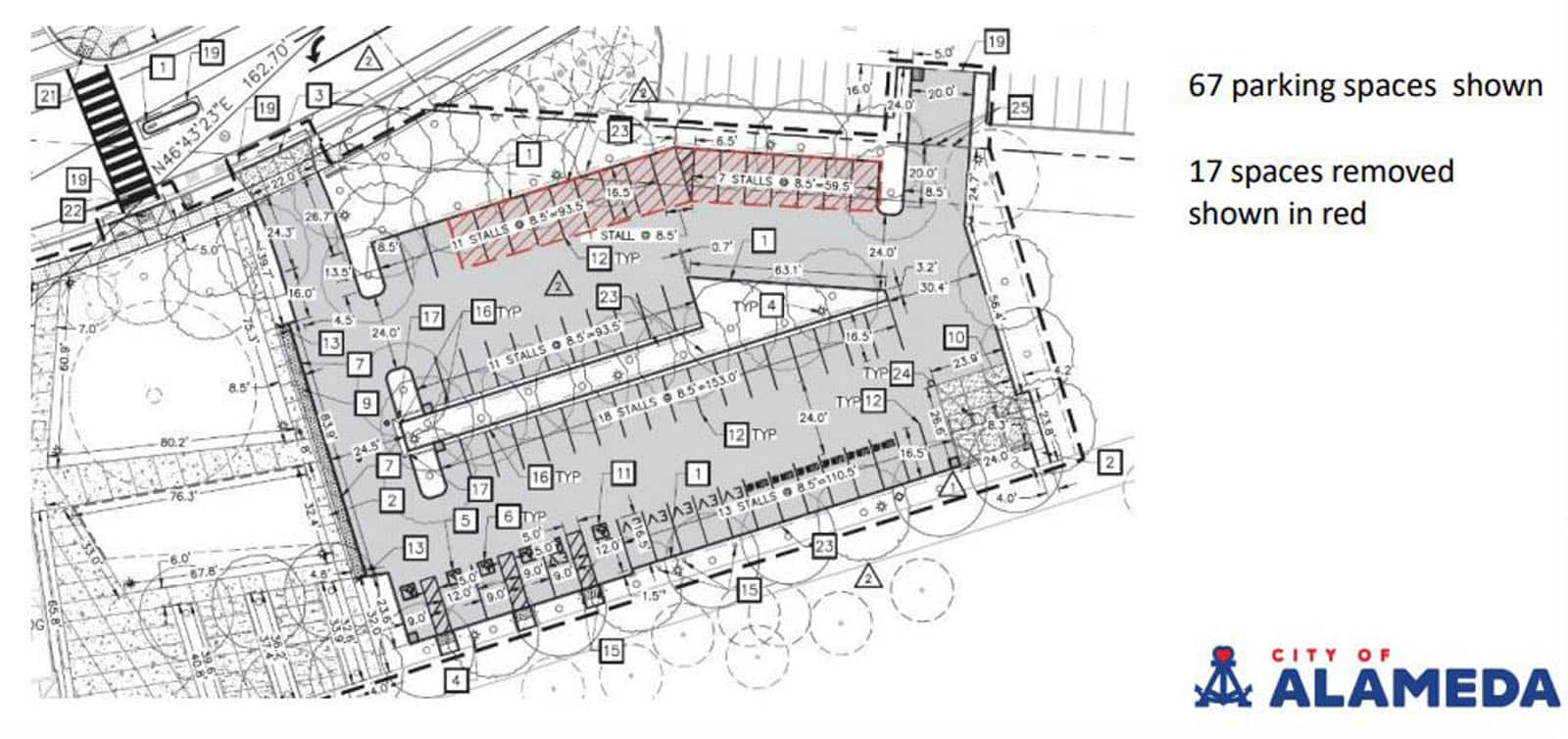
Recreation and Parks Department Director Justin Long presented a recommended parking strategy for the future Aquatic Center planned for the western side of Jean Sweeney Open Space Park, near the intersection of Atlantic Avenue and Wilma Chan Way. The proposed strategy would reduce on-site parking from 67 to 50 spaces and meet demand by relying on shared parking agreements, off-site employee parking, and transportation demand management.
Long said that studies by consultant Dixon Resources Unlimited found that both parking configurations would experience periods of unmet demand, but that off-site parking solutions would be a more effective solution than simply increasing the number of on-site spaces.
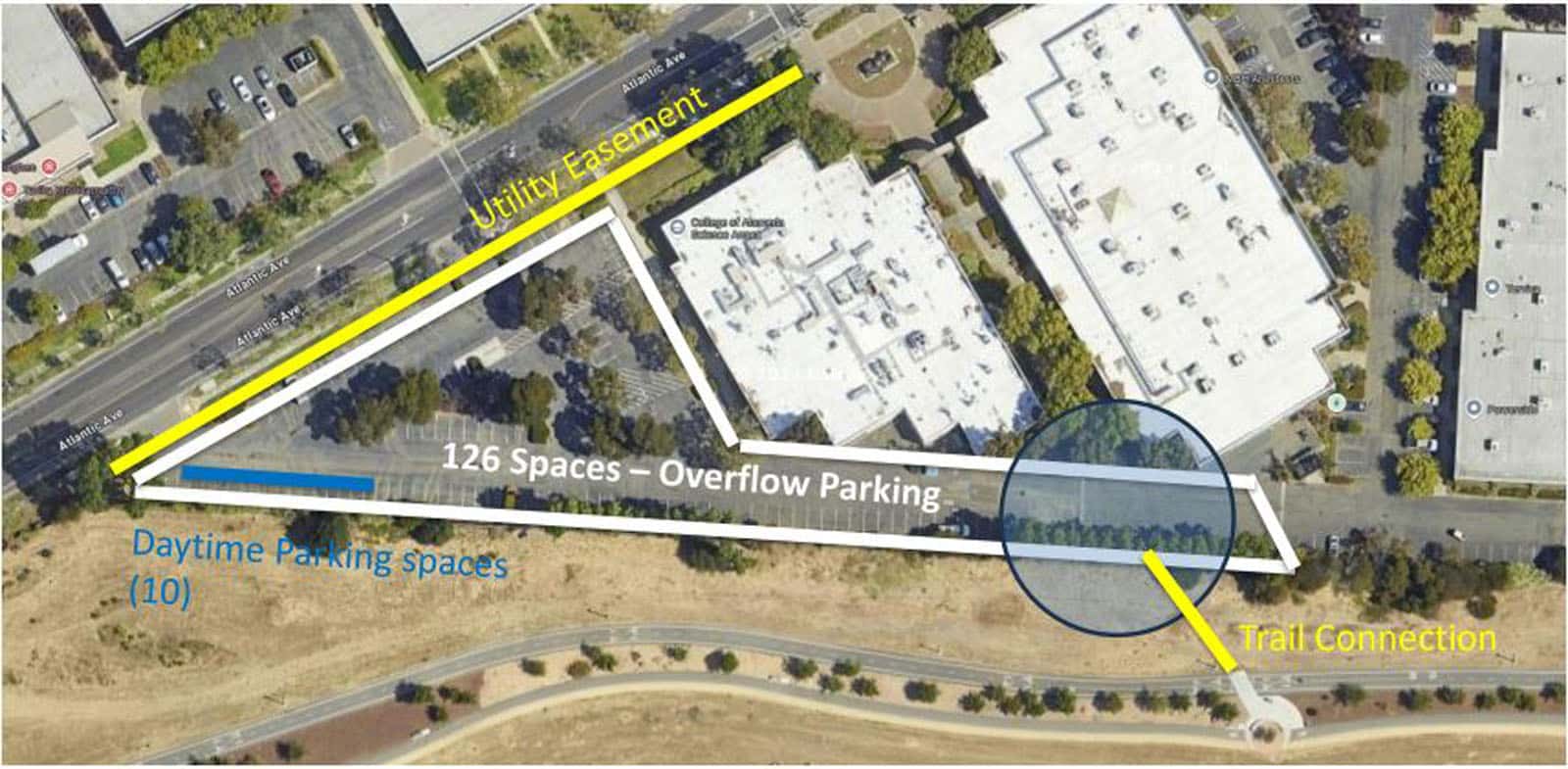
Under the proposal, the City has secured 10 daytime parking spaces for Aquatic Center employees and access to 126 evening and weekend spaces at the College of Alameda parking lot immediately north of the Aquatic Center parking lot. This overflow parking will be accessible by a connecting trail. Staff is also negotiating with Blue Rise Ventures to provide an additional 25 to 35 unrestricted overflow spaces during peak periods in the Marina Village Office Park, about a half mile away.
The parking strategy includes a range of transportation demand management measures to reduce vehicle trips, including a 5% discount for visitors who arrive by bicycle, public transit, or other alternative modes. Additional strategies include bicycle promotion events, improved wayfinding and transportation information, extensive bike parking, including six cargo-bike spaces, a large drop-off area, and time-limited parking of 90 minutes to two hours to encourage turnover.
Long did not recommend paid parking or a residential permit parking program at this time. Instead, he proposed closely tracking parking impacts on surrounding neighborhoods and adjusting operations as necessary.
 [4]
[4]Public sentiment divided
Public comment revealed a clear divide between advocates of maximizing parking capacity and those prioritizing open space preservation and transportation demand management.
Supporters of the proposed 50-space lot argued that, combined with overflow parking, it would provide sufficient capacity while preserving valuable parkland. Planning Board member Andy Wang said the City should design for typical rather than peak demand, arguing that oversized parking lots represent a poor use of scarce land and that the proposal better aligns with Alameda’s climate goals, the active transportation network, and the Aquatic Center’s proximity to the Cross Alameda Trail.
Denyse Trepanier of Bike Walk Alameda similarly praised the City for reducing the lot size and leveraging nearby underutilized parking. She encouraged consideration of paid parking in the future: “People who don’t arrive by car should not have to pay for those who drive.”
Resident Mitch Ball supported the smaller lot but also urged residential permit parking to prevent spillover into nearby neighborhoods, as well as paid parking, contending that it could generate meaningful revenue while helping manage demand: “[Paid parking] would be financially responsible, considering that the City is asking voters for a bond measure [6], and this project has already gone $5 million over budget [7].”



Opponents of the staff recommendation argued that the City was under-building parking for a major citywide facility. Reyla Graber warned that it would diminish the Aquatic Center’s value as a civic asset. “This Swim Center will cost us megamillions, and so it ought to become a City Jewel,” Graber said. “However, if you shortchange the Center on parking spaces, it will make the City… look like a podunk place that doesn’t know how to produce an important project with the right amenities.”
The Alameda Citizens Task Force similarly argued that the facility must accommodate families, seniors, people with disabilities, swim teams, and residents from throughout Alameda, stating, “The proposed Aquatics Center is envisioned as a citywide resource — not merely a neighborhood amenity.” They advocated for a larger parking supply of approximately 165 spaces.
Council debate
Mayor Marilyn Ezzy Ashcraft strongly supported the shared parking approach, stating, “We don’t need more pavement; we need permeable surfaces.” She added that the City should begin with a simple parking program and adjust it as staff gather data on how visitors use the facility. Still, she expressed concern that a 90-minute to two-hour parking limit might be too restrictive, particularly during summer recreation periods.
Long responded that the proposed time limits were based on the duration of most Aquatic Center programming. Lap swimming is offered in one-hour blocks and swim lessons in 30-minute sessions. The primary purpose of the limits is to encourage turnover during the busiest weekday periods. For longer visits, he noted that unrestricted overflow parking would be available at the nearby shared lots.
Vice Mayor Michele Pryor also supported reducing the lot to 50 spaces and particularly praised accommodations for community gardeners. Gardeners will have a designated drop-off area to unload supplies, such as soil, fertilizer, and tools, before parking. They will be able to borrow landscape wagons, stored in the nearby community garden, to transport materials from their vehicles to their garden plots, reducing the need to haul heavy bags and equipment by hand.
Councilmember Greg Boller also backed the staff recommendation but sought assurance that negotiations for the 25 to 35 additional off-site spaces would continue. Long responded that he was confident that an agreement would be secured.
Councilmember Tony Daysog was skeptical of relying on five-year parking agreements with nearby property owners. While expressing strong support for the Aquatic Center itself, he argued that the consultant’s analysis showed the larger parking configuration would better accommodate demand. “The 50-space configuration is particularly vulnerable, with regular overflow expected throughout the year.” Daysog said. He warned that future changes to property ownership could jeopardize shared parking arrangements.
 [8]
[8]Vote: Parking plan passes
Vice Mayor Pryor’s motion to endorse a 50-space parking lot, shared parking agreements, off-site employee parking, time-limited on-site parking, and incentives for alternative transportation passed 4-1 with Councilmember Daysog casting the dissenting vote. The motion also directed staff to continue evaluating parking demand and consider future adjustments, including potential paid parking and residential parking permits, as operational data becomes available.
Contributing writer Karin K. Jensen covers boards and commissions for the Alameda Post [9]. Contact her via [email protected] [10]. Her writing is collected at https://linktr.ee/karinkjensen [11] and https://alamedapost.com/Karin-K-Jensen [12].