In recent stories, we’ve taken readers to Napa [1] and Calistoga [2], and those trips were so inspiring that my intrepid traveling partner (my wife Edie) and I decided to continue these North Bay adventures with another historic destination, Sonoma. On this trip, we stayed in our campervan on a farm in rural Sonoma, where the sounds of farm animals replaced the noise of traffic that we usually hear at home. And there was even a barn cat there, one with more body parts than the average cat.
 [3]
[3]Last of the California missions
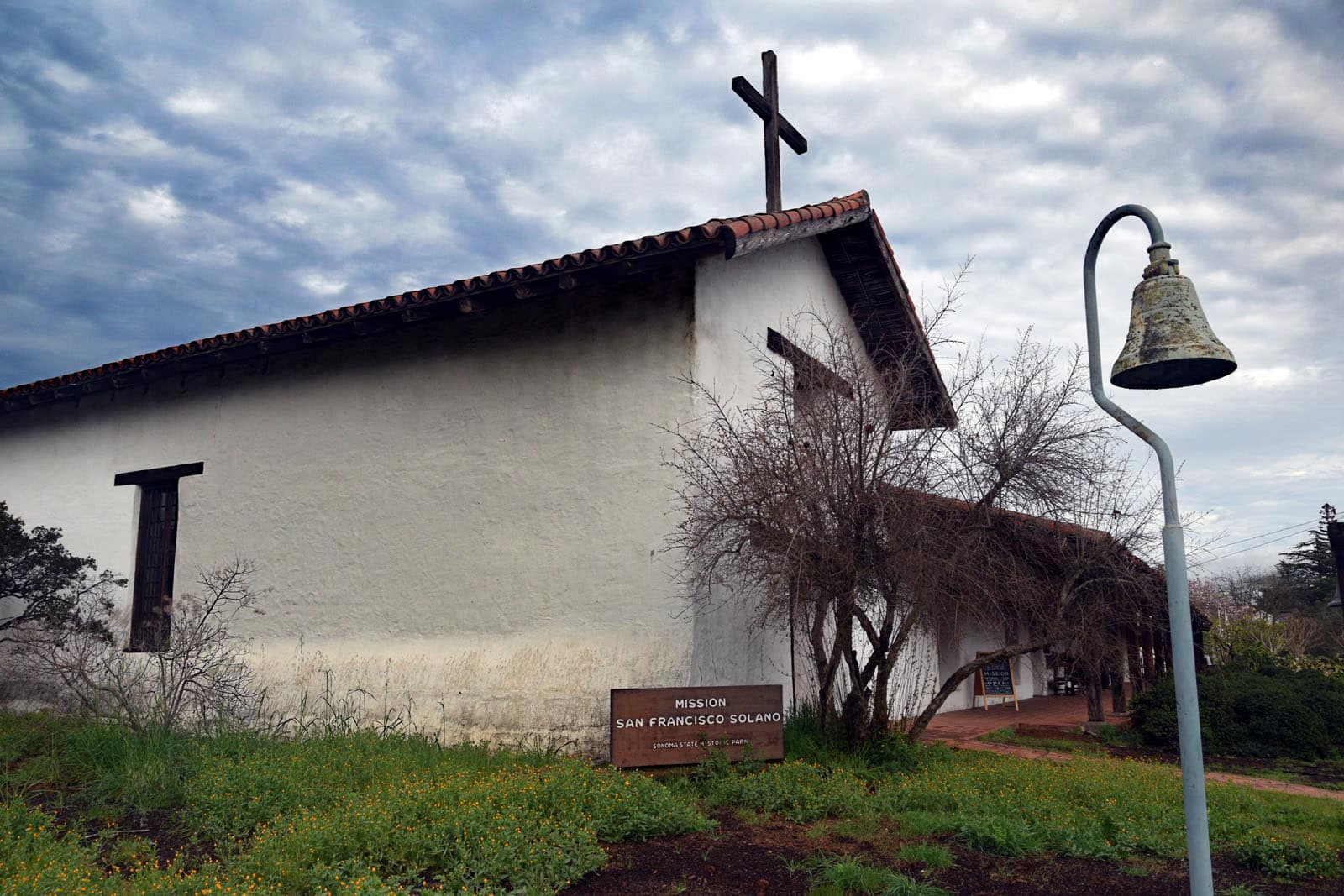
Sonoma’s modern history dates back to 1823, when Mission San Francisco Solano (commonly known as the Sonoma Mission) was established in a location that would later become the northeast corner of the Sonoma Plaza. Spain built a series of 21 missions, or religious outposts, in Alta California between 1769 and 1823, with the mission in Sonoma being the final and most northern one, and the only one built under independent Mexican rule (Mexico gained independence from Spain in 1821). The purpose of the mission system was to spread Christianity in Spain’s colonies, and expand its empire.
Valley of the Moon
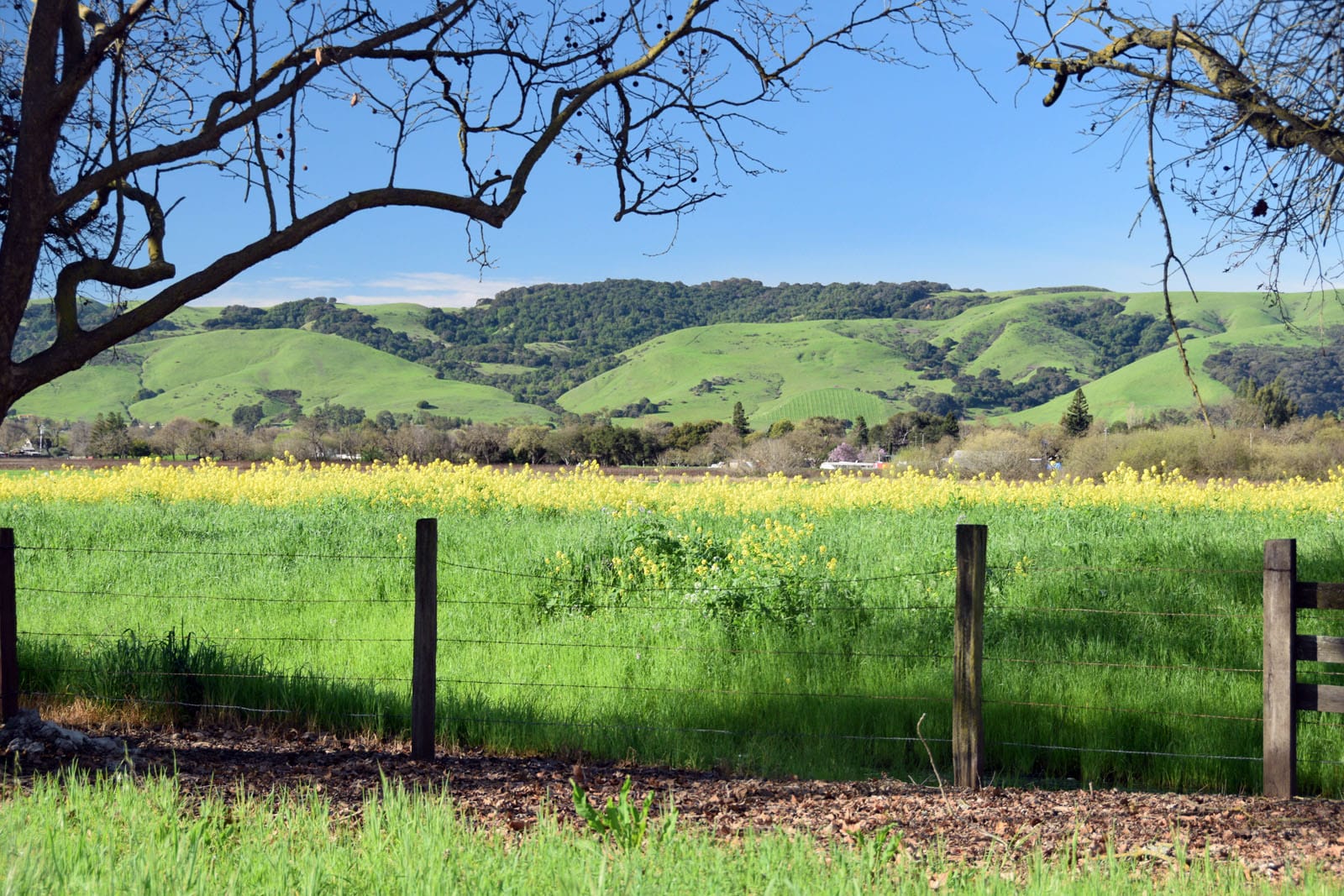
The name Sonoma is said to have originated from the language of the Coast Miwok tribe, and translates to “Valley of the Moon.” The name suggests a peaceful and tranquil landscape, one inhabited by native tribes for many centuries before European settlers arrived in the early 1800s. Because the Spanish started their California mission system in Baja California, it took them about 140 years to reach the “end of the mission trail” at Sonoma, so the native people here had more time to enjoy their traditional ways before change arrived. But change ultimately did arrive, and the lives of the Miwok people would never be the same.
 [4]
[4]Secularizing the missions
The Decree for the Secularization of the Missions of California, which nationalized the missions, was passed by the congress of the Mexican Republic in 1833. The act transferred the missions and their properties from the Franciscan Order of the Catholic Church to the Mexican government. Part of the reason for this was that Mexico feared that Spain would continue to have influence and power over its former colony, since most of the Spanish missions in California remained loyal to the Catholic Church in Spain.
It took until 1836 for all of the missions to be secularized, and one of the requirements of the decree, in addition to emancipating indigenous peoples from the missions, was that these people also receive a portion of the land and assets. In reality, this never happened in any meaningful way, and the land ended up granted mostly to well-connected Mexican citizens, ranchers, military officers, and settlers.
 [5]
[5]General Vallejo arrives
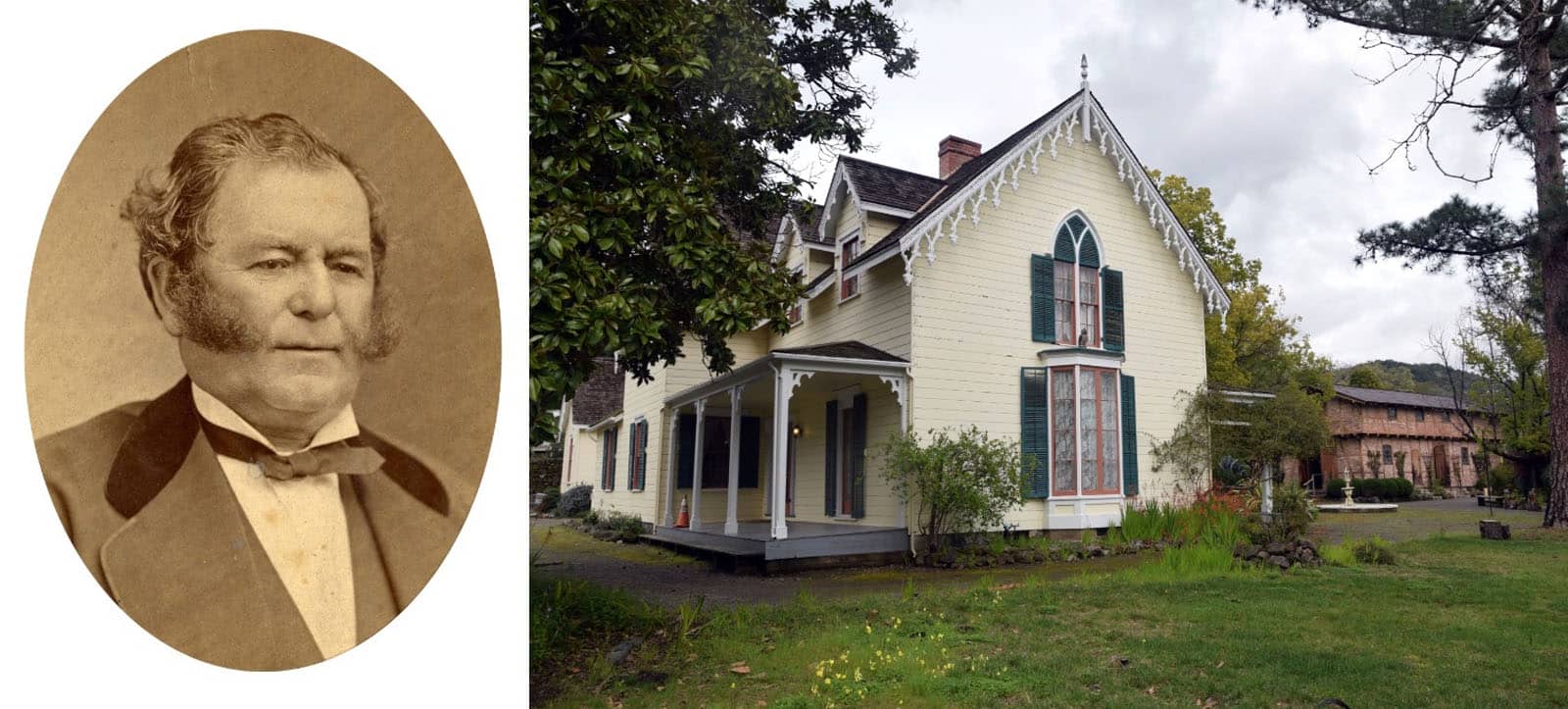
Mariano Guadalupe Vallejo (1807-1890) was born in Monterey, California, which at that time was part of the Spanish empire. He joined the Mexican military as a young man in 1824, after his country had achieved independence from Spain. In 1834, he was sent to Sonoma to secularize the mission and establish a garrison and pueblo there, to secure the region against Russian expansion from the north.
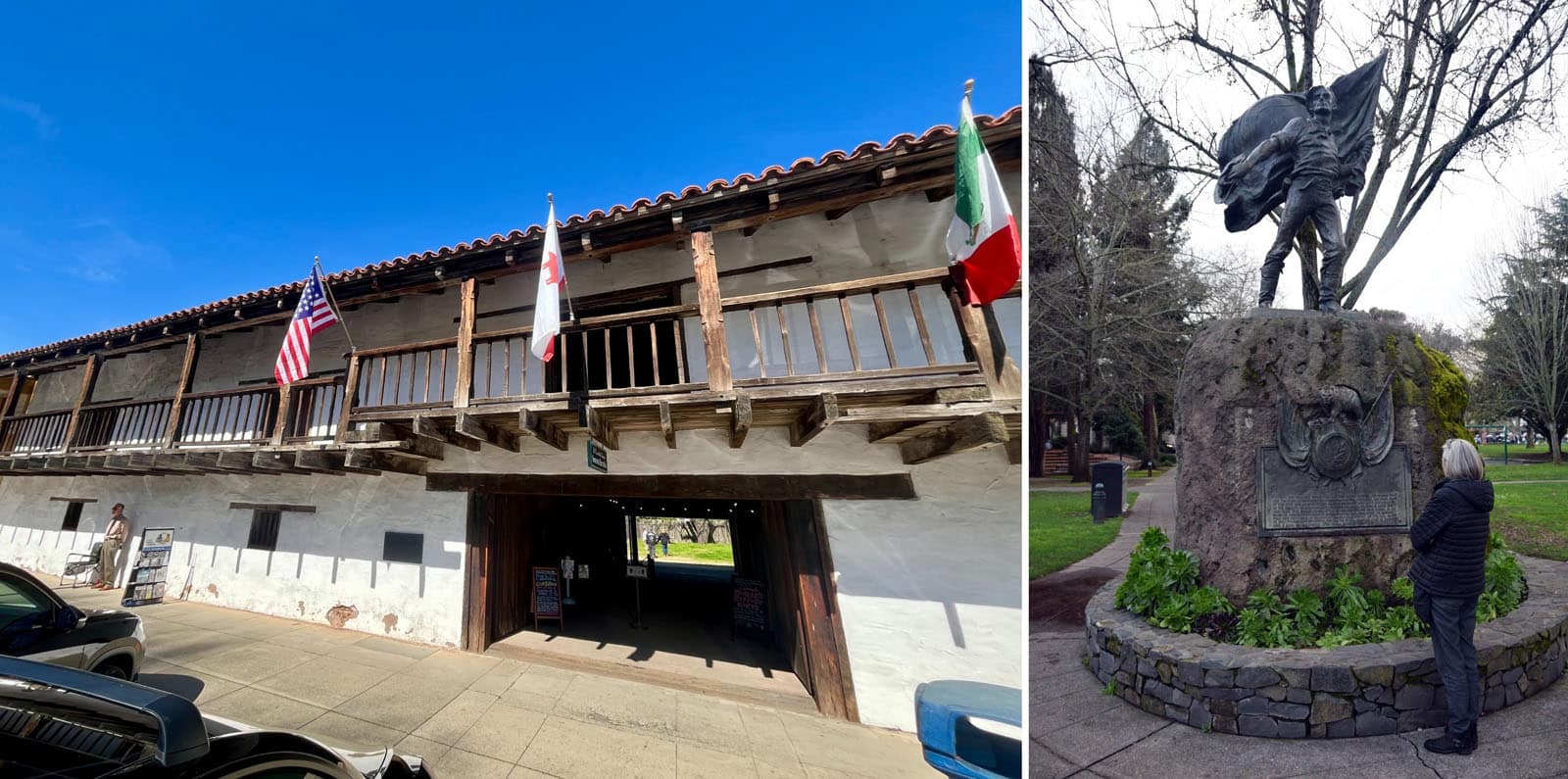
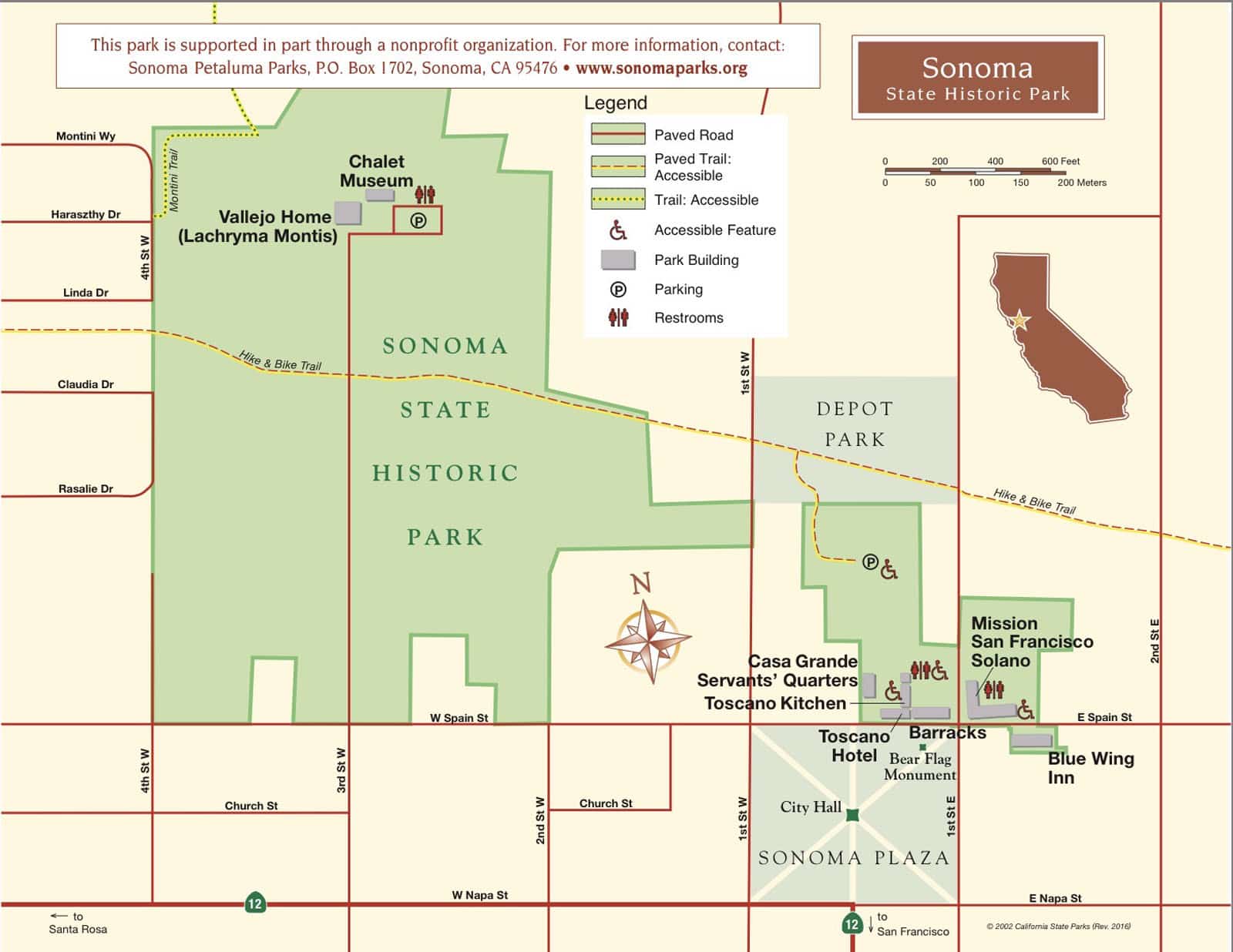
It was General Vallejo who laid out the town of Sonoma as we know it today, with its large central plaza, reminiscent of the zocalos, or public squares, found in Mexico. With the Mission anchoring the northeast corner of the plaza, Vallejo built his own home (La Casa Grande) on the north side, along with a barracks for his troops. La Casa Grande burned down in 1867, leaving only the two-story servants’ quarters. The servants’ quarters and the Sonoma Barracks remain to this day, part of the Sonoma State Historic Park.
 [6]
[6]Sonoma State Historic Park
This historic park is a great place to start a visit to old Sonoma. It actually spans four separate locations, all close together, including the Vallejo home (1851), the Sonoma Barracks (1841), the Mission San Francisco Solano (1823), and the Blue Wing Inn (1836). All of these structures, plus the historic Toscano Hotel and Casa Grande Servants’ quarters are part of the Sonoma State Historic Park [7], and feature rich interpretative exhibits and knowledgeable docents.
By learning about the rich history of this area, from the native period, though the Spanish colonial period, the Republic of Mexico, the California Republic, the California territory, and finally the State of California, one can begin to realize the vast changes that occurred in this land, and how many cultures have contributed to it over the centuries.
 [8]
[8]Jack London State Historic Park
Having spent the previous day exploring the historic Sonoma Plaza, we headed off the next day on a drive up to Glen Ellen, the former home of writer, journalist and activist Jack London (1876-1916). The drive up to Glen Ellen from Sonoma is a scenic one, taking only about 20 minutes as you make your way through the Valley of the Moon wine country.
It always amazes me that after 42 years of living in California, and having done a good amount of traveling, camping, hiking, and exploring, there are still so many parks and attractions that I haven’t seen yet. Jack London State Historic Park [10] is one of those places, and was well worth a visit, even if it took me over four decades to get here.




Early inspiration
Jack London grew up in Oakland, and for a short time was an oyster pirate on San Francisco Bay. In 1886 he met librarian Ina Coolbrith [11] at the Oakland Public Library, and it was she who encouraged his lifelong love of books and learning. Later in life, when London had achieved great success in his field, he wrote to his one-time mentor: “No woman has affected me to the extent you did. I was only a little lad, I knew nothing about you, yet in all the years that have passed, I have met no woman so noble as you.”
London’s early life was characterized by poverty, hard work, low pay, and a thirst for adventure and a better life. He sought this out by working in a cannery, then signing onto ships’ crews for adventures on the high seas, along with prospecting for gold in the Klondike. These adventures didn’t lead to material riches, but they formed the basis for a different kind of wealth—an abundance of material for the stories he would begin to put down on paper. His talent for writing vivid descriptions of his adventures in the Yukon, the Klondike gold rush, Japan and the Bering Sea, the South Pacific, and journeys across North America, formed the basis for the 50 books and hundreds of articles he wrote during his lifetime.
 [12]
[12]Beauty Ranch
On any trip to Sonoma, it would be worth your time to make a visit to the ranch Jack London purchased in Glen Ellen in 1905, which he named “Beauty Ranch.” Today, that ranch is preserved as the Jack London State Historic Park. Jack called city life a “man trap,” and longed for a quiet place in the country where he could write and relax, along with pursuing his interest in sustainable farming techniques. After Jack and his wife Charmian returned from their two-year South Sea sailing adventure aboard their boat Snark, he set about restoring the land on his ranch, which had been damaged by years of shortsighted farming and ranching practices.
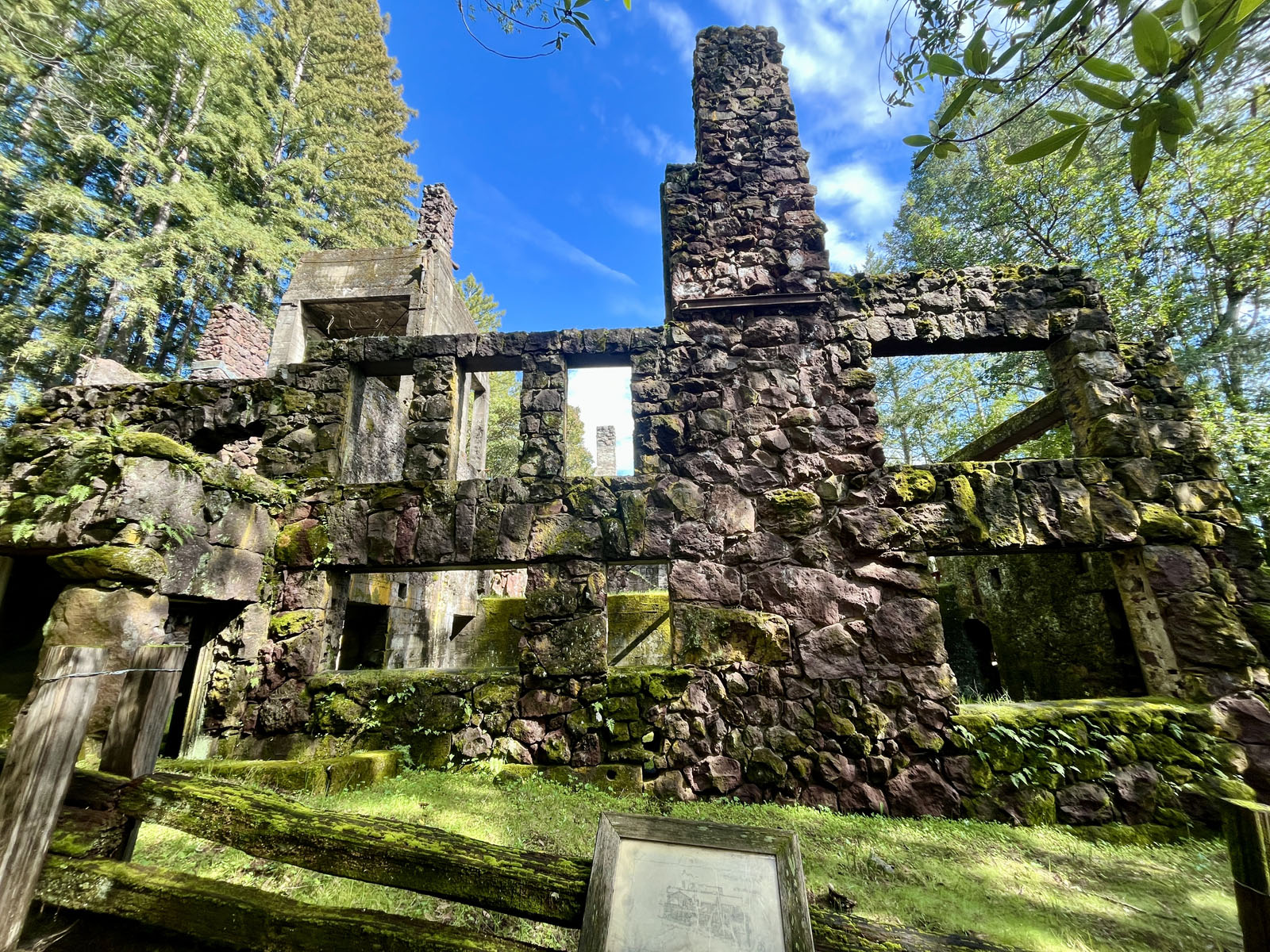
A visit to Beauty Ranch allows one to see the buildings and land that London developed during his time there, from 1905 to 1916. Some of the buildings and structures date back to earlier eras, such as the Kohler and Frohling winery buildings, while other structures were built by London during his time, like the massive “Wolf House”, his 15,000 square foot, 26-room mansion, made largely of local stone. The wooden portions of it burned down just days before Jack and Charmian were to move in, in 1913, but the massive ruins still stand, and are a testament to the grandeur and rustic setting of what was to be London’s final home. He and Charmian remained in their cottage on the property until Jack died in 1916 at just 40 years old. That cottage can be visited while at the park, and it still contains its original furnishings and the office where Jack did much of his writing.
 [13]
[13]House of Happy Walls
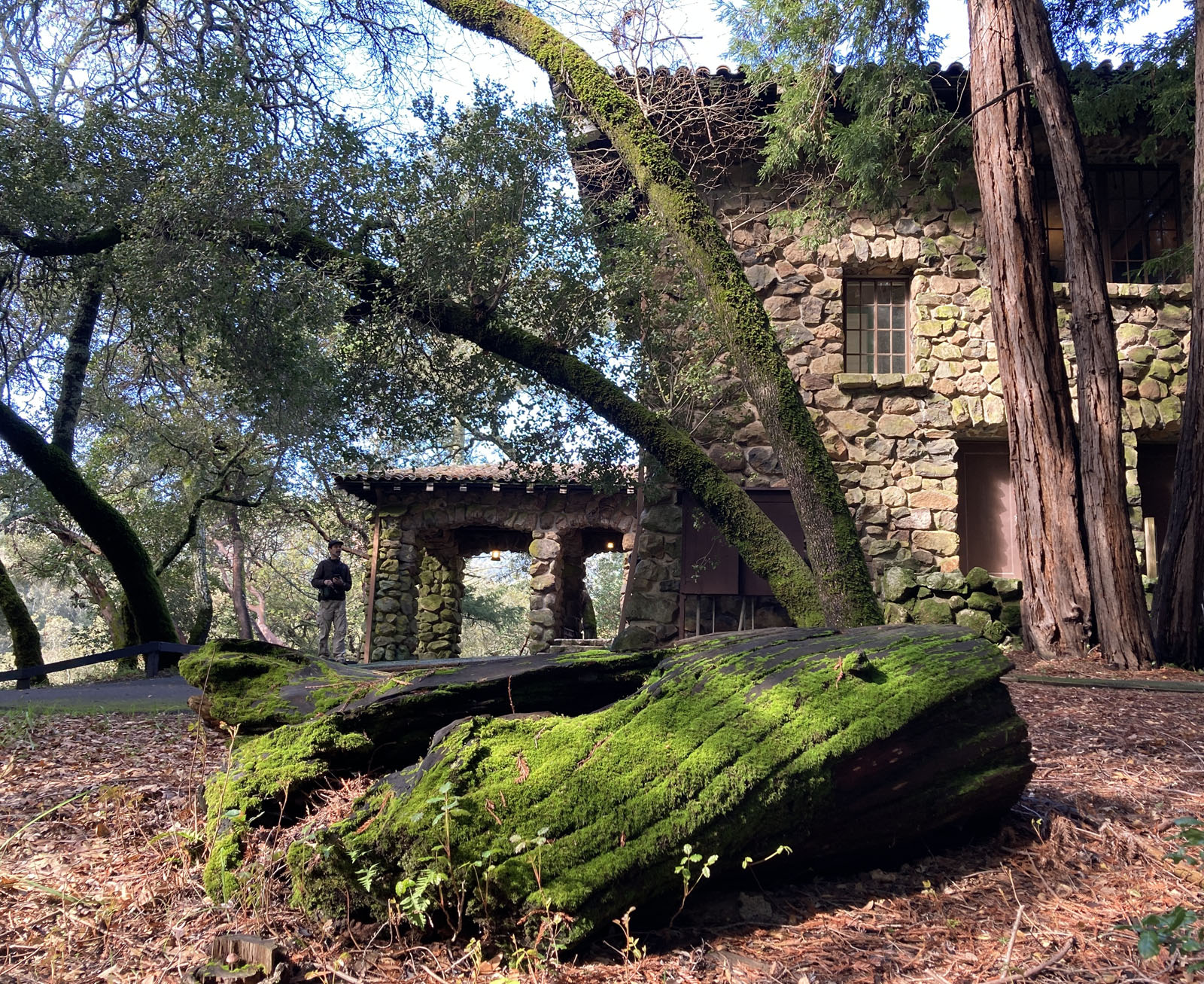
After Jack died on November 22, 1916, the heartbroken Charmian London had a new house constructed on the ranch, one she called the “House of Happy Walls.” It was built from ranch fieldstone, and was meant to be a memorial to her husband, her home for the rest of her life, and then a museum celebrating the life of Jack London. Today, the beautifully built home tells the story of London’s life, his relationship with his soul-mate Charmian, as well as how she lived in this home from around 1935 until her death in 1955. The home is filled with art and cultural items collected during their world travels, and is a must-see while visiting Jack London State Historic Park.
Along with the cottage, the Wolf House ruins, and the House of Happy Walls, other interesting sights include the old distillery building, winery ruins, the gravesite of Jack and Charmian, the terraced hillside and vineyard, London Lake, and the “Pig Palace,” a two-story circular stone structure with separate apartments for his 200 Jersey Duroc hogs, complete with running water, outdoor runs, and a central feed tower. In addition, there are more than 29 miles of back-country trails that traverse through mixed forest, redwood groves, oak woodlands, and grassy meadows. The elevation varies from 600 to 2,300 feet. A visit to this park can easily warrant a stay of at least a few hours.
Pharo Pharms
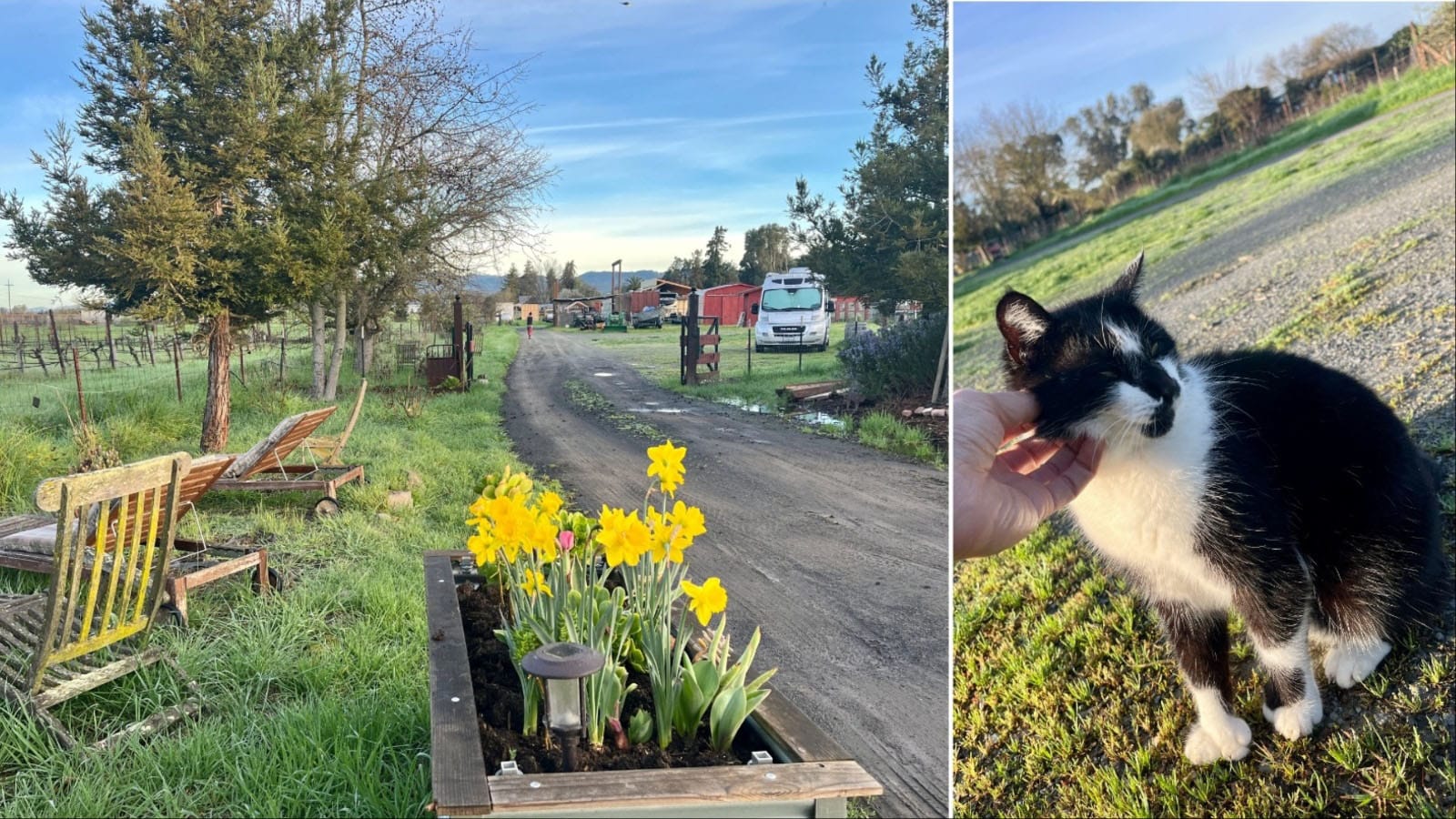
When planning this four-day/three-night camping trip to Sonoma, I found that there were no public campgrounds near town. There are good campgrounds in Napa (Bothe Napa Valley State Park) and Kenwood (Sugarloaf Ridge State Park), but neither of them are quite as close to downtown Sonoma as I wanted to be. Expanding my research into private camps, I turned to the Hipcamp [14] app, where private owners offer camping on their properties for a fee. I soon found an organic farm called Pharo Pharms [15], just over five miles south of the Sonoma Plaza, in a rural part of Sonoma. The fee of $65 per night was more than we usually spend on campgrounds, but it was worth it for a unique experience of camping on a working farm and being close to downtown Sonoma.
 [16]
[16]In Alameda, we live near a busy corner and a fire station, so the noise level is usually pretty high. But out there on the farm, the only sounds we heard were those of sheep, chickens, birds, and the morning rooster call. There were even a few farm cats patrolling the property, including a friendly one named Toes, a polydactyl cat with six toes on each of his front paws. He didn’t want to approach at first, but Edie and I are longtime “cat whisperers,” so before long Toes was rubbing against us and wanting his head scratched. With Pharo Pharms as our home base, and all of Sonoma at our doorstep, it was hard not to have a good time on this trip. So much so that I’ve already got a list of things to see and do next time.
Sonoma wine country
You may have noticed that I haven’t mentioned the thing that Sonoma is most famous for now, which is its world class viticulture. According to the Sonoma County Tourism [17] website, “Sonoma County’s 18 wine regions are home to more than 425 wineries. They range from small, family-run operations to internationally acclaimed wine houses.” My wife and I don’t happen to be drinkers, so wine-drinking wasn’t part of our trip. But for anyone who is interested, you will have absolutely no problem finding excellent wineries and knowledgeable staff almost everywhere you look. There are even two wineries within walking distance of Pharo Pharms.
If you go
- Sonoma State Historic Park [7] is open daily from 10 a.m. to 5 p.m. This includes the General Vallejo house, the Sonoma Barracks, the Toscano Hotel, The Sonoma Mission (Mission San Francisco Solano), Blue Wing Inn, and Casa Grande servants’ quarters. Admission is $3, and parking is free in a lot behind the barracks. There is also parking at the General Vallejo house.
- Jack London State Historic Park [10] is open daily 9 a.m. to 5 p.m. (museum hours 10 a.m. to 5 p.m.) There is a $10 vehicle entry fee.
- Pharo Pharms [15] can be found on the Hipcamp site and app. This private campsite is only for self-contained RVs with their own restroom facilities onboard, since there is no restroom onsite. Water, power, and garbage service is provided
- To learn more about Sonoma’s wine country, visit the Sonoma County website’s dedicated Facts About Sonoma Wine Country [18] page.
Contributing writer Steve Gorman has been a resident of Alameda since 2000, when he fell in love with the history and architecture of this unique town. Contact him via [email protected] [19]. His writing is collected at AlamedaPost.com/Steve-Gorman [20].