 [1]
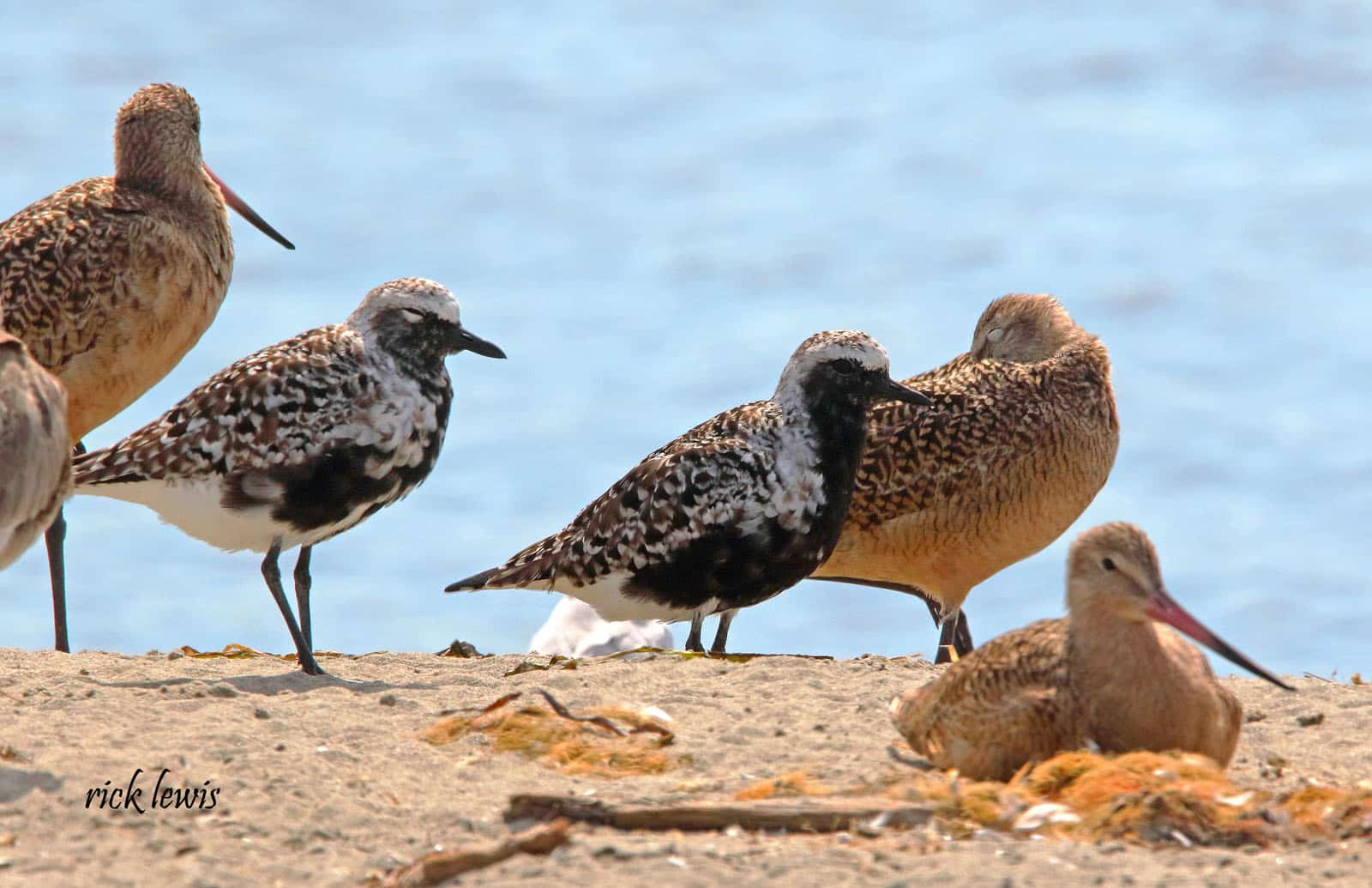
[1]The shorebirds that have enlivened our coastline all winter, in their white and gray or pale brown and white outfits, are suddenly changing into new more vibrant browns, blacks, and golds, and are fattening up to make their long flights north to breed. I will miss them over the next months.
 [2]
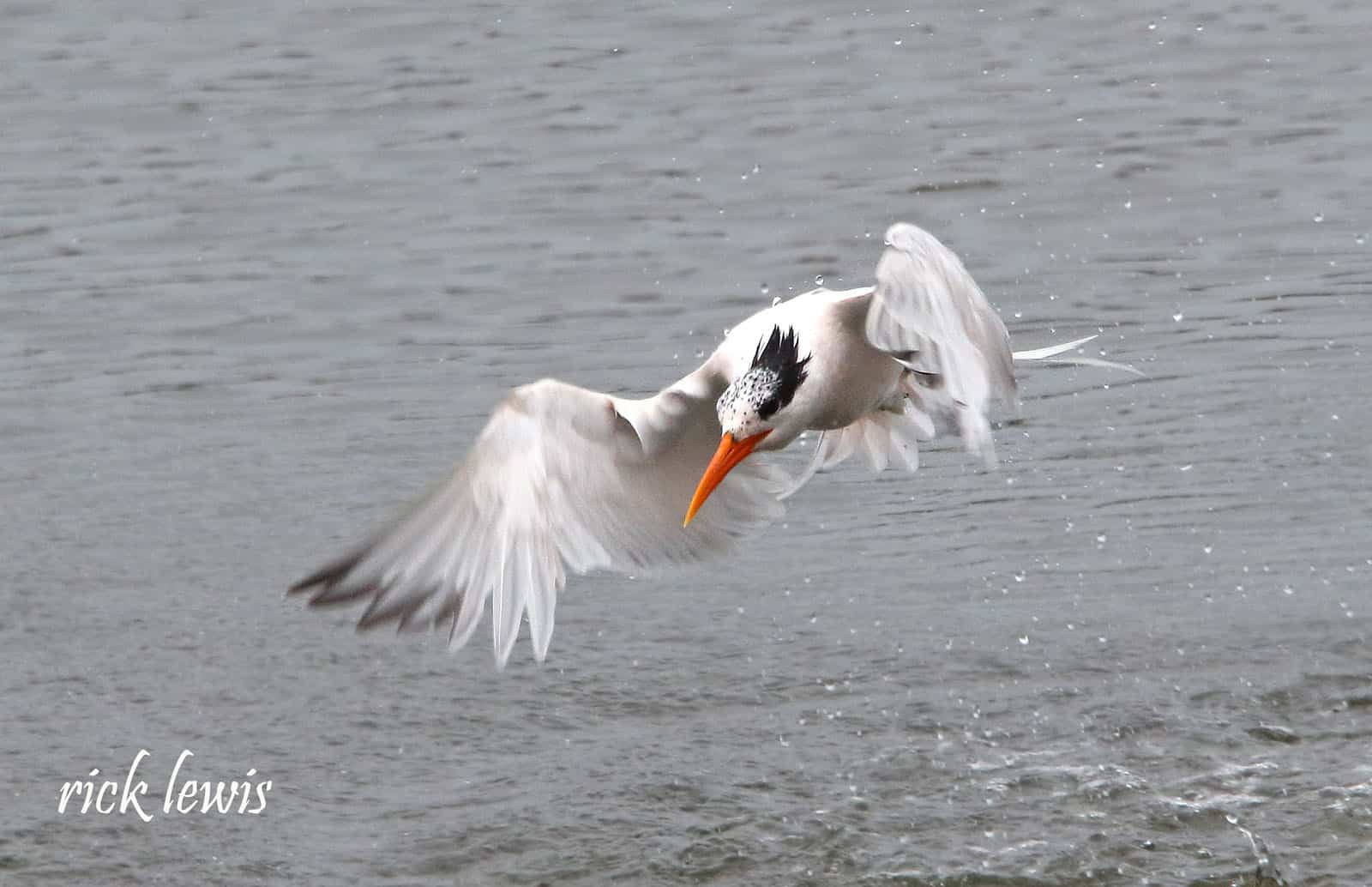
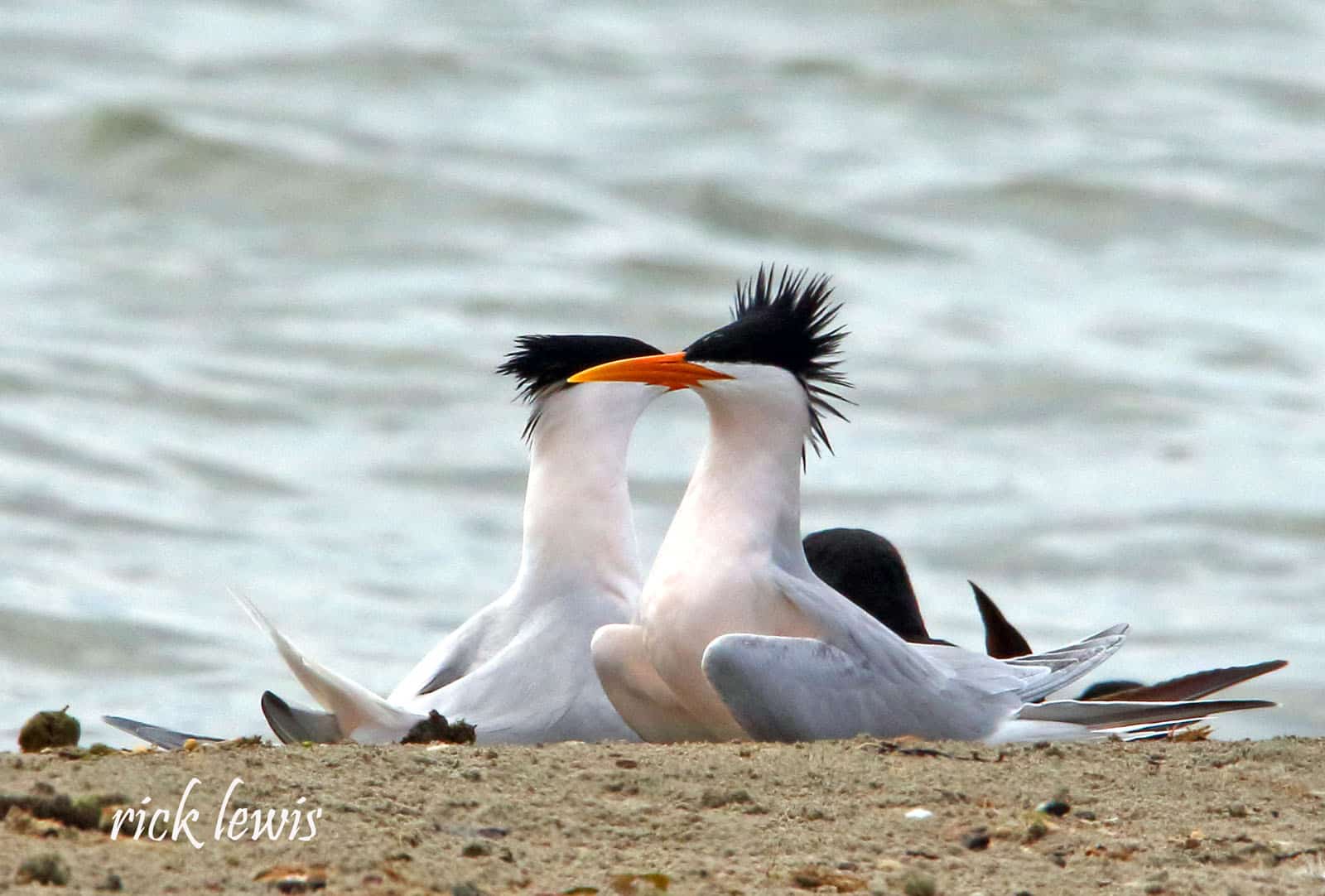
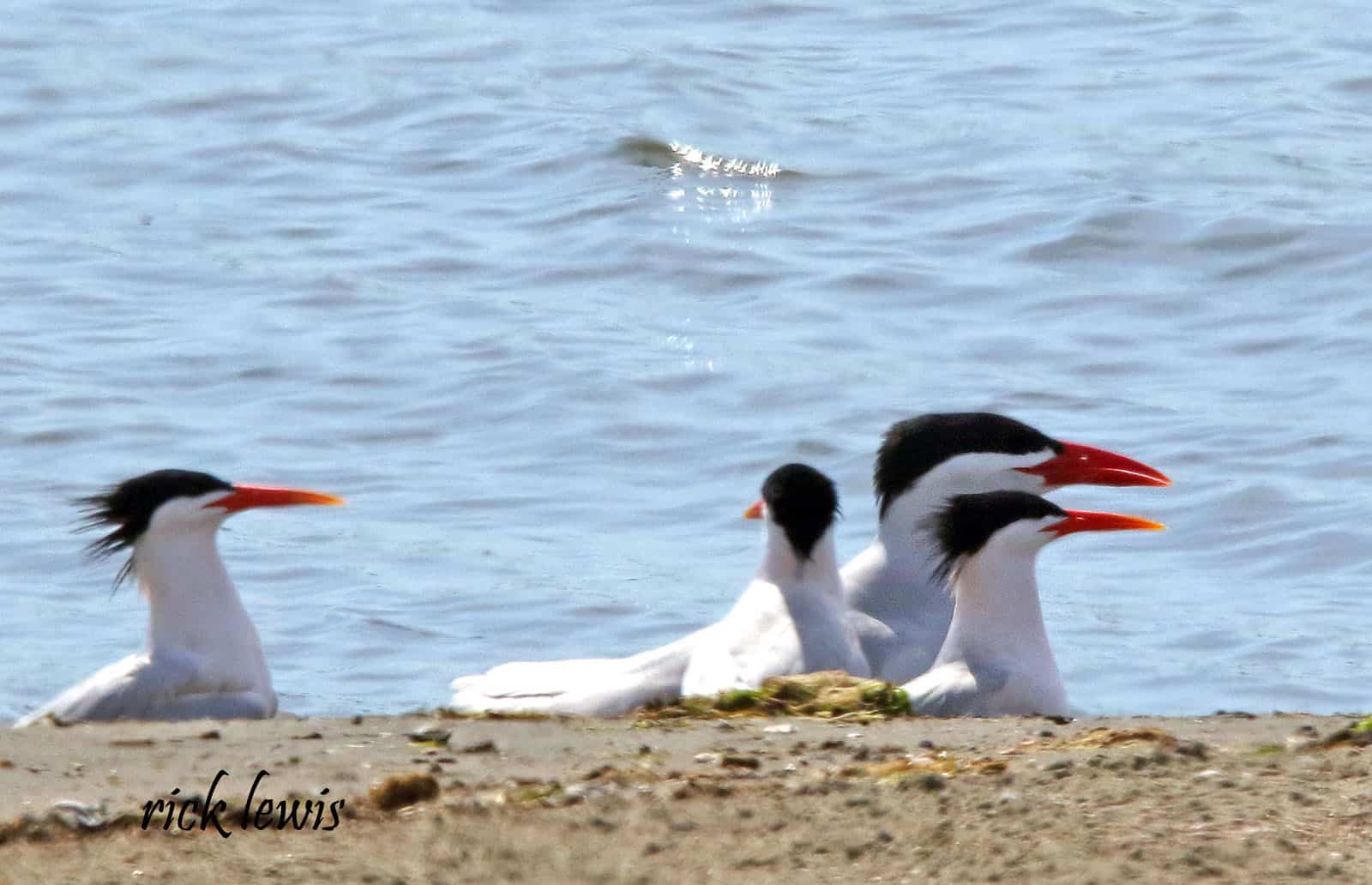
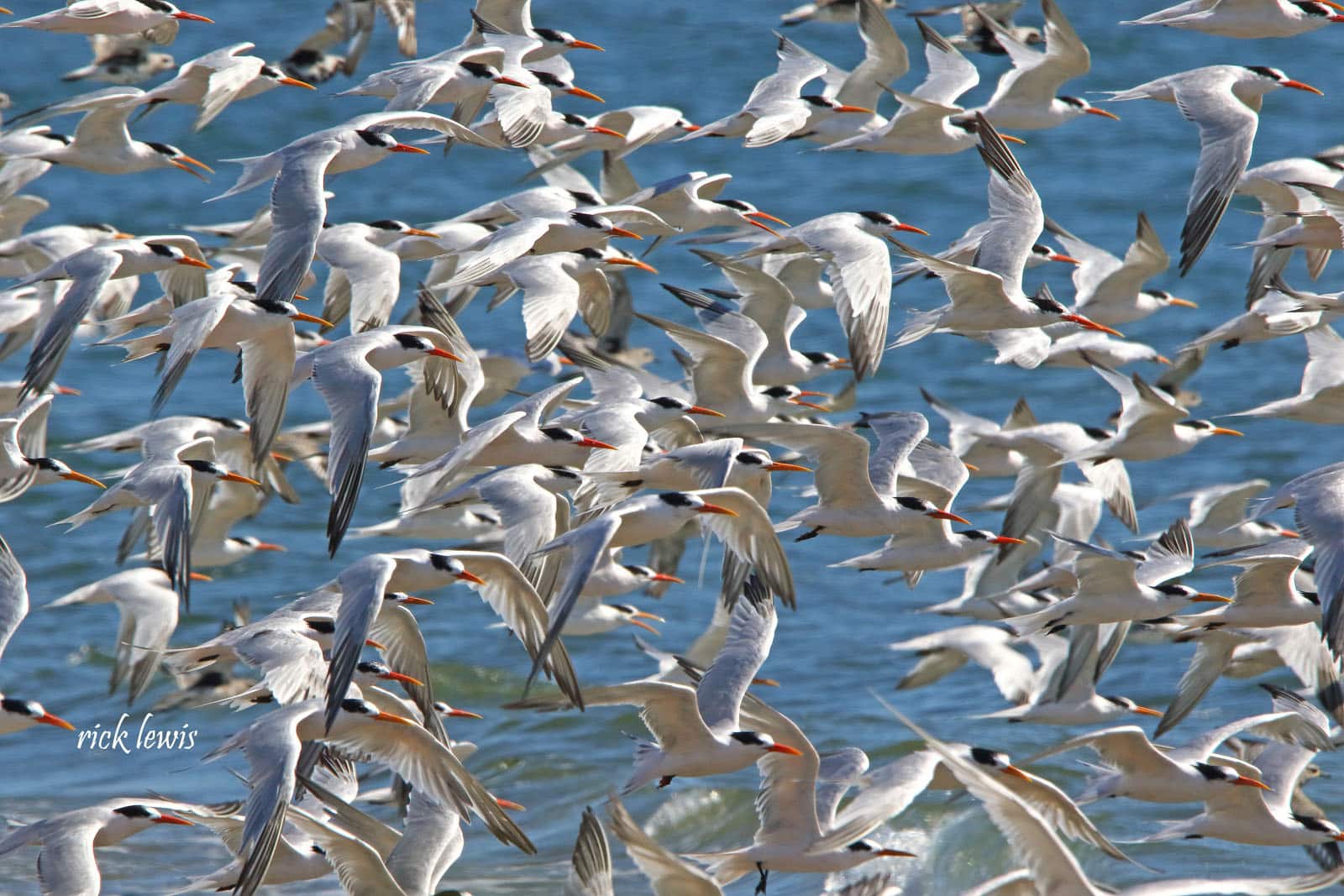
[2]But they have recently been joined by a pale, swift-flying bird with a long yellow bill, a scruffy black head patch, and a raucous call. It’s misnamed, in my opinion, as an elegant tern. I think the black feathers sticking out at the back of their heads make them look like they are ready for an inelegant confrontation.
 [3]
[3]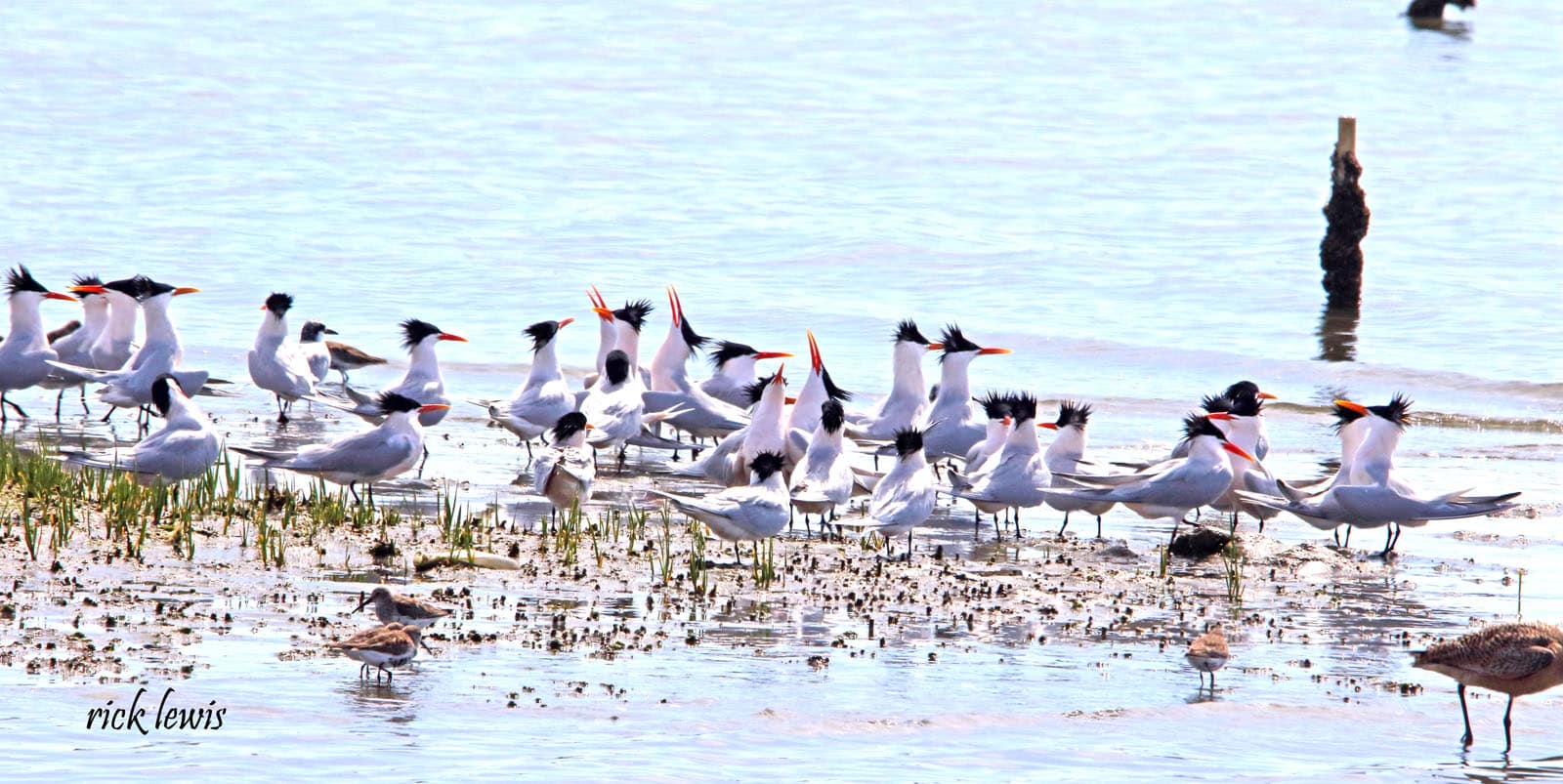 [4]
[4]For years we saw them in the fall, when the adults and newly fledged juveniles followed the small fish north [5] from their breeding locations in Mexico and southern California. But now, they are sometimes found nested at the Veterans Administration (VA) property [6] at Alameda Point, and we are hoping they do so this year.
 [7]
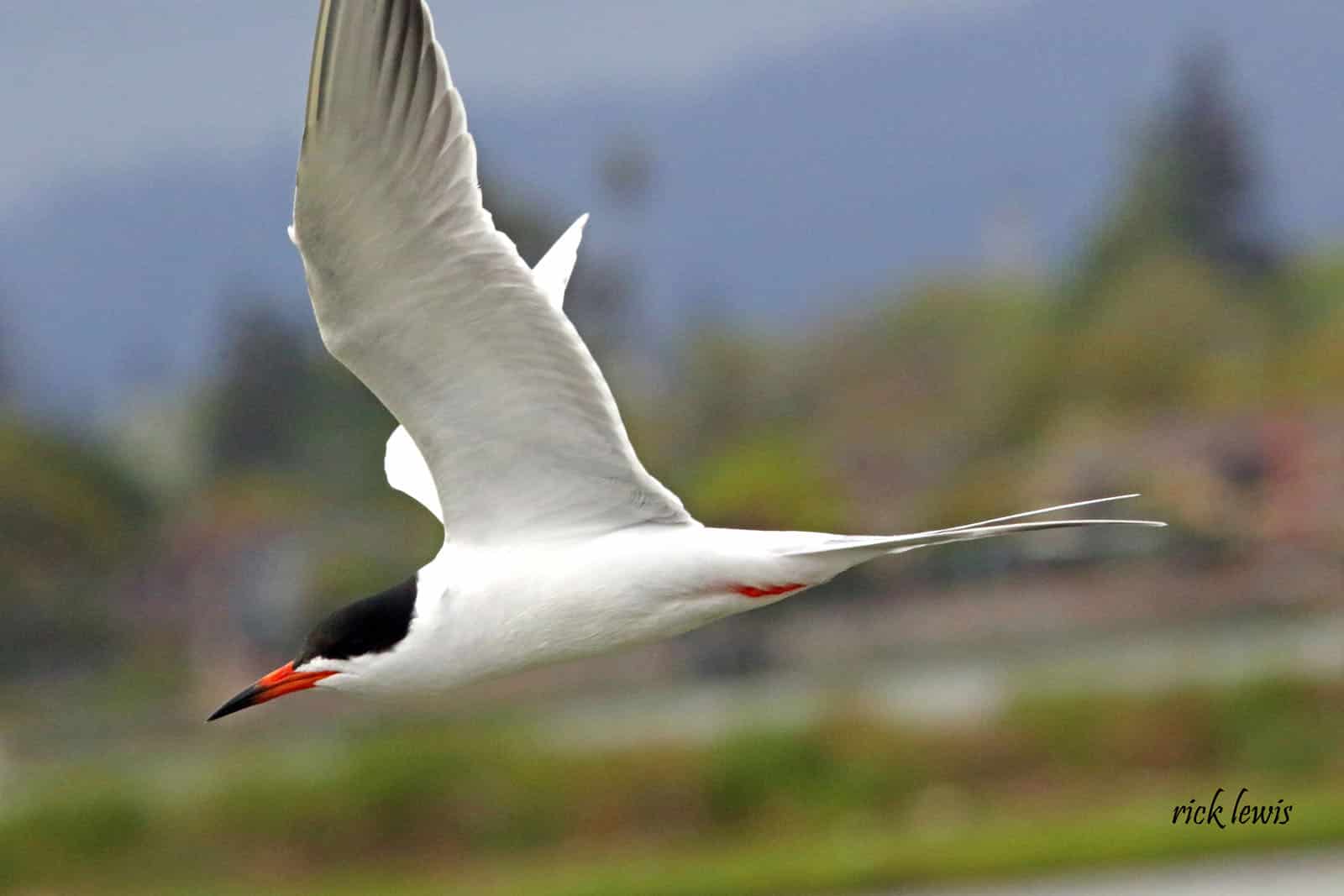
[7]There are actually three species of terns here now. The smaller ones with black bills that are starting to get yellow near their heads are Forster’s terns; they will leave shortly for Canada and the upper Midwest to breed and will return in the fall. The larger ones with a fatter red bill are Caspian terns, which also sometimes nest at Alameda Point. Larger than the elegant terns, the Caspian terns also more aggressively drive predators away from their nests, so the elegant terns like to nest nearby, taking advantage of the protection. Gulls and peregrine falcons are the primary predators of tern eggs, chicks, and fledglings. Mammals such as foxes and raccoons also take eggs and chicks; the outer fence at the VA property provides some protection from them.
 [8]
[8]All terns nest in small depressions in sand, close to other nests. While beaches are their traditional nesting spots, our beaches are too full of people throughout their spring-summer nesting season, so they have found other locations. The sand between the runways at the former Alameda Naval Air Station is one such location. The California least terns, which usually arrive in early to mid-May, still nest there but the elegant and Caspian terns found another sandy area a little distance from the least terns.
 [9]
[9]All terns eat fish, which they catch by plunge-diving as they fly over the water looking down. Without a hook on their beak, terns can’t break up their fish, so they swallow them whole; the smaller terns need to catch smaller fish. And the adults need to catch even smaller fish for the very small young chicks. Young chicks do well in years when there are lots of small fish. The waters of San Francisco Bay usually produce lots of small fish, but a warmer year, pollution, or less fresh water that results in saltier Bay water, can kill the small fish, so the tern chicks starve.



 [10]
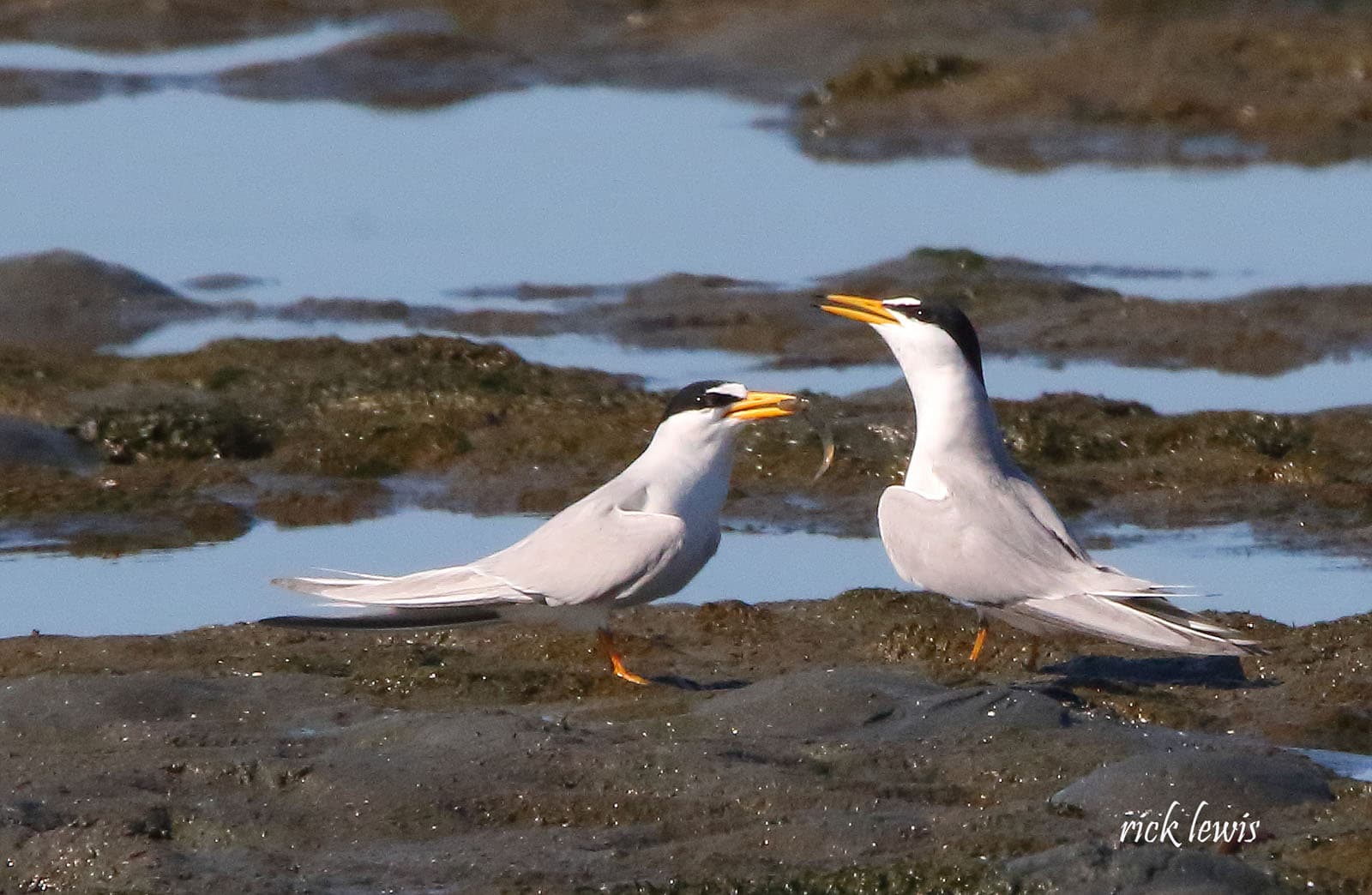
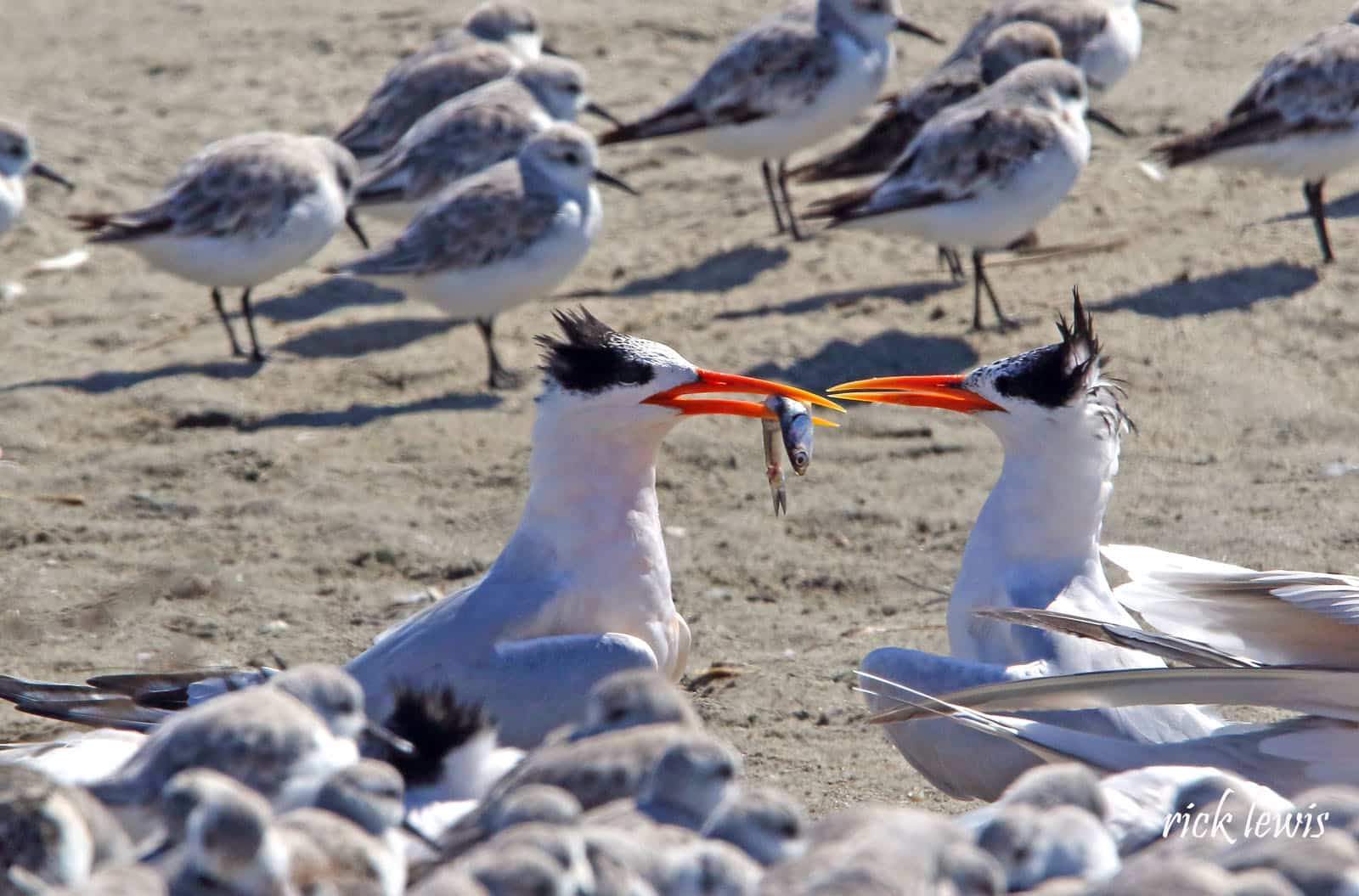
[10]In the spring, as elegant terns are selecting mates for the year, a male may offer a fish to a female, and a female will beg for and accept a fish from a male. You might see a tern offering or begging for a fish if you watch the terns from the platform at the Elsie B Roemer Bird Sanctuary on Shoreline Drive or the rocks past the Visitor Center at Crab Cove just before or after a high tide.
 [11]
[11]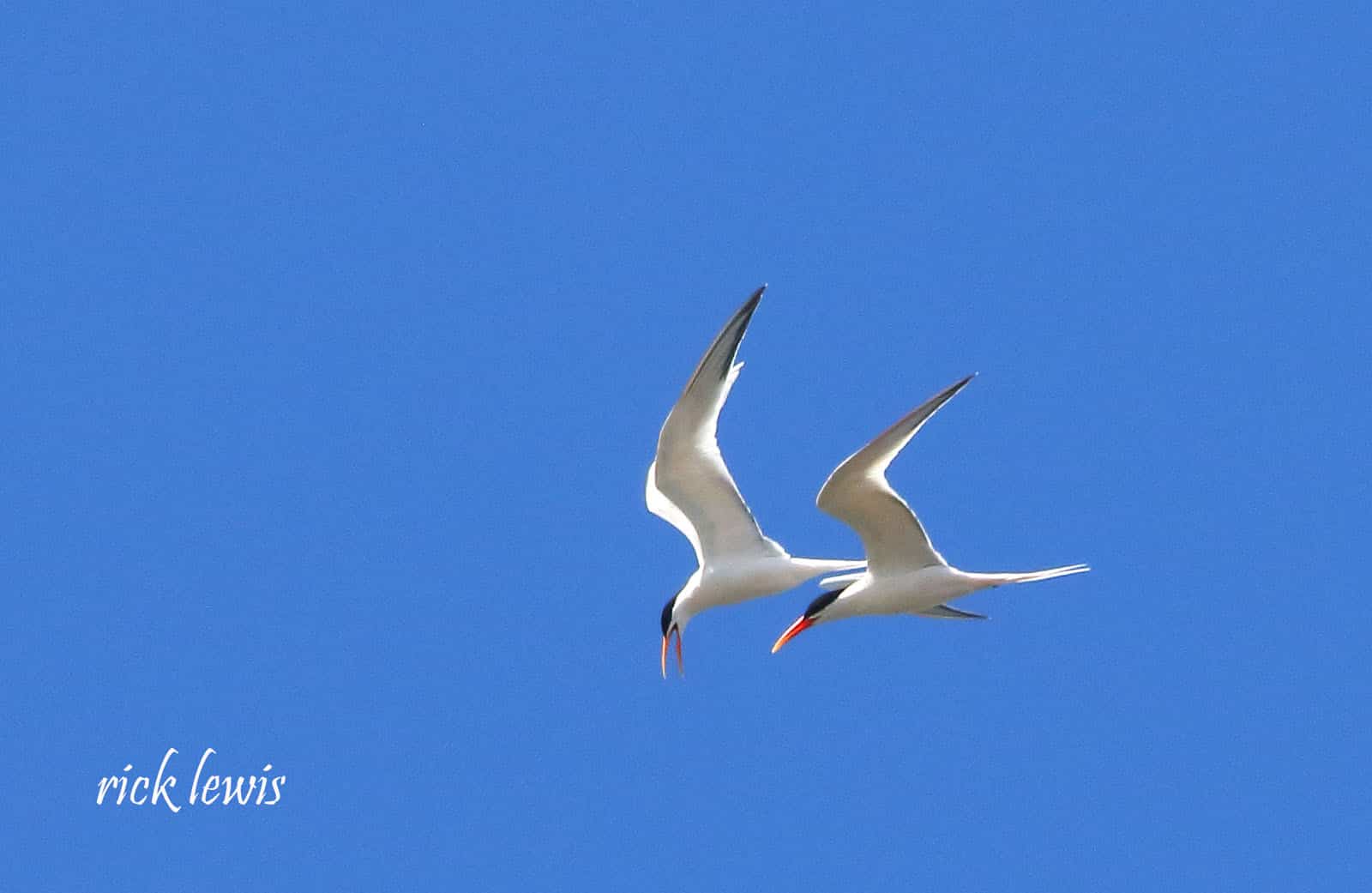 [12]
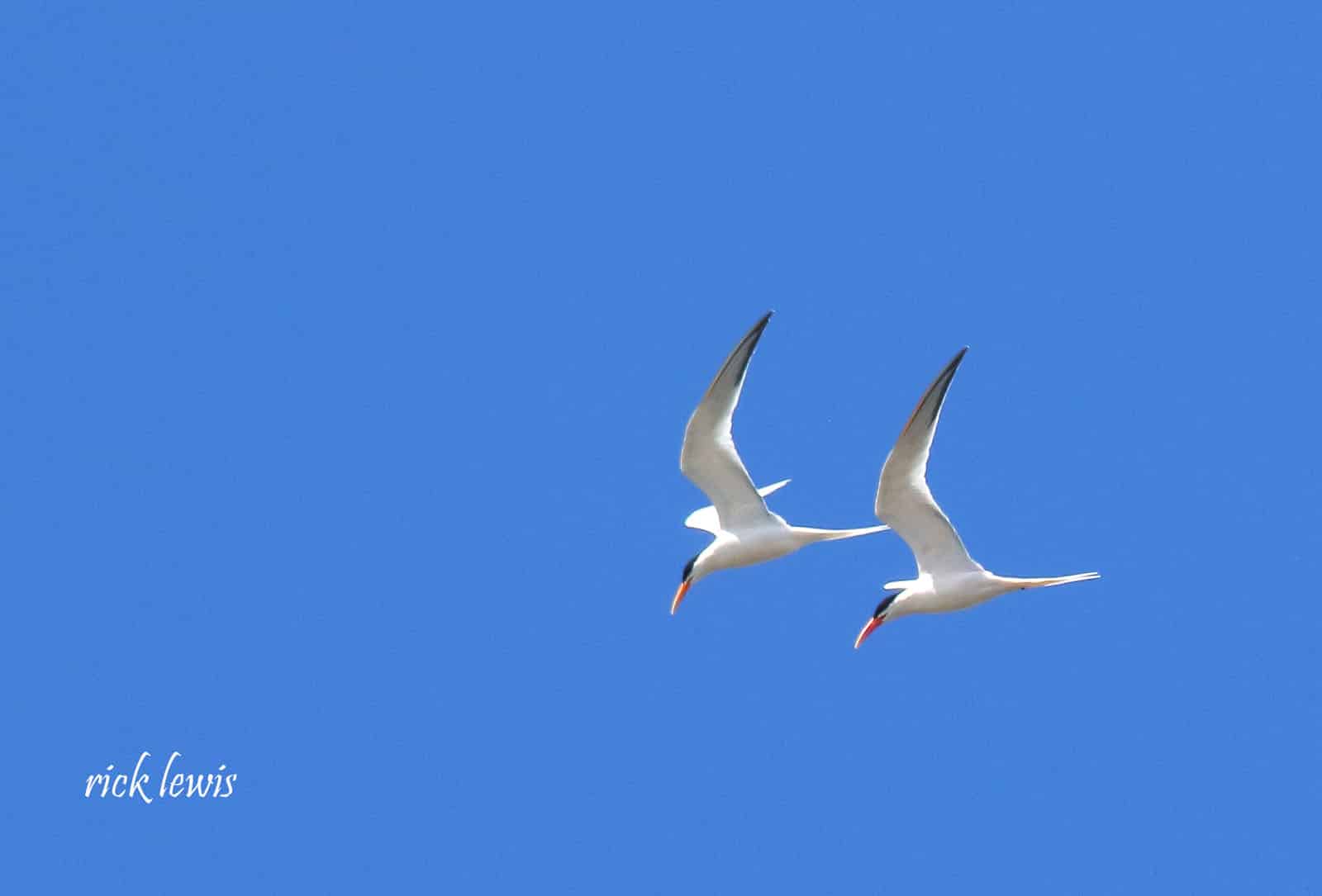
[12]Another step in the courtship process, after a fish transfer, is called a V-flight. One elegant tern flies up, followed by the second bird, which positions itself below the first. The two terns lift their wings into a V and glide in parallel, then flap for a short distance before gliding again, followed by a flap and third glide. The pair may swoop down then fly up and repeat the V-flight flap-and-glide pattern. These courtship behaviors occur shortly after they arrive, as they select mates. They start breeding in late April, so this is the time to look for courtship behaviors.
 [13]
[13]Cornell University’s Birds of the World reports that elegant terns nest on the coast of Mexico and the Sea of Cortez, as well as San Diego, but that before 1950 they nested in the San Francisco Bay. We birders who have been excited to have them nesting the past few years are hopeful that they will continue to nest at Alameda Point and that the scientists will catch up with our new summer birds.
Marjorie Powell moved to Alameda from the East Coast in 2014. A member of Golden Gate Bird Alliance [14], she serves on its Alameda Conservation Committee, the Friends of the Alameda Wildlife Reserve [15], and tries to go birding frequently.
This article is part of a series from the Friends of the Alameda Wildlife Reserve [15] (FAWR), a Conservation Committee of the Golden Gate Bird Alliance [14] (GGBA). Learn more about FAWR at www.goldengatebirds.org [16].