 [1]
[1]You know it’s spring when the yellow-rumped warbler puts on a summer outfit.
Warblers are small, active birds that are everywhere but not easily seen, especially without binoculars. Their habit of flitting around high up in the trees tends to keep them out of sight for non-birders and difficult to find even for birders who know where to look. They are smaller than the sparrows that are often seen on lawns, but bigger than hummingbirds. A good size comparison is the chestnut-backed chickadee, a well-known backyard bird that frequents bird feeders.
 [2]
[2]Yellow-rumped warblers are the exception to the rule. In Alameda they are actually very easy to find in winter because of their sheer abundance and their sometimes un-warblerlike behavior. They flit around in the trees like other warblers, but they also have a habit of acting like other birds such as flycatchers and even shorebirds. Flycatchers are birds like phoebes that tend to perch in a conspicuous location and periodically fly out to snag flying insects with amazing accuracy. Yellow-rumped warblers often do the same, making them easier to see. You might also find them looking for insects out in the open on suburban lawns and local parks. It is also not unusual to find them on shoreline mudflats when the tide is out, mixing with the shorebirds.
 [3]
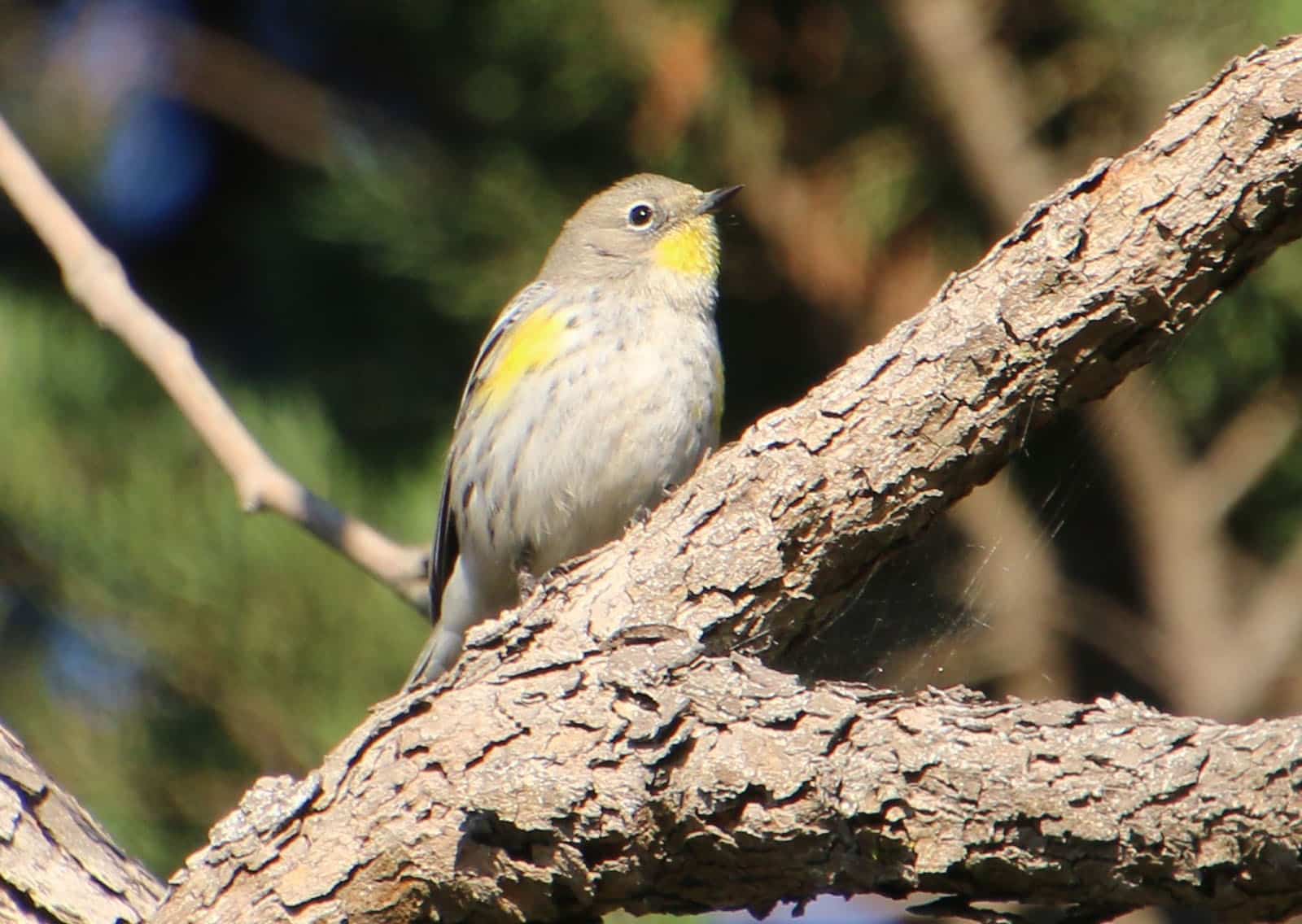
[3]Despite their attempts to be noticed, yellow-rumps in winter plumage are easily dismissed as “those little brown birds” on the lawn. They are mostly brownish gray but if you get a closer look you will notice small yellow patches on the crown and sides, and as they fly up from the ground, you may see the namesake yellow spot on the rump at the base of the tail, leading to the nickname “butter-butt.”
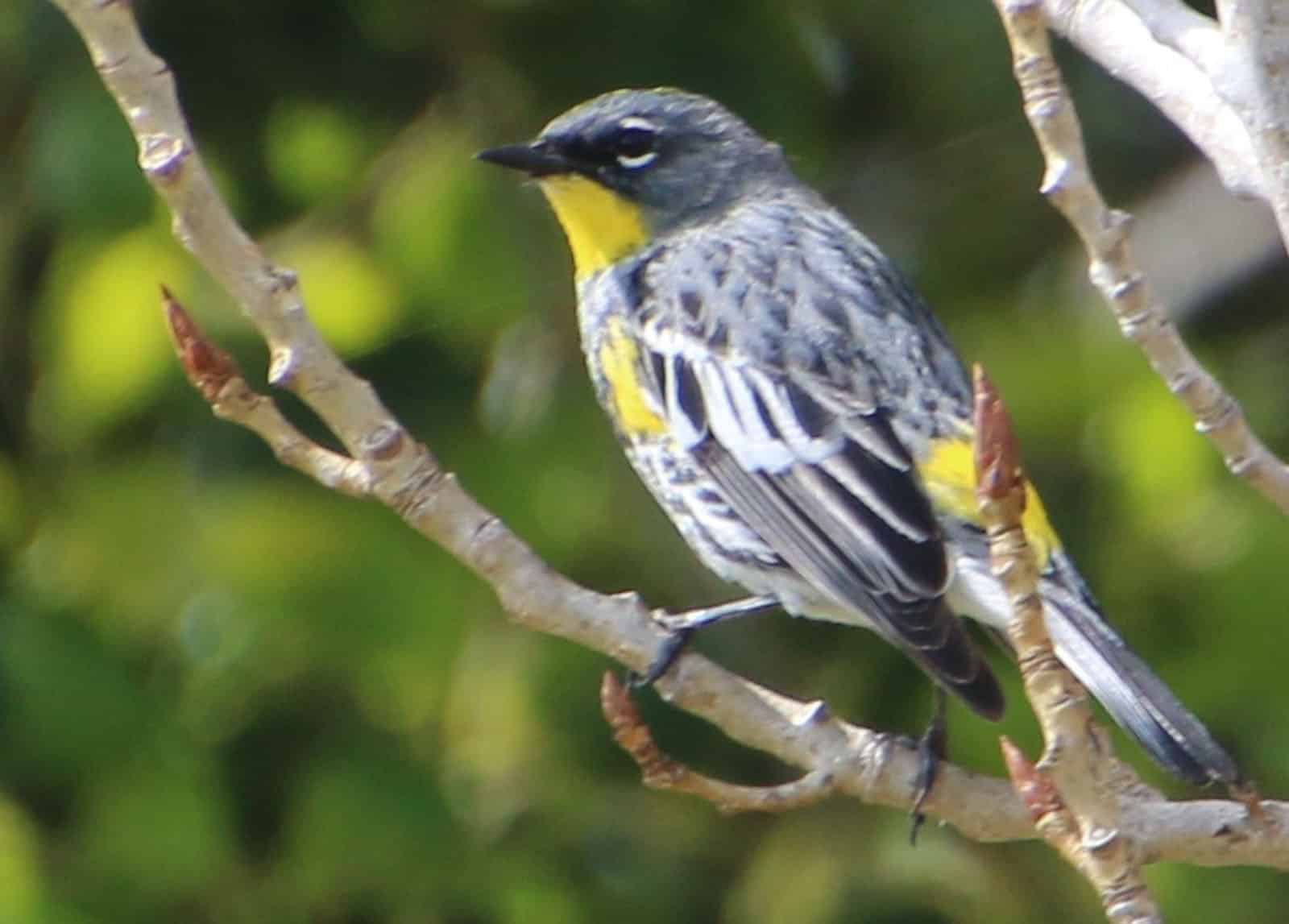
In early spring, they shed their subdued winter garb and change into a bright summer outfit by molting into their summer or “alternate” plumage in preparation for breeding season. The subtle yellow markings become vibrant, and the dull greenish brown is replaced by charcoal gray, black, and brilliant white. March is the best time of year to see these birds in a variety of plumages before they take off for their breeding grounds in northern California, the Sierra and Rocky Mountains, and Canada.


 [4]
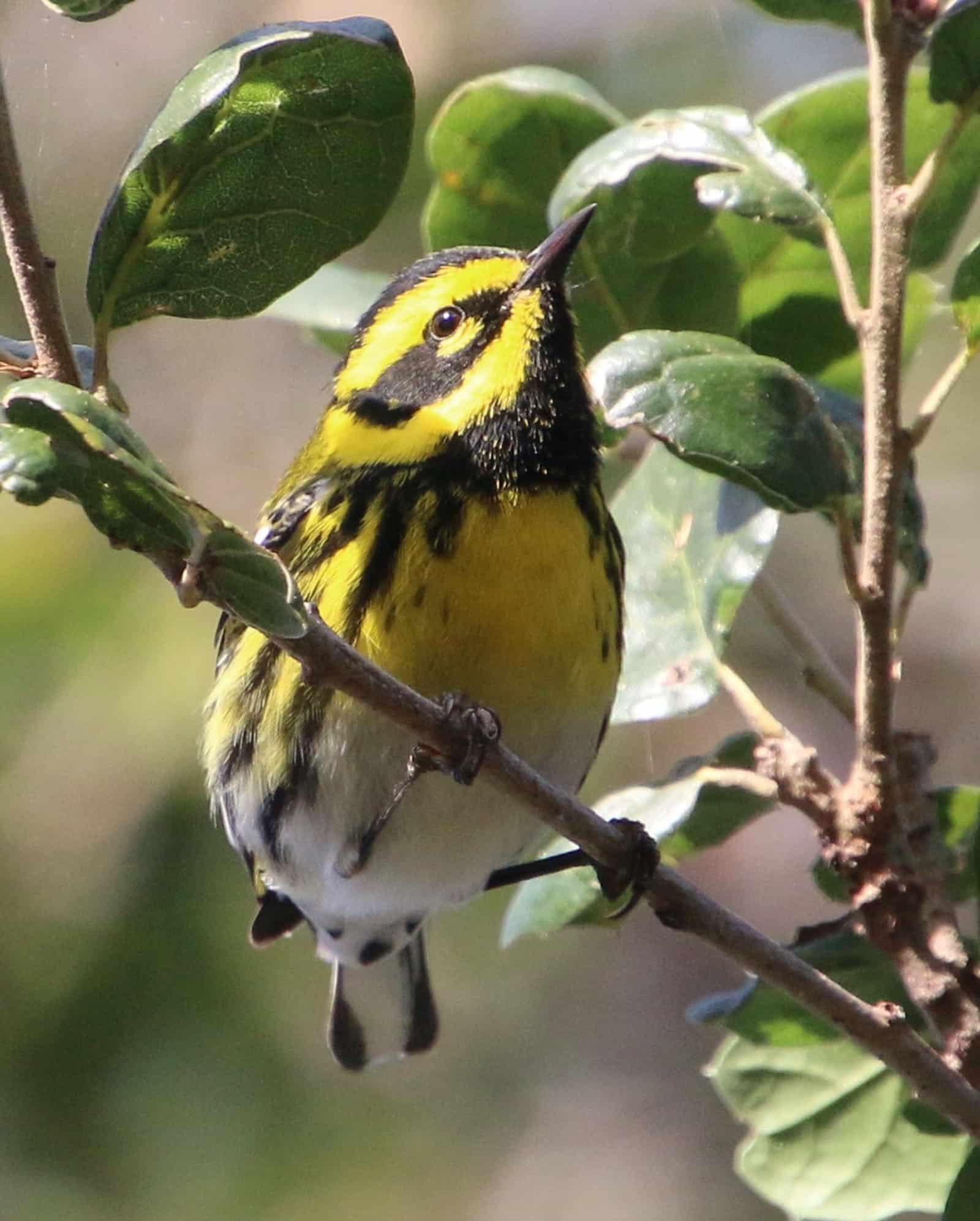
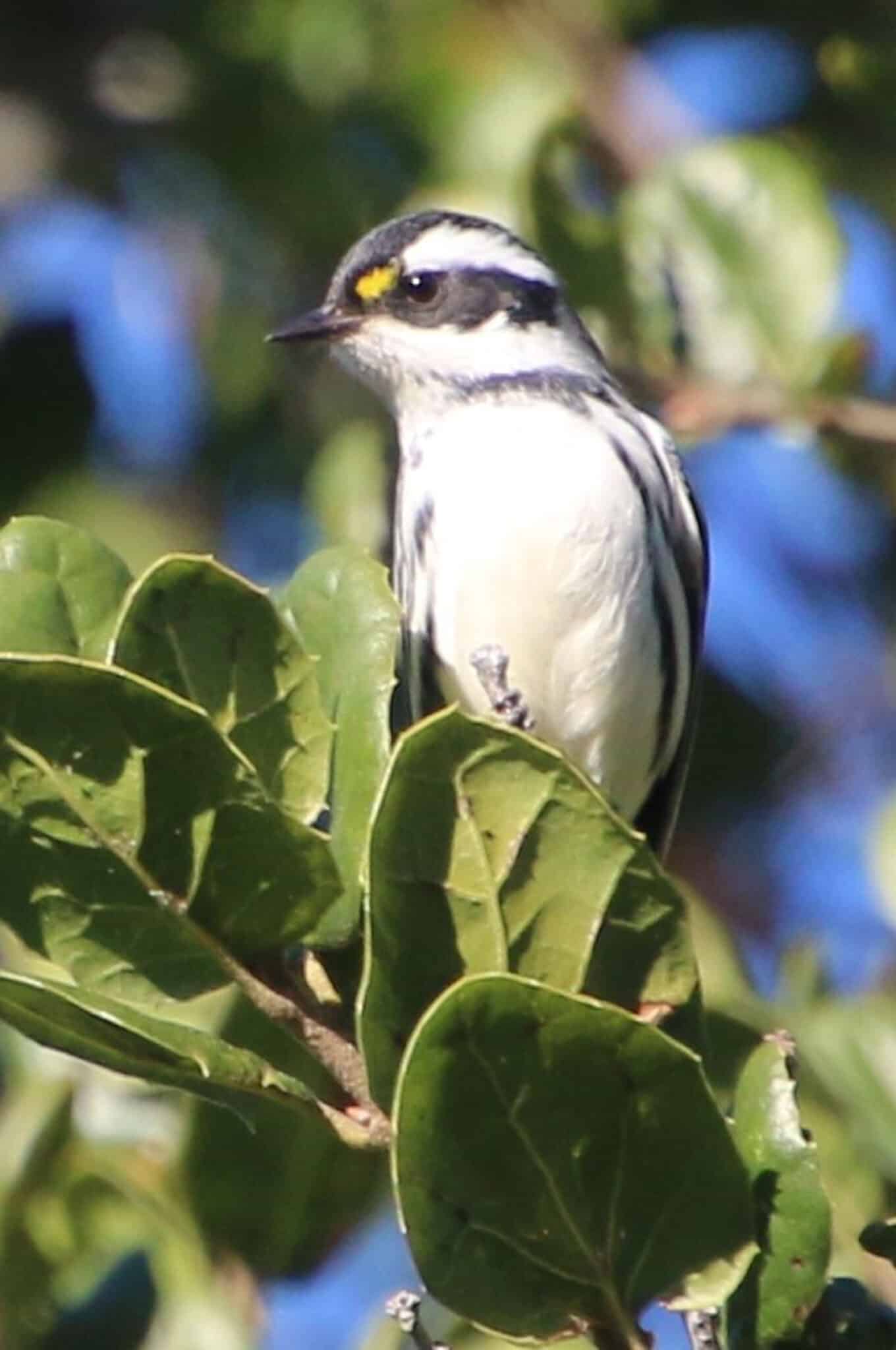
[4]One of the other wintering warblers is the Townsend’s warbler, not easily seen but worth the effort for its spectacular black and yellow colors. They spend most of their time in the treetops of oaks or conifers, gleaning insects. Also common but often unnoticed is the orange-crowned warbler whose muted olive-green coloring helps it hide in the trees. A much less common warbler, the black-throated gray, has been seen occasionally in town, far from its usual wintering ground in Mexico. In summer the bright yellow Wilson’s warbler replaces the winter warblers.
 [5]
[5]If you wonder where you might find these birds, any place that has trees is a good place to keep your eyes open for warblers. One of my favorite spots is Crab Cove, especially walking from the visitor center parking lot along the sycamore-lined path, keeping an eye on the oaks next to the condominiums. You have a good chance to see dozens of yellow-rumps, and if you’re lucky you may get a glimpse of one of the other warblers.
Doug Henderson has been birding Alameda and the surrounding area for many years and is a member of the Golden Gate Bird Alliance.
This article is part of a series from the Friends of the Alameda Wildlife Reserve [6] (FAWR), a Conservation Committee of the Golden Gate Bird Alliance [7] (GGBA). Learn more about FAWR at www.goldengatebirds.org [8].