My sister and I share a sad distinction: We both lost husbands fairly young. At 23, my sister lost hers to a rare kidney disease, a loss so devastating that when she later found work as a flight attendant in New York City, she abruptly packed a suitcase and abandoned her apartment in San Francisco, never making the Bay Area her home again. By contrast, after my marriage ended, I lost my ex-husband to suicide in my early 40s, news I received quite differently. I felt a heartbroken resignation, knowing he was freed from the sharp swings of darkness and mania he had endlessly grappled with because of his bipolar disorder.
 [1]
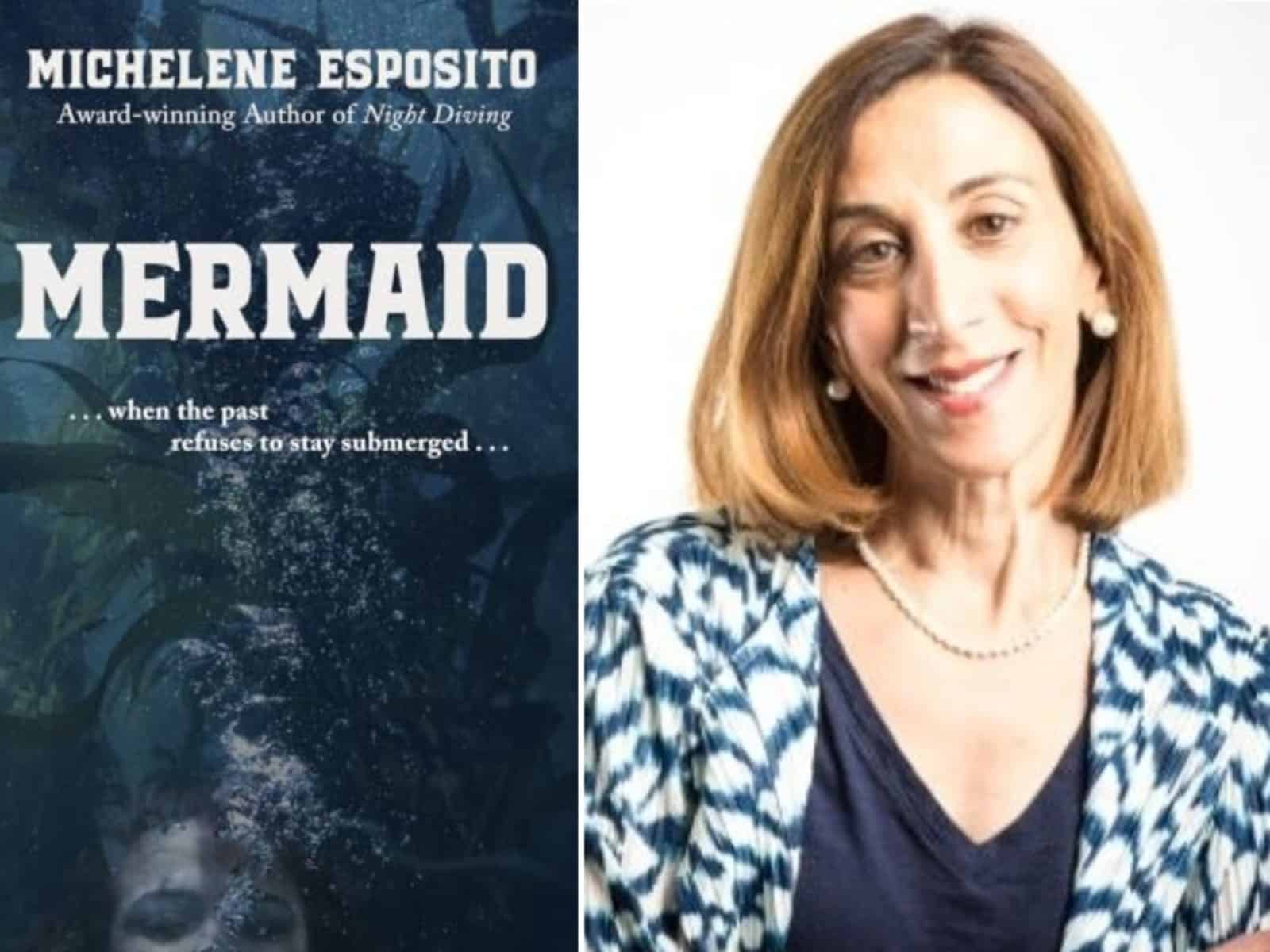
[1]So I deeply appreciated Alameda author Michelene Esposito’s [2] treatment of sisterhood, loss, and mental illness in her novel, Mermaid. The story begins with a chilling image: two young sisters sitting in the back seat of a car on a San Francisco pier while their mother chains herself to the steering wheel. Seven-year-old May knows something is wrong even before the car begins rolling. Moments later, the vehicle plunges into the freezing bay. May and her older sister Kate escape; their mother, Liza, does not. Ever afterward, May is haunted by the image of her mother as a mermaid, mythical and submerged, yet resurfacing in dreams, both longed for and feared.
Originally published in 2007 and reissued by Ortensia Press in 2026, Mermaid is less interested in the catastrophe itself than in the long wake it leaves behind. Esposito’s novel explores what it means to grow up after an almost unimaginable trauma, particularly when grief is tangled with anger, guilt, and the knowledge that the person you mourn was also the person who harmed you.
At the center of the book are May and Kate, sisters bound together by what happened on the pier but shaped by it in very different ways. Kate becomes a storm, volatile and self-destructive. May seeks safe, solid ground, becoming the peacemaker: “It was as if Kate’s job was to keep the temperature high… I knew my job: to watch, scan, and turn the temperature down.”
That contrast gives Mermaid its psychological interest. Esposito recognizes there is no single way to survive trauma. One child may rage against what happened; another may become accommodating, responsible, and hypervigilant. Neither response necessarily represents healing.
The novel is effective in showing how mental illness complicates loss. Liza is present throughout the book even in her absence. The daughters remember a mother capable of tenderness and love, but also unpredictability and terror. May asks, “How can you love like that and then leave? How can you love like that and kill the objects of your love?”
Esposito’s novel explores what it means to grow up after an almost unimaginable trauma, particularly when grief is tangled with anger, guilt, and the knowledge that the person you mourn was also the person who harmed you.
Esposito wisely resists reducing Liza to either a monster or a victim. Instead, Mermaid asks readers to inhabit the discomfiting space between explanation and absolution. Mental illness may help explain behavior, but it doesn’t erase consequences. The girls still grow up fearing and half expecting further abandonment, while questioning their psychological inheritance. If the person who formed you could become so unrecognizable, how confidently can you trust yourself?
Esposito is also effective at bringing Liza back to life through the journal she kept as a young woman. Her voice is by turns funny, naïve, romantic, and defiant. At the same time, the journal opens a window onto a very different world, one in which an unmarried pregnancy could abruptly put a young woman’s future in the hands of parents, doctors, and religious institutions: “Rachel says I should tell James and that he will have to marry me right away—that he will, of course, want to marry me since he loves me.”
For all its dark subject matter, Mermaid is unexpectedly funny. Perhaps reflecting Esposito’s New York Italian-American roots, May’s humor is dry and self-deprecating, as when she describes two friends taking her out for a walk after a difficult period: “They treated me like an egg, too breakable to travel well. They walked on either side of me, and finally, I couldn’t stand it and picked up the pace so it didn’t look like they were taking me out for my first walk since the lobotomy.” The humor is more than comic relief; it is May’s way of resisting the identity of a damaged survivor that others sometimes impose on her.



May loves Kate intensely, but that love is mixed with resentment and exhaustion. “I love my sister, and I’ve hated her too,” she admits, a line that captures the novel’s refusal to make love uncomplicated. Loving someone does not necessarily mean understanding them, approving of them, or being able to save them.
May’s warm, second-chance romance with her high school sweetheart, Buddy, offers another perspective on healing. Both carry old wounds, but their relationship is healthiest when neither treats the other as a project to be fixed.
 [3]
[3]Can love sustain another person through mental illness or trauma without becoming responsible for that person’s survival? And what happens to those who spend so long trying to save others that they start to lose themselves? These questions give the novel depth.
Alameda is more than a backdrop. May and Buddy meet for breakfast at Ole’s Waffle Shop, characters walk down Grand Avenue to the beach, and the fire station and former Naval Air Station figure naturally into their lives. These familiar places give the story an intimate, lived-in quality. But the island geography carries deeper significance for May, who is never far from the bay associated with the defining trauma of her childhood. The water can be ordinary scenery one moment and a reservoir of memory the next. From the opening plunge into San Francisco Bay, water carries associations of danger, memory, and fear. At the same time, the mermaid image captures how a child can transform the terrifying into something almost magical.
Ultimately, Mermaid is a novel about surviving loss without pretending that survival brings closure.
While the book moves between family drama, romance, and mystery in ways that can make its tone feel uneven, this is outweighed by the warmth of the characterization and Esposito’s compassion for people coping imperfectly with damage they did not choose.
Ultimately, Mermaid is a novel about surviving loss without pretending that survival brings closure. May and Kate do not simply “get over” the past. They live beside it, reinterpret it, and seek a fuller understanding of the mother they lost. Forgiveness comes not from denying the harm that was done, but from learning to hold two difficult truths at once: Liza harmed her daughters deeply, and she loved them with all she had to give.
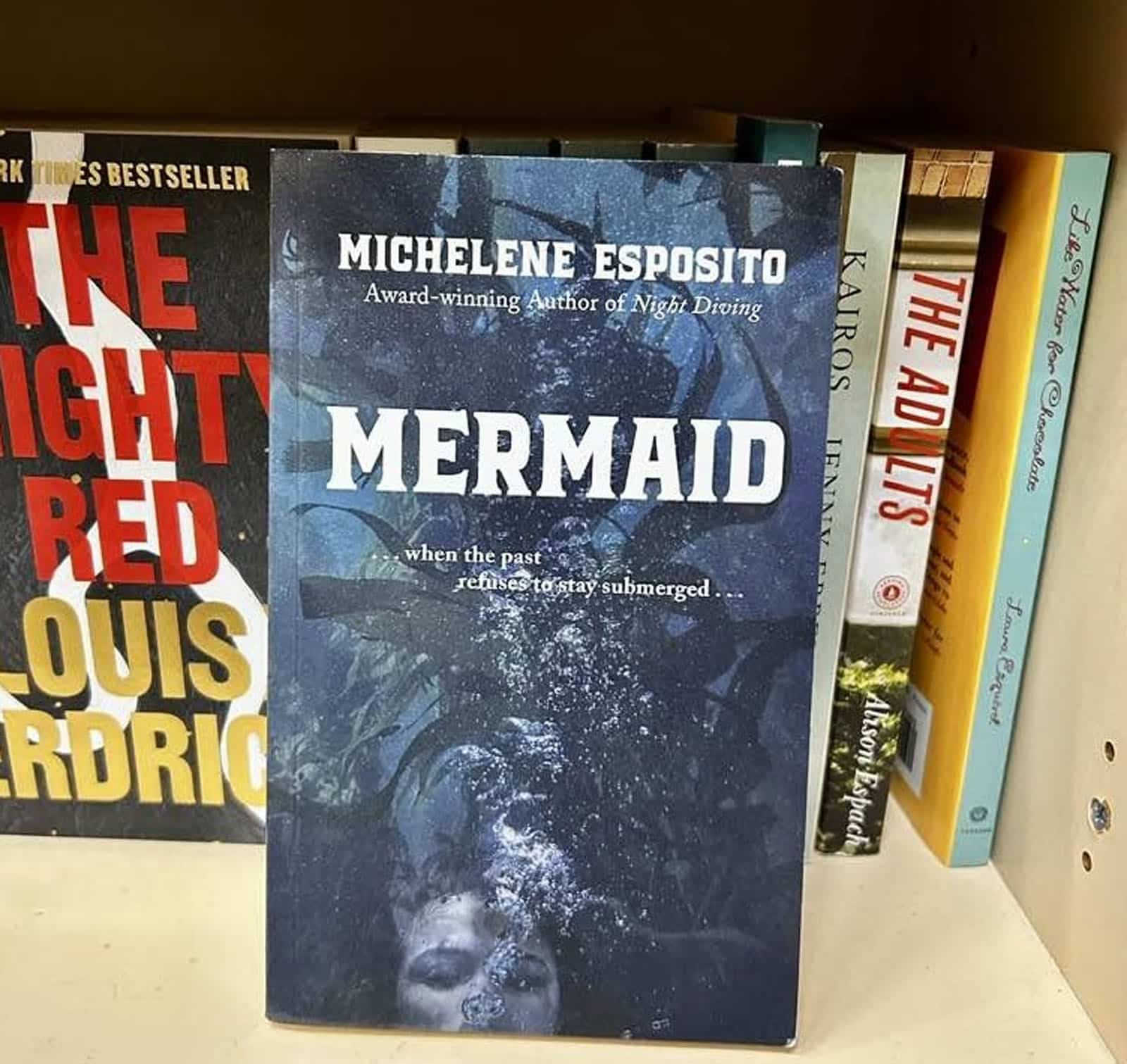
Mermaid is available for purchase at Books Inc., 1344 Park Street, Alameda.
September is National Suicide Prevention Month, a dedicated time to raise awareness, share resources, and break the stigma surrounding mental health. If you or someone you know is in crisis, support is available 24/7. Call or text 988 to reach the Suicide & Crisis Lifeline, or chat online at 988 Lifeline [4].
Contributing writer Karin K. Jensen covers City Council and book reviews for the Alameda Post and is a local author of The Strength of Water, An Asian American Coming-of-Age Memoir. Her writing is collected at https://linktr.ee/karinkjensen [5] and https://alamedapost.com/Karin-K-Jensen [6]. Contact her via [email protected] [7].