This month, our fourth- and fifth-grade class at Love Elementary continued our Happiness Project with a powerful new focus: emotional regulation.
After learning about kindness, mindfulness, gratitude, social connections, and growth mindset, we wanted to understand something that connects to all of them—our emotions.
We learned that all emotions are good. Even the uncomfortable ones.
 [1]
[1]Scientists say that emotions are messages from our brain. They give us information about what is happening around us and inside of us. For example, feeling angry could let us know that the thing we are mad about is something we really care about. Feeling sad also might mean something matters to us. Emotions aren’t problems. They are actually signals. We can learn so much about ourselves from them.
We also learned about how our brain works. The front part of our brain helps us think clearly, make decisions, and solve problems. But when we have really big emotions, another part of our brain can take over to protect us. That’s when it can feel hard to think or make calm choices. It is almost impossible to think clearly. Like when your favorite team loses, and it’s like all you see is red and you might do something that you regret later.
There is good news, though. We can train our brains!
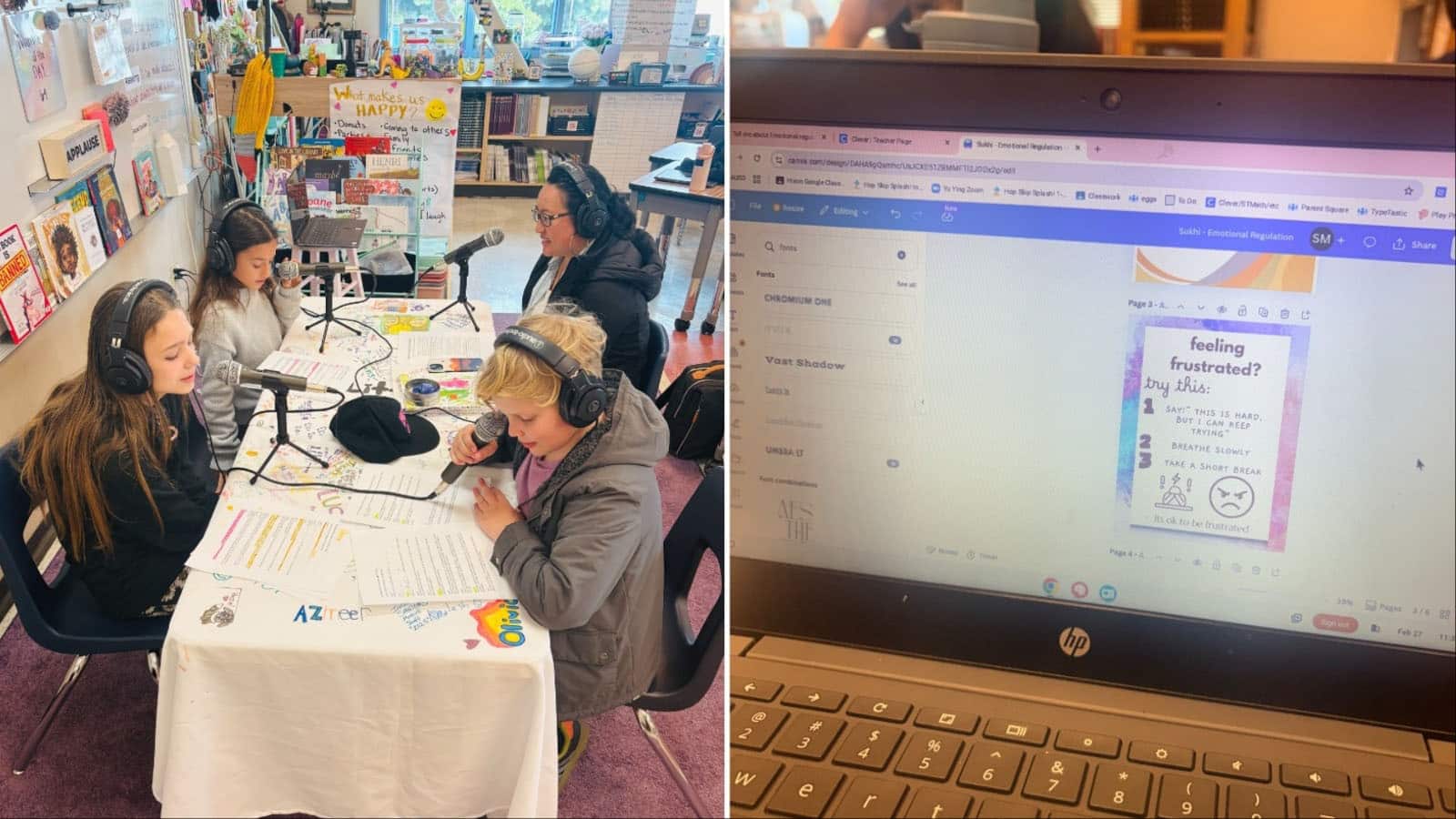
To help us understand this better, we interviewed Dr. Thao, a local child psychologist, on our class podcast, Little Minds Big Talks [2]. She explained why kids (and adults!) have big emotions and how those feelings are completely normal. She taught us that emotional regulation doesn’t mean stopping emotions. It means learning what to do with them, and that is so exciting! Like we are little puppetmasters for our own emotions.


Dr. Thao shared strategies we can use in the moment, like taking slow, deep breaths, pausing before reacting, moving our bodies, or talking to someone we trust. When we calm our bodies, it helps our brains think clearly again.
We also talked about emotional intelligence in class, which is understanding our own feelings and being able to understand other people’s feelings too. We learn a new word each week to help us describe what we are feeling with better accuracy. Dr. Thao reminded us that emotional regulation can be practiced at home and at school, and that it gets stronger over time, just like a muscle.
To put our learning into action, we created emotional regulation posters. Each one of us chose 2-3 common emotions, explained why it is okay or helpful to feel that emotion, and listed strategies that can help manage it in a healthy way. We are printing them and hanging them around our school and community so everyone can learn alongside us.
If you see one of our posters around Alameda, take a moment to read it. You might learn a strategy that helps you the next time you feel a big emotion.
Our community challenge this month is: The next time you feel a strong emotion, pause and take five slow, deep breaths before reacting. See what changes.
Next month, our Happiness Project will focus on optimism and how the way we think about challenges can shape our happiness.
In our class, we believe little hearts can make a big difference. And together, we can help Alameda become a community that understands emotions, supports each other, and grows stronger every day.