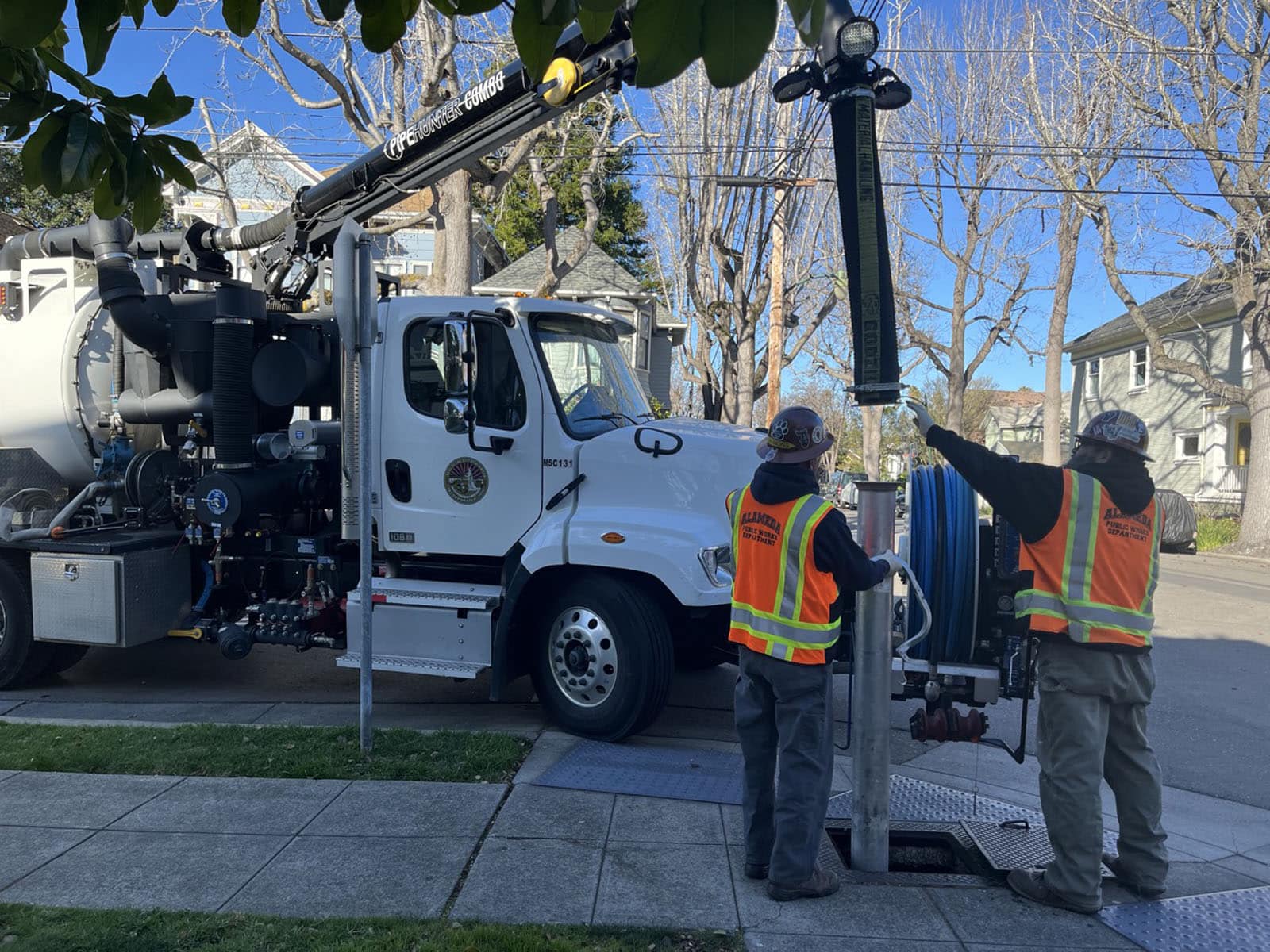
At 9 o’clock on a recent sunny morning, the Pipe Hunter, a white truck with a large cement-mixer type barrel and a giant pipe attached to the top, rolled up to the corner of San Antonio Avenue and Weber Street. Two men in orange Alameda Public Works Department vests exited the vehicle, opened up a square in the sidewalk, and eased a giant pipe into the square. Then they unrolled a water hose from the front of the truck, which also went into the square.
 [1]
[1]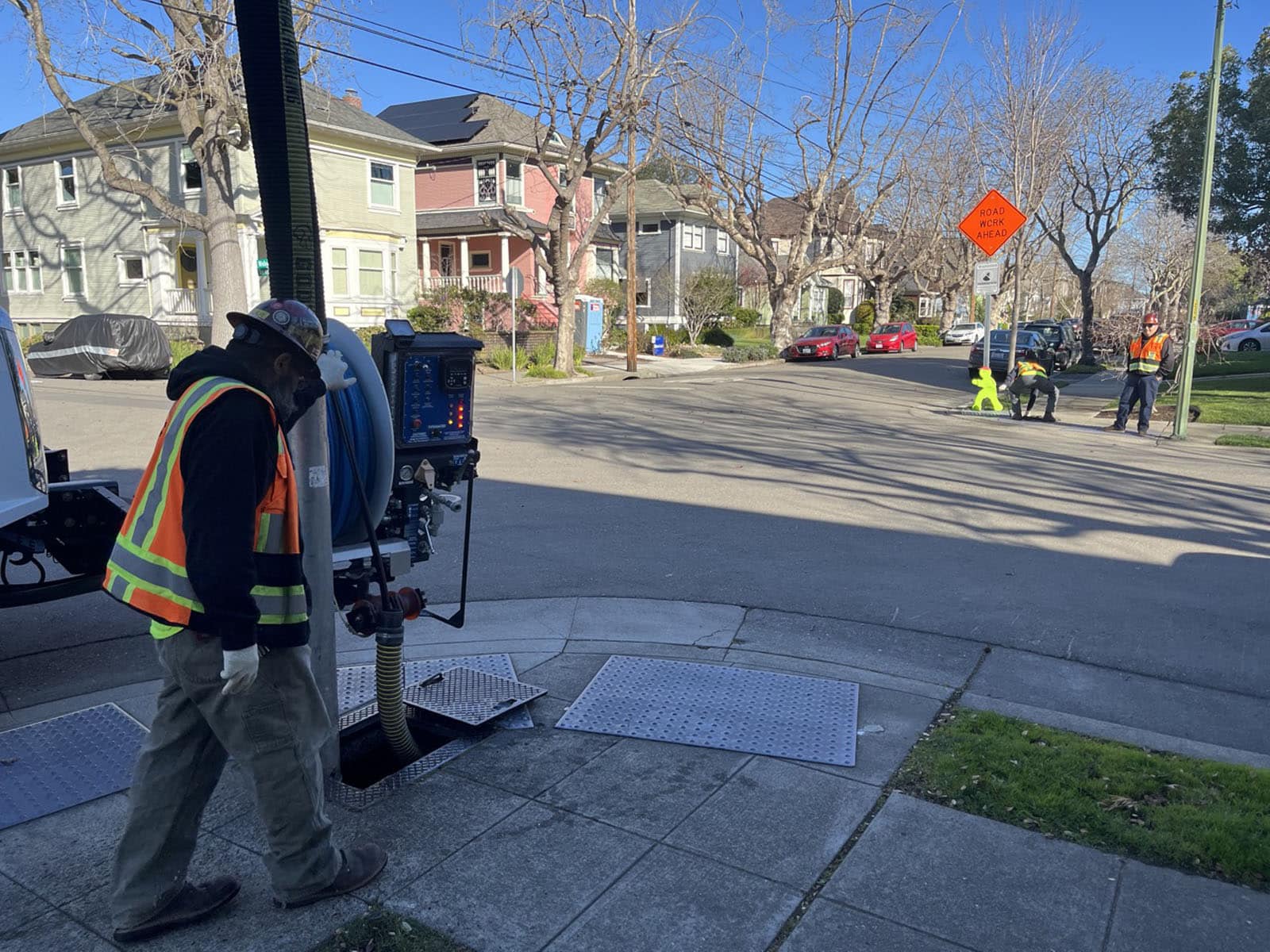 [2]
[2]The Pipe Hunter was here to clear out the storm drain. As water from the high pressure hose loosened debris in the drain, the large pipe sucked it out like a giant vacuum cleaner into the barrel on the truck. Maintenance workers Steve Simmons and Paul Otenbrite drive the Pipe Hunter around town and work on the storm drains to keep roads from flooding when it rains.
This particular location is a culvert drain system, where excess rainwater enters a drain on the north side of the intersection, flows into a pipe under the street, exits a drain on the south side of the intersection, and continues to flow along Weber Street until it discharges into the lagoon.
 [3]
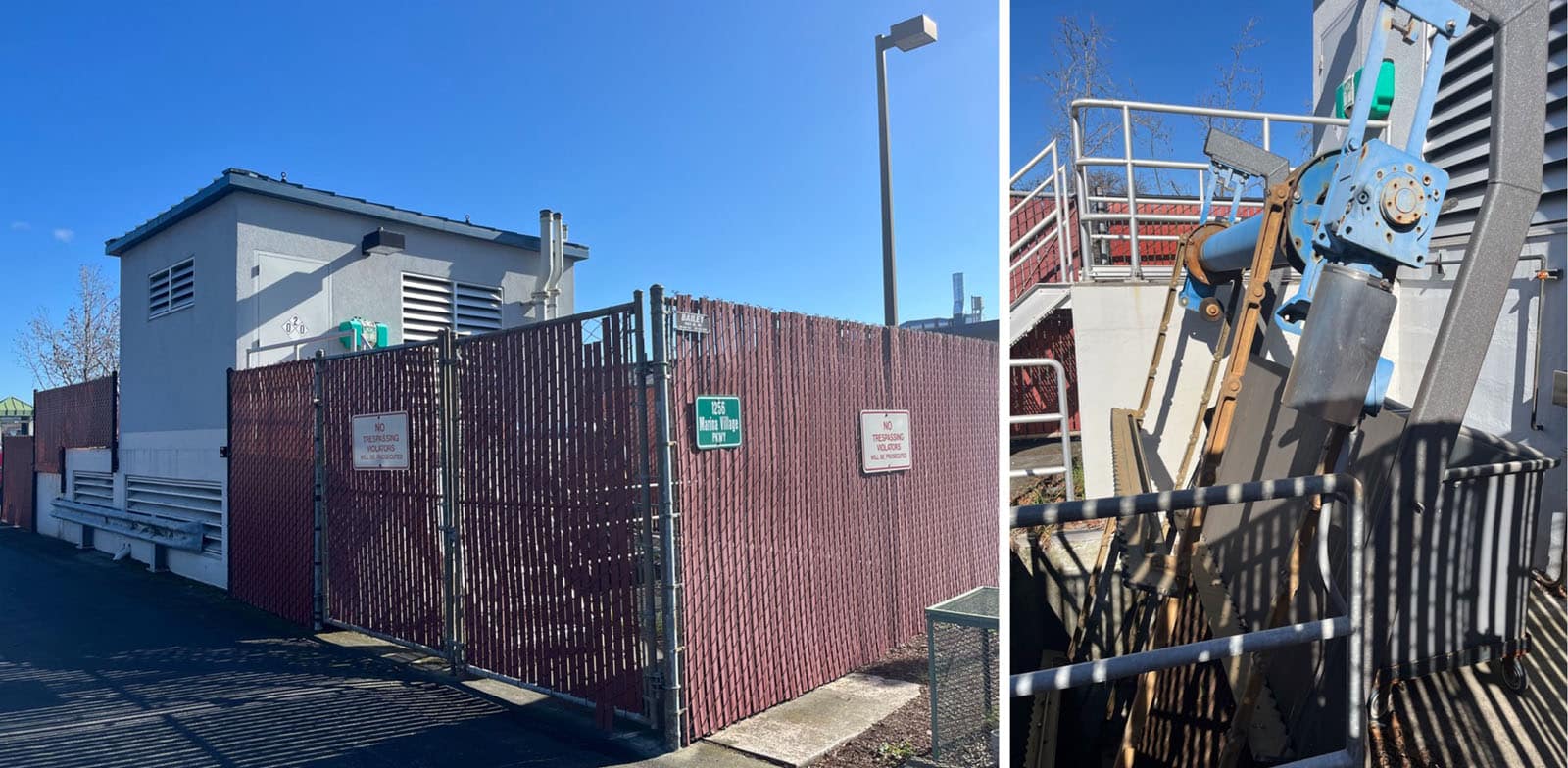
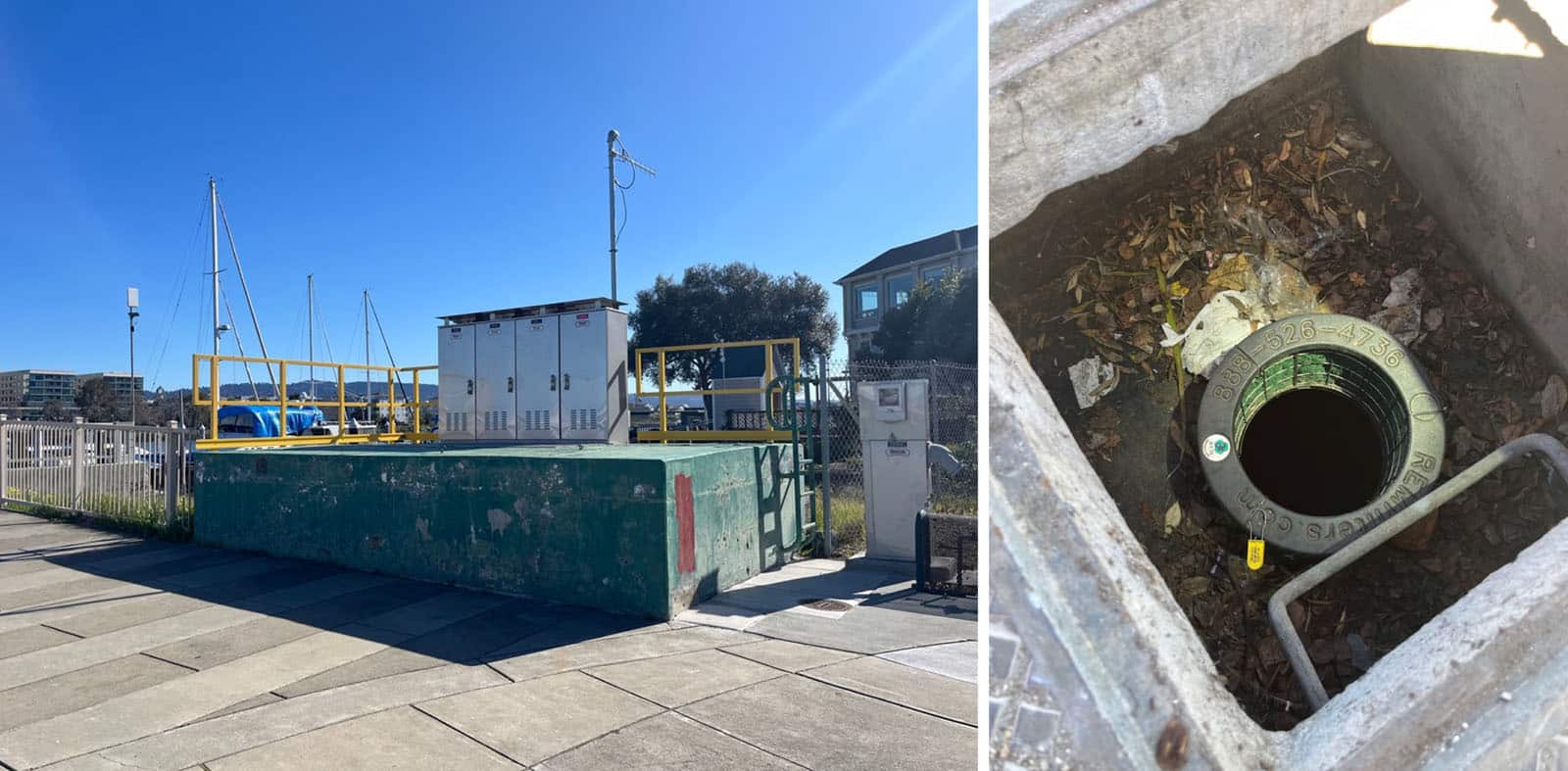
[3]In addition to the culverts, Alameda has 12 pump drainage systems throughout the city. In these drains, water flows through a pipe, which activates three pumps once the water reaches a critical level. The water is then pumped to higher ground and discharged into the Bay. The pumps are in small, nondescript sheds and structures throughout Alameda.
Alameda Public Works shows how they clear a drain. Video Jean Chen.
As he worked to clear out the drain, Simmons told the Alameda Post that most of the debris are “leaves and the occasional raccoon or skunk.” Trash, of course, also ends up in the storm drains. Neighborhood resident Jenn Bush happened to be walking by and recounted that the drain near her house was once mysteriously clogged with shredded denim. “There were a lot of vintage Levi’s in there,” she said with a shrug.
 [4]
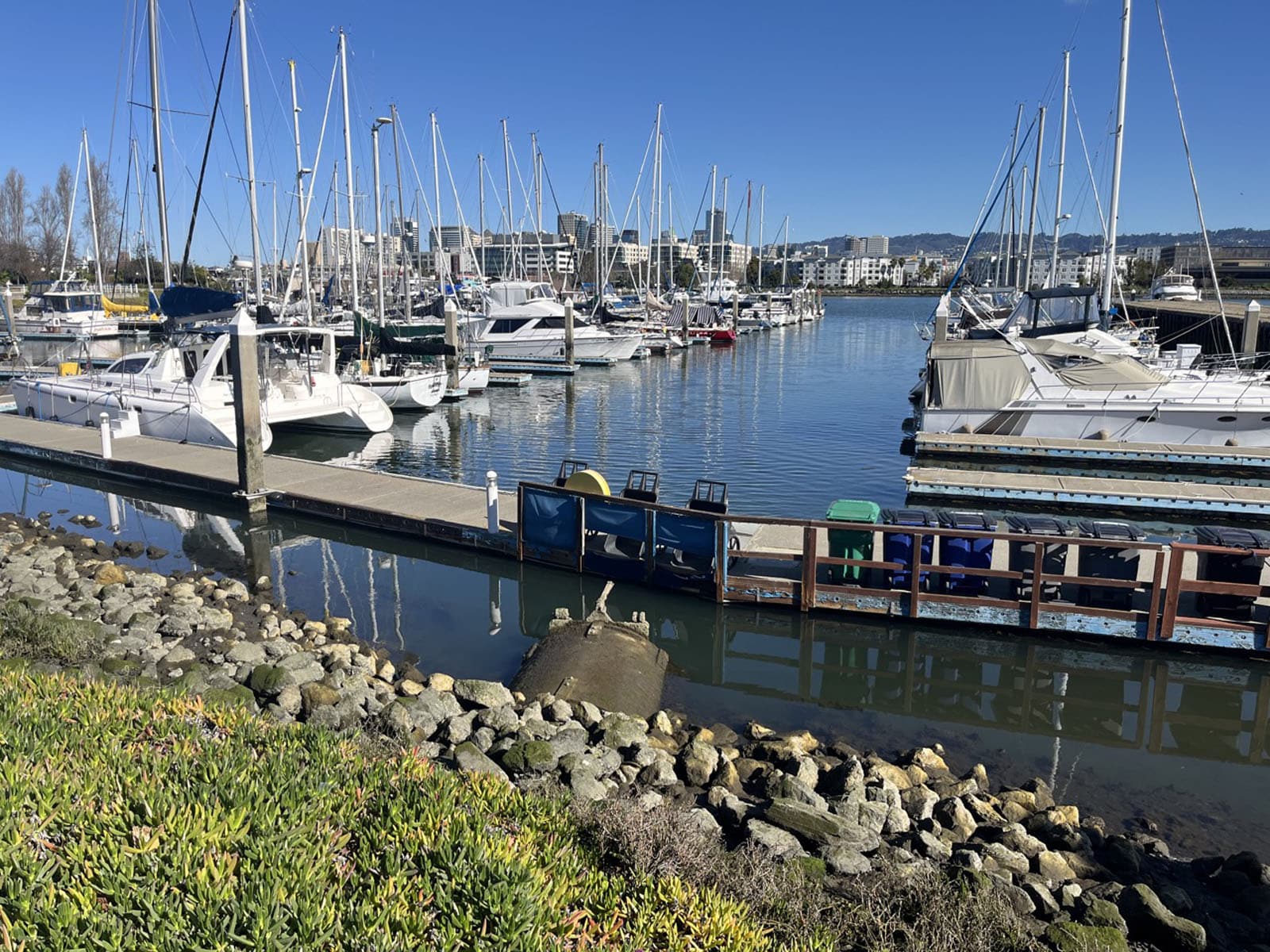
[4]The pump drainage systems have trash racks—large, ridged metal racks—that rake trash out of the water before pumping it into the Bay. The drains also have filters that catch trash before it reaches the pumps. At the pumps at 1300 Marina Village Parkway, two waist-high trash bins catch the debris and trash. Public Works Supervisor Manny Rios told the Post that during the rainy season, it takes about a month for those bins to fill up.




“People don’t understand the consequences of putting trash in the storm drains.”
Rios explained that street sweeping trucks regularly pick up a lot of trash that would otherwise end up in the drains. “Street sweeping really helps and is the first line of defense—after homeowners who properly dispose of their garbage,” he said.
Rios urges the public not to litter. “People don’t understand the consequences of putting trash in the storm drains.” Rios explained. He also advises Alameda residents to avoid blowing grass clippings and leaves into the street. “Put them in the compost bins. Leaves and grass clog the storm drains.”
 [5]
[5]In addition to clogging the storm drains, trash can also end up in the Bay. Rios says he sees a lot of styrofoam litter, which reflects the composition of the debris that washed up on Alameda’s shores [6] during the December King Tide storms.
While the City of Alameda actively works to keep trash out of the Bay with street sweeping, trash racks at pumps, and the Pipe Hunter, the system is designed to filter out large pieces of trash and isn’t equipped to catch small particles. Motor oil residue on the street and tire particles, for example, still wash into the Bay when it rains.
And despite Alameda’s best efforts to keep the Bay clean, Rios points out that the city shares its waterways with Oakland, San Francisco, and San Leandro, which may explain why trash is constantly littering our shores and keeping volunteers with Community Action for a Sustainable Alameda (CASA) [7] and I Heart Oakland-Alameda Estuary [8] busy with beach and water clean-ups.
 [9]
[9]In addition to properly disposing of trash and yard waste in bins and adhering to the motto, “Only rain down the drain,” Alameda residents can help keep our storm drains working and our Bay healthy by reporting storm drain flooding via See Click Fix [10].
Jean Chen is a contributing writer for the Alameda Post [11]. Contact her via [email protected] [12]. Her writing is collected at AlamedaPost.com/Jean-Chen [13].